Chapter 1: The Park That Learned to Dance
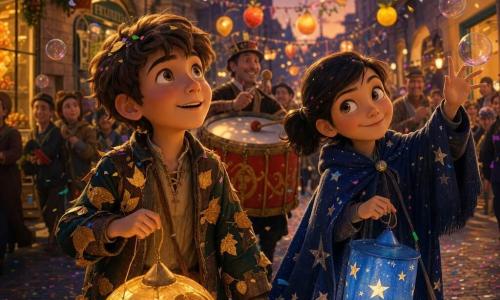
Saturday afternoon spilled into the public garden like a box of glitter tipping over. Streamers hung from the old chestnut trees, twisting in the breeze. Paper lanterns bobbed like friendly jellyfish. Someone's trumpet practiced the same three notes as if it had forgotten the rest on purpose.
Milo Granger, age eleven and owner of a smile that showed up even when he tried to look serious, stood at the park gate with his dad.
“You look like you're about to run a marathon,” Dad said, eyeing Milo's bouncing knees.
“I'm not running,” Milo said. “I'm exploring. There's a difference. Explorers look heroic. Runners just… sweat.”
Dad pointed to the sign: CARNIVAL IN THE GARDEN — TODAY ONLY! Under it, somebody had drawn a tiny moustache on the letter R, turning it into something that looked suspiciously smug.
Milo adjusted his costume—half pirate, half magician, because he couldn't decide and refused to. A striped scarf fluttered from his belt, and a cardboard hat sat on his head at a brave angle.
A drumbeat rolled through the trees. Children in bright masks zigzagged between stalls. A woman on stilts waved as if she had borrowed a piece of the sky.
Milo took a deep breath. The air smelled like popcorn, cinnamon, and something sweet he couldn't name.
He wasn't just here to eat cotton candy until his teeth squeaked. Milo had a mission.
In his backpack was a crumpled photocopy from the library: an old newspaper article about the park carnival from decades ago. The headline read: “THE LOST TRADITION RETURNS—THE LANTERN PARADE OF THANKS.”
But the article ended mid-sentence, like the reporter had been interrupted by a pie to the face.
Milo had circled a line in pen: “At sunset, the community gathers to—”
To what? Sing? Dance? Summon a friendly ghost? Milo wanted to know.
He stepped into the garden, and the carnival swallowed him in happy noise.
Somewhere in the music and the laughter, a forgotten tradition was waiting. Milo could almost hear it tapping its foot impatiently.
Chapter 2: A Clue with Sprinkles
The first stall Milo visited was run by a man dressed as a giant strawberry. Not a strawberry costume—he looked like an actual strawberry had decided to get a job and pay taxes.
“Greetings, fearless pirate-magician,” Strawberry Man boomed. “Would you like a cupcake that changes color when you blink?”
“That's… suspicious,” Milo said.
“It's science,” Strawberry Man replied, offended. “Or magic. We don't label things here.”
Milo bought one anyway. The frosting was blue. He blinked. It turned purple.
“Okay,” Milo admitted, “that's excellent.”
While Milo chewed, he scanned the stalls for anything about old traditions. Most signs advertised modern attractions: Balloon Battle Arena, Disco Hula-Hoops, and something called The Dramatic Escape Room (With Extra Drama).
He tried asking at the popcorn stand. The teen scooping kernels shrugged. “Forgotten tradition? I forget where I put my phone every six minutes. Sorry.”
At the face-painting table, a little girl with tiger stripes growled at him. Her mom said, “Tradition? We usually just lose one child and find them under a table eating chips.”
Milo turned away, thinking hard, and bumped straight into someone.
“Whoa—sorry!” he said, catching himself.
The person he bumped into wore a cloak made of shimmering patches, like someone had sewn together pieces of sunset. A feathered mask covered their face. Only their eyes showed—bright and amused.
“No harm done,” the masked person said. Their voice sounded young, maybe a teenager. “You look like you're hunting something.”
Milo wiped cupcake frosting from his chin. “I am. I'm trying to find a tradition that got… misplaced. Like a sock.”
The masked person tilted their head. “A tradition. In a park full of music. That's like looking for a whisper in a marching band.”
Milo pulled out his crumpled paper. “This says there used to be a Lantern Parade of Thanks at sunset. But nobody knows about it.”
“Maybe people forgot,” the masked person said. “Or maybe it's still here, hiding in plain sight.”
“How would you know?” Milo asked.
The mask's beak-like nose seemed to grin. “Let's say I like old stories. Follow the music. Not the loudest music—the music that sounds like it remembers.”
Before Milo could ask what that meant, the masked person slipped into the crowd, leaving behind a faint smell of oranges.
Milo stared after them. His stomach did a small flip—half excitement, half cupcake.
“Okay,” he muttered. “Follow the music that remembers. That's totally normal advice.”
A trumpet blared nearby, proud of itself. Milo listened past it, past the drums, past the laughter… until he caught a softer sound, like a tune being hummed under someone's breath.
It floated from the far end of the garden, where the oldest trees stood like quiet grandparents.
Milo tightened his scarf and marched toward the whispering music.
Chapter 3: The Shed That Wasn't Boring
The far corner of the garden was cooler and shaded. The carnival noise faded into a distant sparkle. Here, the trees leaned close together, and the grass was dotted with fallen petals like confetti that had decided to nap.
The humming led Milo to a small wooden shed tucked behind a hedge. A faded sign read: GARDEN SUPPLIES. Someone had added, in smaller letters: AND POSSIBLY SECRETS.
Milo knocked. No answer.
He tried the handle. It creaked open like it had been waiting for drama.
Inside, the air smelled of soil and old paint. Rakes and spades stood against the wall. A mop looked exhausted. And on a shelf—half hidden under a tarpaulin—something glowed faintly.
Milo pulled the tarpaulin back.
Lanterns.
Dozens of them. Paper lanterns in shapes of moons, fish, stars, and tiny houses. Their colors had faded, but they still held a gentle light, as if they remembered being admired.
Milo's heart thumped. “No way.”
A voice behind him said, “Way.”
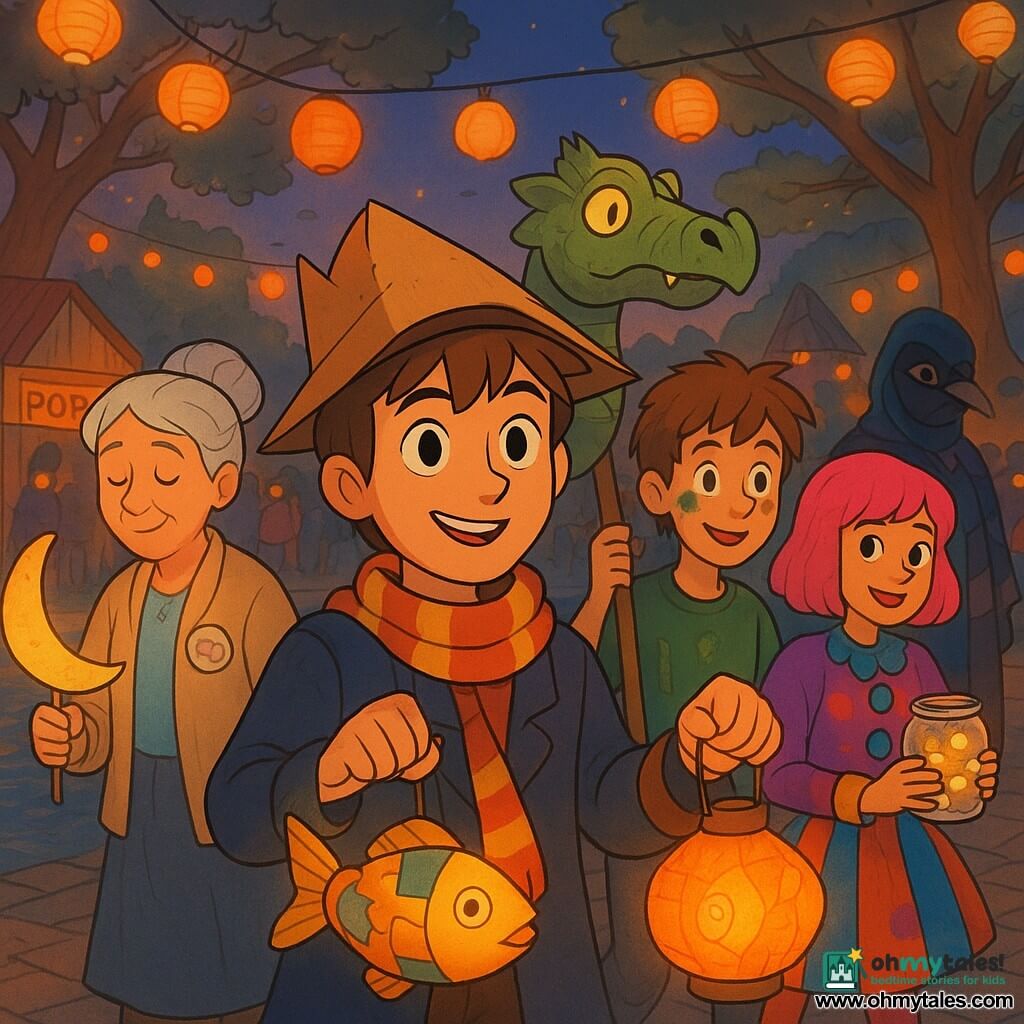
Milo spun around. An elderly woman stood in the doorway, arms crossed. She wore a simple cardigan and a carnival badge that said VOLUNTEER: MRS. DALLOWAY. Her hair was silver and piled into a bun that looked like it meant business.
Milo froze. “I—uh—this shed invited me.”
“It did not,” Mrs. Dalloway said. Then her eyes softened a little. “But you didn't break anything, and you're looking at the lanterns like they're treasure. That's new.”
Milo held up his paper. “I read about the Lantern Parade of Thanks. Was it real?”
Mrs. Dalloway stepped inside and touched one lantern gently, like greeting an old friend. “Oh, it was real. Years ago, people made lanterns and walked through the garden at sunset, singing a little tune. They thanked the park, the neighbors, the volunteers—anyone who'd helped them that year. It was silly and sweet.”
“So why did it stop?” Milo asked.
Mrs. Dalloway sighed. “People got busy. The old organizer moved away. Then the parade became ‘that thing we used to do.' And then it became ‘what thing?'”
Milo looked at the lanterns again. They were too beautiful to sit in a dusty shed forever. “Could we bring it back? Like… today?”
Mrs. Dalloway raised an eyebrow. “Today is rather ambitious.”
Milo's smile showed up, bold as a drumbeat. “Ambitious is my middle name. Actually it's Thomas. But spiritually, it's Ambitious.”
Mrs. Dalloway snorted, which for her counted as a laugh. “If you want the parade, you'll need help. Lanterns need fixing. The tune needs remembering. And people need a reason to join, not just watch.”
“I can do that,” Milo said, then paused. “I mean, I can try. But I'll need… teamwork.”
Mrs. Dalloway nodded toward the lantern shelf. “Start with one lantern. Fix it. Light it. Then convince others it's worth carrying.”
Milo lifted a lantern shaped like a fish. Its tail was crumpled, and the handle was loose.
He whispered to it, “Don't worry. I'm a pirate-magician. Fish are in my job description.”
From outside the shed, the distant carnival music swelled, impatient and bright.
If Milo wanted a forgotten tradition to breathe again, he'd have to move fast—before sunset slipped away.
Chapter 4: Recruiting the Unlikely
Milo carried the fish lantern carefully, like it might swim out of his hands. Mrs. Dalloway marched beside him with a box of supplies: tape, wire, tiny candles, and a stapler that looked like it had seen wars.
“We need people,” Milo said. “People who like helping.”
“Or people who like being part of something,” Mrs. Dalloway replied. “Even if they pretend they don't.”
They approached the craft tent where kids were painting masks and gluing sequins onto cardboard crowns. A boy about Milo's age struggled with a giant papier-mâché dragon head that kept drooping sadly.
Milo leaned in. “Need a hand?”
The boy's eyes were fierce behind smudges of green paint. “It keeps flopping. My dragon looks like it needs a nap.”
Mrs. Dalloway opened her box. “Wire. Tape. Also, emotional support, if required.”
Milo and the boy worked together, bending wire into a sturdy spine and taping it inside the dragon's jaw. The dragon head lifted, proud again.
The boy grinned. “Yes! It's terrifying now. In a friendly way.”
“I'm Milo,” Milo said. “We're bringing back a Lantern Parade of Thanks at sunset.”
The boy blinked. “A what?”
Milo showed the fish lantern. “A parade with lanterns. We walk, we sing, we thank people who helped. It's old-school carnival magic.”
The boy—his badge read: LEO—looked toward the busy carnival. “Will there be attention?”
“There will be glowing fish,” Milo said. “And stars. And moons. Possibly a lantern shaped like a house, which is confusing but impressive.”
Leo nodded, already sold. “I'm in. Dragons and lanterns go together. It's science.”
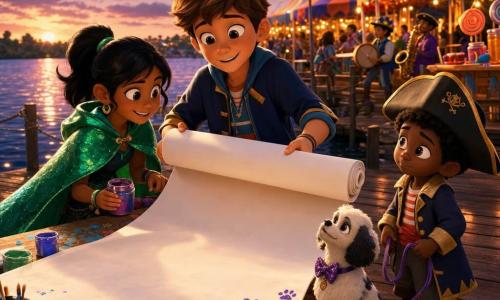
They moved on to the lemonade stall, where a girl in a clown wig was juggling lemons. Some were real. Some might have been rubber. One might have been a potato. Milo didn't want to ask.
“Excuse me,” Milo said when she caught them all without blinking. “We need help fixing lanterns for a parade.”
She set the lemons down and bowed. “I am Zinnia, performer of citrus miracles. What's the parade for?”
“To say thanks,” Milo explained. “For helping, for kindness. For… not letting dragons flop.”
Zinnia's eyes softened. “My grandma says thank-yous are like confetti. You can never have too much.” She pointed at her wig. “Also, I have spare glue.”
They recruited a few more: a shy kid named Noor who was amazing at drawing tiny stars, and twins who could tie knots faster than Milo could think.
As they worked at a picnic table, fixing lanterns and repairing handles, the masked person from earlier appeared, leaning against a tree as if they'd been there the whole time.
“You found the lanterns,” they said.
Milo squinted. “Who are you?”
The masked person tapped their beak. “A friend of forgotten things.”
Leo whispered, “That's a dramatic answer. I respect it.”
Mrs. Dalloway looked the masked person up and down. “If you're here to cause trouble, I have a stapler and I'm not afraid to use it.”
The masked person lifted both hands innocently. “I'm here to remind. The tune—do you know it?”
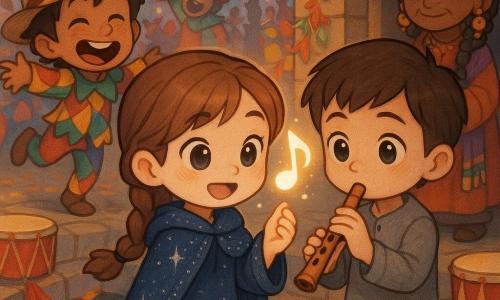
Mrs. Dalloway hummed a few notes, hesitant at first. Then Milo heard it—the same whispering melody that had led him to the shed. It curled through the air like ribbon.
Zinnia joined in with a soft whistle. Noor tapped a rhythm on the table. Leo beatboxed very quietly, because he couldn't help himself.
The melody grew, and it didn't feel old or dusty. It felt like a door opening.
Milo looked at the patched-together team. Helpers. Makers. Fixers. People who said yes.
“Okay,” Milo said, voice bright. “We're doing this. At sunset, we light the lanterns, we walk through the garden, and we thank as loudly as possible without scaring toddlers.”
Leo lifted the dragon head. “The dragon will be gentle.”
Zinnia saluted with a lemon. “Citrus miracles will provide moral support.”
Mrs. Dalloway nodded once, like a queen approving a quest. “Then let's prepare. Sunset won't wait for anyone—not even pirates with spiritual middle names.”
Chapter 5: The Parade Almost Trips
The sky began to turn the color of peach sherbet. Carnival lights flickered on, one by one, as if the park was putting on jewelry for the evening.
Milo's group carried the repaired lanterns to the path that looped around the garden pond. They handed them out to anyone who looked curious.
“Want to be part of a secret-but-not-secret tradition?” Milo asked a couple of parents.
“A tradition?” one parent said, suspicious. “Is it… expensive?”
“Free,” Milo promised. “Costs only one sincere thank-you.”
They joined. More people followed. Kids tugged their siblings closer. A teenager filming a dance challenge lowered her phone and said, “Wait—what's happening?” Then she took a lantern shaped like a star and smiled like she'd discovered a new filter in real life.
Mrs. Dalloway lit the first candle. The lantern glowed, soft and steady.
A breeze swept through the trees.
And suddenly—whoosh—the flame flickered wildly.
Milo's fish lantern shivered in his hands. “Uh-oh.”
One by one, a few candles went out. People murmured. A toddler announced loudly, “THE LIGHTS ARE SAD.”
Mrs. Dalloway frowned at the wind like it was misbehaving on purpose. “This is why I prefer indoor events,” she muttered.
Milo's stomach dropped. The parade couldn't start with a bunch of dark lanterns. That was like a birthday cake with no candles—technically fine, but emotionally tragic.
Noor stepped forward, holding a small jar. “My dad uses these for camping.” She opened it to reveal tiny battery lights.
Zinnia gasped. “Little glow bugs!”
Leo snapped his fingers. “We can mix them. Candles where it's calm, glow bugs where the wind is rude.”
The twins were already tying the lights inside lanterns with their lightning-speed knots.
Milo exhaled. “Teamwork saves the day again.”
The masked person drifted closer. “The parade doesn't need perfect flames,” they said. “It needs people carrying light for each other.”
Milo stared at them. “That's… surprisingly wise for someone wearing a beaked mask.”
“I contain multitudes,” the masked person replied.
With the lanterns glowing again—some candlelit, some softly electric—the group gathered at the start of the path. The pond reflected their colors, turning the water into a moving painting.
Milo stood at the front, fish lantern in hand, dragon head beside him, volunteers behind, and a growing crowd waiting for something to begin.
Mrs. Dalloway cleared her throat. “Well? Are we doing this or standing here forever like decorative statues?”
Milo's smile widened. He lifted his lantern.
“Lantern Parade of Thanks,” he said, loud enough to carry. “Let's go.”
And the garden, like it had been holding its breath all these years, finally let out a happy sigh.
Chapter 6: The Forgotten Tune Finds Its Feet
They walked.
Not marching like soldiers, not shuffling like bored shoppers—walking like a story unfolding. Lanterns swayed, painting warm light across faces. The carnival music softened behind them, as if making space.
Mrs. Dalloway hummed the tune again, steadier now. Milo joined in, and so did Zinnia, whistling harmonies that made the air sparkle. Soon the crowd picked it up: a simple melody, easy to follow, like skipping stones on water.
As they passed the popcorn stall, Milo called out, “Thanks to everyone who set this carnival up!”
The teen scooping popcorn blinked, startled. Then he lifted his scoop like a trophy. “Uh—yeah. You're welcome!”
People laughed. The laughter didn't break the magic—it stitched it tighter.
At the face-painting table, the tiger-striped girl roared again, but softer. Milo said, “Thanks for making everyone look awesome.”
The tiger's mom winked. “Thanks for reminding us to say thanks.”
They circled the pond. Lantern reflections swam alongside them, a second parade under the water.
Milo spotted Dad near a bench, holding two hot chocolates and trying not to look like he'd been saving the day with snacks on purpose.
Dad called, “There's my explorer!”
Milo jogged over for a second, lantern bobbing. “You're coming, right?”
Dad lifted a chocolate in salute. “I was waiting to be officially invited by a pirate-magician.”
“You're invited,” Milo said. “Also, thank you for driving me here and not asking too many questions about my wardrobe choices.”
Dad laughed and fell into step beside him. “You're welcome. That hat is a brave decision.”
As the parade continued, people started thanking each other without being asked.
“Thanks for sharing your glue,” someone told Zinnia.
“Thanks for fixing my dragon,” Leo told Milo, and then added, “Also thanks for not laughing when it flopped.”
“I laughed a little,” Milo admitted.
“That's fair,” Leo said solemnly.
Near the oldest chestnut tree, Mrs. Dalloway stopped. Her lantern—shaped like a small moon—glowed against her cardigan.
“This is where we used to finish,” she said quietly.
The crowd gathered, forming a circle. The lanterns lit everyone's hands, their sleeves, their costumes. Even the trees seemed to lean in to listen.
Milo took a breath. “I wanted to find a forgotten tradition,” he said. “But I think… it wasn't lost. It was just waiting for someone to pick it up.”
Noor nodded. “Like a dropped song.”
Zinnia held up her lantern and said, “Thanks for helping each other today. Even when the wind tried to be a villain.”
The crowd chuckled.
Mrs. Dalloway looked at Milo. For a moment, her stern volunteer face softened into something bright. “Thank you,” she said, “for being curious. And for bringing people together.”
Milo felt warm all the way to his ears. “Thank you for keeping the lanterns safe,” he replied.
The tune rose again, hummed and whistled and sung in different voices, all of them fitting together. It wasn't perfect. It was better than perfect. It was real.
The masked person stood at the edge of the circle. Milo caught their eye.
“Are you going to take off the mask now?” Milo asked.
The masked person leaned closer. “Traditions like a little mystery,” they said. “But you don't need me. You've got them.”
Then, with a swirl of patchwork cloak and the faint scent of oranges, they slipped away into the lantern-lit crowd, impossible to follow.
Milo watched for a second, then turned back to the circle of faces.
The forgotten tradition wasn't a secret anymore.
It was a shared light.
Chapter 7: Warm Goodbyes and Glowing Pockets
The parade slowly untangled. People returned lanterns to Mrs. Dalloway's careful hands, or carried them to the shed with promises to help next year.
“Next year,” Leo repeated, eyes wide as if he'd just spotted the future. “We're doing it again.”
“We are,” Milo said. “With better wind plans.”
Zinnia tossed a lemon in the air and caught it. “I'll bring emergency glow bugs.”
Noor tucked a tiny paper star into Milo's palm. “For luck,” she said. “And in case you forget how today felt.”
Milo closed his fingers around it. The star was small but sharp-edged with careful folds, like someone had made bravery out of paper.
Dad squeezed Milo's shoulder. “Ready to go, explorer?”
Milo looked back at the garden. The carnival still buzzed—music, laughter, rides spinning like bright coins in the air. But in the corner near the old trees, the path still seemed to glow with leftover thank-yous.
Mrs. Dalloway locked the shed and tucked a key into her pocket. “Good work,” she told Milo, as if she were awarding him an invisible medal. “And thank you.”
Milo's smile, tired now but still shining, answered first. “Thank you too.”
He waved at Leo, at Zinnia, at Noor, at the twins, at the volunteers, at the families still drifting through the lights.
“Goodbye!” Milo called. “See you next carnival!”
“Goodbye!” they echoed, warm and loud, a chorus that bounced off the trees and into the evening.
As Milo and Dad walked toward the gate, Milo felt the paper star in his pocket and the tune in his head.
Behind him, the public garden kept humming—like it had finally remembered the words.