The Map That Sighed
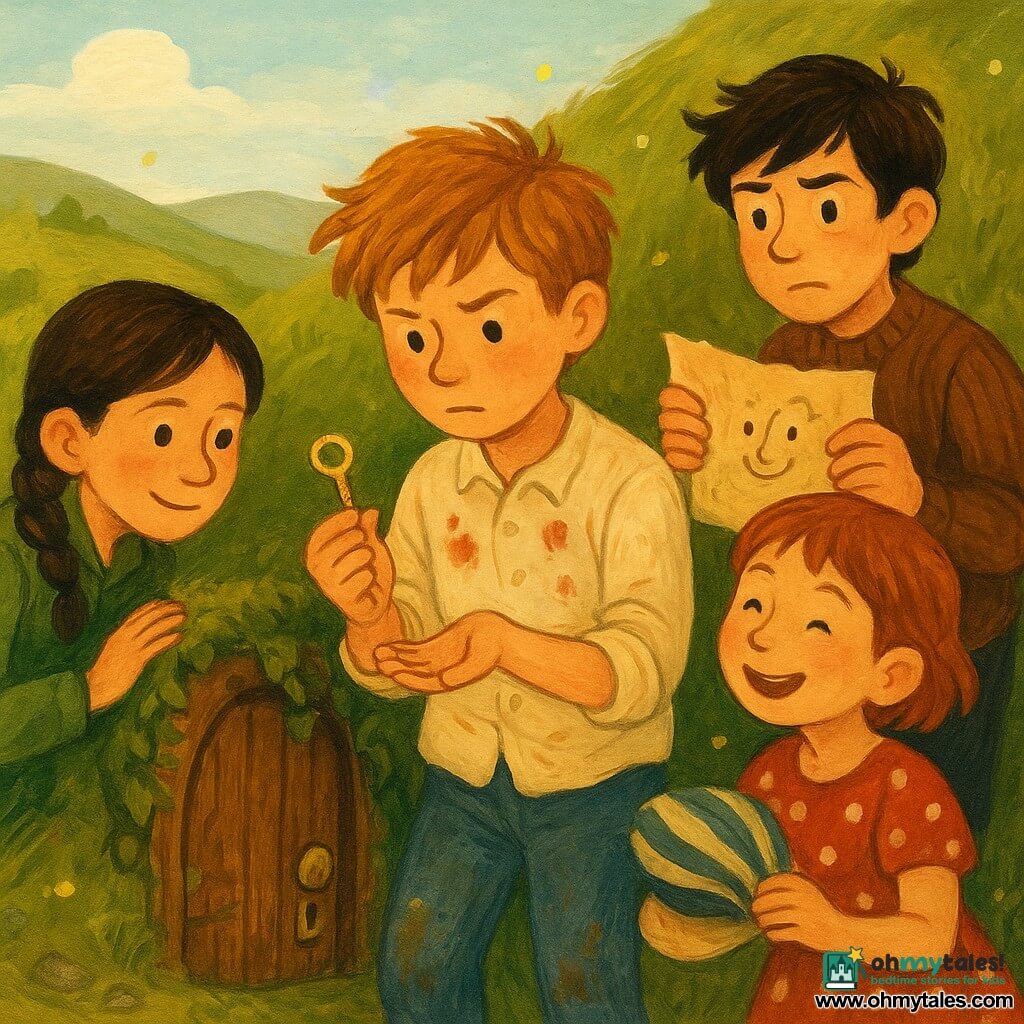
"Listen," said Pip, tapping a scribble on the paper until the map sighed back. The map belonged to four friends and it had mood swings. Sometimes it blushed. Today it sighed because a key had been lost and the wind had started telling jokes it shouldn't.
"There," said Maia, poking a hill that looked like a sleeping cat. "Under the Cat Hill. The Brise Key waits."
"A key for a breeze?" muttered Jory. He had a worried nose that wrinkled whenever trouble smelled like laundry. "Or a key that breaks things? Brise sounds dangerous."
"It opens a small door," said Lila, who loved small doors. "A tiny door opens to a gentle wind. It keeps the town's umbrellas from flying away during market day."
Pip grinned. "Then we must turn the key. Adventure before supper."
They set off with pockets full of jam sandwiches, a rope that pretended to be serious, and a sense of duty that would not be denied. The path to Cat Hill was littered with sensible stones and odd socks. A stray breeze tried to tie Maia's shoelaces into knots. The map hummed and produced a tiny bell sound whenever they took a wrong route.
"Wrong," it said when Jory headed toward the pond instead of the hill. "Pond is for thinking, not for key-finding."
They reached a hollow beneath the hill where a door no bigger than a breadbox sat in the grass. It wore ivy like a beard and looked amused.
"Hello," said Lila, bending low. "We have a key. We just need to turn it."
The keyhole winked. "You must do three things first," it said in an echo that smelled of mint. "Find the feather that forgot its way. Make a lost hat remember its owner. And give up something that makes you laugh."
"That last one is unfair," Pip declared. "My laugh is priceless."
"Then your laugh will be valued very highly," said the keyhole.
Maia smirked. "We can do that."
They discovered the feather stuck up a tree like a note on a pinboard. It was the size of a knitting needle and dusty with clouds. Jory climbed with careful feet. He hit his elbow, remembered a joke he'd almost told, and laughed. His giggle shook the feather loose. It floated down like a comma and landed in Lila's hands.
"Next," said the keyhole.
A hat sat at the foot of the hill, forlorn and full of yesterday's rain. It was striped and looked like it had once attended a parade. The hat wouldn't talk until Maia hummed the tune of the town bell. When she did, the hat sniffed and remembered a tall woman who sold lanterns. The hat rolled delightedly toward Lila, who bowed and lifted it like a sunlit loaf.
"Now the last thing," the keyhole whispered.
Pip thought. He could not give up his laugh. It lived in his ribs and made his cheeks tingle. But when he looked at the hat remembering and the feather fluttering, he saw how pleased the town of Windford might be if their umbrellas stayed put. He thought of Mrs. Bramley, whose grocery stall often lost apples to rogue gusts. He thought of Jory's careful nose, which worried about strong winds. Pip pressed his hand to his chest.
"I will," he said, and let out the smallest of giggles. It was a brave, honest chortle. The keyhole drank it like tea and brightened.
The little door opened with a sigh of satisfied wood. Inside was a pedestal and, on the pedestal, the Brise Key. It looked like a key made by a playful clock: gears smiling, a handle that could have been a spoon, and teeth shaped like tiny waves.
"Careful," said the map. "Keys can be ticklish."
They took the key together, like an argument and a promise rolled into one. They had done it. They had found the Brise Key.
The Post Office of Mismatched Letters
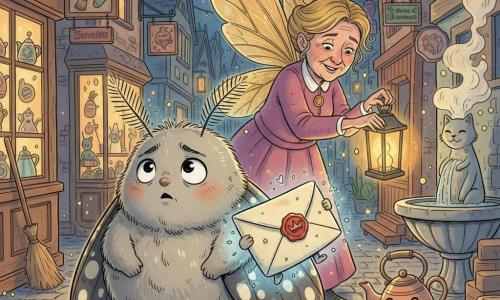
On the way home, a stack of letters puffed into the path. They had escaped from the Post Office of Mismatched Letters because the sorting hat had sneezed. Each envelope carried a stamp with a crooked face.
"Help us," said a purple letter. "We're lost. We were meant for the lighthouse, but our handwriting says 'cabbage' instead of 'cottage.'"
"We must sort them," Jory said, now a respectable sorter of problems. "A breeze could blow them into the river."
Pip held the key like a compass and listened. The Brise Key hummed softly. It liked rhymes. Lila had the idea: use the key to whisper a little wind to put the letters back where they belonged.
They used the rope to make a gentle pulley. Maia sang the town bell tune again. Jory arranged letters by how they smelled, which was a useful trick for small towns. Lila guided the wind with the Brise Key like a conductor guiding a spoonful of soup.
"Careful," warned the map. "Do not let the key whistle."
But the key loved to whistle, and it did, making the letters do a polite little dance. One letter leapt into the lighthouse window, another tipped into the baker's flour bin (where it declared itself quite comfortable), and a cottage-bound letter bounced onto Mrs. Bramley's shelf beside a jar of pickles.
A child by the river clapped. A letter found an owner and began to purr. The friends felt a glow that was not only from the key. It came from helping and the secret pleasure of returning things to their proper places.
"See?" Maia said. "Small magic. Big kindness."
The key hummed, pleased. It liked being useful.
The Argument with a Turntable of Weather
Night fell like a cat stretching. A tiny stage in the square was being set up for the Market's Closing Play. Someone had borrowed a weather turntable from the old theatre — a big wheel that could summon fog, drizzle, or a polite moonlight. It had been left with the dial on "Mischief."
"No one should leave weather on Mischief," said Lila. "It tends to wink."
And wink it did. A drizzle began to tickle the performers' noses. A polite moonlight flashed in and then out like a shy frog. Umbrellas stood on their handles, protesting.
"We must set the dial to 'Gentle Breeze,'" Jory announced. "Otherwise the finale will be ruined."
Pip held the Brise Key up to the turntable. The key clicked against the paint. It liked turning things. The turntable argued back.
"Why should a little key decide?" the turntable grumbled. "I have been spinning weather for a long time."
"Because a key asked nicely," said the key. Pip asked, because Pip was good at asking.
"Turn," whispered Maia. "Just a little twist."
Pip put both hands on the key and turned. The turntable pushed back with a wind that smelled of socks and lemons. For a moment the clouds tried to perform a comic duet. Then the key's teeth met the turntable's grooves, and something kind happened: the weather slowed, like a dancer remembering the steps, and chose to be gentle.
"Thank you," said the turntable in a voice softer than creaking floorboards.
The square filled with a breeze that brushed hair like book pages. The performers bowed, the audience laughed, and a hat that had once been lost performed a small cartwheel.
Pip felt the key vibrate — not from power, but from happiness.
The Turning and the Curtain
At last the moment to turn the Brise Key properly had come. The tiny door beneath Cat Hill needed only a twist so mild the grass wouldn't notice. They returned on tiptoe, the map humming a lullaby.
"Are you ready?" Maia asked.
Pip looked at his friends. Lila was smiling like a sunbeam; Jory had crumbs on his shirt from something noble; Maia had mud smoothed into patterns on her knees. They had given up things — sandwiches eaten, a laugh tucked away — but they had gained something too: the shining look of work done together.
He put the key into the lock. It fit as if it had been waiting its whole life for that moment. Pip turned.
The key turned and turned, as if turning could tell a joke that made the world giggle. Winds woke, politely. A breeze unbuttoned a sleepy skylight. Curtains in window boxes fluttered applause. The town sighed in relief. Umbrellas snapped open calmly and returned to their stands like obedient dancers.
"That did more than stop umbrellas," Jory noted. "It made everyone breathe easier."
"And the key?" Lila asked.
The Brise Key slipped from the lock and landed in Pip's palm. It was warm and smelled faintly of lemon meringue.
"Keep it safe," said the map, voice small and proud. "Or at least don't feed it after midnight."
They agreed to put the key in a place where it could be borrowed when needed. They made a tiny box out of leftover theatre props and covered it with stickers that said KIND and PLEASE and a picture of a small cat.
A theatre director (who had been listening from behind a lamppost) took notice. "Bravo," she said, and offered the children a place in the Market's Closing Play as honorary stagehands.
They accepted. Pip tucked the Brise Key into the box, closed the lid, and handed it to the director for safekeeping. She winked and promised to guard it with a watchful scarf.
The square filled with cheers. People whose hair had been worrying about the wind hugged each other, and Mrs. Bramley gave Pip a jar of jam as thanks, because jam is praise you can eat.
On the little stage, the play's curtains — bright, slightly theatrical, and very pleased — were drawn for the final bow. The children took hands. Pip felt the smallest tug on his chest where his laugh had been kept. It bubbled up like a secret and escaped as a giggle. Everyone laughed with him. It was a shared sound, like a bell in the middle of town.
The director bowed. The audience clapped. The friends curtsied and waved. Light from the market lanterns twinkled like a crowd of small stars.
Behind them, the sky dropped a cloth of dusk over the world. It fell neat and tidy, like a blanket. And finally, with a polite little flourish, a heavy velvet curtain slid across the stage and closed.