Recess Questions
Ben padded back into the classroom with grass on his knees and a small cloud of dust on his sneakers. The bell had rung, laughter still hanging in the doorway like birds. He dropped his backpack by his desk and watched as Ms. Ortiz shuffled markers and a stack of picture books on the teacher's table.
"Did you have fun?" she asked, smiling up at him.
"Kind of," Ben said. He shrugged, his voice soft. "I played football, but Mia wanted to be the goalie. Some kids laughed."
Ms. Ortiz knelt down so her eyes were level with his. "What did you think about that?"
Ben chewed his lip. He liked Mia—she ran faster than anyone in their class and could kick hard. When she grabbed the goalie gloves, some boys made jokes. It didn't feel right. "I asked if she wanted to, and she said yes. But they said girls can't be goalies. Is that true?"
Ms. Ortiz stayed quiet for a beat, letting him feel okay about asking. That small pause was a warm blanket. "What do you think?"
Ben thought of Mia diving, her hair flying, of the laugh that followed when she saved a shot. "I think it's silly. People can do things if they want to. And some kids don't get to finish talking."
"There are lots of ways to be brave," Ms. Ortiz said. "Asking a question is one of them."
That answer made Ben feel lighter. He had more questions, not about science or math but about who gets to try what, and why some voices were louder. "Can we talk about it?" he asked.
"Of course," she said. "We can make space for questions. After the bell, we'll have a calm-down circle. You can help lead it."
Ben's heart did a surprised little jump. Leading? He swallowed his nerves and nodded. "Okay."
The Quiet Circle
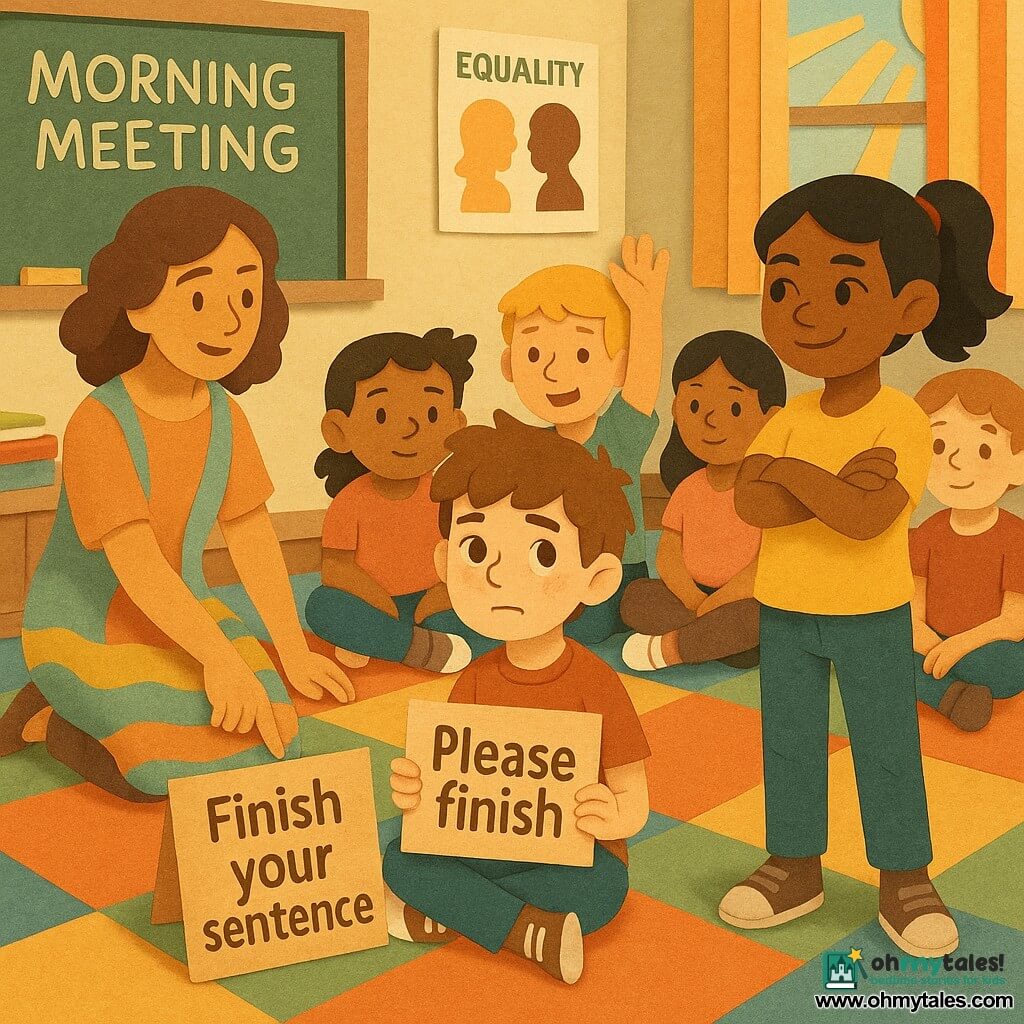
After recess, the class settled on the reading carpet. The summer sun painted bright squares on the floor. Ms. Ortiz sat cross-legged and patted the middle of the circle. "Today, we'll have a speaking time," she said. "A place where everyone can share without being interrupted."
Ben felt his palms get a tiny bit sweaty. He had written some notes on the back of his hand: listen, be kind, ask questions. He held them like a promise.
Maya, who often whispered stories into other kids' ears, went first. "I like dinosaurs," she said quickly. "But sometimes boys say it's a boys' thing."
"I love dinosaurs too!" invited Ben, smiling. He wanted to make space for both.
Then Luca, usually the loudest, raised his hand. His cousin had told him that girls shouldn't play with certain toys. "But my mom says everyone can like anything," he confessed, looking surprised at his own words. "I think my cousin was wrong."
Ben listened. When it was his turn, his voice trembled, then steadied. "When Mia wanted to be goalie, some kids laughed. She wanted to try, and I think she should be allowed."
There was a hush. Tommy, who had teased Mia, fidgeted. Ben kept going. "And sometimes people get cut off when they talk. It happens to some friends. I want to help make sure everyone gets to finish."
Ms. Ortiz nodded like she was tucking his words into a safe place. "This is about respect," she said. "About giving others the same chance to speak and to try."
"How do we do that?" asked Aisha, folding her legs.
Ben thought of a whistle that referees used during games. He pictured a list on the board. "We could have a talking stick," he said. "Or a timer. Or someone who listens and says 'wait' if someone interrupts."
Maya's eyes lit up. "What if we have a 'finish your sentence' rule? If someone starts talking, you let them finish their thought."
"Yes," Luca agreed. "And if you interrupt, you practice saying 'sorry, please finish.'"
Ms. Ortiz wrote the ideas on the whiteboard. She asked the class to pick two rules to try for the rest of the week. The room buzzed with ideas that didn't sound like rules at all—more like games they'd invented together.
Ben felt proud and shy at the same time. It was strange and good to help make something that kept everyone safer.
Practice and Trouble
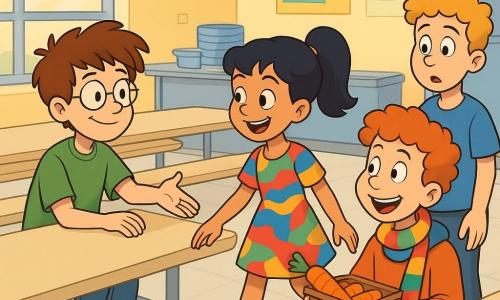
The next day, at lunch, a new challenge arrived in the shape of a debate about whether superheroes needed capes. "Capes are cool," said Jason, swinging his tray.
"Capeless heroes are practical," countered Mia, her eyes serious as she carefully ate a slice of pizza. "They don't get stuck."
Ben remembered the talk circle and the rules on the board. A chorus of interruptions started. Before anyone could talk over her, Mia raised her hand. Ben caught Ms. Ortiz's eye and gave a tiny nod. Ms. Ortiz came to lean against the sink, watching.
"Can I share?" said Mia when Ms. Ortiz gestured. "Some heroes are caped, some aren't. I like both. My favorite is a firefighter—no cape—but brave."
Tommy opened his mouth, then closed it. He moved his lips like he was practicing. "I always thought heroes are like comic books," he admitted, surprising himself. "But my uncle helps at the animal shelter and that's heroic."
Ben felt the air shift. People were naming real things—teachers helping with projects, kids learning to be kind. It wasn't a battle between what boys and girls should like. It was stories of people doing things that helped others.
At recess, Ben practiced the "finish your sentence" rule with his friends. When two classmates started talking at once about the same toy truck, Ben said softly, "One at a time. Finish your sentence, then you can both share."
They rolled their eyes playfully but followed the rule. The sound of their agreement made Ben grin. Rules could be small and still lift a room.
When an Adult Listens
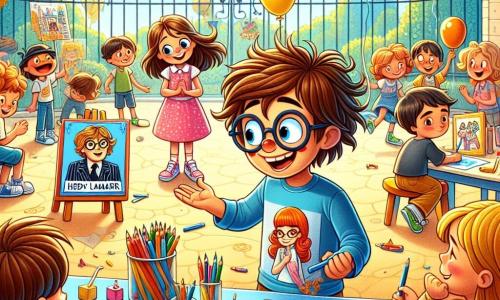
One afternoon, the class was making posters about heroes for the school's hallway. Ms. Ortiz brought out big sheets of paper and brushes. Ben painted a big blue sky and wrote, "Heroes Help." Next to him, Aisha drew a scientist with a magnifying glass. Beside her, Luca painted a baker with flour on his cheek.
During the quiet painting, the principal, Mr. Lee, dropped in to check the posters. He looked at the class, then sat down on the floor like he had a secret to tell.
"You all look busy," he said. "I'm making a list of heroes in our town. Can you help me?"
Hands shot up. Ben raised his too, and when Mr. Lee pointed, he said, "My hero is Mia—she's brave. And Luca is a hero when he helps his sister."
Mr. Lee listened slowly, nodding. He listened to every suggestion, including Tommy's shy mention of his uncle. He asked questions that made the kids explain why the people mattered. "What did they do that helped someone?" he would ask.
It was like watching a pot simmer to a perfect bubble. When an adult asked follow-up questions, it made the stories grow bigger and stronger. Ben noticed how the kids perked up; their listening grew. After Mr. Lee left, Ms. Ortiz said, "That's why asking and listening matter. It shows respect."
Ben remembered when she had knelt down to him after recess, letting him ask his questions. That moment had felt like permission. When others listened like that, they were saying permission to everyone.
New Heroes
At the hallway display, the posters formed a garden of heroes: Mrs. Patel from the bakery who tutored kids after school, Javier who coached the girls' basketball team, and Keisha, a firefighter who loved to read to small children. There was a picture of a costumed hero with a cape, and beside it, a librarian with a tool belt who fixed chairs and gave good advice.
Ben walked along the line of posters with Mia and Luca. "I like the librarian," Mia said. "I didn't know fixers could be heroes."
"Heroes can be anyone," Ben said. "Even friends who help you finish your sentence." He laughed, and they joined in.
That evening, Ms. Ortiz asked the class to write a short sentence about who their hero was and why. Ben wrote, "My hero is someone who lets others speak and tries new things." He drew a small picture of a circle with many voices inside.
The next day, the principal announced during assembly that the school would start a monthly "Listening Hour" where students could share things important to them. He quoted ideas that had come from the class: "Finish your sentence," "Respect," and "All kids can try anything they want."
Ben's stomach buzzed. He felt proud that a tiny idea—his idea—had grown into a school moment. But more than pride, he felt hopeful. The world around him seemed a little kinder, like a sweater that had been patched where it was thin.
Learning to Be Brave Together
Months passed. The rules held up most days and bent on others. Sometimes, someone forgot and interrupted. But the class had practices: gentle reminders, a "please finish" card, and, when needed, a calm chat after school where kids said what they felt. Each time, the listening grew easier.
One rainy afternoon, the class played an indoor game to decide roles for a drama project. The usual jokes started when a girl picked the role of the astronaut and a boy asked if he could be the nurse character. For a moment, old habits clicked like a loose lock. Then Ben remembered the circle, the posters, and the principal who had listened. He stepped forward.
"Let's try this rule," he said. The class quieted. "When someone chooses a role, we say 'brave choice' instead of 'that's weird.'"
Maya grinned. "Brave choice," she echoed, then the whole class echoed it back like a little cheer. The game flowed. People giggled, picked costumes, and, most importantly, tried roles they'd thought weren't for them.
At the end of the session, Ms. Ortiz asked Ben to say a few words about listening and roles. He stood, a little taller, and told the class how asking the right questions had helped him understand things he didn't know. He spoke about fairness, about letting Mia be goalie, about people who help in small ways. The room listened.
As he sat down, Mia bumped his shoulder with a happy nudge. "Thanks," she mouthed.
On the last page of his notebook that year, Ben wrote, "Heroes: people who help, listen, and let everyone try." He drew the class circle with lots of different colors inside. The drawing looked like a bright lunchbox of ideas—practical, messy, cheerful.
Before the bell, Ms. Ortiz tucked a small sticker on Ben's shirt that had a picture of a tiny superhero cape and the words "Brave Listener." He smiled. It wasn't a cape, and he liked that. It was a promise he could wear without worrying it would get stuck.
Walking home, Ben watched kids on the pavement. Some were racing, some carrying paint, some talking about their day. He thought about heroes and choices and how his questions had led to a small, warm change. He felt grateful for the adults who had listened—not fixing everything, but hearing what he said and letting him help shape the answer.
That night, Ben washed his hands and put his notebook on his bedside table. He turned off the lamp and, in the soft dark, whispered to himself, "You can be whoever you want to be." The words felt like a blanket. Outside, his house hummed with quiet. Inside, he felt ready for tomorrow—ready to listen, ready to speak, ready to be brave with friends by his side.