Chapter 1: Morning Plans
The sun slipped between curtains like a shy cat. Milo woke with a promise in his chest and a small list folded in his pocket. It was Mother's Day, and his mother liked ordinary things made special: crooked drawings, warm toast with a smile, and loud, messy songs in the kitchen. Milo was ten and poetic in a simple way—he noticed the way steam drew little clouds above mugs and how his mother's laugh sounded like a bell.
He tiptoed down the stairs carrying the folded list. "Be kind. Be brave. Be silly," he read, adding, "Make a blanket picnic. Visit the café. Give a hug." The house smelled of coffee and clean sheets. His mother hummed while watering the plant that always leaned toward her, like it wanted to listen better.
Milo put on his best socks—one with tiny stars, the other with a moon that winked—and went to the closet. He chose a big, soft blanket: blue, with tiny stitches that looked like waves. He folded it carefully, like wrapping a secret. Today it would be a stage for surprises.
"Morning, sleepy poet," his mother said, smiling. Her hair was in a loose bun, and her eyes had morning crinkles Milo thought were beautiful. He handed her a crooked drawing of a sun with six rays.
"Happy Mother's Day," he said. "First surprise: breakfast in bed?" He tried to sound casual, but his chest felt like a drum.
His mother's face lit up. "Only if you promise not to spill jam on your socks."
Milo grinned, and the day began.
Chapter 2: The Blanket
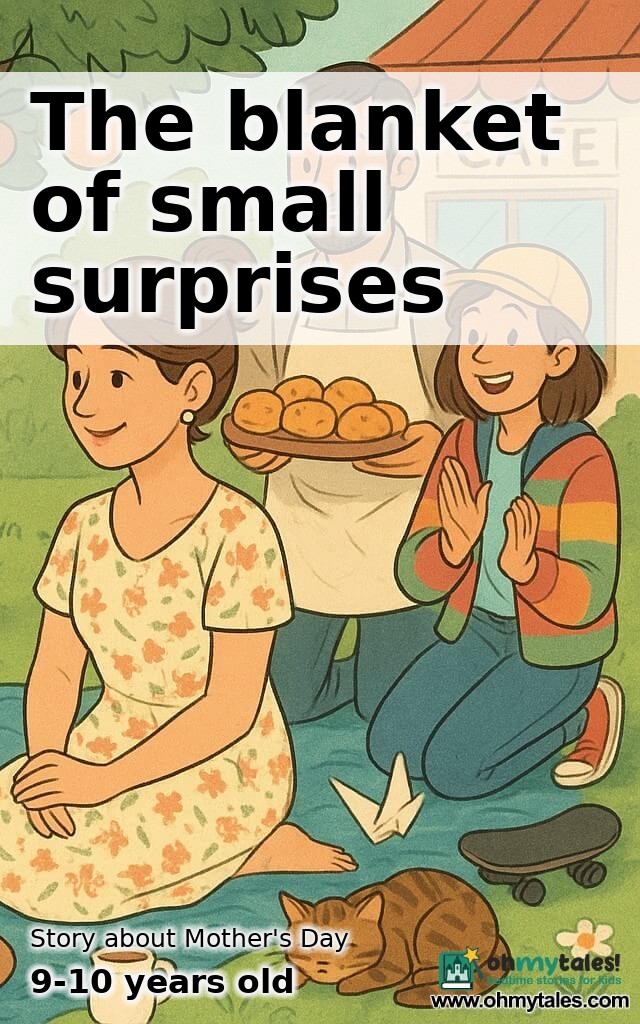
After a breakfast full of giggles and spilled jam (only a little on the table), Milo carried the blanket outside. The garden was still cool, and the neighbour's cat, Miette, trotted over to inspect. Milo spread the blanket under the old apple tree. It landed with a satisfying puff, like a small cloud had decided to nap there.
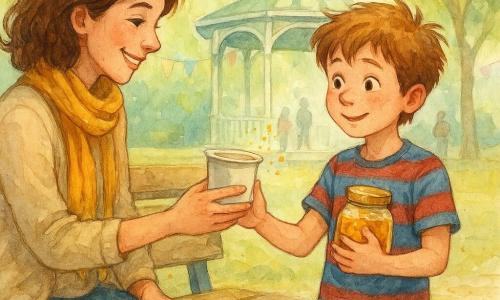
"This is perfect," his mother said, settling down. Milo put little things on the blanket: a plastic vase with daisy-like flowers, a mason jar of warm milk, and a paper crown he had folded. He arranged them like a treasure map.
They lay side by side, looking up through the apple branches. Leaves made shadow patterns on the blanket—a moving mosaic. Milo told her a poem he'd made on the way to the garden, lines that rhymed because that felt safer.
"Your words are cozy," his mother said, and hugged him so he could hear her heartbeat. "You always know how to bring stories to life."
Milo beamed. He loved seeing the world find his small arrangements as gentle celebrations. He had arranged seats for people who might join: an extra cushion, a homemade badge that said 'Guest of Honour', and an empty cup waiting to be filled.
They read together, passing jokes between a chapter and the next, until the sun moved and the day sighed warmer. Milo tapped his chin with a finger. There were more surprises to find.
Chapter 3: The Neighborhood Café
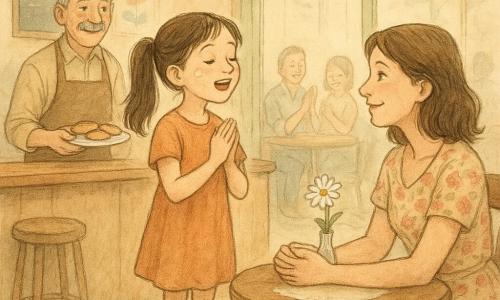
Milo and his mother walked to the corner café, a place with mismatched chairs and window paints that always looked like someone had been humming while they brushed. The bell above the door jingled with a friendly clatter. Inside, the air smelled of cinnamon and roasted beans. A tapestry of pots and postcards hung on the wall.
"Hello, Mr. Patel!" Milo called. Mr. Patel wiped his hands on his apron and bowed like a magician. "Two hot chocolates and one scone, please," Milo said, because some things felt fancier in a café.
They sat at a round table with a chipped edge that had probably been loved to bits. Around them, the café flowed with life: an old man teaching a child to fold paper cranes, a woman sketching a cat that looked too proud to be real, and a girl with a skateboard tapping a beat with her spoon.
Milo noticed how everyone smiled when he and his mother walked in; the café was a little family of its own. He slid the extra cushion onto a chair and set the paper crown on top. He took out a small jar of doodles—little notes he had scribbled earlier that morning: "You are brave," "You make sunshine," "Thank you." He left them around the table like tiny treasures.
"Do you want to give one to someone?" his mother asked, eyes twinkling.
Milo nodded. He handed a note to the old man making cranes. The old man read it, his eyes softening, and then he made a crane and placed it on the napkin holder. A woman at the next table got a note and offered Milo a slice of her lemon tart. Mr. Patel winked and wrote "for Milo's mom" on a napkin, folding it into a heart.
The café hummed with small kindnesses. Milo felt as if the room had expanded to include everyone's smiles. Solidarity was in the air—people sharing warmth, pastries, and a willingness to make someone's day brighter.
Chapter 4: Little Performances
Outside the café window, the world carried on, but inside, something light and joy-filled grew. Milo stood up on a chair—carefully—and performed a short, dramatic reading of his poem about a heroic sock and a moon that winked. His mother cheered, clapping loudly. The paper crane man pretended to nap dramatically. The skateboard girl joined in with a drumbeat on the table that sounded like rain on a tin roof.
Milo's performance was not perfect; he stumbled on one rhyme and then made a face that made everyone laugh. Laughter bounced around the café like soft balls. A small girl leaned over and whispered, "Your poem made my cat happy." Milo felt like a balloon filling with warm air.
They collected a few more surprise smiles and left with a small bag of scones wrapped in a napkin, tucked like a prize. Outside, they saw neighbors arranging a pop-up bench for people to sit and talk. A woman was pinning paper hearts to a lamp post. Milo added a doodle heart to the bunch.
"It looks like the whole street is joining in," Milo said.
His mother squeezed his hand. "Love spreads faster when it's shared," she said, and Milo nodded as if he had discovered something true about stars and spoons.
Chapter 5: The Big Hug
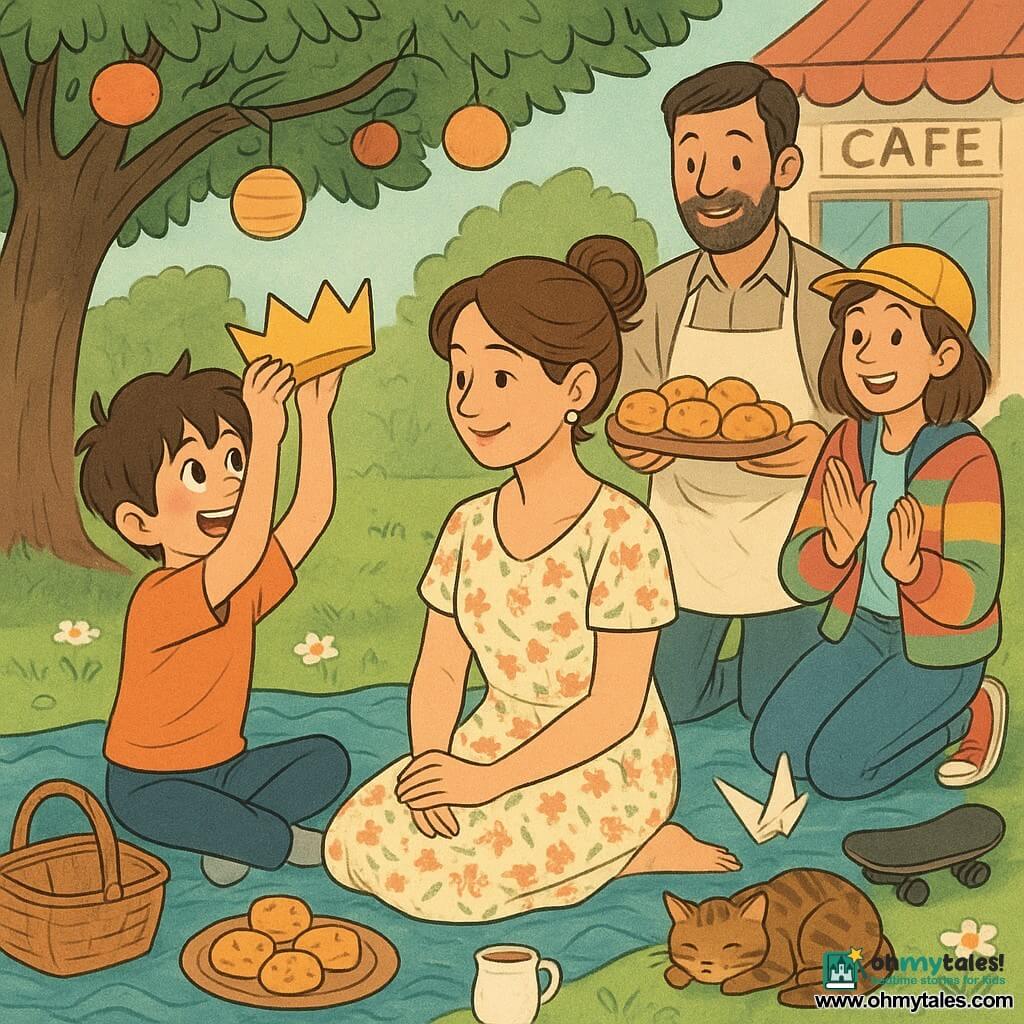
Back in the garden, the blanket waiting like a faithful friend, Milo's mother sat down and patted the space beside her. They invited Mr. Patel and the crane man, the skateboard girl, and a few neighbors who had wandered by. Miette the cat curled up at the edge. Everyone settled in, forming a gentle circle.
Milo looked at each face—some smudged with flour, some with paint, some with sunburn—and felt the day bloom inside him. He read one last poem, quiet and a little proud. Then he took the paper crown, placed it on his mother's head, and said, "Queen of Small Surprises."
It was time for the hug. They leaned in like a puzzle closing its final piece. Arms wrapped around shoulders, backs, and tiny hands. Mr. Patel's apron smelled of cinnamon; the skateboard girl's jacket smelled like fresh paint; the crane man smelled like soap and stories. Milo felt safe and enormous at the same time.
The hug lasted a long moment—long enough for the blanket to fold itself into warmth, for the apple tree to drop a brave petal, and for something gentle to settle into everyone's chest. Someone hummed. Someone else started a soft chorus, and the sound wrapped them tighter than any knot.
When they let go, faces were glowy and a little wet at the corners. Milo's mother put her arm around him and whispered, "Thank you for today."
"No," Milo whispered back. "Thank you for everything."
They all stayed on the blanket, sharing scones and notes and stories until the sun lowered and the first lantern was lit. The neighborhood café had given them treats, the street had pinched itself with little hearts, and Milo had learned that a simple blanket and a few brave words could gather people together, stitching them into a warm, bright patchwork of care.
As the evening hummed toward home, Milo folded the blanket slowly and carefully, like he had a map of the day tucked inside. He carried it back into the house, and, as if on cue, everyone gathered for one more big, collective hug—soft, messy, and perfectly ordinary.
It was the best kind of ending: full of small, radiant things that meant, without saying too much, I love you.