Chapter 1: The Plan
Maya woke up with a song on her lips. The tune had been growing for days, a soft ribbon of notes that tied itself to the idea of Mother's Day. At ten years old, she knew how important small things could be. A daisy in a jar could look like a parade; a scribbled card could sound like a symphony. She padded across the kitchen in socks that slid a little on the tiles and found her mother at the table, reading the newspaper with a mug like a warm moon in her hands.
Maya hummed through her plan. "Today is a day for surprises," she announced before her mother could sip her tea.
Her mother smiled, the kind of smile that makes the corners of your cheeks do a little dance. "What kind of surprises?"
"The kind that start with breakfast and end with a curtain call," Maya said, beaming. She loved the way that sounded, dramatic and sweet. She had written a list the night before: pancakes, a hand-painted placemat, the song she had been practicing, and—most importantly—time.
She made the pancakes with careful clumsiness. Flour puffed into the air like tiny clouds whenever she whisked, and she sang softly so the batter would believe it was being celebrated. By the time her mother tasted the first bite, the kitchen smelled like a cozy bakery and the table was a little festival: mismatched plates, a vase with a single daisy, and a placemat painted with happy colors and the words "For You" in wobbly letters.
"Thank you, my singer," her mother said, and Maya felt her heart warm like butter in the sun.
Chapter 2: The Gift
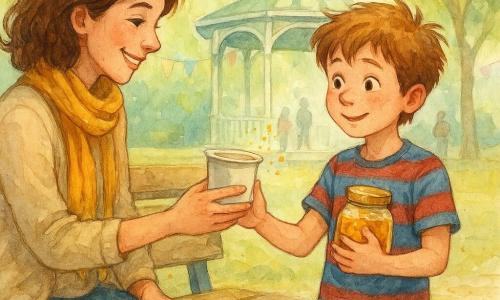
After breakfast, Maya set out to make a gift more special than the usual store-bought ribbon. She wanted something that said, "I notice you, I love you," in the little language of shared moments. She filled a jar with folded notes—twenty-four small papers, each one a memory or a promise. "A hug on rainy days," one read. "Help with the dishes when you're tired," said another. She added tickets for two: one for a park picnic and one for a quiet afternoon reading together.
As the jar filled, Maya sang a little tune between every fold. Her voice bent the air in a playful way, and the notes made the chair legs hum faintly. Her persistence showed in the neat folds and in the care she took to write even the smallest promises.
When the jar was ready, Maya wrapped it in tissue and placed it on the table. Her mother opened it with an expression that was both surprised and soft, like sunlight through a watercolor. They read the notes together, laughing at some memories—like the time the dog stole their socks—and then growing quiet at the sweeter ones. Maya felt proud, not because the jar was fancy, but because it was full of things that mattered.
"I'll keep one for every month," her mother said. "We'll open them together."
Maya put a finger to her lips. "No peeking before the picnic," she whispered. Her mother nodded, and the secret felt like a small, warm pebble they passed between them.
Chapter 3: The Café Detour
Midday found them walking to the little neighborhood café, a place with bell chimes and chairs that leaned in like old friends. Maya liked the café for its soft cushions and the way it smelled of cinnamon and stories. She had practiced part of her song in the corner booth the week before, testing how the notes rolled off the windows.
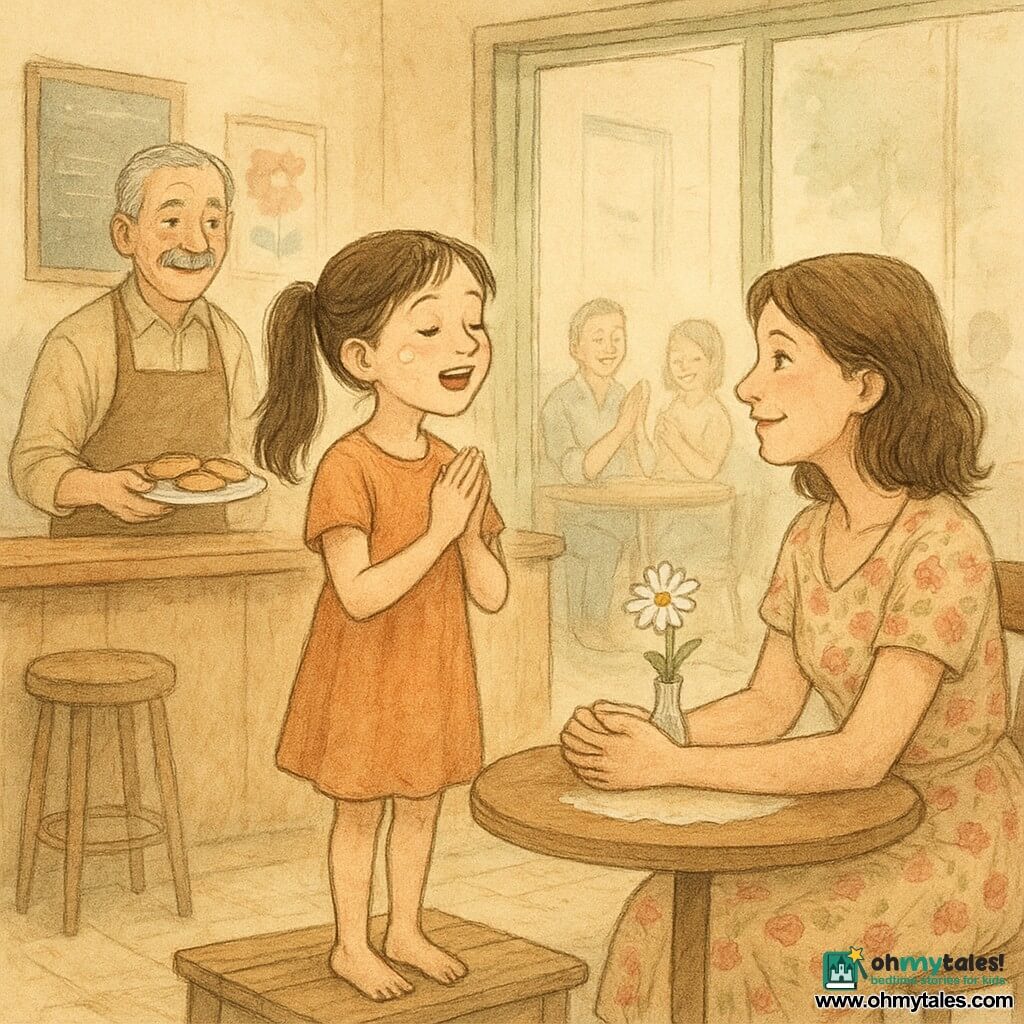
They ordered tea and a slice of lemon cake to share. The café owner, Mr. Alvarez, had a moustache that twitched whenever he laughed, and he always gave Maya a sticker for being polite. Today he added a small paper doily with a drawing of two birds on it. "For Mother's Day," he said with a wink.
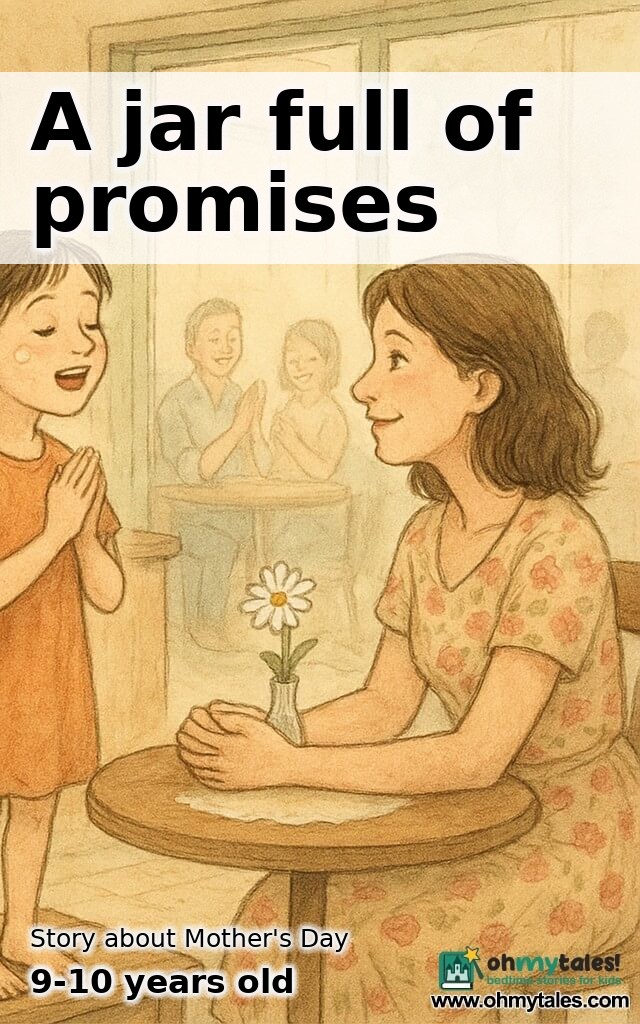
As they sat, Maya felt a rhythm rise in her chest—the kind that asks to be sung out loud. She cleared her throat and began, soft at first. "This one's for you," she said, and then sang the song she'd made: a gentle sequence of notes that spoke of warm hands and shared blankets, of pancakes and tiny daisies.
People nearby turned their heads, smiling. A couple whispered to each other, a child at the next table clapped with sticky fingers, and an elderly woman tapped her cane to the beat. Maya's mother closed her eyes and reached for Maya's hand. Her fingers fit into Maya's like a key into a lock—familiar and right.
When the last note faded, Mr. Alvarez brought over two extra cookies "on the house" and said, "Encore!" Maya laughed. Her song had not been perfect, but it had been honest, and the café felt brighter, as if some of the sunshine had pooled into their booth.
Chapter 4: The Curtain Call
On the way home, Maya found a thrift-store scarf with colors that reminded her of the placemat. She tied it around her mother's shoulders like a cloak. "For protection against everyday gloom," she declared solemnly, and they both laughed.
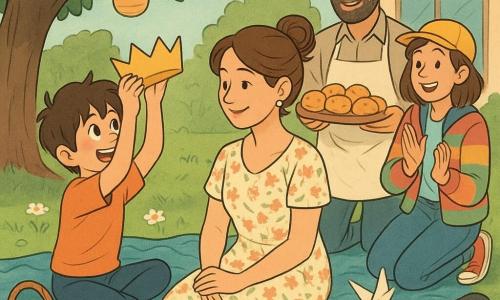
Back home, they laid out a blanket in the living room and had the picnic they'd promised in the jar: sandwiches, a jar of jam, and stories that were passed around like treasured coins. They opened one of the promises and read it aloud: "A movie night with popcorn." They added a little teapot of hot chocolate to the spread and curled up to watch an old film that made them both snort and sigh at the same parts.
As evening drew its curtains—soft violet spreading across the sky—Maya thought about how the day had been full of small improvisations: the pancakes, the jar, the café song, the scavenged scarf. Each had been a tiny way of saying "I love you" without using that precise sentence too often. Sharing had been the thread that stitched the day together; each act of giving made both of them fuller.
Before bed, Maya's mother tucked the daisy in a jar beside the placemat and kissed Maya's forehead. "You made today shine," she said.
Maya climbed into bed and hummed the tune once more, like a bedtime spell. She practiced one last line, softer than a secret: "Thank you for the small hands that hold the big ones."
Downstairs, the living room light went out. The house held its breath, content. From Maya's window she could see the café's sign dimming and Mr. Alvarez washing dishes with the same careful patience Maya had used on pancakes. The jar of promises sat on the table like a treasure chest.
Then, like the final flourish in a play, her mother drew the curtains across the living room window. The day folded in on itself, warm and complete, the outer world muted. Maya felt the peaceful curtain of night settle, as if the day had been bowed and the audience—neighbors, café patrons, and two people at a small table—had risen to clap for the small, sweet show they'd shared.