Chapter One
On top of a row of old brick buildings, where iron railings caught the morning light like tiny lanterns, lived a small boy named Milo. He was seven and wore a coat with a pocket so deep it could hide a secret. The buildings were linked by narrow bridges and hidden stairs that smelled of rain and dust, made when the city was young. People called them the Passages, though most folks forgot they were there.
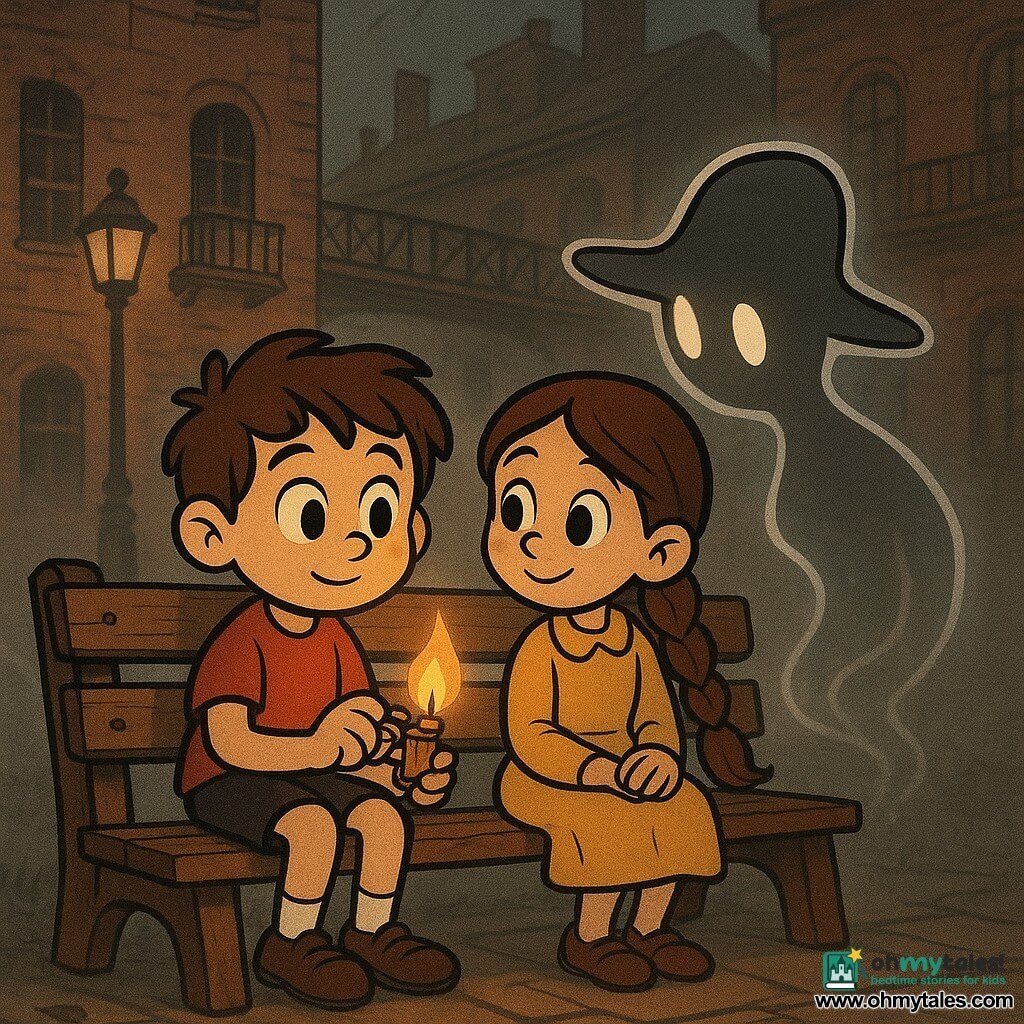
At the center of the Passages was a wooden bench, rounded by time and polished by the hands of many who had rested there. To Milo, it was not just a place to sit. It was a doorway that opened between the bright city and the softer world beneath worry. He sat on the bench each evening and lit tiny lamps he called veilleuses—little lights that chased away small, whispering fears.
He had an old brass lighter that had belonged to his grandmother. "Be honest with it," she had once said with a smile. "Lights answer the truth." Milo kept that advice in his pocket like a pebble you rub when you think hard.
Chapter Two
The city hummed below—cars like tired beetles, shop windows like jars of glowing things. The Passages were quieter, full of the sounds of footsteps and the breath of the wind. Milo learned the hidden routes by walking them at dusk, when benches and balconies wore shadows like scarves. Sometimes he met neighbors—an old baker who hummed to his dough, a librarian who smelt of paper and peppermint, a cat with a bell that chimed like a bellflower.
"Why do you sit there every night?" asked Lila from the top stair. She was eight and curious, with a braid that almost reached her knees.
"To light the veilleuses," Milo said. He flicked his lighter and a small, steady glow bloomed. "They make fear softer."
"Fear?" Lila peered at the light as if it were a new kind of bird.
"Not the big things like cliffs," Milo said, thinking of concrete and tall buildings, "but the small noises under the bed, the hollow feeling when a lamp is switched off, the sudden doubt before a test. Veilleuses keep those small things gentle."
Lila sat beside him. The bench creaked like it was sighing with relief. "Do they work?"
"They do when you tell the truth to them," Milo replied. "Honesty is the wick. If you hide a thing, the light stumbles."
"So tell it something now," Lila urged.
Milo closed his eyes. "I am a little afraid to be alone." He held the thought out like a small stone. The little light grew steadier, warm as toast.
"See?" said Lila. She smiled. "Your bench smells like safety."
Chapter Three
One evening the city sent a fog that wrapped around chimneys and wrapped around voices. It was the kind of fog that made streetlights look like moons walking in a hurry. The Passages felt farther from the rest of the world. Milo noticed that the bench hummed quietly, a sound like a throat clearing. When he reached to light a veilleuse, the brass lighter stubbed and sputtered. The flame smelled faintly of smoke and something older—like stories just before they are told.
A shadow moved across the tiles; not a scary thing, but a slow, sad shape that looked like a hat with the brim bent down. It hummed low. Milo felt a small tremor of worry—he had not told the truth before sitting down. He had spent the day saying he was fine when his stomach felt hollow and he missed his mum.
He took a breath that filled his chest as if it were a small bellows and said out loud, "I have been hiding that I miss her. I said I was fine when I wasn't." The lighter took the honesty like a gift and burned bright. The little lamp on the bench shivered into a soft golden bloom. The shadow softened; its bent brim straightened a little.
A gentle voice came from the shadow. "It grows easier when you speak plain," it said. It was not mean. It sounded like rain on pages. "We are not here to frighten you, little keeper. We carry questions. We wish to be seen."
Milo nodded. "Then see me." His own voice sounded braver than he felt. He reached into his coat and found a pebble he had been saving for a very special thing. He set it beside the lamp. The pebble shimmered, and the shadow let out a sigh that sounded like a page turning.
"Honesty makes the path brighter," the shadow said, and the fog around it fell like the hem of a curtain. The Passages felt kinder.
Chapter Four
News of the bench and the little lights moved through the Passages like a seed on the wind. Children began to come—some shy, some with eyes wide as saucers—each carrying a small truth like a folded paper boat. They would sit, light a veilleuse, and whisper what made them small-gloomed: "I lost my toy," "I am scared of the dark at school," "I told a lie to my friend." Each time, Milo listened and the light shone. When someone was not brave enough, Milo would remind them gently, "Honesty is the wick. Let it in."
Once, a boy named Tomas came with a story that smelled of trouble. He had taken an apple he should not have. His hands trembled when he held it out, but he promised to give it back and to say he was sorry. Milo did not scold. He simply lit a lamp and said, "Truth is not always easy, but it is a steady thing." Tomas's face went softer, like dough ready to be shaped. He left with the apple and a promise that felt like a small steady stone in his pocket.
Sometimes the lights chased away a small fear right away. Once a waitress who had forgotten her words before a crowd sat on the bench and told the veilleuse the truth: "I am worried I will forget." The lamp warmed her fingers, and when she returned to the room of people she found her words like friendly bees returning to a hive.
At the heart, Milo was not a hero of grand battles. He was a keeper. He kept a bench that was a doorway, and he kept honesty alive like a small set of lamps. The hidden walkways hummed softer because of it. The city's edges felt kinder. People climbed the Passages at dusk knowing a tiny light would meet them.
On a night when the moon looked like a coin someone had lost, Milo sat with Lila and the others. He looked at the little lights blinking like a row of brave fireflies. He thought of his grandmother's lighter and of the pebble he had given to the shadow when its brim bent.
"Are you still afraid?" Lila asked, after a long quiet.
"A little," Milo admitted. "But the bench helps. And so do we."
"You were honest tonight," Lila said, tapping his knee. "You were brave in a small way."
Milo watched the veilleuses. They were small, and they were steady. He understood then that being honest did not always make fear vanish; it made fear smaller, clearer, and easier to face.
He lit one more lamp for the night, and the Passages shone with a soft light that felt like a promise: if you tell the truth, the world will answer in kind. The bench hummed, content, as the city breathed out and the stars blinked like a kind audience. Milo tucked his secrets into his pocket and smiled, ready to light more veilleuses tomorrow.