Chapter 1: The New Project
Jack and Ethan sat side by side in their usual spot near the window in Mrs. Brown's sixth-grade classroom. They were best friends, almost inseparable since kindergarten, and they shared a particular fascination with technology. Jack's parents often joked he was born with a tablet in his hands, while Ethan could navigate the latest gadgets like a pro.
"Alright, class," Mrs. Brown announced, pulling their attention from the science fiction book they were both reading. "We have an exciting project coming up. It's called 'Screen Smart.'"
The room buzzed with curiosity as Mrs. Brown explained. "Your task, over the next month, is to explore how screens impact our lives. You'll work in pairs to create a presentation on healthy screen habits and how to balance technology use with other activities."
Jack nudged Ethan, his eyes gleaming with excitement. "This is perfect for us. We can use our tech skills and help others at the same time!"
Ethan nodded eagerly. "Yeah, and maybe we'll learn a few things ourselves."
Mrs. Brown continued, "You will have access to a virtual space filled with educational resources to guide you. Use it wisely to craft your project. Remember, the goal is to promote a balanced lifestyle."
As the bell rang, Jack and Ethan gathered their things, animatedly discussing all the possibilities that lay ahead. They were determined to create something impactful, not just for a good grade, but to make a real difference.
Chapter 2: The Virtual World
That night, Jack and Ethan logged into the virtual environment provided by the school. It was like stepping into a digital wonderland, with interactive lessons on the effects of screen time, tips on physical activities, and even mindfulness exercises.
"This is incredible," Ethan marveled, his avatar standing in a lush, digital forest. "There's so much to learn."
Jack nodded, guiding his avatar to a section labeled "Screen Time Stories." Inside, they found videos and narratives from kids around the world sharing their experiences with screens – the good, the bad, and everything in between.
"Look at this one," Jack said, clicking on a story from a girl their age who had turned her screen addiction around by taking up gardening. "She says it helped her focus better in school and sleep better at night."
Ethan was inspired. "Maybe we can incorporate stories like these into our presentation. Real experiences could really resonate with our classmates."
They spent hours exploring, taking notes, and brainstorming ideas. The digital world offered them tools and resources they'd never imagined, and they felt empowered to use them creatively.
Chapter 3: The Balance Challenge
As they delved deeper into the project, Jack and Ethan decided to try out some of the activities suggested in the virtual world. They set a goal: one week of balanced screen time.
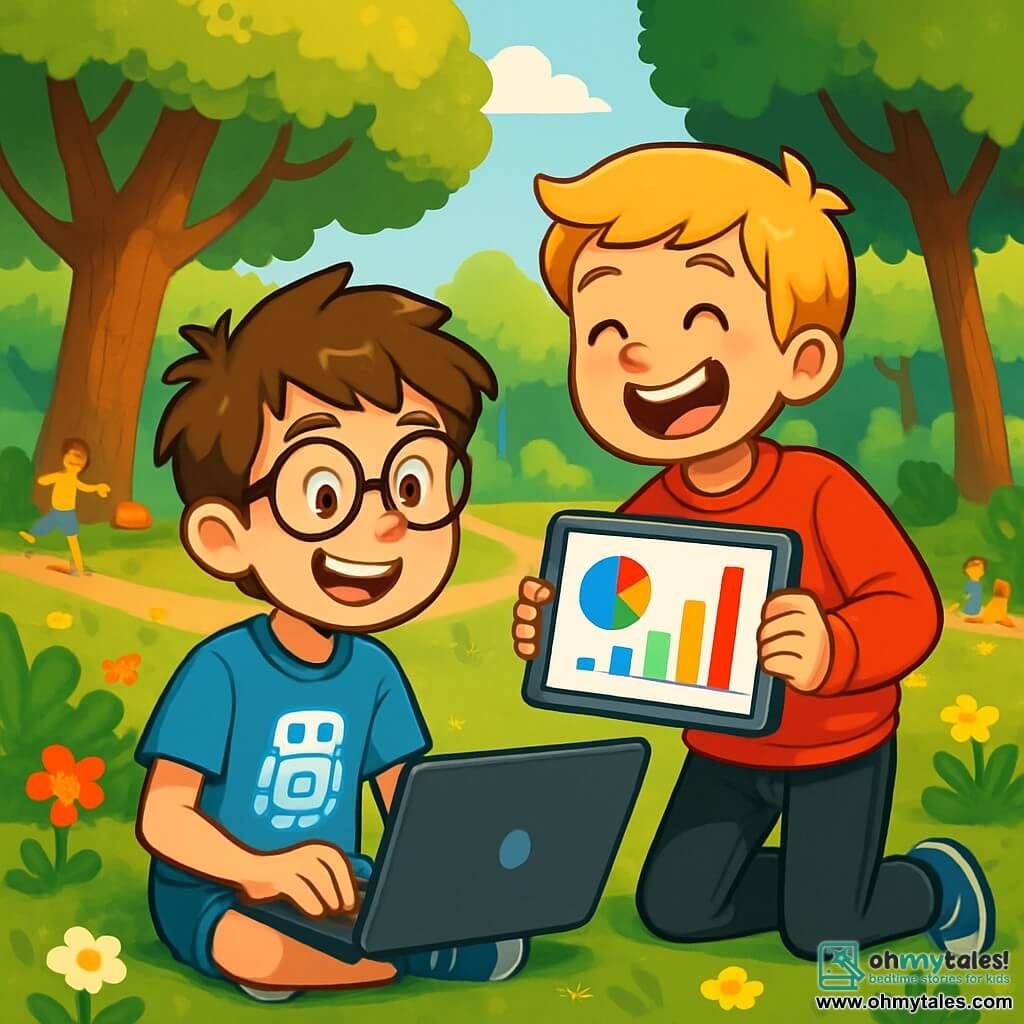
On the first day, they met at the park instead of playing video games after school. They kicked a soccer ball around, laughing and racing each other across the field. It felt good to be outdoors, and they realized how much they enjoyed these simple pleasures.
In the evenings, they participated in online mindfulness sessions. At first, they giggled through the breathing exercises, but as the days passed, they found themselves looking forward to the calm it brought.
By the end of the week, they were surprised by the changes. Ethan noticed he was less tired during the day, and Jack found he was more focused on his homework. They talked about these changes, wondering why they hadn't tried this balance before.
"This is what we need to share," Jack concluded. "The real impact of balance – how it makes us feel. It's not just about reducing screen time; it's about improving our lives."
Chapter 4: Creating the Presentation
With their experiences fresh in mind, Jack and Ethan spent the following days crafting their presentation. They decided to structure it around three key themes: understanding screen time, finding balance, and exploring alternatives.
They included personal stories, like the gardening girl and their own week of balance, to illustrate the benefits of reducing screen time. They also prepared fun, interactive elements, like a quiz to engage their classmates.
"We want them to think," Ethan said, as they rehearsed their speech. "Not just about why screens can be bad, but how awesome life can be without them sometimes."
Jack agreed, adding, "We should end with some ideas for activities they can try, like those we found in the virtual world."
The presentation started to take shape, a vibrant blend of facts, personal stories, and practical advice. They were proud of what they had created and eager to share it with their class.
Chapter 5: The Big Day
On the day of the presentation, Jack and Ethan stood in front of their class, their nerves replaced by excitement. Mrs. Brown gave them an encouraging nod as they began.
"Hello, everyone!" Jack greeted. "Today, we'll talk about screens and how they impact us."
Ethan took over, "We all love screens, right? But too much can be a problem. We want to show you how to enjoy them without letting them take over your life."
They moved through their presentation, discussing the importance of balance and sharing the stories they had gathered. The class listened intently, nodding along and asking questions. The interactive quiz was a hit, sparking laughter and discussion.
As they wrapped up, Jack concluded, "Remember, it's about balance. Screens are awesome, but so is everything else life has to offer."
"And we hope you find your balance too," Ethan added with a smile.
The class erupted in applause, and Mrs. Brown beamed. "Well done, boys. That was informative and inspiring."
Chapter 6: Reflections
After the presentation, Jack and Ethan received lots of feedback from their classmates, who shared their own experiences with screen time. Many said they were inspired to try new activities and explore the balance they'd talked about.
Walking home, Jack reflected, "I think we really made a difference."
Ethan nodded, "Yeah, and we learned a lot too. It's not just about screens being good or bad, but about how we use them."
They both felt a sense of accomplishment, not just for completing the project but for the insights they had gained through the process. They understood now that while screens were a big part of their world, they didn't have to be the only part.
As they parted ways, they agreed to meet at the park again the next day, excited about the new adventures that awaited beyond their screens.