Chapter 1: A World on Screens
Maya blinked as the sunlight streamed through her window, announcing the beginning of another school day. The gentle warmth played on her desk, where her tablet lay, still open on last night's game. She rolled over and grabbed her phone, scrolling through messages from friends and the latest updates on her favorite social app. Time slipped by quietly, as it always did when she had a screen in her hand.
“Maya, breakfast!” her mom called from downstairs.
“Coming!” Maya replied, but she couldn't look away from a funny video her friend had sent. By the time she put down her phone, she realized she was running late. She rushed to get ready, barely tasting her toast before grabbing her backpack and dashing out the door.
At school, the halls buzzed with the chatter of students, many glued to their own devices. Maya's best friend, Zara, greeted her at their locker.
“Did you see that new level in Monster Quest?” Zara asked, her eyes bright with excitement.
Maya grinned. “I beat it last night! Took me ages, though.”
They laughed together, but their conversation soon drifted to other games and online trends. It wasn't until their teacher, Mrs. O'Donnell, called the class to order that Maya finally put her phone away.
Chapter 2: The Lesson
After morning announcements, Mrs. O'Donnell stood at the front of the classroom, holding up a colorful poster.
“Today, we're starting a special project,” she said. “We'll be learning about screens—how they help us, how they can sometimes hurt us, and most importantly, how to use them wisely. You'll work in groups and share your own experiences.”
A few students groaned quietly, but Maya felt a flicker of curiosity. Screens were a huge part of her life—was there really that much to learn?
Mrs. O'Donnell continued, “Let's start with a quick survey. How much time do you think you spend on screens each day, outside of schoolwork?”
Maya hesitated, counting hours in her head. She realized she spent more time online than she liked to admit. Around her, classmates shifted uncomfortably in their seats.
Ben, the class clown, raised his hand. “Does watching TV and playing games count?”
“Yes, Ben, all of it,” Mrs. O'Donnell smiled.
Hands went up, and answers varied wildly—three hours, five hours, even eight on weekends.
“Screens are wonderful tools,” Mrs. O'Donnell said, “but like anything, too much can have side effects. This week, we'll find out how screens impact us and experiment with ways to keep a healthy balance.”
Maya glanced at Zara, wondering what they might learn.
Chapter 3: The Challenge
That afternoon, the class started their first activity: tracking their screen usage for two days. Maya downloaded a tracking app, curious to see her results.
She was shocked at the end of day one. Nearly six hours had vanished into games, videos, and chats. Her eyes felt tired, and she remembered ignoring her brother when he'd asked her to play basketball outside.
The next day was similar. Maya felt a pang of guilt but shrugged it off—everyone did it, right?
On the third day, Mrs. O'Donnell divided the class into groups and gave them a new challenge: each group had to create a plan to reduce their screen time and try new activities.
Maya's group included Zara, Ben, and a quiet girl named Lila. They gathered in a corner.
“So, what should we do instead of using screens?” Ben asked, twirling his pencil.
Lila spoke up, her voice soft. “I like drawing. Maybe we could have an art contest?”
Zara nodded. “We could go outside—play something, maybe ride bikes?”
Maya hesitated. She loved her games, but she was also tired of feeling glued to her devices. She remembered how much fun she'd had building forts in the park as a kid.
“Let's try it,” she said. “One hour a day, no screens, just something different.”
Chapter 4: A New Adventure
The next afternoon, Maya left her tablet on the desk and met her friends at the park. The air was crisp, and the grass sparkled with dew. For a moment, she felt awkward without her phone, unsure what to do.
Ben led the way to the playground. “Let's play capture the flag!” he suggested.
Lila and Zara joined in, and soon they were running, laughing, and tumbling across the field. The game was fast and loud, their shouts echoing through the park. Maya's heart pounded with excitement, and she realized how good it felt to move, to laugh out loud, to simply be present.
Later, they sat on the grass, catching their breath.
“This is way more fun than I expected,” Zara admitted, brushing dirt from her jeans.
Maya nodded, her cheeks flushed. “I'd forgotten how much I like being outside.”
Ben grinned. “And we didn't even need a screen!”
The group decided to meet again the next day, but this time, Lila brought a sketchbook. They took turns drawing silly pictures of each other, then watched the clouds drift by.
When Maya got home that evening, her mom noticed a difference.
“You look happy,” Mom said.
Maya smiled. “I had a really good day.”
Chapter 5: The Difficulties
Not every day was easy. On rainy afternoons, Maya felt bored and restless. The pull of her games was strong; she missed the excitement of leveling up, the thrill of beating her high score. Her friends texted her about new updates in their favorite game.
One evening, she almost caved—her phone buzzed with notifications, and she reached for it. But she remembered Mrs. O'Donnell's words: “Screens are a tool, not a life.”
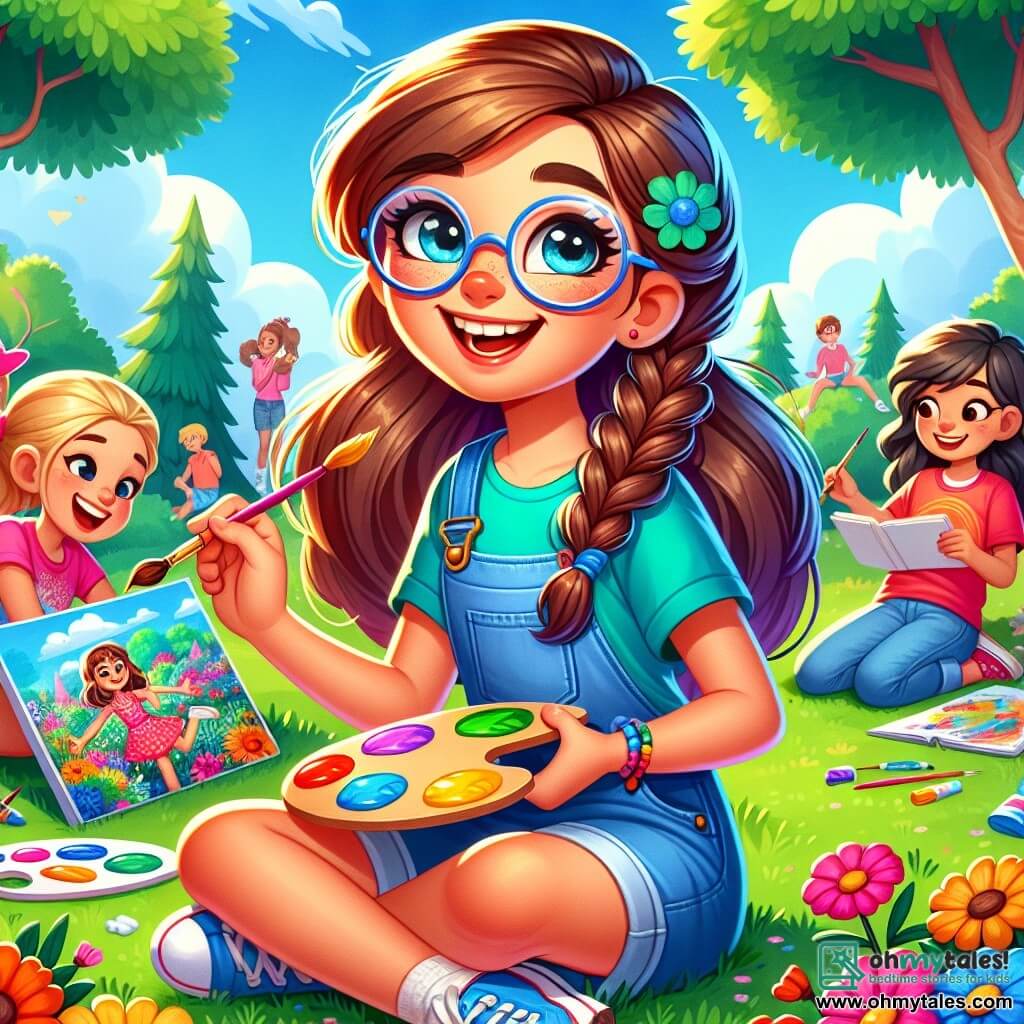
Instead, Maya rummaged through her closet and found her old box of art supplies. She hadn't painted in months. As she dipped her brush into bright blue paint, she felt her mind relax. The world of colors and shapes was just as exciting as any digital adventure. She lost track of time, only realizing how late it was when her mom peeked in.
“Wow, Maya, that's beautiful!” her mom said, admiring the half-finished painting.
Maya beamed. “Thanks. I think I'm going to finish it tomorrow.”
The next day at school, the class gathered for a discussion. Mrs. O'Donnell asked them to share their experiences from the challenge.
Zara spoke first. “I realized I was spending more time watching videos than talking to my family. I helped cook dinner last night, and it was fun.”
Ben admitted, “I got bored at first, but then I started reading a book I found in the attic. I actually liked it!”
Lila smiled shyly. “Drawing outside made me feel calm.”
Maya hesitated, then spoke up. “It's hard to stop using screens. But I remembered how much I liked painting, and now I want to do it more.”
Mrs. O'Donnell nodded. “You've all learned something important. Balance isn't about giving up screens; it's about making space for everything that brings you joy.”
Chapter 6: The Digital World
The class also learned about online safety that week. The school counselor, Mr. Evans, visited their classroom and shared tips for protecting personal information.
“Not everyone online is who they say they are,” he warned. “Be careful what you share, and always talk to an adult if you see something strange.”
Maya thought about the messages she sometimes got from people she didn't know. She realized she needed to be more careful.
That afternoon, Mrs. O'Donnell assigned a group project: create a poster with tips for safe and healthy screen use.
Maya's group brainstormed ideas. Zara suggested, “We could list things like taking breaks, never sharing your address, and turning off screens an hour before bed.”
Ben added, “And only playing games with people you know!”
Lila drew colorful illustrations, while Maya wrote clear, bold captions. When their poster was finished, the whole class admired it.
Later, Maya reflected on how much she'd learned. Screens could open up amazing worlds—help her connect with friends, learn new skills, and explore new ideas. But she understood now that they could also distract her from the real world, and she needed to use them thoughtfully.
Chapter 7: Finding Balance
By the end of the week, Maya had settled into a new routine. She set limits for herself—one hour for games after homework, then time outside or working on her painting. She turned off her phone during meals and talked with her family instead. She even started helping her little brother with his homework, showing him how to use educational apps the right way.
Sometimes, the temptation to spend hours online was still there. But Maya remembered how good it felt to run, laugh, and create. She found herself looking forward to weekends at the park or afternoons spent painting in her room.
One day, as she finished her latest artwork, her dad knocked on her door.
“Want to go for a bike ride?” he asked.
Maya grinned. “Sure! Let me grab my helmet.”
They pedaled down quiet streets, laughing as the wind whipped through their hair. Maya felt free, her worries left behind with the hum of her phone.
That night, as she lay in bed, Maya thought about everything she'd learned. Screens were a part of her world—sometimes exciting, sometimes overwhelming. But she knew now that she could choose how to use them. She could balance the digital with the real, the online with the outdoors.
Chapter 8: Sharing the Lesson
The next week, Mrs. O'Donnell invited parents to an open classroom. Maya's group presented their poster and shared what they'd learned.
“Screens are great for games and learning,” Maya said confidently. “But sometimes, we forget to look up and see what's around us. I learned that drawing, playing outside, and talking with my family make me just as happy as any game.”
The parents clapped, and Maya's mom squeezed her hand proudly.
After the presentation, several classmates came up to Maya.
“I started playing soccer again,” one boy said. “It's way more fun than I remembered.”
“My little sister and I built a fort,” a girl added. “We laughed so much.”
Maya felt proud. She realized that her small changes had inspired others, too.
Chapter 9: A Brighter Tomorrow
On Sunday evening, Maya sat in her room, surrounded by sketches and books. Her tablet was closed, resting nearby. She smiled, thinking of the adventures she'd had—both online and off.
Her phone buzzed with a message from Zara: “Park tomorrow after school?”
Maya typed back, “Yes! Can't wait.”
She looked out her window at the fading sunlight, feeling grateful for everything she'd discovered. Screens would always be a part of her life, but now she understood how to use them wisely. She could explore fantastic digital worlds, stay safe online, and still enjoy the magic of the real world around her.
As she drifted off to sleep, Maya knew that tomorrow would bring new challenges—and new possibilities. Whatever happened, she was ready to find the balance, and to help others do the same.