Chapter 1: The Quiet Knight of Willowmere
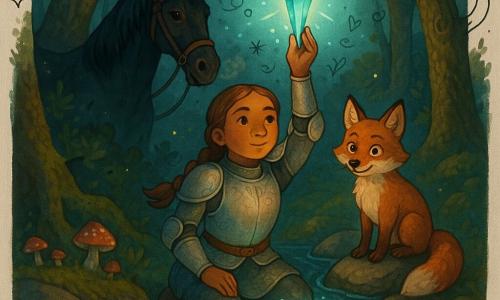
Sir Rowan Dreamer rode like a hush across the meadow, his black horse's hooves making soft drumbeats on the dew. He was not a knight who sought noisy glory. His helm tucked under his arm, he wore a smile that looked more like a question than a boast. People called him gentle because he listened—truly listened—to the creak of old bridges, the gossip of sparrows, and the worries of ferrymen. Listening was, he said, a kind of courage.
Willowmere lay where the wide river met the canal, its willow trees bowing as if to whisper secrets. At the heart of the town rested the Willow Grimoire, an ancient book bound in bark and river-reed, filled with songs and instructions that kept the riverfolk and canal keepers in harmony. The riverfolk tended the moving water and the creatures within; the canal keepers kept the channels straight and the barges steady. For generations the Grimoire handed down chants and pacts that prevented floods, calmed squalls, and mended quarrels.
One moonless night the Grimoire vanished. Its case was found empty beside the great stone bridge. Accusations mounted like storm clouds. Each side suspected the other of theft: the riverfolk muttered about selfish locks on sluices, and the canal keepers grumbled about cuts in the banks. Fear seeded itself quickly. Without the Grimoire, old protections weakened, bickering grew, and the river began to cough with strange tides.
Sir Rowan stood on the bridge and listened to the water's sigh. He felt the knot of worry tighten in Willowmere like a rope. He had promised, quietly, to mend what was torn. So he mounted his horse and set his jaw like a sword. He would find the Grimoire, and he would listen to everyone until the truth untangled.
Chapter 2: The First Thread—The Ferryman's Tale
Rowan first sought Mathin, the ferryman whose cartograph of the river flows was as detailed as a mason's map. Mathin's hands were stained with silt and honesty. He told Rowan of a night when a shadow slipped between the reeds, humming a tune that made the fish leap in frightened arcs. The shadow left ripples in a pattern like a braided rope.
Rowan knelt and cupped water to his ear. The ripples still hummed a memory that only he seemed to hear: a melody not of hostility but of longing, threaded with a word from an old dialect—"mend." Rowan paused. If the thief sang of mending, perhaps the motive was not theft for greed but a desperate hope to fix something else broken.
He thanked Mathin and went to speak with the canal master, Old Merra, who guarded the sluice gates with iron and stories. Merra's face was a map of past storms. She admitted on a breath that some locks had been sealed in secret, and fines had brewed bitterness. Yet when Rowan listened closely to her complaints, he also caught a soft sorrow—her youngest had gone to work on distant barges and would not return for years. Merra's tightening of gates came from fear of losing control in a world that would not wait.
Rowan began to see the knot's threads: grievances, losses, fear. None of them neatly fit a thief's hand. He rode on, following the tune that hummed through the reeds like an unfinished song.
Chapter 3: The Riverfolk's Secret
The riverfolk lived beneath woven barges and in clever reed houses that rocked with the tides. Their leader, Lysa of the Scales, met Rowan at dawn, her hair threaded with riverweed, her voice as clear as water over stone. She spoke in metaphors and splashes, asking him to listen with more than ears.
They told him of a new creature seen in the deep pools—something that tugged at nets and frightened the fry. The Grimoire included a lullaby to soothe those beasts, but without it the river grew skittish. Lysa confessed, with a look that cut warmth from the air, that some of her people had grown impatient. They wanted to move the canal's course to better feeding grounds. The canal keepers' walls would not allow this. So, a caller among the riverfolk—bolder and lonelier—had sung the "mend" tune as a plea for change.
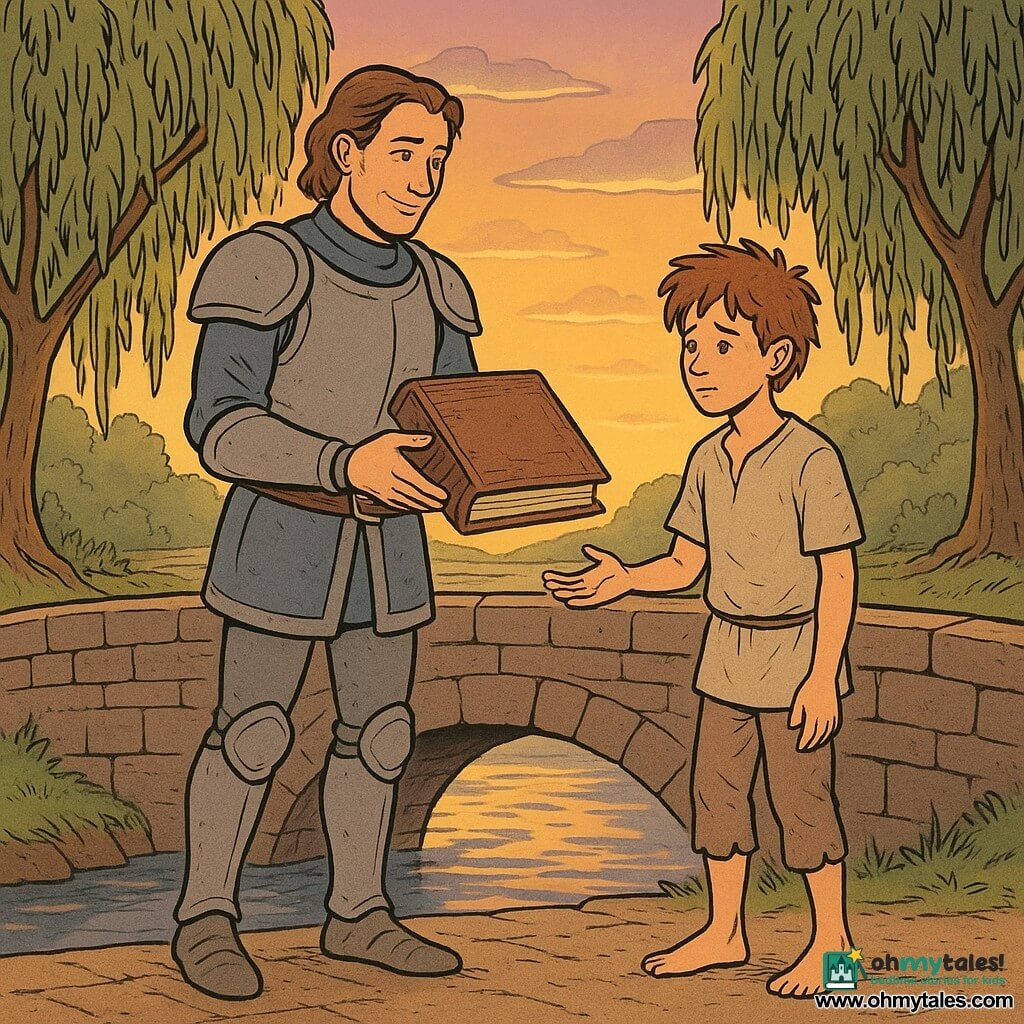
Rowan listened until the reed huts sighed. Then he asked, softly, who among them sang most often alone. Lysa named a young boatwright, Brin, who was known to sing at night and patch bows with hands that trembled for adventure. When Rowan found Brin by the willow roots, the boy admitted he had taken the Grimoire—not to hoard its magic but because he believed it could teach the river new songs that would feed his people. He wept when he spoke of nets torn and children hungry.
Rowan did not brand him a villain. He promised Brin that stealing was wrong, but he also promised to hear the hunger that drove a hand to desperation. Rowan left Brin with a task: return the Grimoire if others would stand at the water's edge and speak their needs aloud, so the whole town might hear.
Chapter 4: Forging a Promise
The bridge that divided Willowmere became a stage. Rowan set a meeting under the old willow, its hanging leaves like a curtain. He put the Grimoire upon the stone and asked the canal keepers and the riverfolk to come together, not armed with accusations but with stories of what they feared and what they lost. Many came reluctantly; many came curious.
Rowan stood between them and spoke of listening as the first act of bravery. He read aloud a passage from the Grimoire that spoke not of spells but of pacts—lines that tied the flow of water to the flow of promises. He invited each person to speak, and when they did, he reflected their words back so that others would understand them as if through a clear glass.
Old Merra confessed she had sealed gates because she feared failing those who depended on her. Lysa admitted her folk had sung for new paths out of hunger. Both had loved Willowmere in hard, twisted ways. When Brin stepped forward, he apologized and explained how he had meant to make a better life; his hands shook, but he kept his eyes steady.
Rowan suggested a plan: the canal would open a test channel for a season, guarded by both riverfolk and keepers, so that fish might find new places to spawn without losing the town's safety. In return, the riverfolk would share their knowledge of tides and creatures that might help the canal keepers mend weakened banks. Each promise would be written and sealed with a pact from the Grimoire—a song to be sung by all, so no one voice would carry alone.
Some scoffed. Old habits are heavy as stone. But Rowan's calm was stubborn; his listening turned fingers away from pointing and toward holding. He spoke of courage as not just lifting swords but admitting fear and asking for help.
Chapter 5: The Weave of Willowmere
The test channel opened to the sound of many hands pushing at one gate. The riverfolk showed where currents flowed like hidden braids; the canal keepers taught how to shore banks with woven reeds and stout willow wood. Children followed with nets, learning to let small fish slip through. The Grimoire's songs were recited each dawn, not by a single leader but by a chorus of voices that rose like sunlight on water.
Time did not change everything at once. There were mistakes: a wrong cut to a bank, an argument that flared like a sudden wind. But Rowan stood in the middle of these small fires, listening and reminding people of their promises. When waves swelled after a storm, the joint defenses held because those who knelt to mend the dike were those who had learned each other's names.
Brin returned the Willow Grimoire to its case and then, under Rowan's watch, helped inscribe a new page—a page for promises kept and for lessons learned. Lysa taught keepers a lullaby for the deep pools; Old Merra taught riverfolk how to anchor a lock against sudden surges. They worked until the moon gave up her place to dawn, and the town slowly learned to weave difference into strength.
On the last morning of that season, the river smoothed like a ribbon and the canal shone like a newly polished blade. Rowan stood on the bridge once more, not as judge but as witness. Willowmere had not become perfect, but it had acquired a softer, braver shape: a community that could listen and mend.
Rowan Dreamer rode away at sunset, as gentle as his name, but people called his passing a victory. He had not fought a dragon or won a castle; he had done something quieter and grander—he had taught a town to listen, to promise, and to keep those promises like oaths sworn on the water. The willow leaves clapped softly in the wind, and in the reeds the Grimoire hummed a new tune—a song of mending, sung by many voices, echoing downriver toward whatever adventures might one day call for courage, intelligence, and resilience.