Chapter One: The Little Hare with a Bell
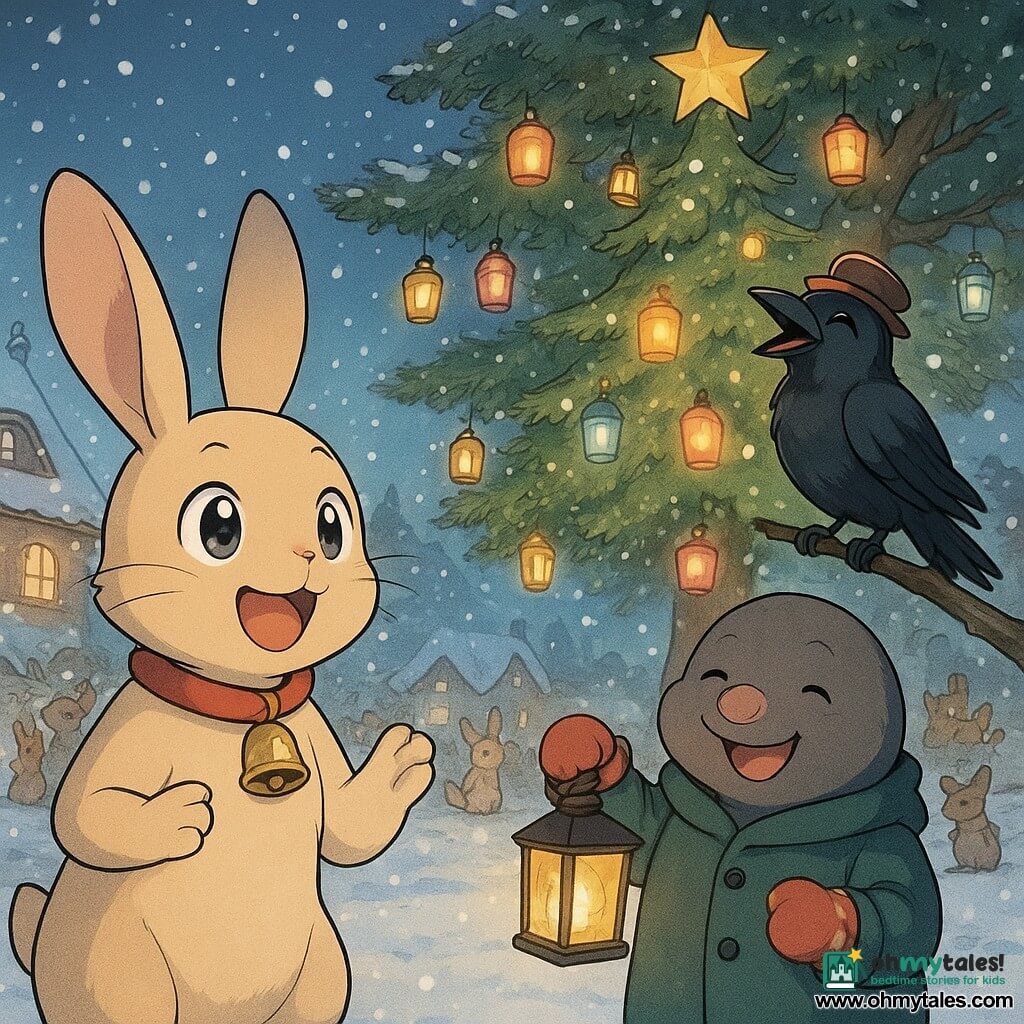
In the village of Frostwillow, where chimneys sighed and snow lay like sugar, lived a little hare named Pippin. Pippin's fur was the colour of warm milk, and on his collar hung a tiny brass bell that chimed like a laugh whenever he hopped. Pippin loved two things most: making lanterns from jars and listening to other animals tell their favourite holiday stories.
One bright morning, while frost painted fern fronds with silver, Pippin woke with a flutter in his chest. The Great Christmas Oak, a tall tree in the village square, would soon be lit for the first night of winter. It was a night for singing, for ribbons, for shared pies. But this year the stream had frozen earlier than anyone remembered, and the busy fox and the badger family were away collecting winter stores farther than usual. Pippin worried that some friends might not make it back in time.
“I'll gather them all,” he decided, bouncing like a button. He clipped a red ribbon to his bell and filled his little cart with jars of lanterns, cinnamon biscuits, and a map drawn with warm, wobbly lines. Pippin wanted the Great Christmas Oak to be full of faces and laughter. He tied on his woolly scarf, tucked a sprig of holly behind one ear, and set off, the bell tinkling like a tiny promise.
Chapter Two: The Moonlit Path and the Singing Crow
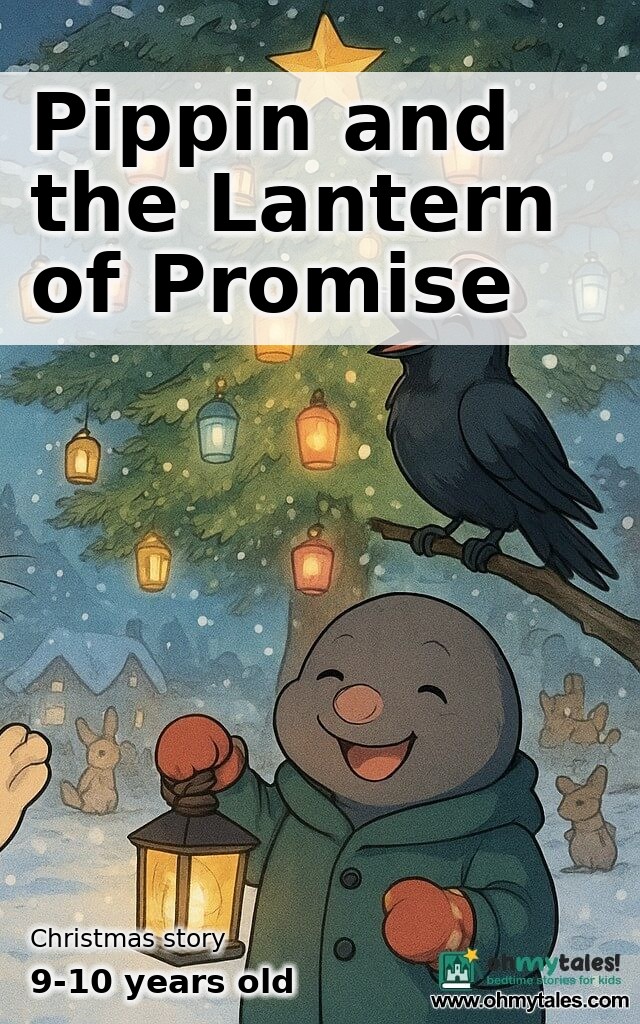
The path out of Frostwillow wound through sugar-bent brambles and past a pond that held the moon like a borrowed coin. Pippin met Marla the mole first, whose mittens were mismatched but whose smile patched every soggy worry. Marla loved stories but had never seen the oak lit. "I can't see well at night," she said, nose wrinkling. Pippin shared a lantern and her face brightened. Together they hummed a tune that sounded like snowflakes tapping windows.
Further along, in a hollow of roots, sat Cornelius the crow, perched with his glossy feathers and a hat too small for his clever head. Cornelius had the loudest, most dramatic voice in the valley and loved to recite poems he'd heard while scavenging crumbs of rhyme. But tonight his throat felt tight. "My voice is a hush," he croaked. Pippin pressed a cinnamon biscuit into Cornelius's wing and told him about the plan. Cornelius cleared his throat, found a single note, and the note turned into two. He promised to lead the walk with a song that would gather anyone within earshot.
They crossed over the frozen stream on stepping stones that winked like teeth. At the middle stone, the bell on Pippin's collar chimed softly, and the sound drifted like apple steam into the cold. Down below, the water whispered old cold secrets. A little shiver ran through the party, but Pippin kept smiling, and Cornelius practiced a bold “Caw-lé-la.” Even the moon seemed to lean closer.
Chapter Three: The Storm and the Lanterns
As they reached the ridge where the wind had a habit of telling jokes, the sky changed its face. Clouds gathered into a woolly blanket and the first big flakes began to fall. They swirled and spun and tried to catch each other's mittens. Pippin lifted a lantern, and its amber glow made the snow shimmer like a thousand tiny lantern-butterflies.
Badger, who was returning from a store run with a sack of treasure, met them puffing and blowing. His cheeks were red as burning beetroot. "The road's tricky," he said, and he was right — a drift blocked the path, like a white hill that had rolled across the way. Pippin suggested making a path together. Cornelius sang, and Marla dug with nimble paws, while Badger shoveled with strong, slow pushes. Other villagers heard the little song and lantern light. A hedgehog rolled down a slope, a pair of squirrels skittered with a sled, and even Old Mrs. Owl blinked awake and offered night-time hot cocoa.
The storm seemed to think it could be part of the party; it tossed flakes like confetti. Pippin's bell chimed faster. He handed lanterns to those with cold paws and tied one to the side of the last drifting hill. Light made the snow less big and the way less scary. When the last snow-block tumbled, everyone cheered, breath making tiny ghosts in the air. Their footsteps made a new path, smooth and safe, all the way to the village square.
Chapter Four: The Great Oak and a Promise
At the square, the Great Christmas Oak stood taller than tales, its branches a crown of frost. Pippin and his friends arranged lanterns on every branch they could reach. Cornelius perched at the highest place he dared and began a song, a sound that threaded through the trunks and leaned on eaves. Marla recited a tiny story about a mole who learned to follow starlight; Badger told a joke about a raccoon who tried to neatly stack snowballs and failed comically; the hedgehog served surprise peppermints that popped like mini fireworks in everyone's mouth.
The animals gathered: the fox family with bright eyes, Mrs. Otter with her scarf dripping like candy, the rabbits from the hill with ears full of gossip, and even shy Sprig the mouse who held a crumb that had somehow become a cracker. There were decorations made of popcorn strings and elderberry jam tinsel, and someone had left a single wooden sled at the foot of the tree — a sign that someone would soon need a ride.
Light spread until the whole square glowed like a warm, safe heart. The Great Oak listened and, in its own tree way, rustled like applause. Then together they sang, and their voices braided into a song that felt like a cozy quilt. Pippin's bell chimed the final note and everyone laughed, because even the moon seemed to giggle.
As the night grew quiet and the lanterns ticked down like sleepy clocks, Pippin climbed onto a low root and looked at all the faces shining back. He felt a warm bloom inside him, a feeling like honey on toast. He thought of the journey, of hands and paws and wings that reached out, and he realized that the oak had not been filled by any one creature, but by many small offerings of courage, light, and biscuits.
"I wanted to gather everyone," he said softly so even the frost could hear. "And we did it together." The animals nodded; some wiped away a sparkle that might have been a tear.
Pippin reached into his pocket and handed out the last of his lantern jars, one to each of the youngest ones. He tied a red ribbon on the oak's lowest branch and then, with a little hop, he placed his own bell there too, where the wind could find it.
"I promise," Pippin said, voice like the gentlest bell, "that every year I will light a lantern and call for us to gather. We will share stories, songs, and food. We will make a path when snow blocks our way, and we'll save a space for anyone who comes late. We will keep each other warm."
The animals murmured a happy agreement. Outside the square, snow whispered secrets of coming mornings, and the bell on the oak chimed in the rhythm of the promise. The promise was small and strong, like a seed tucked into soft earth, certain to grow.
They stayed until the lanterns were nothing but warm pockets of memory, until yawns spread like lazy shadows, and then they went home under a sky full of patient stars. Pippin walked last, his scarf trailing like a comet tail, and he hummed a little tune — the same tune that had stared the day with a flutter and that would, one day, be hummed by someone else who remembered the night of lanterns and the promise on the oak.
And always, every winter after, if the wind was listening and the moon was free, you could hear a small bell ring through Frostwillow, and you would know someone had kept a promise.