Chapter 1: Morning Ride
Officer Tom tightened the strap on his helmet and swung his leg over his bright blue patrol bicycle. The sun made little patterns on the pavement. He loved these quiet morning rides through Maple Lane. The bells on his bike were cheerful; his radio gave soft chirps. Today he had a small paper bag with stickers and a stack of blank name tags for the school outing later.
"Good morning, Mr. Pritchard," Tom said to the gardener who was pruning roses by the fence. He smiled and waved his gloved hand. The gardener waved back. Tom slowed his bike as a group of sparrows hopped across the path. Riding slowly helped him notice more things — misplaced toys, a loose paving stone, a child walking with a heavy backpack. He made a list in his head of small helps he could offer.
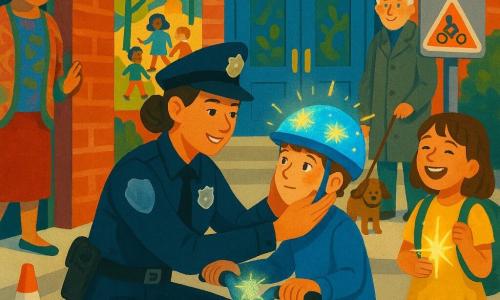
A little girl on roller skates zipped past and nearly bumped a parked scooter. Tom called, "Hey there, helmet?" She stopped and panted, "Forgot it." He wheeled his bike over and gently explained where the helmet store was and why it mattered. She nodded, cheeks red, and promised to put one on next time. Tom felt happy. Prevention starts with small words and friendly reminders.
Chapter 2: The Missing Kite
Near the park, children were trying to fly kites. One kite kept diving into a low branch. A boy named Sam looked worried. "My kite's stuck," he said, voice quiet. Tom parked his bike and crouched beside them.
"Let's think together," he said. "Can you hold this string? I'll see the branch from the other side." Tom spoke calmly and gave clear steps. He taught the children to work as a team: one person steadied the pole, one carefully climbed a safe little step, and one held the string. Tom held the branch gently and used a reacher tool from his bag to free the kite.
"Sometimes I help because it's safer if we try one by one," he said. "You were close to pulling too hard. That can snap the branch or hurt you." Sam's eyes brightened. The kite soared free and danced above the bushes. Everyone cheered.
Tom used the moment to talk about being careful with ropes and to show how to keep a safe distance from roads. "If a kite crosses the street, don't chase it alone," he advised. "Ask an adult, or come find a friendly officer like me." The children laughed and promised to be cautious. Tom felt the steady satisfaction of teaching through a small, joyful success.
Chapter 3: A Helpful Conversation
Further along, Tom met Mrs. Alvarez sitting on a bench, looking puzzled by her phone. Her bus pass would not show the time, and she needed to catch the bus to the doctor. Tom locked his bike and sat down beside her.
"Can I help?" he asked softly.
She handed him the phone. "I don't like fussing with new things," she admitted. Tom spoke slowly and showed her the simple steps: how to tap the app, where the schedule was, and how to make the screen brighter. He wrote the bus number on a sticky tag and fixed it to her bag so she wouldn't forget.
"You're like a walking instruction manual," she teased, smiling. Tom laughed. "I prefer being called a helper," he said. They chatted about the town, and Tom listened while she told a little story about when her granddaughter visited. Listening, Tom reminded himself that being a policeman is as much about calm conversation as it is about action.
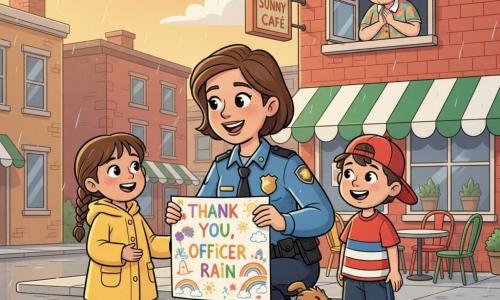
As he left, Mrs. Alvarez squeezed his hand. "Thank you for being patient," she said. Tom pedaled away feeling warm. Small acts of mediation — explaining, calming, helping — kept the neighborhood connected.
Chapter 4: The Name Tag Idea and a Lasting Smile
Near the community center, a school group waited for a nature walk. The teacher looked stressed, counting heads and calling names. Tom pulled out his stack of name tags and a box of colorful stickers.
"How about we make name tags for everyone?" he suggested. "A quick label can help kids stay together, and you can write a parent's phone on the back if you like."
The teacher brightened. "Yes, that would help a lot."
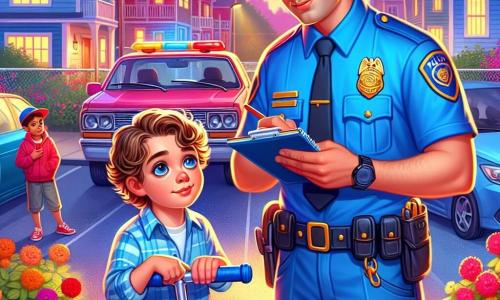
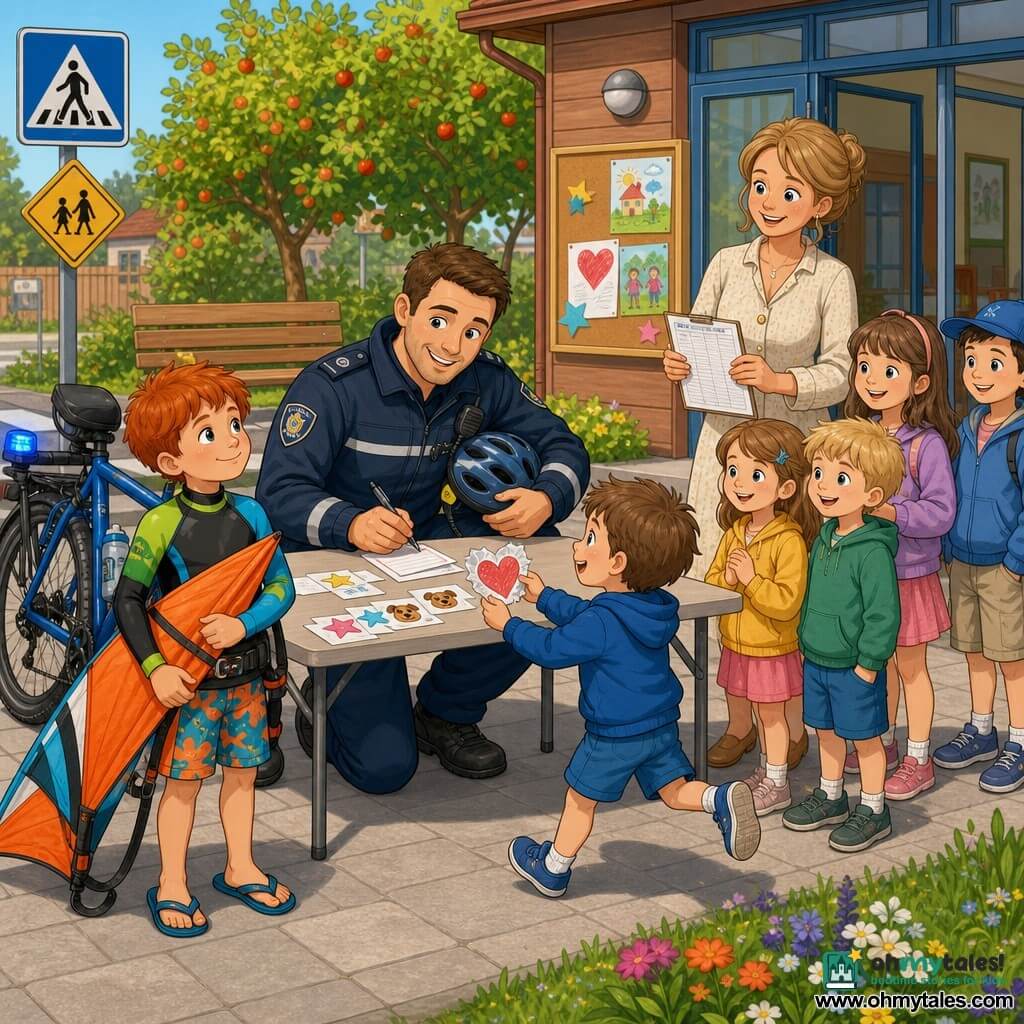
Tom showed the kids how to write neatly and how to fold a tag so it would stay on a jacket pocket. He added a tiny safety tip on each tag: "Hold hands on crossings" or "Stay on the path." The children giggled choosing stickers — stars, suns, and tiny dogs. One boy cheekily stuck a sticker on Tom's badge. "Now you're ours!" he declared.
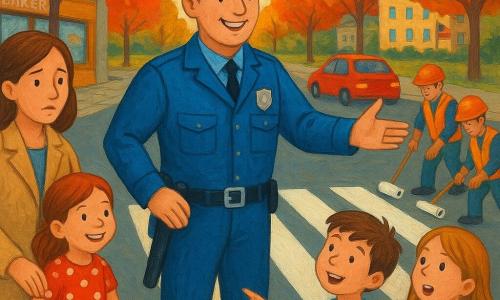
Before the group left, Tom taught them how to cross at a zebra crossing: stop, look left and right, and make eye contact with drivers. The children practiced with him in a funny song. The teacher thanked him for helping the outing feel safer and calmer.
As the school walked off in a neat line, Tom took a deep breath. His radio chirped with a small request to check a display board in the square, nothing urgent. He pedaled slowly, enjoying the sound of children's voices behind him.
At the end of his patrol, Tom stopped by the little bridge where he often paused. He took off his helmet and watched a pair of swans glide by. He remembered the girl's promise to wear a helmet, Sam's smile when his kite flew, Mrs. Alvarez's relieved face, and the children's laughter as they showed off their stickers.
A boy from the group ran back and handed Tom a crumpled paper heart. "For you," he said shyly.
Tom put it in his pocket and, with a soft, tired grin, gave the boy a thumbs-up. He felt proud and calm. He had taught, listened, and helped, and the town felt a little safer because of small, steady acts.
He clipped a final name tag to his own jacket — a little reminder that names, like people, matter — and rode slowly home under the warm afternoon light, ending the day with one last smile.