Chapter One: The Spark in the Shed
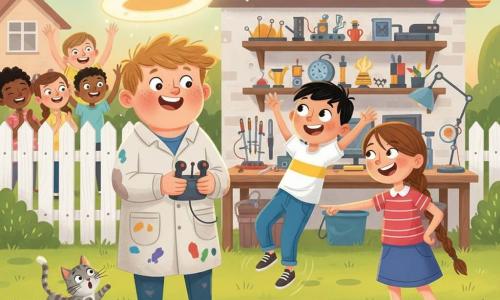
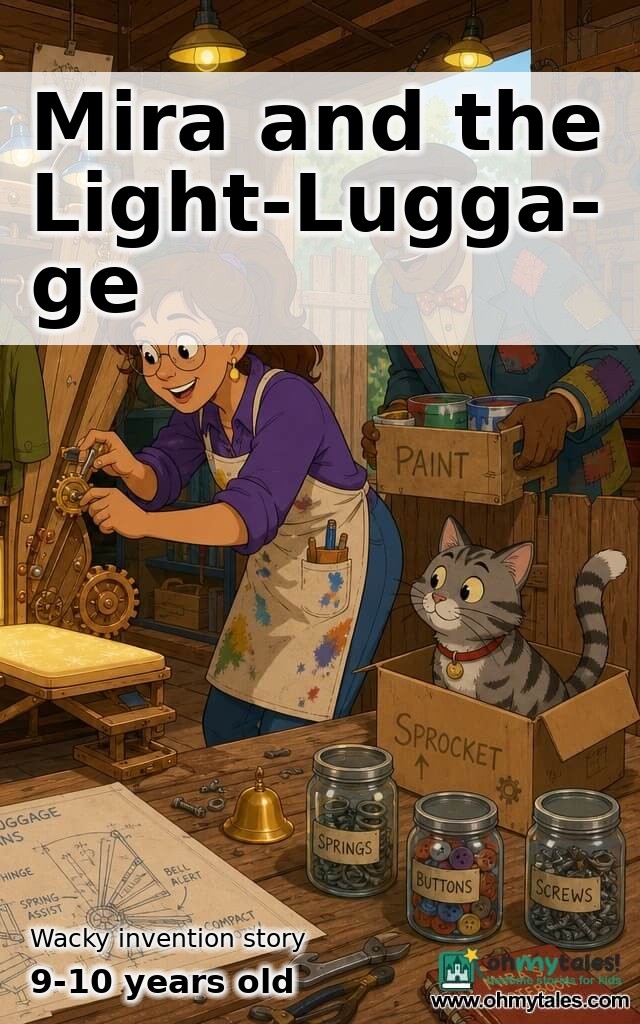
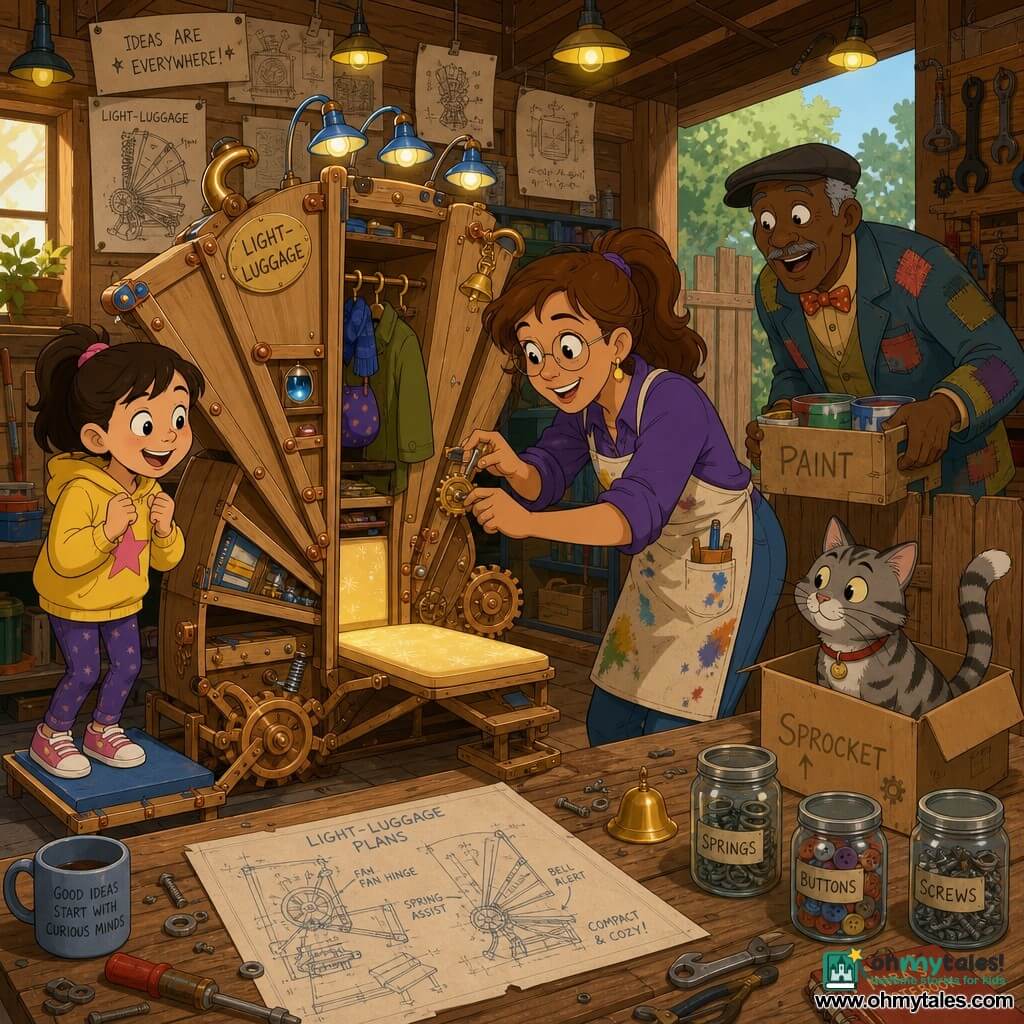
Mira liked making things the way some people like making sandwiches: carefully, with a little dance of the hands and a spoonful of imagination. She kept a shed at the end of her garden that smelled of lemon oil and old bolts. On her workbench were sketches with tiny face doodles she called “helpers,” jars of buttons, and a stack of notebooks tied with twine.
“I want to invent something that helps people carry their small worries,” she told her cat, Sprocket, who blinked as if he understood deep science.
Her idea was silly and simple: a portable shelf that could hold not only groceries but also little troubles—lost keys, tricky homework, grumbling stomachs. It would hum a soft tuneful note and make things lighter. She called it the Light-Luggage. Mira drew it with a crank, some accordion panels, and a soft bell that would chime when the burden felt heavy.
“It should be kind,” she wrote in her notebook, underlining the word twice. “It mustn't pick on anyone's feelings.”
She tightened a bolt. “Tomorrow, I'll try the lift.”
Sprocket hopped into a shoebox and pretended to be the first test passenger.
Chapter Two: The Unexpected Passenger
The first test went mostly according to Mira's plans. The shelf unfolded like a polite umbrella, balanced a bag of potatoes, and hummed a polite hum. Mira clapped. The potatoes felt lighter. The bell chimed a friendly ding.
Then her neighbor, Mr. Pender, stuck his head over the fence. He was carrying a crate of paint cans and wearing two different slippers.
“What have you got there?” he asked.
“A Light-Luggage,” Mira said, proud as a kite. “It holds little worries and small things.”
“You say it might help with worries?” He squinted. “I've been worrying about the town fete banner. It keeps wobbling.”
Mira's fingers itched with ideas. She slid the crate onto the shelf. The shelf wobbled, hummed, and then—surprise!—produced a tiny flagmaker from a hidden compartment. A spool of fabric marched out like a ribboned soldier and sewed a neat little banner that read: KEEP CALM AND BAKE PIES.
Mr. Pender laughed and clapped. “Well, I never.”
Word spread because word loves to travel, especially if it thinks a new gadget will do the heavy thinking for you. Children came with flat bicycles, old toys, and torn notebooks. An officious postman brought a bag of complaints (he'd written them down, just in case). Each time, the Light-Luggage shivered, then unexpectedly added a small feature to solve a problem: a tiny umbrella for a soggy poem, a soft pocket that mended a ripped page, a mechanical pencil that sharpened itself politely.
Mira realized two things. One: her invention liked to be helpful. Two: it had a sense of humor.
“It's adding things,” she told Sprocket that night. “I made a shelf, and it's decided to be cleverer.”
Sprocket licked his paw as if saying, That's the best kind of invention.
Chapter Three: The Pocket Transport
Weeks later, the town asked Mira to help at the school fair. The Light-Luggage was popular, but dragging it around the fairgrounds made Mira tired. She thought of adding wheels, then thought of adding something even better: a pocket of transport.
“I'll make it carry tiny people for short hops,” she told her notebook. “A gentle ride, no more than across the square.”
She worked late, soldering a tiny engine that purred like a content mouse, weaving a fabric seat into the shelf's fold. She tested the mechanism with a stuffed rabbit. The seat folded out, the engine hummed, and the rabbit experienced a grand tour of the shed.
At the fair, a shy girl named Lila had lost her courage to enter the puppet tent. Mira offered the Light-Luggage a quiet apology for being experimental. “Would you like a short ride?” Mira asked.
Lila nodded. Mira folded the shelf open; the seat popped out with a polite bow. The pocket of transport hummed, and the Light-Luggage carried Lila gently across the fair, past the baking stall and the juggler. The bell chimed a tiny tune that made Lila giggle. When she stepped down, she marched into the puppet tent with her head held high.
“Thank you,” Lila said. “That was like a bubble ride.”
Mira felt warm and proud. Still, the transport had an odd quirk: it sometimes added a feature mid-ride. On a later afternoon, the Light-Luggage carried Mr. Pender's cat, Buttons, who was suspicious of everything. Mid-ride, the pocket produced a miniature opera hat and a tiny monocle, which Buttons accepted with regal dignity. The audience clapped. Buttons pursued a royal posture for three happy days.
Mira learned to laugh at these additions. They were harmless, always kind, and often funny. People began to decorate the Light-Luggage with stickers and gratitude notes. It became a town helper that tipped its bell politely.
Chapter Four: The Day the Rain Took a Nap
One cloud-heavy afternoon, the school's rain machine—part of a science project—went off at the wrong time. Showers started inside the town hall where the art show hung. Paintings shivered. Paper boats floated sadly in puddles.
The Light-Luggage was parked outside, sipping sunlight. Mira dashed in, bring the shelf and its pocket transport. She unfolded it under the leaking skylight. The shelf hummed, then produced a soft awning that smelled faintly of cinnamon and morning. The awning hovered like a slow-moving cloud and caught the indoor rain, turning each drop into a shimmering bead that the Light-Luggage offered to the paintings like tiny, polite left-behinds. The raindrops dried on their own, leaving the paintings happier and slightly sparkly.
The mayor shook Mira's hand. “We didn't think of that,” she said, eyes bright.
Mira shook back. “Neither did the rain,” she said.
On the way home, a young boy tripped on a loose tile, scraping his knee. His scrape was small but loud in his chest. Mira set the Light-Luggage beside him. The shelf opened a soft pocket with a bandage printed with smiling stars and a small paper bird that sang a silly tune. The boy's frown loosened. He hugged the bandage like a tiny prize.
“You're a miracle,” he told Mira in a whisper.
“I'm just an inventor who listened,” Mira replied, scratching Sprocket behind the ear. “And it listens, too.”
Chapter Five: Curiosity Intact
By the time autumn painted the trees in marmalade and copper, the Light-Luggage had more little inventions tucked into it than a squirrel has winter plans. It mended mittens, carried lost umbrellas, and occasionally produced an impossible hat for the solemn librarian.
Mira still took notes every evening. The Light-Luggage had become something between a friend and a puzzle box: wonderfully helpful and sometimes unpredictable. Once, it grew a tiny flag that read, WITH CARE, PLEASE. Mira laughed and added a pencil note: Respect others' puzzles.
A new idea nudged at her—something about teaching the Light-Luggage to ask before adding things. She put the thought in her notebook with a doodled question mark that winked.
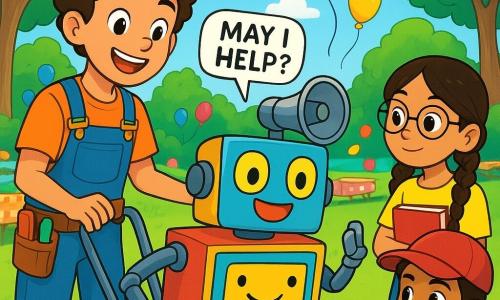
One morning she woke with a plan that was gentle and careful: to give the Light-Luggage a polite question wheel. Before adding anything, it would ask, “May I?” in a tinny, courteous voice. Everyone could answer yes or no.
She worked in the shed, humming, and when the wheel clicked into place, the Light-Luggage asked, “May I help?”
“Yes,” said the town.
“Yes,” said Mr. Pender, after a moment's thought.
“Yes,” said Buttons too, though he did so with his tail.
The new feature made people smile. It gave them a choice and showed the town that inventions should respect others as much as people.
That evening Mira wrote in her notebook: INVENTION = HELP + CHOICE + KINDNESS. She underlined kindness three times.
Sprocket settled on her lap. Mira looked at her garden, the shed, and the town she loved. Her curiosity felt full, not finished. She still had ideas—a hat that sang sea shanties, a teapot that told polite jokes, perhaps a little tram that only ran between two very important places: the bakery and the playground.
She closed her notebook and whispered to the Light-Luggage, “What shall we try next?”
The bell gave a tiny, thoughtful ding. It did not answer with words. It didn't have to. The curiosity was intact—bright, gentle, and ready for another day of making the world a little lighter, one polite invention at a time.