Chapter 1: Morning at the Fire Station
Maya's boots made a soft thump-thump on the station floor as she walked past the shiny red fire engine. She was a firefighter, and she liked to start her day the same way: with a calm check of everything that helped her keep people safe.
She tested her radio. She checked the hoses, neat and rolled like giant sleepy snakes. She looked at the helmets lined up like friendly yellow turtles. Then she smiled at the kitchen table where a few chairs were slightly crooked, as if they had been having a midnight dance party.
Maya gently straightened one chair. “We'll have you tidy later,” she whispered, as if the chair might feel proud.
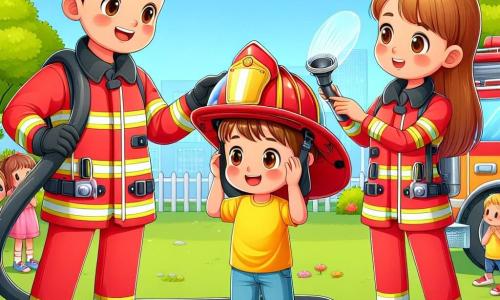
Today, a class from Maple Street School was visiting. Maya liked having kids around the station. They asked bright questions, and they noticed things grown-ups sometimes forgot—like how the siren sounded a little like a musical whale.
The kids arrived in a cheerful line with their teacher, Ms. Patel. Their eyes widened at the fire engine and the tall silver poles.
Maya kept her voice warm and steady. “Welcome! My job is to help people during emergencies and to teach everyone how to stay safe before an emergency happens.”
The children watched as she showed them her jacket with bright stripes. “These stripes help others see me,” she explained. “And the jacket helps protect me from heat.”
She guided them to a big wall map. “We learn our town like a storybook,” she said. “We need to know where schools, parks, and hospitals are, so we can get there quickly.”
A boy pointed at the engine's long ladder. “Is it for rescuing cats?”
Maya chuckled softly. “Sometimes. Mostly it's for reaching high places safely. We don't want anyone taking risky climbs.”
She taught them a simple rule: “If there's smoke or fire, get out, stay out, and call for help. And if your clothes ever catch fire, remember: stop, drop, and roll.”
The kids practiced “stop, drop, and roll” in slow motion, giggling as if they were pancakes being carefully flipped.
Maya watched their happy faces and felt proud. “Learning safety is brave,” she told them. “Bravery isn't only running into danger. It's also making smart choices.”
Chapter 2: A Tiny Fire and a Big Lesson
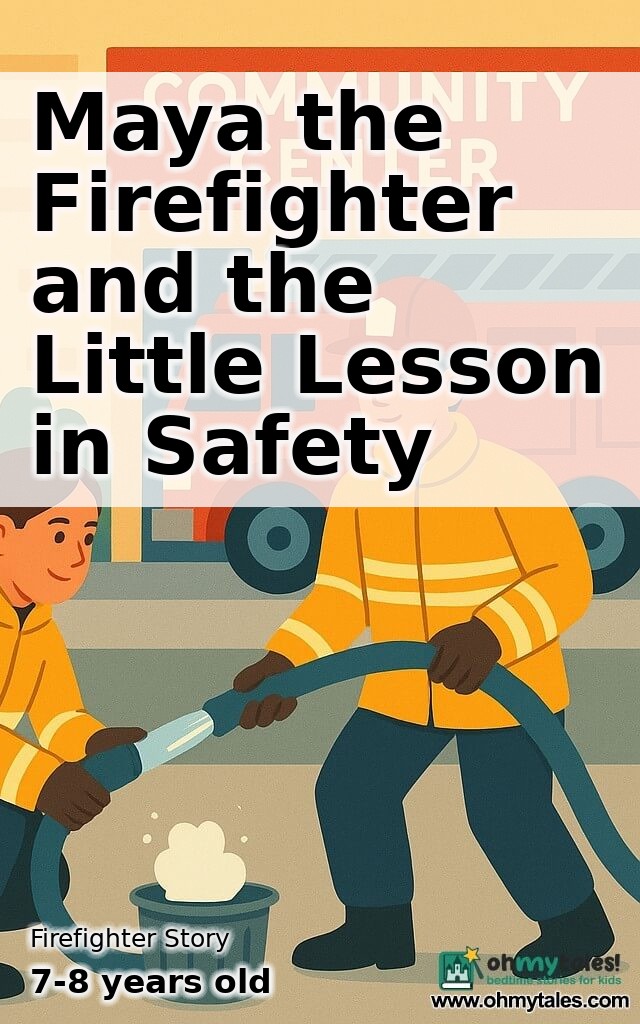
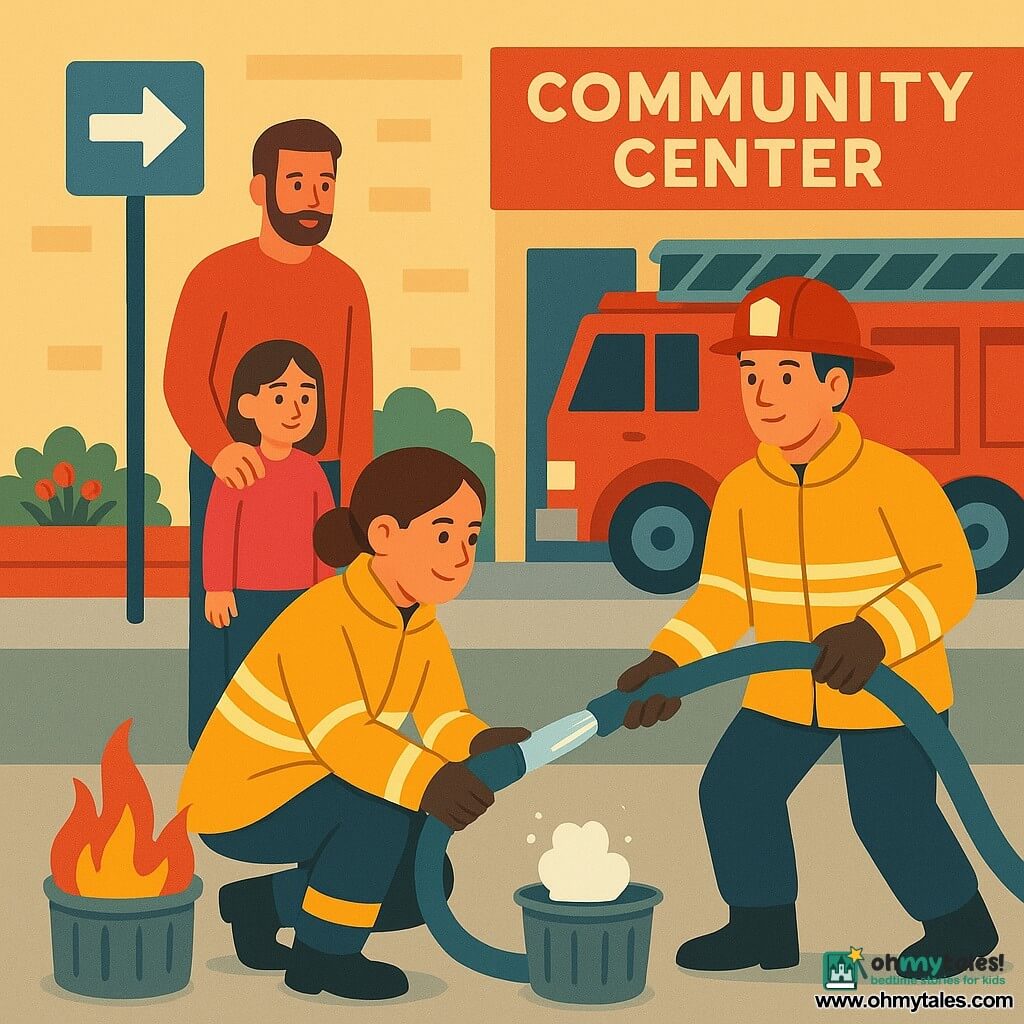
After the visit, the station was quiet again. Maya drank water and listened to the gentle hum of the building. Then her radio crackled with a calm voice: a small fire had started in a metal trash bin behind the community center. It was outside, away from the building, and someone had already moved people to a safe spot.
Maya and her team drove out smoothly. No rushing with wild zigzags—just steady, careful driving. “Respect the road,” Maya always said. “We keep everyone safe, even on the way.”
When they arrived, Maya saw a small orange flicker in the bin. It looked more like a campfire than a monster, and it stayed right where it was, because the bin was metal and the area around it was clear.
A few neighbors stood at a safe distance. Maya gave them a friendly wave. “You did the right thing by stepping back,” she called.
One little girl held her dad's hand tight. Maya crouched so her eyes were level with the girl's. “You're safe,” she said in her calmest voice. “We're going to take care of it.”
Maya asked her teammate to bring the hose, but she didn't spray right away. First, she looked. Firefighters don't just act fast—they also think fast.
She noticed there was a light breeze. The flames leaned in one direction, bending like they were bowing politely to the wind. Maya stepped back a little more, watching from afar for a moment to understand the fire's movement.
“Fire needs three things,” she explained to the neighbors in a gentle teaching voice. “Heat, fuel, and oxygen. The wind can give it extra oxygen, and the fuel is what's burning.”
She pointed carefully, keeping her distance. “See how the flames stretch toward the breeze? That helps us choose where to stand and how to spray. We respect the fire by understanding it.”
The little girl blinked. “So you're studying it?”
“In a way, yes,” Maya said. “Fire is not something to play with, but it is something we can learn about, so we can stop it safely.”
When she was ready, Maya nodded to her teammate. They aimed the hose with control, using a steady stream to cool the fire. The water hissed, and the flames shrank smaller and smaller, like a candle being pinched out—quick, quiet, and done.
Soon, only a bit of steam rose into the air, and the bin sat there looking slightly embarrassed, as if it had tried to do a trick and failed.
Maya checked the area again to make sure nothing else was warm or smoking. “We always double-check,” she said. “That's part of the job, too.”
The neighbors relaxed. The little girl finally let her shoulders drop.
Maya smiled. “You were brave,” she told her. “And your dad was respectful, keeping you back. Respect means we listen to safety rules, even when we're curious.”
Chapter 3: Back to Calm
Back at the station, the afternoon sunlight fell in soft squares on the floor. Maya helped clean and reload the hose so it would be ready next time. Firefighters take care of their tools the way librarians take care of books—because both help people.
Maya wrote a short report about the small fire: where it started, what burned, how the wind moved the flames, and how they put it out. She liked writing it clearly. “Someone might learn from this later,” she thought.
In the kitchen, the chairs were still a little messy from lunch. One was turned half-away from the table, like it wanted to see the hallway better.
Maya chuckled quietly. “All right, you wandering chairs,” she murmured, “back to your places.”
She set each chair straight with gentle hands. She didn't slam or shove. Even a chair deserved respect. She imagined the kids from the school visit would like that idea—that being kind wasn't only for people.
Her teammate Ben walked by and raised an eyebrow. “Negotiating with furniture again?”
Maya kept her voice calm and playful. “They respond well to polite instructions.”
Ben laughed softly and went to wash a mug.
Maya finished lining the chairs evenly. The kitchen looked peaceful, like a picture in a bedtime book. She sat for a moment and listened to the steady quiet of the station. No sirens, no rushing—just readiness and calm.
She thought about the day: teaching children, helping neighbors, watching flames from a safe distance to understand how they moved, and then acting with care. It all fit together. Being a firefighter wasn't only about big dramatic moments. It was about patience, learning, teamwork, and respect—respect for people, for rules, for tools, and even for the power of fire.
Outside, the sky began to turn a softer color. Maya stood and gave the nearest chair a tiny final nudge so it matched the others perfectly.
Everything was in place. The station felt safe and settled, ready for whatever tomorrow might bring. And for now, in the calm, Maya let the quiet wrap around the room like a warm blanket.