Chapter 1: Dust and Dawn
The wind sang across the prairie like an old fiddle. Lila Mae sat on the fence of her small ranch and watched the sun climb over a ridge. Her hat was tilted back. Her braids had dust in them from the trail. The horses were munching hay with soft plink sounds, and a bright blue sky promised adventure.
Lila Mae was young, but people called her "Lila the Ready" because she liked to fix things. She had a quick laugh and quicker hands. Today, she had a new plan. The town's tiny schoolhouse had no room for sick folks and there was no doctor nearby. Lila decided she would build an infirmary — a little place to care for bumps, bruises, and sore hearts.
She packed her saddlebag with clean cloths, bottles of mild tonic, a small bandage kit, a soft quilt, and a tin lamp. "We'll do this right," she told her horse, Maple. Maple nicked the air and whinnied as if to say, "Let's go."
At the edge of town, townsfolk were starting stalls for the weekly market. Mr. Finch, the baker, waved a floury hand and called, "Lila! Watch out for the stray calves!"
Lila waved back. She loved the town's bustle, but the wide land beyond it called too. She rode toward the old wagon grove where she planned to set up the infirmary. The grove had towering cottonwoods that clicked their leaves like applause.
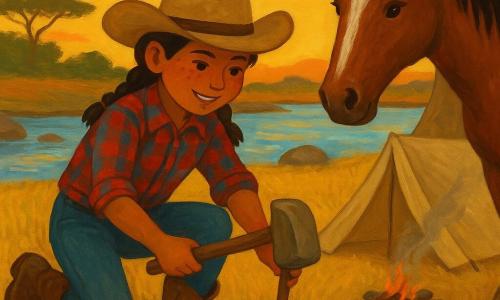
When she arrived, she found a lean-to that had already given shelter to a family of mice. Lila smiled. "We'll make room," she whispered. She cleared the ground, hammered in pegs, and hung quilts between the trees like colorful sails. The tin lamp made warm circles of light. The place began to feel like a safe little room in the middle of the wild.
"I'll need a sign," she said. With a wood slat and charcoal, she drew a red cross and wrote CARE. It was small, but people would know help was near. Lila checked her supplies once more and tucked a promise into her pocket: to be brave and steady.
Chapter 2: Trouble on the Trail
By noon, the infirmary was a tidy nook. A plump armchair sat by a stump table, and a shelf held jars of dried herbs. Lila hummed as she stitched a patch on the quilt. The sound of hooves turned her head.
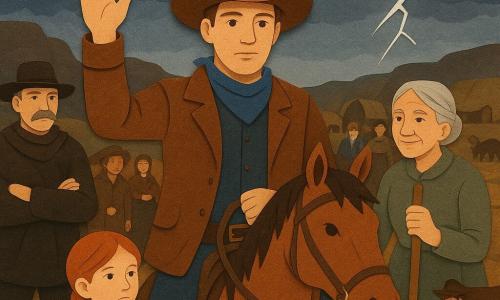
A rider came in a cloud of dust. He was tall, his coat full of dust, and his horse limped a little. His eyes were worried. Behind him, a small caravan of settlers moved like a line of living boxes — wagons, trunks, and tired faces. Mothers rocked babies and children held hands. The rider rode up quickly and called, "Miss Lila! My name's Tomas. We've had a rough spill. Can you help?"
Lila sprang up. "Of course. Bring them in." She motioned to the lean-to, smoothing the quilt. "Let's see who's hurt."
The first to step in was a boy named Benny with a scraped knee and a brave face. He gamely grinned through the pain. "It hurt, ma'am," he said.
"Hold still," Lila said, smiling. She cleaned the scrape with cool water and wrapped it in a neat bandage. Benny's face relaxed. "You're as gentle as summer," he whispered.
Next came Mrs. Alvarez with a bump on her arm. "It'll bruise," she said, but her voice trembled. Lila tied a cold cloth and asked about the wagons. Tomas explained that a sudden thunderstorm had washed out a path and a wheel had broken. The caravan was stranded. They had food and spirit, but the trail to the next town was long.
Lila felt a tug in her chest. Responsibility sat on her shoulders like a small, stubborn bird. "We can fix the wheel," she said. "And I'll make sure no one is left worse for the journey."
Tomas looked at Lila as if she had offered a lantern in a dark night. "You mean it? We'd be lost without you."
"We'll start right away," Lila answered.
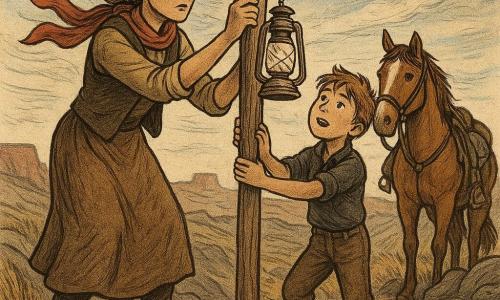
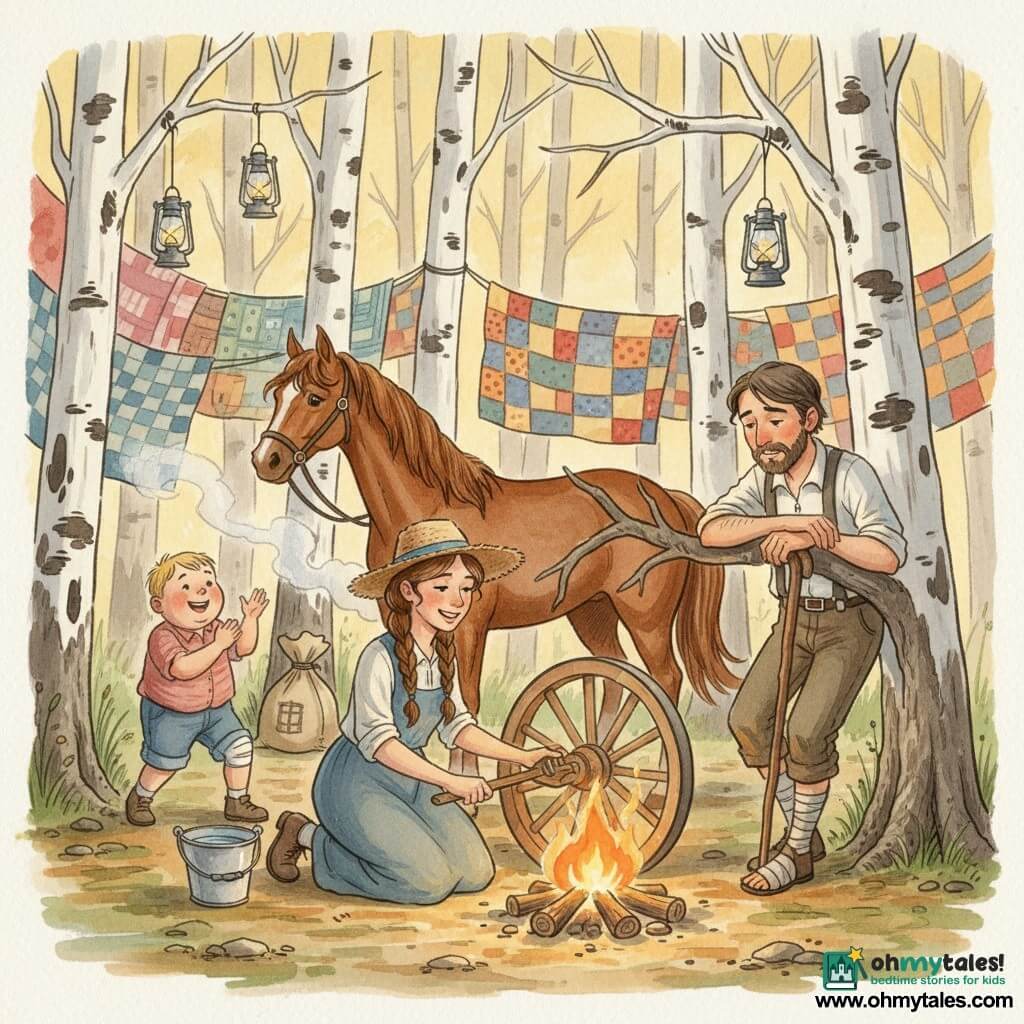
She worked quickly. She found a sturdy pole from the grove and, with the help of Maple and a few settlers, they fashioned a sling to lift the wagon. The men tightened ropes and hammered new pegs. Lila knelt in dirt and oil, her fingers smudging black, but her eyes were bright.
While the wagon was mended, the women and children sat under quilts, telling stories to keep spirits high. Lila made warm bread over the small campfire. The smell of baking and the soft crackle of flames made the camp feel less like a stranded caravan and more like a family picnic with a mission.
When the wheel creaked back into place, the settlers cheered. Benny bounced on his good leg. "Hurrah for Lila!" he shouted, which made everyone laugh. Lila felt satisfied and tired. Even brave people need rest, she thought. She wrapped a quilt around herself and hummed into the night.
Chapter 3: The Storm and the Star
That night, thunder rolled like big drumbeats. Wind tugged at the quilts like it wanted to join the dance. Some of the children woke and feared the storm, so Lila sat by the fire and told stories that turned thunder into a giant sheep that coughed. The children giggled and sipped warm milk. "You're funny," said little Mina, rubbing her eyes.
In the middle of the noise, a sharp cry cut the air. A young calf had slipped off the path near a thorn bush. Tomas ran, but his ankle twisted on the wet ground. He fell and cursed softly. Lila rose without thinking. Her hands worked like trained fishermen, careful and quick. "Stay with me," she told Tomas, putting a warm cloth to his ankle.
Tomas watched her with trust. "You're always ready," he said, and Lila felt the warmth of that trust like a blanket.
Maple and a couple of strong men held ropes. Lila led the others to the thicket where the calf trembled. It was muddy and frightened, its eyes wide as saucers. "Easy, little one," Lila whispered, speaking slowly so the calf could hear kindness. She untangled vines and used a soft halter to calm the calf. With a gentle pull, the animal came free and leapt into the open. The children clapped until they were out of breath.
On the trail back, Tomas twisted his ankle more than he thought. Lila set it, wrapping it snug with a padded bandage. "You'll walk with a staff for a few days," she advised. "Rest and sip broth."
He accepted the help, leaning on her steady shoulder as he walked. "How can I ever thank you?" Tomas asked.
"Take care of your folks," Lila said. "And be kind on the trail."
They all settled under the cottonwoods. The storm passed like a visitor who had said its piece. The sky cleared to a velvet black, sprinkled with stars like sugar. Lila looked up and breathed the cool night. "Tomorrow we head out," she said, feeling both weary and brave.
Chapter 4: A Gesture of Peace
Dawn spread gold like syrup. The caravan was ready to roll, wagons packed and children cheerful again. But a new problem loomed: across the ridge lived the Hartley clan, who sometimes argued loudly with the settlers over grazing rights. A Hartley rider, Jack, rode into the clearing with his hat in his hands. He was well-known for being fierce, but Lila noticed his jaw was worried.
"There's been trouble up the ridge," he said. "My cousin saw signs of strayed cattle on your side and thought they were taken." His voice was rough but not mean. Lila remembered many evenings when people argued over small things and feelings grew like fire. She believed a gentle hand could cool the flames.
Tomas bristled, and one of the settlers clenched his fists. "We didn't take anything," Tomas said. "We lost a calf because of the storm."
Jack's shoulders dropped a little. "Truth is tricky on the plains," he muttered.
Lila walked forward, her boots crunching the dry grass. She looked at both sides, at the faces set like puzzle pieces. "I can help," she said simply. "We can find out what happened."
Everyone looked at her. It was a small town of expectant eyes. Lila knew this moment needed more than fixing wheels. It needed courage, patience, and an open heart. She suggested they all work together to track the calf's hoofprints. If they came to a fair answer, then the quarrel would end.
They followed the tracks up the ridge where the ground turned softer from a stream. Along the way, Lila pointed out signs and asked gentle questions. "Whose boot print is this?" she would say, and people answered and listened. When they found a patch of flattened sage and the calf's trail bent toward Hartley land, both sides slowed. A Hartley boy, Tom, held Lila's gaze and nodded.
"It came from our ravine," he said softly. He had been watching the weather too and cared for the land his way. "We kept it safe until we could call out."
Tomas breathed out, and the settlers relaxed. The two groups sighed like a thread pulled straight. Lila breathed in peace like fresh air. "Alright," she said, smiling. "We all helped each other today. That's what matters."
Jack reached into his saddlebags and pulled out a small jar of sweet jam. "For the bread," he said, handing it to Lila. He bowed his head a little. "Forgive me if I was quick to blame."
Tomas gripped Jack's hand, and the two men laughed like old friends. "No hard feelings," Tomas said. "We were scared."
Lila arranged a small table under the cottonwoods. Bread, jam, and hot tea made a picnic of peace. The children ran in circles while adults shared stories. Lila felt the good in the world sit quietly beside her, like a cat curling up on a porch.
Before they left, Lila tied a little flag to a post near the grove. It had both clans' marks: a small horse and a tiny plow. "This is the peace flag," she told the children. "If anything goes wrong, we meet under it and talk."
Everyone promised. They shook hands, kissed cheeks, and patted horses. The wagons rolled again, and this time the road felt wide enough for all.
As the caravan moved away, Tomas waved. "We'll stop by the infirmary when we pass," he called. "You saved us, Lila."
"No, we saved each other," Lila answered, turning to Maple. The horse flicked her tail like applause.
The town seemed smaller as they left, but the prairie felt larger. Lila returned to her lean-to, sat on the stump and watched dust columns shrink into the horizon. She felt tired and proud. She had fixed a wheel, soothed a calf, bandaged an ankle, and helped make peace.
Lila dug a little cellar under the lean-to and placed a jar labeled "For Helping Hands." Inside went a note with careful letters: Be kind, be ready, and always help. She tucked the jar away like a secret for the future.
That evening, she lit the tin lamp and hummed a soft tune. Stars shone like tiny lamps in the sky, and a gentle breeze carried the smell of baking from the distant town. Lila knew that the West could be wild and wide, but it could also be a place of mended things and warm hearts.
She lay down under the quilts, her head full of plans. Tomorrow she would stock more tonic and learn to stitch better bandages. But tonight she had peace, and she slept with the steady rhythm of the prairie in her ears.
In the morning, a note was taped to her care sign: Thank you, Lila Mae. From friends near and far. Lila smiled. She had set out to make an infirmary, but she had built something else too — a small shelter for courage, care, and the promise that folks could look after one another.
And when trouble came again, as trouble sometimes does, the townsfolk would remember the flag and the quilt and the girl who made a place for healing. They would come together, talk, fix things, and share bread. Lila Mae had done more than stitch wounds; she had stitched a new way to live on the wide, wild prairie.