Chapter 1
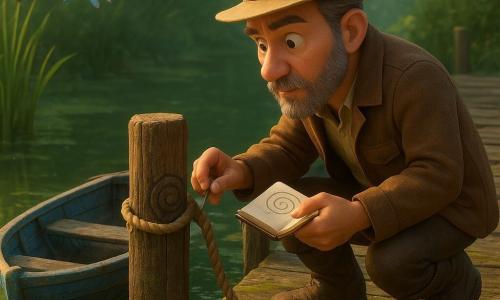
The young man walked down the pebble path that curled like a sleeping snake around the sheltered bay. Salt wind brushed his hair. Small boats bobbed and hummed with the tide. He carried a leather satchel, a brass compass, and a rolled-up chart tied with blue ribbon. His name was Tomas, and he had a warm, curious face that smiled even when the sky grew gray.
Tomas loved the bay. It was tucked between soft hills and ancient stone walls. Old fishermen mended nets on the shore and children chased crabs between the rocks. At night, the bay became quieter. Lanterns swung. Shadows stretched like long, gentle hands. Tomas's greatest wish lived in those quiet nights. He wanted to map the local constellations—the bright stories the people once used to find their way.
Long ago, the villagers had named stars after sea creatures, old boats, and brave sailors. Over time, storms and new lights had blurred the sky. The old names were fading. Tomas thought the constellations were part of the bay's heart, a way to remember who they were. He wanted to bring them back, to show children how to read the sky and to honor the people who loved the sea before him.
At the edge of the water, Tomas set his little wooden boat into the bay. He pushed off with a steady oar and listened. The sound of lapping water, the call of a far gull, and the soft creak of the boat made a gentle music. He rowed to the middle, where the water held the sky like a dark, waiting mirror.
He unrolled his chart. It was partly empty, like a sleeping map waiting for dreams. He had sketches of old tales—the Whale's Tail, the Lantern Sail, the Fisher's Net—faded lines that his grandmother had traced for him. He wanted to find the stars that matched those lines and to write their positions with the compass and a brass pencil. The night was his friend. He waited for the first star.
Chapter 2
The first star came like a small, brave spark. Then another. The sky filled with a slow, careful scatter of lights, each one a pinprick of silver stitched into velvet. Tomas held his breath. He compared the sky with the sketch in his hand. Some stars fit like puzzle pieces. Others were shy, hiding behind a low cloud or a fishing lantern.
A hush fell over the bay. Tomas felt the chill on his fingers and the soft pressure of the dark. He marked a line. He whispered a name. A wind tiptoed across the water and tugged at his hair. A gull circled, its wings painting the air.
Trouble came like a shadow. A fog rolled in from the open sea. It was thick and smelled of wet stone and distant kelp. The stars vanished under the fog's soft blanket. Tomas's heart thumped. He could not see the sky. His compass trembled in his hand like a small, caged bird.
He thought of going back to shore. The warm light of the village, the shelter of the stone walls—that was safe. But the old names needed saving. Tomas remembered the stories his grandmother told—how the people of the bay once lit lanterns on the cliffs when the sky hid, to guide boats and to keep the stories alive. He felt brave, like the sailors in those tales. He would not turn back.
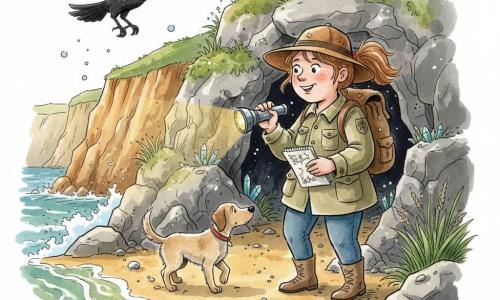
Tomas tied his chart to the boat and took his lantern. The golden light cut through the fog in a steady circle. It did not show the stars, but it showed the land. He rowed close to the cliffs where seaweed hung like dark hair and small caves sat like hidden mouths. He stepped out, boots squishing in soft sand, and climbed. The path was slippery. His palms grew sore on the wet rock. A small gust knocked the lantern. For a moment, the light trembled—and then Tomas steadied it. He remembered to breathe slow and sure.
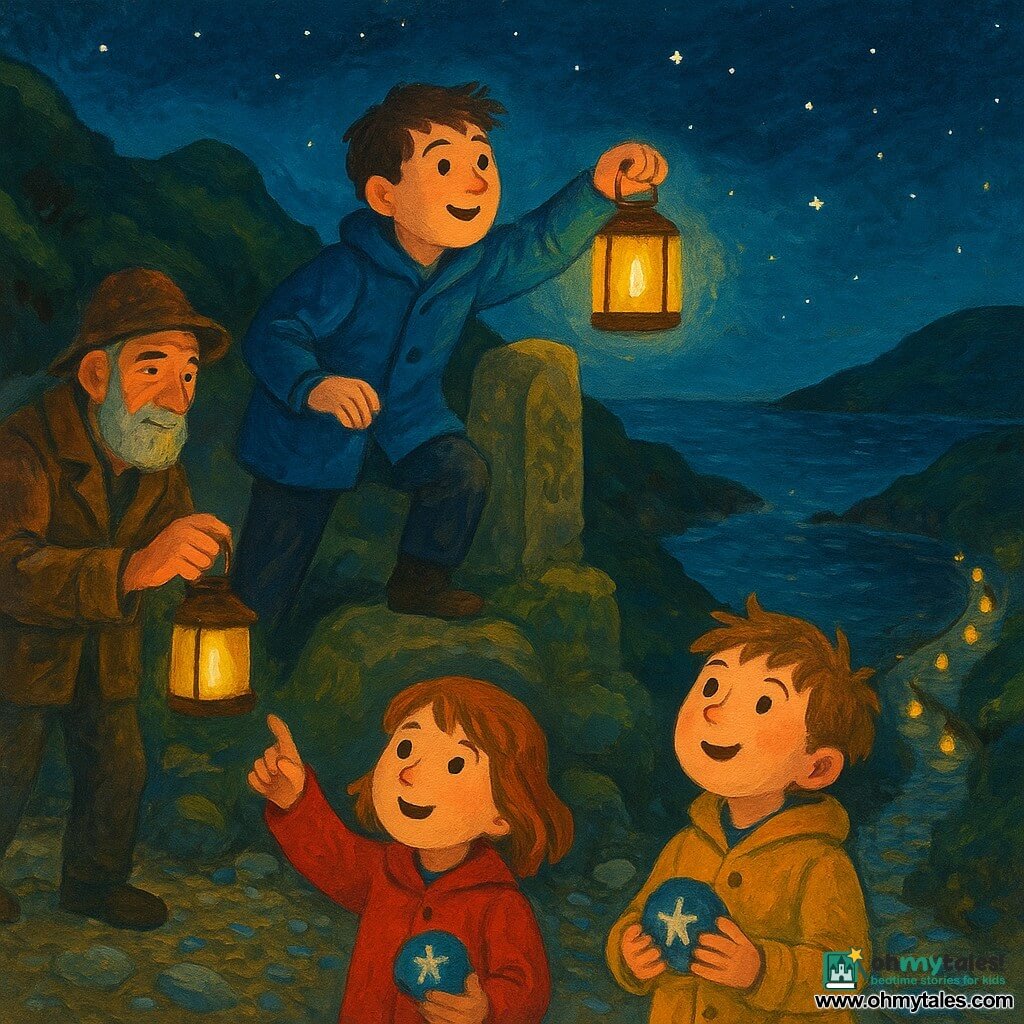
Higher on the cliff, he found an old stone marker. It had been carved long ago with tiny symbols: a fish, a boat, a crescent moon. Moss hugged the edges. The marker pointed to an old lookout where lanterns had once been set. Tomas set his light on the stone and rubbed at the moss. He could almost hear the voices of the past. He whispered the names he knew. The fog was thick, but the breeze began to change. The lantern's glow reached out, and the fog around it thinned like breath on glass.
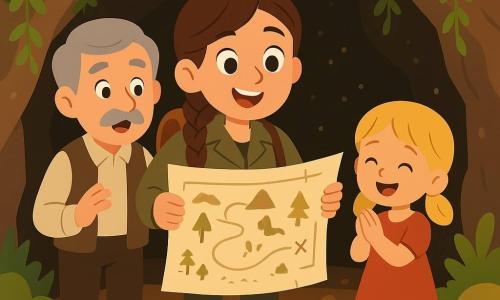
Below, a group of fishermen saw the light. They came with their own lanterns, their faces lined and gentle. They asked what he was doing. Tomas showed them his chart and spoke of the old names. The fishermen peered at the sketches and at the sea. They told him, softly, stories they had learned from their grandparents. A man with calm eyes spoke of the Lantern Sail that guided his father's boat. A woman with quick hands hummed a tune for the Fisher's Net. Together, they placed more lights along the cliff—small, steady fires like heartbeat points.
As the lanterns lit, the fog began to lift. It thinned, then broke, and the sky opened like a curtain. Stars poured through, bright and patient. They hung over the bay, glinting in the water. Tomas felt a warm tug in his chest. He read the sky with hands that shook only a little. He matched the stars to his chart. He wrote names with slow care, his brass pencil scratching like a small bird.
The fishermen watched quietly, proud and gentle. Tomas felt the history of the bay around him, like a cloak. He thought of how the lanterns had saved not only boats but also stories. He drew the last line on his chart and marked the place where the old marker stood. Respect sat in his bones like a steady stone.
Chapter 3
Days passed. Tomas worked with the village. Children came to learn the star names and to carry small lanterns on the shore. Tomas taught them how to watch the sky and how to listen to the sea. The fishermen told tales of long nights and safe harbors. Old women hummed the star songs while peeling fish near the fire. The bay hummed with memory, sewn together by new lights.
One evening, a small storm came from the west. Rain hammered the roofs and rattled the windows. Tomas's chart, wrapped in oilcloth, lay safe beneath his bed. He watched the rain and thought of the stars he had traced. He wondered if one night would wash the names away. Dawn came with quiet gold, and when he stepped outside, he saw something small and bright on the shore.
A child had painted tiny symbols on pebbles and lined them along the path. Each pebble had a star stitched with color—a blue whale, a silver fish, a tiny boat. The children had saved the names in their own brave, joyful way. Tomas knelt and touched a pebble. It was warm from the sun. He felt a happiness that wrapped itself around him like a blanket.
The bay changed slowly, as bays do. New lights arrived from the town, and new boats came from faraway places. But the people of the bay kept their lanterns on the cliffs for special nights. They read the chart Tomas had made with careful ink and brass lines and taught the names to children who would grow into keepers of the sky. Tomas set a small wooden box by the old marker. Inside he placed a copy of his chart, a brass pencil, and a whisper of the songs he had learned. He wanted future eyes to find the map if they needed it.
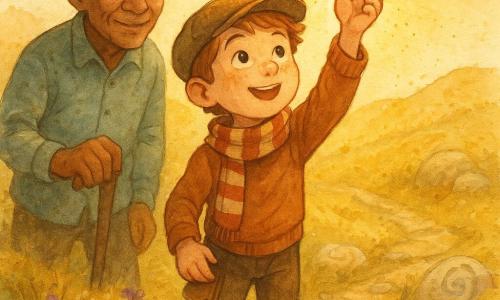
One night, under a sky full of patient stars, the villagers gathered. Lanterns swung. The children held pebbles. Tomas stood by the cliff marker and looked up. The stars were bright, clear as polished glass. He pointed with a steady hand to the Whale's Tail and to the Lantern Sail. The children traced the lines with their fingers and laughed when the wind tickled them. Tomas felt the bay breathe with him.
He thought of his grandmother, of the stone marker, of the fishermen who came in fog, and of all the small acts that had kept the stories alive. Courage had been gentle—stepping into the fog, climbing the cliff, speaking a name. Intelligence had come in patient thinking—watching the sky, tying lanterns, listening to elders. Resilience showed when the chart was wrapped and re-opened, when the children painted pebbles after the storm.
Tomas whispered the last line into the night, a promise more than a sentence. The promise was to watch the sky and the bay, and to remind people that the stars were not only for sailors and maps. They were for songs, for memory, and for small hands learning to read the dark.
The lanterns burned until the moon rose and the stars watched like friendly eyes. The bay held its breath and then let it go in a soft wave. Tomas walked home with empty hands and a full heart. The chart lay safe in the wooden box beneath the marker, and the constellations shone as they had for long ago and for the days to come.