Chapter One: The Fox with a Lantern
In the old wood where trees kept their secrets, there lived a little red fox named Ember. Ember's fur was like a warm fire in winter, and her eyes were bright as two small moons. She lived in a snug hollow beneath the roots of an ancient oak, where the ground smelled of moss and stories.
Each evening, Ember walked a path to the river to listen to the water sing. The river knew the names of all the stones and told riddles in soft sounds. But beyond the river and past the birch trees, a shadow moved like a long thought: the grand big bad wolf. He was not always seen; he came with the fog, when voices grew thin and the world seemed to forget itself.
“I keep a lantern,” Ember told the moon one night, polishing its glass with a leaf. “Not for light alone, but for keeping my steps steady when the world forgets to be clear.”
The lantern was small and brass, with crackled glass that looked like a tiny mirror of dawn. Ember liked knowing there was a plan in her pocket. She liked the idea of a plan B — a second path if the first path slipped away in mist.
Chapter Two: Voices in the Fog
One morning the woods woke with a hush. A white blanket slid between the trees, and it wrapped small sounds into cotton. The wolf's breath was in that mist, searching, folding sound into the shape of worry. He liked to find voices that stumbled, voices that did not know their own names.
From his den of shadows he called, “Little ones, come close. Tell me where you are.” His voice was a river stone that had been left to roll.
Ember listened. She heard a chick's small peep across the fence, sheep's soft bleats on the hill, and an old hedgehog's sigh. The voices fluttered, unsure. Ember felt the fog as if it were a hand over the forest's mouth. She thought of the lantern and of her other small things: a bell that made a clear, bright sound, and a thread of blue yarn she wore around her neck.
She walked slowly, keeping her paws light. “If the fog takes the road,” she said aloud, as she always did to teach herself courage, “I will have a second road. If the fog takes my voice, I will have my bell.”
She tied the bell to a low branch. It rang like a tiny bell in a village church, clear and sure. Then she walked to the river and dipped a paw into the cool water. “If I get lost, I will know home by the water's song,” she whispered. The river gurgled as if it agreed.
Nearby, a young rabbit hopped, trembling like a leaf. “I can't see,” the rabbit said. “I can't find my burrow.”
“Keep your steps quiet and your breath steady,” Ember answered. “The wolf listens for the quick and the frightened. He follows stumbles. I will show you how to be steady.”
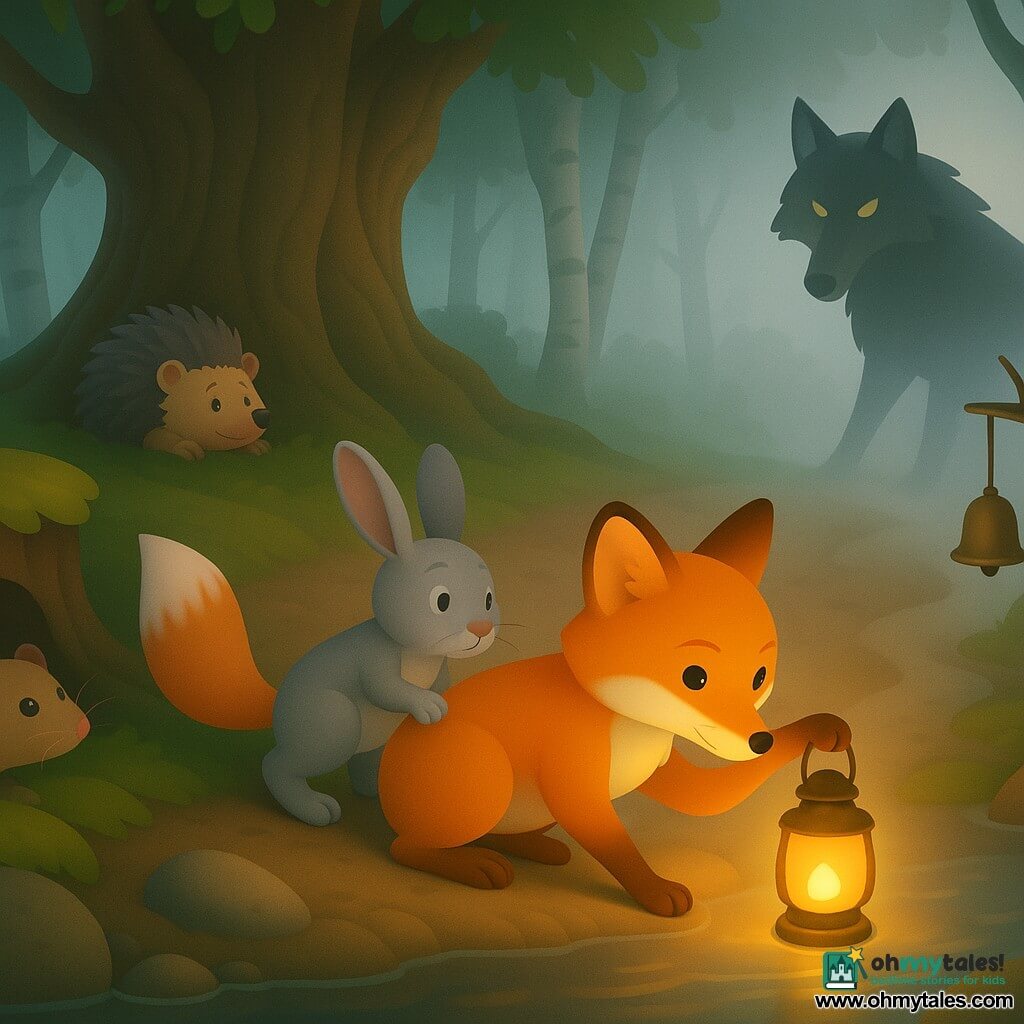
She led the rabbit by the tail with a gentle paw, and when the fog thickened near the bramble, her bell spoke softly to the rabbit's ear. The rabbit followed, head high.
Chapter Three: The Wolf and the Quiet Courage
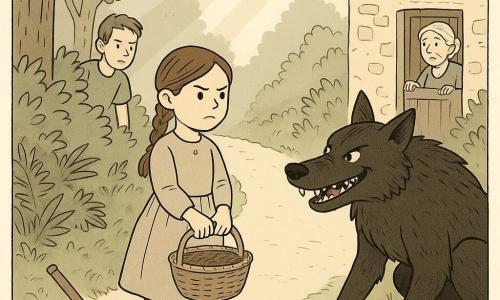
The grand wolf prowled closer, a shadow with a hunger for wavering words. He padded on soundless paws and unfurled questions like nets. “Who is there?” he asked. “Where do your footsteps go when you hide them?”
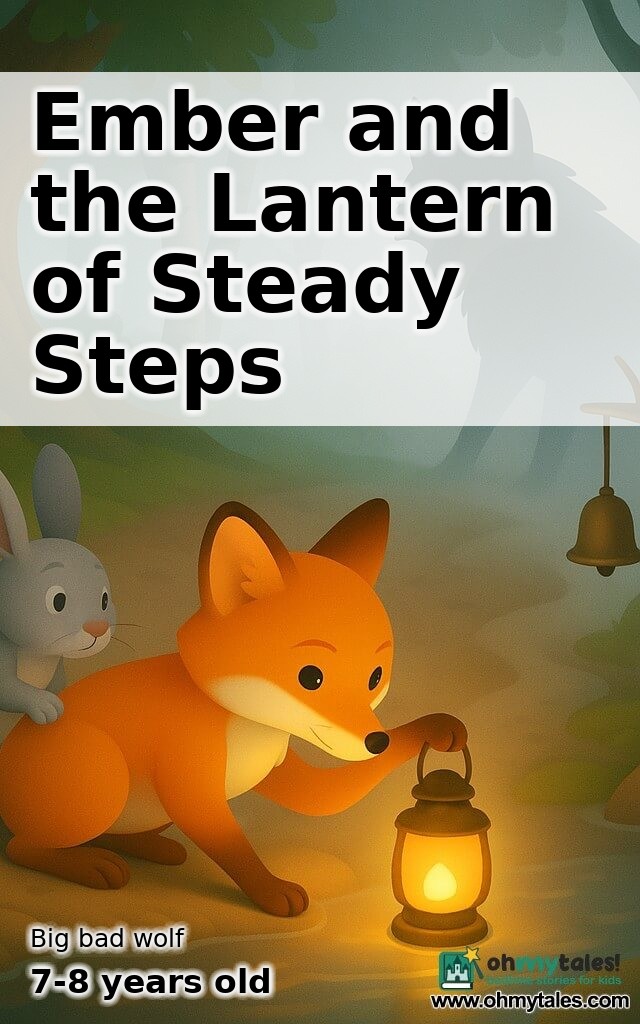
Ember stood at the river's edge. The mist curled around her like a slow ribbon. She could have run, for foxes are quick, like startled sparks. Instead she kept her lantern down low, showing a small circle of steady light on the moss.
“Step steady,” she told the others. “Count each breath. One, two. If you hush your fear, the wolf will not find the gap in your voice.”
A mouse peered from a hole, whiskers trembling. “But he is so big,” the mouse squeaked. The wolf's breath was close enough to make the grass bow.
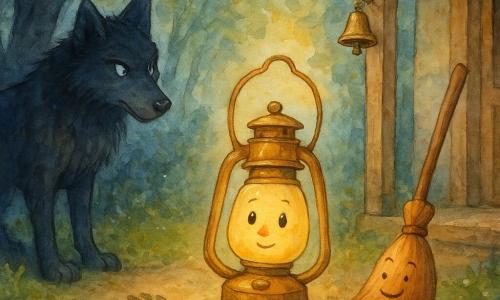
Ember took a deep breath. She lit the lantern. Its glow was not a shout; it was the patient hum of a stone warmed by the sun. The light painted the fog with a slow, kind hand. The wolf stepped into the circle and blinked. The lantern's glow asked no questions. It only kept steady.
The wolf sniffed the air and found the bell's small note, the river's song, the lantern's quiet shine. He listened for a falter, for a voice that might slip on its words. There was none. The fox, the rabbit, the mouse, the chick and even the hedgehog breathed, counted, and kept their steps gentle and sure.
Frustration swelled in the wolf like a storm cloud without the thunder. He tried to howl, to scatter the light with a shout. His voice became a clumsy stone, heavy and loud. But the forest held its calm like a bowl holds water, and the wolf's clumsy voice found no echo.
Seeing that the small ones did not scatter, the wolf's anger cooled. He turned away, a shadow folding into thicker woods. Ember watched his shape melt into the mist, her paws steady as a promise.
Chapter Four: The Lantern Left Burning
When the fog drifted off like a tired bird, the forest sighed. Sunlight threaded through the branches, and the river resumed its chatter. The rabbit found its burrow by following the bell and the scent of damp earth. The mouse returned to its hole, and the chick hopped back to its coop where the farmer hummed an old song.
“You were brave,” the rabbit said, its nose twitching.
“No,” Ember replied softly. “We were steady.”
She placed the lantern on a low stone and tied the blue yarn around a branch where a fox of another day might find it. “Keep a plan,” she told the wind. “Keep a light, and keep your breath. When the world grows unclear, a second road is a gift.”
The forest learned the lesson like a song learned by heart: courage grows not from loudness, but from calm. When the wolf returned for his place in the story, he found fewer easy shadows and fewer hurried voices. He learned that cunning meets better mettle when the small keep their steps even.
That night, Ember curled up beneath her oak. The lantern's glass made a little moon by her paw. The river hummed a lullaby, and the stars blinked like knowing eyes. Ember closed her eyes, steady as a well-founded stone, and in the soft dark she kept her plan B safe: a bell, a light, a breath. She slept with the calm of someone who has prepared for fog, and the forest slept with her, warm and wise.