Chapter One: The Keeper of Stones
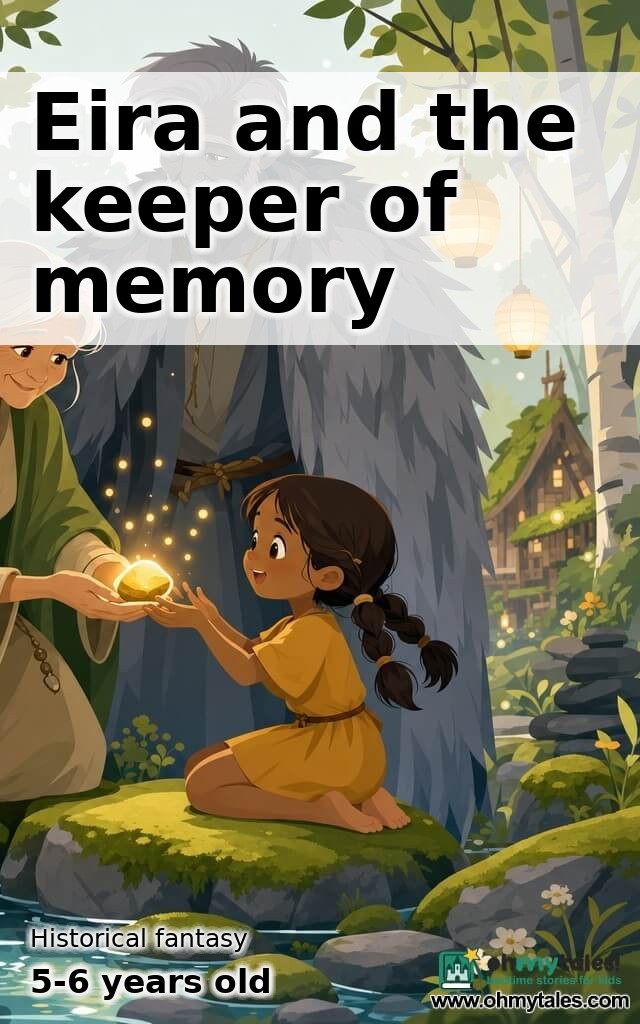
Long ago, when the rivers ran wide and the trees spoke in low songs, there lived a woman called Eira. She walked with soft boots on moss. Her hair was silver like moonlight. Her eyes held stories like small bright stones.
Eira belonged to a tribe that camped on the edge of a great forest. They carved wood and sang at firelight. They told tales of heroes and of storms. But stories can slip away like stray lambs. People forget names. They forget why they are brave. Eira had made a promise when she was young and worried.
"I will keep what the world remembers," she had said. "I will guard the memory of rivers, of songs, of small loves."
The elders smiled. They gave her a small pouch of round stones. Each stone was smooth and warm. Each had a tiny mark, like a rune. "These stones hold a name," said Old Hald, who wore a beard like ropes. "They will glow when someone remembers. You will keep them safe."
Eira held the pouch close. She pressed a stone to her heart. It felt heavy and good. She learned to sing to the stones. The songs were not loud. They were soft as breath. When she sang, the stones shivered and a light moved inside them, like a tiny dawn. The tribe listened. They began to remember more — the names of streams, the smells of summer grass, the old stories of brave girls and kind bakers. Eira felt joy that felt like bread fresh from the oven.
But the world is large, and memory is like wind. One night, a stranger came with a cloak of feathers and eyes that flashed like a hawk. He told of a dark place far away, a hollow where a great forgetfulness spread like mist. Plants withered there. Children lost the names of their games. Eira's hands tightened around the pouch.
"I can go," she told the tribe. "My promise is to keep memory for all. I must go to the hollow."
They gave her a flame from the hearth, wrapped in cloth, for the way would be long. Old Hald placed one stone into her palm. "Take our stories," he said. "Take our thanks."
Eira bowed and stepped into the forest. The trees leaned toward her, as if listening to the soft song she hummed, carrying it like a ribbon.
Chapter Two: The Hollow of Quiet
Days passed like leaves. She crossed frost and warm rain. She met a boy who had lost his favorite toy. She met a woman who could not remember her mother's lullaby. Eira shared a stone and sang. Light sparked. Names returned like birds to their nests. The boy found his toy. The woman hummed and cried, and in her tears were soft waves of thanks.
At last Eira reached the hollow. It lay like a bowl in the earth. The sky there was a pale gray, as if the sun had forgotten its color. Trees stood thin and bare. The air tasted of old pages. Voices went quiet as if swallowed by a soft cloth.
In the hollow lived a guardian. Not cruel, but lonely. He was called Morn. He had been made long ago from shadow and ash. Morn kept the place because once it had been full of grief. He had learned to hush things to keep pain small. But the hush had become a blanket. It covered names, songs, and laughter.
"Who comes?" Morn asked. His voice was like a drum covered in wool.
Eira stepped forward. "I am Eira, keeper of stones. I remember. I come to help."
Morn watched her. He did not speak like a child. He had many old words. "Why do you keep memory?" he whispered. "Memory brings both joy and hurt."
Eira touched the stone in her pocket. "Memory is a fire," she said. "It warms us when cold. It helps us learn. Yes, it can sting like nettles. But it teaches us to be kind."
Morn held his hands. Something small inside him stirred. He had never stayed for songs. He had only saved people from remembering sadness. "Can you show me a song?" he asked.
Eira sang a tiny tune. It was simple: a name of a girl who loved climbing fences, a name of a river that laughed over stones. The song moved like wind. Morn shivered. For the first time in a long while, his eyes brightened.
"Why would you carry these stones so far?" he asked, softly.
"Because promises are like bridges," Eira answered. "They hold us when the world changes."
Morn gently touched the pouch. A thin light spilled out. The stones glowed with tiny fires. They showed small memories like pictures. Morn saw children playing, saw old hands mending nets, heard a lullaby hummed in the dark. It was warm.
"You could take the stones," Morn said. "And keep the hollow soft. No one would suffer."
Eira looked at him. Her voice did not shake. "No," she said. "Hiding memories hides truth. People need to feel both joy and sorrow. That is how they grow."
Morn's breath held. He was used to being certain. Eira's words were like seeds. He thought about the child who had lost a toy. He thought about the woman who remembered her lullaby. He felt a small tug in his chest that felt like hope.
"Then we will try something," he said at last. "I will open the hollow bit by bit, like a shell. But you must promise to be gentle."
Eira smiled. "I promise," she said. Her promise was a ring in the air. The stones hummed and wished her well.
They began work that same afternoon. Eira placed stones along the edge of the hollow. She sang names into them. She told stories of brave mothers and laughing rivers. Morn used his ash-hands to sweep away the worst of the mist. It was slow. The mist liked its own quiet. Sometimes it pulled back, then it returned, like a shy bird.
One night, when the moon was round as a bread loaf, Eira heard a small cry. A little fox pup had wandered into the hollow and could not find its family. The mist tried to hush the pup's call. Eira ran. She scooped the pup into her cloak and sang. The stones glowed warm. The pup's mother came, her nose bright. She licked Eira's hand like thanks.
"Thank you," Eira said to the pup and the stones. "And thank you, Morn."
Morn watched and learned how gratitude looked. It was a bright thing, small but strong. He felt it too, like a new feather.
But the hollow was older than one night. It had its own guard: a deep forgetting called Grey. Grey was not a creature but a slow mist that loved to erase. When it awoke, it pushed with cold fingers. Eira felt the air thicken. The stones' light dimmed. Even Morn's ash-hands trembled.
"Go back," Grey whispered, wrapping the trees. "Leave the quiet alone."
Eira stood tall. Her voice was small, but steady. "No," she said. "We will not let you erase what should be remembered."
Grey wrapped tighter. It tried to snag a stone. Eira held it close. The pouch was warm and heavy now, filled with many memories. Eira sang the song of the first river she had heard. Her voice filled the hollow like a ribbon. Morn joined her with a low sound, and together they sang louder. The stones crackled. The ground under their feet hummed.
Grey struggled and slipped like wet cloth. It did not vanish, but it let them through. The trees sighed as if waking. Little lights flickered in the branches. The names returned. People who had wandered near the hollow from far villages found their way home with their memories like small lanterns.
Chapter Three: The Gift of Names
When at last the hollow was quieter and kinder, Eira and Morn sat by a clean brook. They watched reflections, which were shy and then smiled. People came. They came with baskets and songs. They brought food and knitted cloth. They came to remember in one place, to speak their stories aloud, and to listen to others. The hollow had become a place of meeting.
Eira placed the stones on a flat rock. Each one glowed with a small light. Children gathered and listened. Eira taught them to sing a small line, and they echoed it like tiny bells. Morn taught them to be patient with sad things, to fold them into soft cloths. He learned to say "thank you" when someone handed him bread. The people said, "Thank you," to him. Morn's shadow uncoiled a little.
One afternoon, a storm came. Rain fell in sheets. The brook rose and ran loud. A strong wind tore a signpost from the trade path. A cart with a small chest fell into the mud. Inside the chest was an old book, its cover cracked. The letters were faded. No one at first could read the words. Many sighed. The chest was heavy with the past.
Eira touched the book. The stones trembled. A memory floated up, thin as onion skin. It was a name, then another, then a long list of small acts: a baker who always baked an extra loaf, a mother who taught children to count stars by their toes, a farmer who whistled to his cows. The book wanted to tell its list, but the letters were shy. Eira sat with the book and sang each name like a seed.
"Anna," she sang, and a little girl clapped. "Bjørn," she sang, and a man nodded and wiped rain from his brow. "Old Hald," she sang, and the elders smiled, though Hald had gone to sleep in the ground. The names poured out and the book warmed. The letters brightened like embers.
A twist came then. The book opened to a page that had no words. Blank. Eira frowned. She tapped the page. Nothing. The crowd waited. Morn brought the pouch of stones closer. They glowed. One stone slid forward, like a small boat. It rolled across the book and stopped. A small mark appeared on the page like a seed sprouting. Then another. The book filled, but not with old names. It filled with new names: the names of children who had been born that year, the name of a carpenter who had learned to carve new doors, the name of a little fox pup who had found her mother.
"We must add our names," Eira said softly. "Memory is not only what was. It is what we promise to keep for tomorrow."
The people smiled. One by one they touched the book and spoke the names of those they loved. The book took each name into its page. It did not fill like a jar of stones. It grew like a tree, rings folding into rings. The more names, the brighter it glowed.
At the edge of the crowd, a small boy who had been shy stepped forward. His mother's face shone with quiet hope. He had been too nervous to say his name before. Now he breathed, and the book drank his name like rain. The crowd cheered. A hot, wet circle of thanks spread through the people.
Days turned to light weeks. Eira knew it was time to move on. Her feet had followed roads and rivers for long. The tribe needed her less now. The hollow had changed into a bright place where memory could be kept without heavy cloak. Morn walked her to the path. He carried a feather from his cloak and tied it to her pouch.
"Take this," he said. "When you go, the feather will remind you that some fog can be gentle. And when you return, it will tell us how your promise grows."
Eira placed the feather among the stones. She hugged Morn. "Thank you," she said, and meant it deep in her bones.
"Thank you too," Morn said. He sounded small and proud at once.
Before she left, Eira made a gift. She made a new stone from river sand and sung seeds. She pressed a name into it. She named it "Gratitude." It was a bright stone. She placed it at the mouth of the hollow so anyone who passed would touch it and remember to say thank you. The people kissed the stone with clean hands. They said thanks for food, for shelter, for work, for the small hands that helped tie shoes.
Eira walked away down a sun-struck path. Her pouch felt lighter. Her heart felt full. She had kept her promise in this place, and she would keep it elsewhere. She thought of the tribes she would visit, and of songs she would sing on other nights.
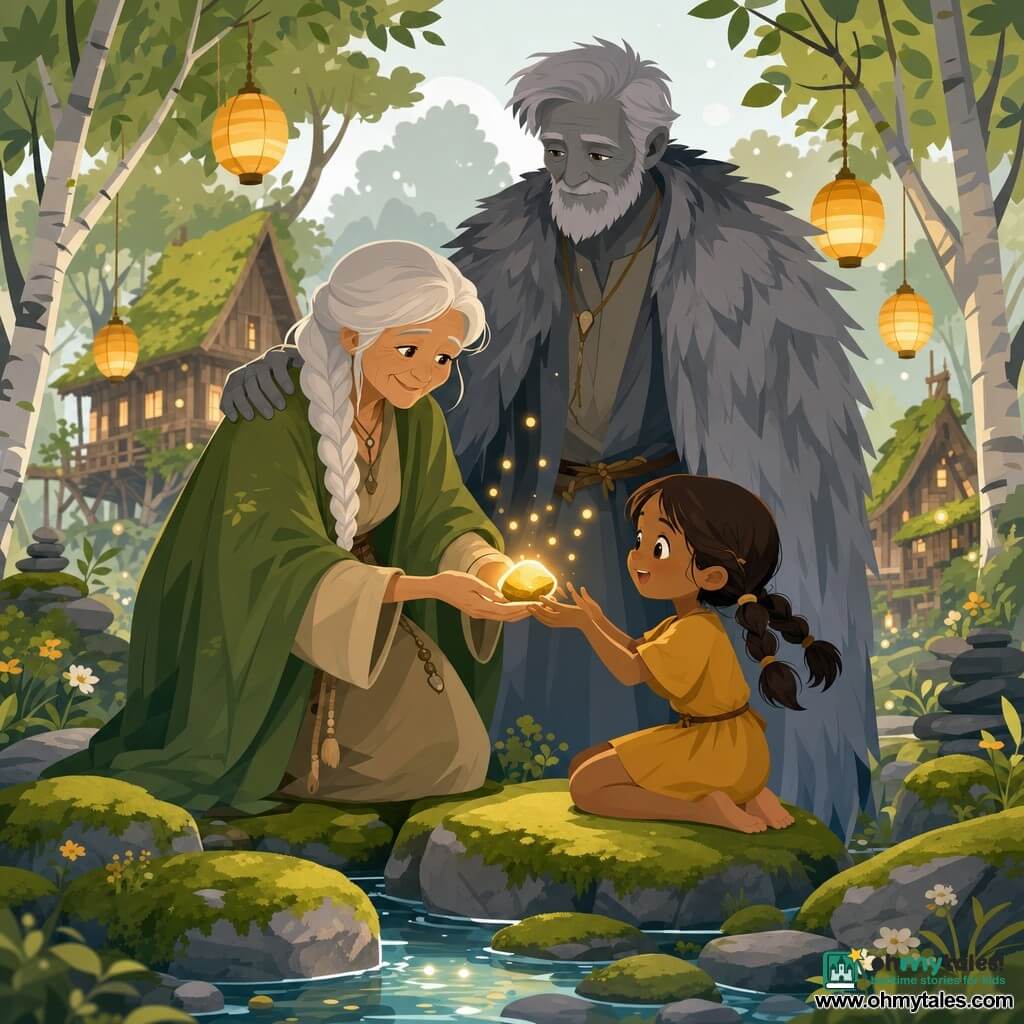
Years later, when Eira grew older and her hair was the color of ripe wheat, she came back. The hollow had changed again. Little houses sat around the edge. Children played and shouted names like flags. There was a round stone in the center with many tiny marks. Morn now walked with a slow step, and his ash-hands had lines like the rings of a tree. He put his hand on Eira's shoulder. He had taught many to say thank you.
Eira knelt by the stone and opened the pouch. Inside were more stones, heavy with light. She took out the Gratitude stone and placed it in the hands of a small child who had no shoes. "Keep this for us," she said. "Keep memory safe." The child smiled and promised.
Eira felt a quiet peace like a warm blanket. Around her, names rose like gentle birds. The old book that had been lost to the mud sat on a high shelf. Its pages were full of living names. The tribe had learned to remember and to give thanks. They had learned that memory is not a weight but a lantern.
Eira's eyes closed a little. She breathed in the scent of bread and river moss. She thought of the first promise she made. It had stretched like a road. It had taken her far. In the end, she had given the world a place to keep its songs. She had taught a lonely guardian the joy of a small "thank you." She had planted the seed of gratitude that grew into a garden.
Before she slept, Eira whispered, "Remember." It was not to herself alone. It was to everyone. The child with no shoes touched the Gratitude stone and felt warmth. She said, loud and clear, "We will remember."
And so the promise passed on, like a soft fire from hand to hand. The hollow held stories now, and the tribe held thanks. The world kept its names, and in the quiet places, the magic of old times stayed alive — gentle, strong, and full of wonder.