Chapter 1: The Doctor with the Calm Shoes
Dr. Amir Khan's shoes made almost no sound on the hospital floor. He liked that. Quiet steps helped people feel safe, especially at night when worries could grow big like shadows on the wall.
Outside, the city was sleepy. Inside, the hospital was awake in small, busy ways: a rolling cart humming softly, a nurse's badge clicking, a distant elevator sighing as it opened.
Dr. Amir checked the whiteboard with the evening notes. He was an experienced doctor, and tonight he was on call, which meant he stayed available in case anyone needed help. He didn't rush like a storm. He moved like a steady lantern.
“Ready for our round?” asked Nurse Jo, holding a clipboard.
Dr. Amir nodded. “Ready. We'll listen first. That's half the job.”
They walked past rooms with dim lights and curtains like folded clouds. Dr. Amir washed his hands at a sink—soap, water, scrub, rinse—until they were clean as new snow.
He noticed a boy in the waiting area twisting a string on his hoodie. The boy's knee bounced like a drum.
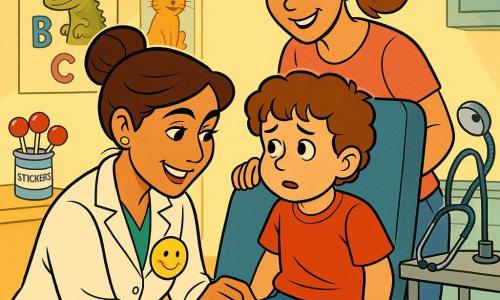
Dr. Amir crouched to the boy's height. “Hi. I'm Dr. Amir. Your body looks a bit nervous.”
The boy blinked. “I'm Milo. My sister has a fever.”
“A fever can feel scary,” Dr. Amir said gently, “but it's often the body's way of turning up the heat to fight germs. Like a cozy fireplace—but we still check that it isn't too hot.”
Milo's shoulders loosened a little, as if someone had untied a knot.
“Can I help?” Milo asked.
“You already are,” Dr. Amir replied. “You're here. You care. That's important.”
Chapter 2: The Mystery of the Warm Forehead
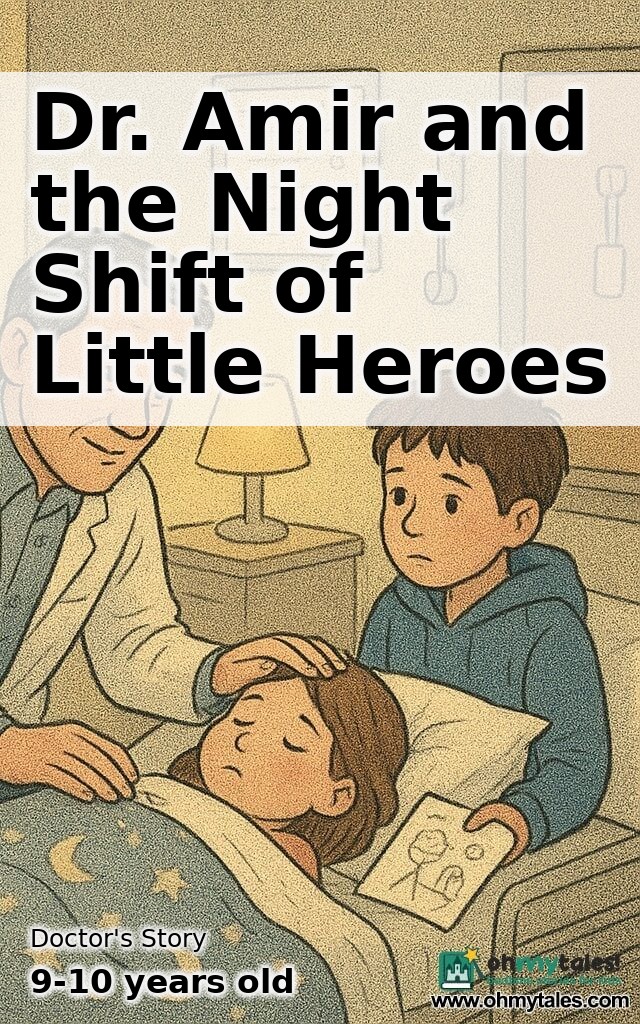
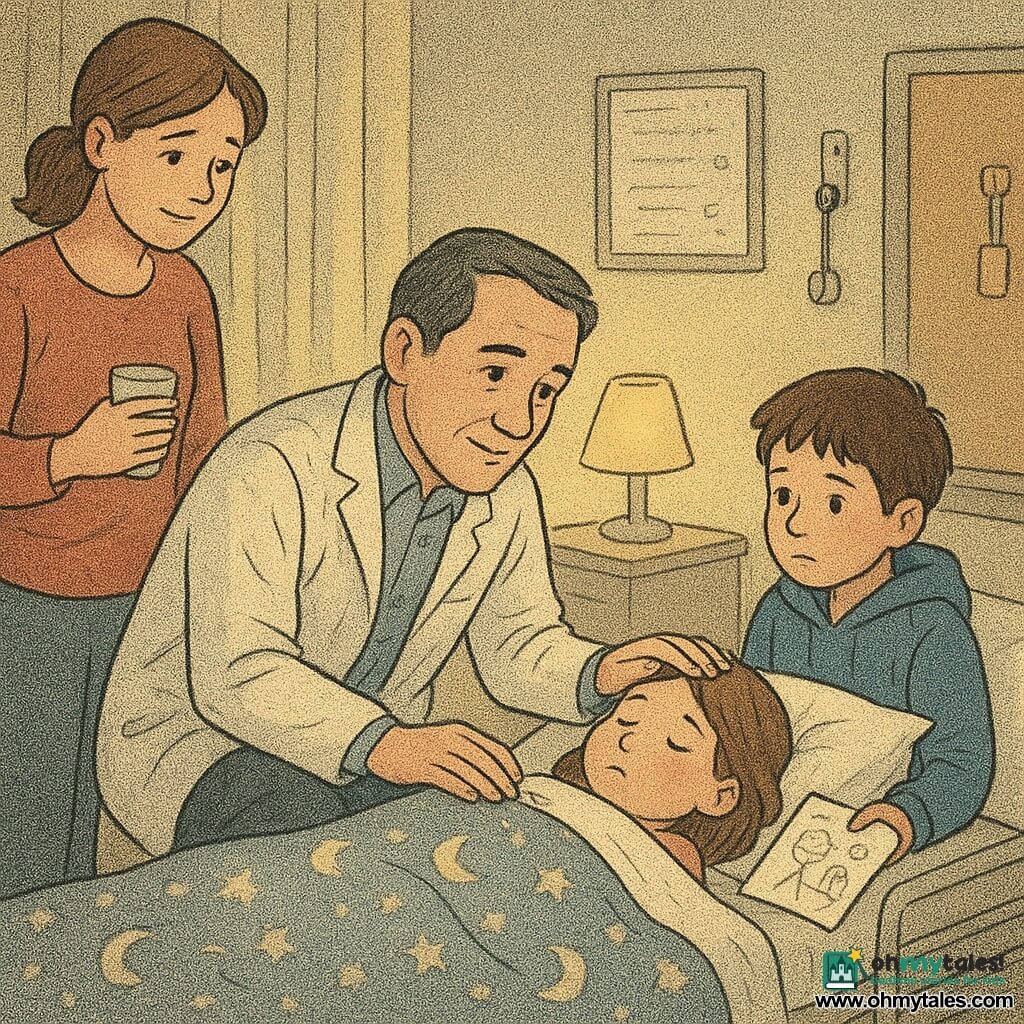
In Room 12, Milo's little sister, Nia, lay under a blanket with moons and stars. Her cheeks were pink, and her hair stuck to her forehead as if it had been gently glued there.
Their mom sat nearby, holding a cup of water like it was a treasure.
Dr. Amir spoke softly, like bedtime. “Hello, Nia. I'm going to be a detective doctor. I'll look for clues, not monsters.”
Nia gave a tiny, tired smile.
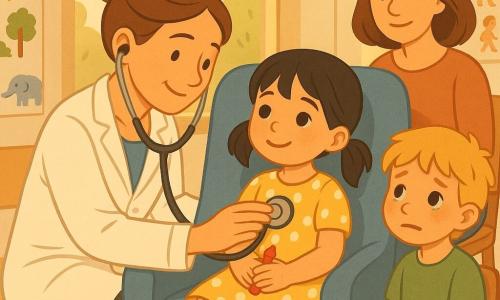
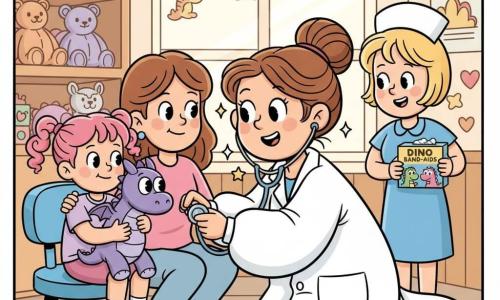
Dr. Amir explained what he was doing as he worked, because surprises made people feel smaller. “First, I'll check your temperature. Then I'll listen to your breathing and your heart. Those sounds tell me how hard your body is working.”
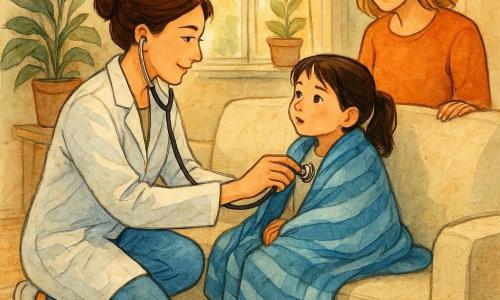
He placed a thermometer under Nia's tongue and waited. Then he used his stethoscope. The stethoscope felt cool at first, and Nia flinched.
“Sorry—cold circle!” Dr. Amir said, warming it in his palm. “There. Better.”
He listened carefully, his eyes calm. In his mind, he pictured air moving in and out like gentle waves. Her breathing was a little fast, but her lungs sounded clear.
He pressed gently on her tummy. “Any pain here?”
Nia shook her head.
Dr. Amir turned to Milo and their mom. “Good news: her lungs sound okay. This fever may be from a common infection, like a virus. Viruses are tiny troublemakers. Antibiotics don't chase them away—antibiotics work on bacteria, which are different.”
Milo squinted. “So what do you do?”
“We help the body do its job,” Dr. Amir said. “We keep her comfortable and watch for warning signs. We can use fever medicine in the right amount, offer water often, and let her rest.”
He held up a small measuring syringe for liquid medicine. “This is why doctors and nurses are careful. The dose depends on a child's weight, not just age. Like packing a backpack—you don't put the same number of books in every bag.”
Nurse Jo wrote notes neatly. “And we'll check again in a little while.”
Milo looked at his sister, then at Dr. Amir. “So… we wait, but we don't ignore.”
Dr. Amir smiled. “Exactly. Caring is active. It's not just sitting—it's paying attention.”
Chapter 3: The Case of the Slippery Banana
A call buzzed from the nurses' station. “Minor injury in the hallway,” a voice said.
Dr. Amir and Nurse Jo followed the sound of sniffles to find a girl sitting on the floor, holding her elbow. A banana peel lay nearby like a comedy prop that no one had asked for.
“My elbow did a weird thing,” the girl said, trying to be brave. “Also, that banana betrayed me.”
Dr. Amir sat on a chair beside her. “Bananas are usually friendly. Let's see what your elbow thinks about this.”
He checked her arm carefully. “Can you wiggle your fingers?” he asked.
She did. “Like this.”
“Great. That tells me the nerves are working well.” He gently felt around the elbow. “Any sharp pain here?”
“Only when you press the ‘ouch button,'” she said.
Nurse Jo chuckled. Dr. Amir kept his voice warm. “I'm sorry about the ouch button. I'm checking for swelling or bones that don't line up. If I suspect a break, we'll do an X-ray, which is like a picture of the bones.”
The girl's dad hovered nearby, worry on his face like a storm cloud. Dr. Amir looked at him too. “You're doing the right thing bringing her in. When someone falls, we check movement, feeling, and how the bone sits. Most bumps are bruises, but we don't guess.”
They walked to radiology, where the X-ray machine stood like a big, quiet camera. The tech guided the girl's arm into place.
“It doesn't hurt,” the tech said. “You just hold still.”
Dr. Amir explained, “Doctors work as a team. I don't do the X-ray alone. Nurses, techs, and many others help. Medicine is a group story, not a solo act.”
The X-ray showed no break—just a sore bruise.
The girl exhaled. “So my elbow is mad, not broken.”
“Exactly,” Dr. Amir said. “Ice, rest, and a wrap can help. And maybe we retire that banana peel.”
The dad's storm cloud thinned into a smile. “Thank you.”
Dr. Amir stood. “You're welcome. And thank you for being careful. That's prevention too—watching floors, tying shoes, using handrails. Small choices keep bodies safe.”
Chapter 4: A Night Lesson in Teamwork
Back in Room 12, Nia's fever had dipped a little. She sipped water slowly, as if each sip was a tiny hero.
Milo sat with a book open but wasn't reading. He was watching his sister's chest rise and fall.
Dr. Amir noticed. “You're keeping watch.”
Milo nodded. “I'm trying.”
Dr. Amir sat on the edge of a chair. “Want to know what we watch for with fevers?”
Milo leaned in.
“We look for breathing that's too hard,” Dr. Amir said, counting on his fingers. “Trouble waking up, signs of dehydration—like very dry mouth or not peeing much—severe pain, or a rash that spreads fast. And we listen to parents, because they know their child best.”
Their mom's eyes filled with relieved tears. “Thank you for saying that.”
Dr. Amir's voice stayed steady. “You're part of the team. Solidarity means we don't leave one person to carry the worry alone. We share it, and it gets lighter.”
Nurse Jo checked Nia's pulse and wrote it down. Dr. Amir looked at the chart. “Her heart is beating a bit faster because of the fever, but it's settling. That's what we want.”
Nia murmured, “Can I go home soon?”
“Soon,” Dr. Amir promised. “After we're sure you're drinking well and feeling steadier.”
He showed Milo a small handout with simple drawings. “This is for you. It's about washing hands, covering coughs, and getting enough sleep. Those are everyday shields.”
Milo studied it. “So being healthy isn't just medicine.”
“Right,” Dr. Amir said. “Doctors love medicine, but we love prevention too. It's like fixing a bike—and also wearing a helmet and checking the brakes.”
Nia's mom laughed softly. “She never checks the brakes on her scooter.”
Milo lifted his chin. “We can start.”
A little later, Nia sat up, asked for crackers, and made a face that said she was returning to her usual self.
Dr. Amir felt that familiar quiet happiness. Not fireworks—more like a warm cup of tea.
Chapter 5: The Badge on the Hook
Near midnight, the hospital grew even calmer. Some lights dimmed. The corridors looked like long, gentle rivers of pale gold.
Nia was ready to go home with instructions: rest, drink water, the right medicine dose, and a plan for what to do if anything changed. Dr. Amir made sure Milo understood too, because older siblings often became mini guardians.
Milo held the paper carefully. “I'll remind her to drink.”
“That's teamwork,” Dr. Amir said. “And remember—if you're unsure, you ask. No one wins prizes for struggling alone.”
Milo hesitated, then said, “Do you get scared doing this job?”
Dr. Amir thought for a moment. “Sometimes I feel worried, yes. But I don't let worry drive the car. I let it sit in the back seat while I use my training and my team. And I talk to people. That helps the most.”
Milo smiled, small but bright. “Your shoes really are calm.”
Dr. Amir laughed quietly. “They try their best.”
When the family left, Nurse Jo stretched and yawned. “Good night's work.”
“Good team,” Dr. Amir corrected kindly.
At the staff room, Dr. Amir washed his hands one last time and took off his white coat. He unclipped his badge—his name, his photo, the word DOCTOR printed clearly—and walked to the row of hooks by the door.
The hooks held coats, lanyards, and quiet stories from the day. Dr. Amir chose an empty hook and hung his badge carefully, letting it settle with a tiny click.
For a moment, the badge swayed like a small silver moon, then became still.
Dr. Amir turned off the light, and the hospital kept breathing—steady, watchful, together.