Chapter I — The Road Grows Silent
Dame Elowen rode at dawn, her cloak a dark ripple against the pale sky. The road she loved was no longer a warm ribbon of mail and laughter. Stones lay smooth and empty, and carts creaked in lonely fields. Travelers spoke in hushed voices of a music that drifted at twilight—sweet, thin, and impossible to shake. Those who followed it wandered off the path, forgetting inns and kin, until they became shadows on the moor.
Elowen had once been a mystery to the court. She arrived at tournaments without fanfare, her armor polished but her answers veiled. She spoke little of home; instead she listened. Now her listening told her something urgent: the Hollow Piper was not merely a villain who stole bodies. He had stolen roads. People avoided the main route, choosing dangerous passes. Markets grew scarce. Villages suffered.
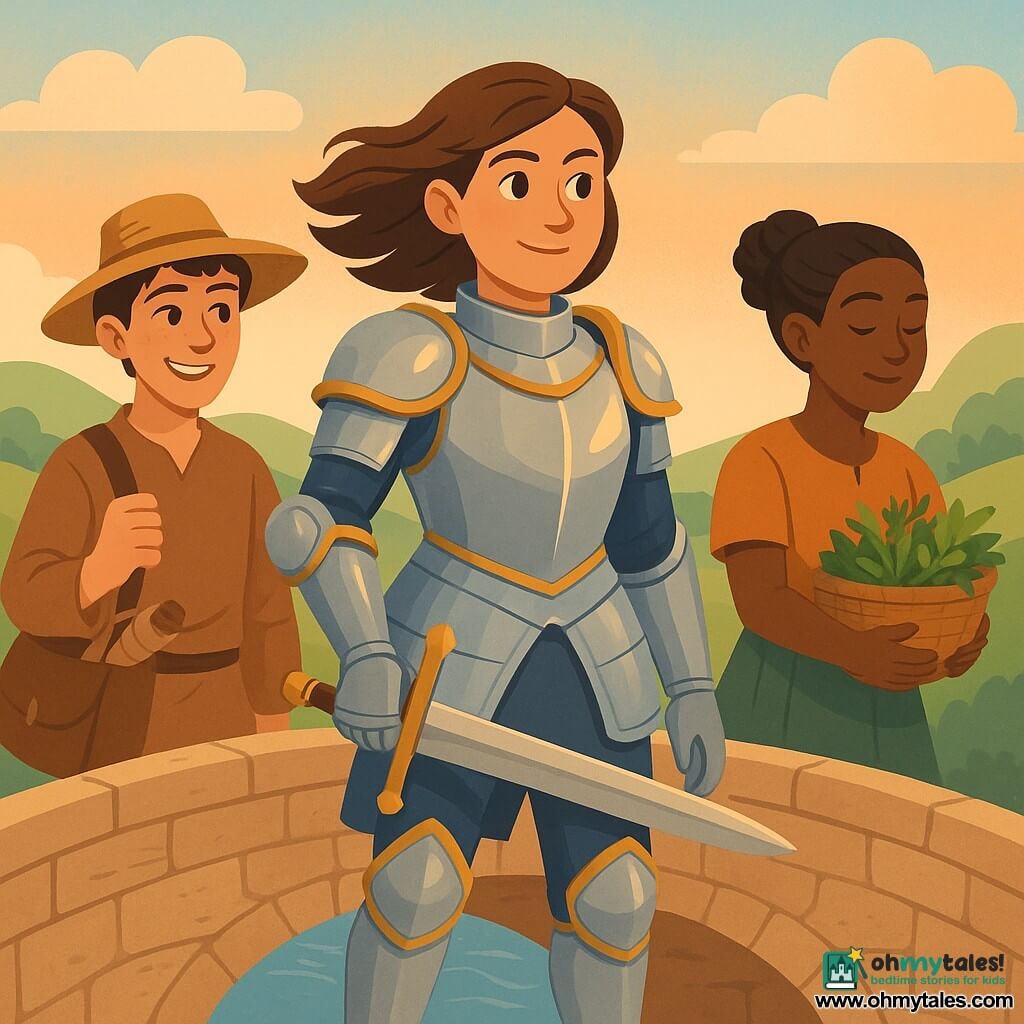
At the market of Greyfen, Elowen met two companions. Jory, a quick-witted peddler with a satchel full of maps and tricks, offered news and a tangle of rope. Mira, a young healer who smelled of lavender and iron, brought salves and long-suffering kindness. They bowed to Elowen with easy trust. She returned the bow and said, "We must mend what music broke. Will you walk with me?"
They set off that evening, the road ahead lighted by a thin harvest moon. As they walked, a tune drifted across the hedges—soft and inviting like the world itself sighing. Jory's hand went to his hat. Mira's eyes grew distant. Elowen stopped them. "Hold hands," she murmured. "Sing with me."
Her voice was low and steady, a single note that braided with the moon. Together they hummed a simple, strong rhythm—one foot, two feet, one foot, two feet—until the tune's pull loosened. The Piper's music faltered and flew away like startled birds. For the first time in weeks, someone laughed out loud on the main road.
Chapter II — The Hollow Piper's Thread
They learned that night the Piper's music was clever. It wound around worries and fed them stories of better places. It promised shortcuts to unseen gardens and whispered that the road was dull. Those who followed it forgot cold, hunger and names. They roamed until they could not remember how to return.
In the ruined chapel of Saint Wren, the party met Rowan, an old ferryman whose boat had been left to moss. He told them of families stranded and a bride who lost her way on her wedding day. "He plays on a flute made of hollow reed," Rowan said, rubbing his knuckles. "But the reeds grow where the river forgets its path. He mends no roads; he unthreads the world."
Elowen studied the chapel stones, tracing the carved feet of ancient pilgrims. "Music can bind as well as break," she said. "If the Piper uses song to scatter minds, then song might gather them." Mira looked unsure. "Can singing stop a spell?" Jory grinned. "If it's a good tune, I'll march to the moon for you."
They crafted a plan. They would walk from village to village teaching a marching song—simple words, an easy tune, and a steady rhythm that made feet remember the main road. It would be a song for the family, for the cart driver, for the child who feared roads. It would be a song that carried names, so memory would not fray.
They tested verses on children in Thornfield. They taught a chorus that named the sky, the road, and each other's hands. The children clapped until their stools trembled. Word spread like light. Travelers began to sing as they walked. The Piper's music still rose like fog, but the new song was a fence against fog. It taught people to listen for each other.
Chapter III — The Broken Bridge
On the third week, the road faced a raw wound: a bridge at Mallow Bend lay in ruins. The river had chewed away at its stones and the crossing shuddered. Traders could not bring grain, and the town's bell pealed only to empty fields.
Elowen watched the river for a long time. Water takes what it wants, she thought, and yet water can be guided. "We will mend the bridge, not by force, but by making many hands willing," she said.
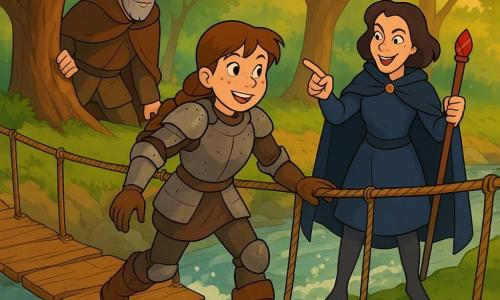
They rallied folk from three nearby towns. Jory taught them how to tie knots that would hold. Mira stitched splints for sore backs and mended boots with soft leather. Elowen stood where the bridge's last beam groaned and began to sing the marching song. It was a workman's rhythm now—ho, ho, up with the stone—each line a call to lift and set, to place and steady.
At first the work was clumsy. Men argued over where stones should lie. A cart wheel umped into the mud and someone cursed. Elowen's voice rose, clear as a bell. "One step at a time. One name at a time." She insisted that each person call the name of another before passing a stone—"For Rowan!"—and the chant wound warmth through tired arms.
By dusk the bridge had a new spine. It still bore marks of the flood, but it stood. The town bell pealed true and the Piper's music tried to drown that sound. The workers sang louder, hands linked across planks. The Piper's tune thinned and spilled out toward the hills, where even it could not harm the bridge that a dozen voices had built.
Chapter IV — The Hollow Piper Revealed
They followed the trail of lost words to a hollow place in the hills where reeds grew tall as men. The air shimmered with the Piper's melody, a web of silver notes that made bowls tremble on shelves. At its center stood a figure cloaked in grey, pale fingers around a flute carved from river reed. His eyes were many shades of empty. He called to them in a voice like wind through winter.
"You mend with song," he said. "You tie roads with hums. How quaint."
Elowen dismounted. Her armor caught the light like small moons. She did not draw her sword. "You lure people away," she said. "You take names like stones."
The Piper laughed, and the sound was as thin as the reed. "I sing what they wish for," he said. "I free them from tedium. Why should the road keep all its stories?"
"Roads are stories too," said Mira. "They keep us safe until we are ready for the next page." Jory stepped forward, banging a spatula he had kept for luck. "You forget that folks are not empty cups you fill. They are full of things—homes, names, promises."
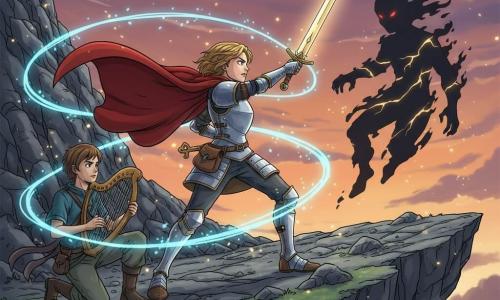
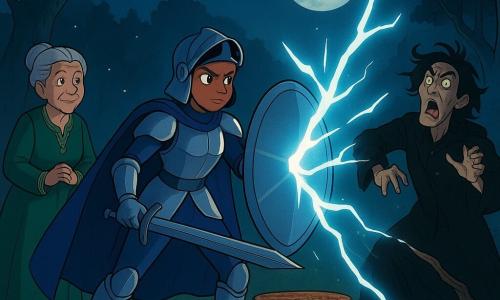
The Piper raised his flute. A note slipped out and the world bent toward forgetting. Elowen lifted her hand and began the marching song, but not the one they had sung in villages. This was a different rhythm—stronger, braided with names of the lost, with the sound of hammer on anvil, with the laughter of a child. She called names aloud—"Marta, Benn, Old Thom!"—and each name struck the Piper's note like a hammer striking glass.
The Piper's flute splintered. It was not a dramatic break of thunder but a quiet unraveling; the reed fell apart into soft dust. The music that had hung in the air like smoke thinned and slipped away. The Piper fell to his knees, his cloak no longer wind but cloth. He looked as small as someone who had been warmed by stealing other people's fires.
Elowen approached without triumph. "Why did you do it?" she asked.
"I wanted to be heard," he whispered. "No one listened. Roads did not see me. People walked but never looked back. I learned a song to gather attention."
"You could have asked," Mira said simply. "You could have built with us."
The Piper had no answer to that. He rose like a man blinking in the sun and let them lead him down the hill.
Chapter V — The Road Mended
They did not lock the Piper in a tower. They taught him to carry a basket and mend reed that still had use for baskets and fences. He learned names and found that being seen was a quiet, honest thing.
Dame Elowen and her friends walked the road one last time before the season turned. Villages once hollowed by music were lively again. Children practiced the marching song as they skipped stones. Travelers hummed the tune in English pockets and foreign markets. When the wind carried the memory of the Piper's notes, it met a chorus instead—a sound of many feet, hooves and wheels moving true.
Elowen stood at the edge of the great road and looked at a line of faces—farmers, bakers, apprentices, a bride with flowers still in her hair. They had learned to cross the good stones, to find the inns, to share names. The road did not become a single bright ribbon of perfection; it bore scuffs and patches and the marks of plenty of mended things. That was enough.
Rowan brought his boat back to the riverbank and set down a small bell. "For getting home," he said. Jory traded one of his maps for a new satchel, and Mira opened a little shop where she mixed salves and sang at the window. The Piper sometimes sat at the edge of the market, selling baskets and listening. When children asked him a question he answered, and sometimes, carefully, he would hum a small tune that did not pull anyone away.
As the sun set that evening, Elowen walked with her hands behind her back. She felt the weight of a road underfoot like a cord that bound people together. She had come as a mystery, and in mending the road she had become part of its telling.
"Will you stay?" Jory asked.
She smiled, a rare and gentle smile. "A knight's place is where the road needs her most," she said. "But I will always return."
They raised their voices in the marching song one last time. The melody wove through the town and crossed the river, through the meadows and into the hills where reeds still whispered. The tune did not silence the wind; it made room for it. It was a song that taught people to walk together, to name what mattered and to mend the places they loved. And so the road ran on—whole, careful, and bright—as many songs stitched it to the world.