Part One
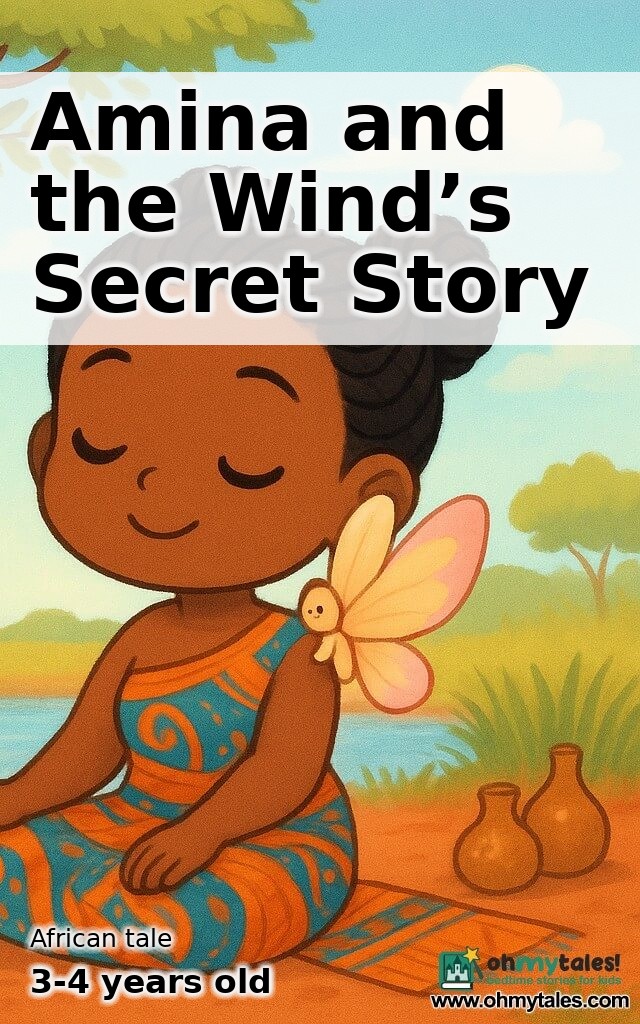
In West Africa, where the red earth smiles under the sun, lived a woman named Amina. Amina was a weaver. Her cloth was bright like mango skin and deep like night. She worked with quiet hands and a kind heart.
But Amina had a secret wish. She wanted to listen to the wind.
“Wind,” she would say softly, “what stories do you carry?”
The wind would whoosh past her hut, playful as a child. It tickled the millet and tapped the calabash gourds. Yet Amina could not understand its words.
One morning, the village griot sat under the baobab tree. His voice was like warm drumbeats.
Amina went to him. “Grandfather Griot,” she said, “how do I hear the wind's story?”
He smiled. “Ah, daughter of thread. The wind is a shy storyteller. If you chase it, it runs. If you sit, it comes.”
He held up three small things: a smooth stone, a tiny seed, and a cowrie shell.
“Stone for stillness,” he said. “Seed for waiting. Shell for listening. Go to the Singing Acacia by the river. Sit. Breathe. And be patient. Patience is a calabash; it holds sweet water.”
Amina laughed a little. “I will try.”
Part Two
Amina walked along a path of tall grass. The grass swayed like green dancers. Birds called, “Ke-ke-ke!” like quick jokes in the air. The river shone like a silver ribbon.
At last she saw it: the Singing Acacia. Its branches were thin arms reaching for the sky. Its leaves whispered, whisper-whisper, like tiny hands clapping.
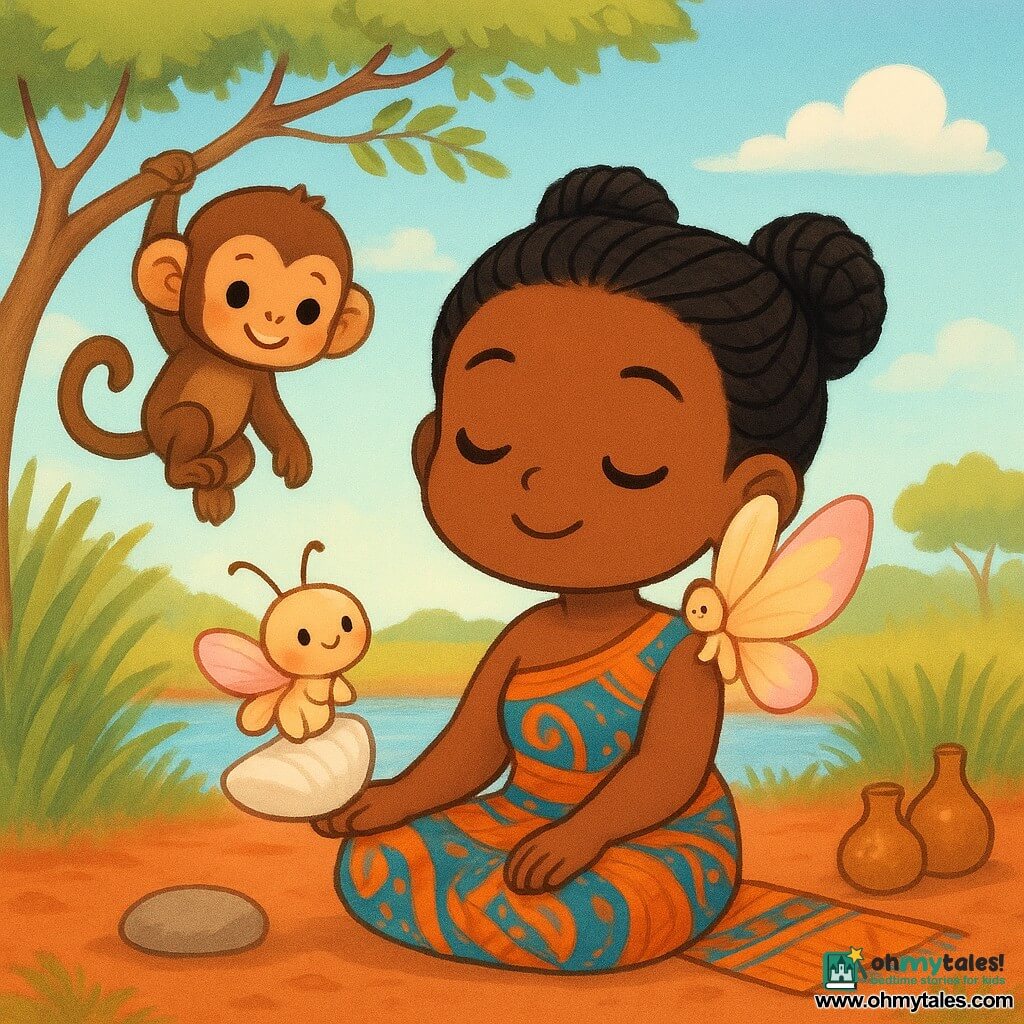
Amina sat in the shade. She placed the stone on her lap. She held the seed in her palm. She pressed the cowrie shell to her ear.
At first she heard only little sounds.
A frog said, “Plip.”
A lizard said, “Tap-tap.”
The river said, “Shhh.”
Amina waited.
Then she waited more.
Her feet wanted to stand. Her eyes wanted to wander. Her belly wanted to hurry. But Amina looked at the seed.
“A seed does not shout at the sun,” she told herself. “It waits in the dark. It waits, and it grows.”
So she breathed slow. In and out. In and out.
A small monkey swung down and stared at her.
“Why are you sitting like a rock?” the monkey asked.
“I am learning,” Amina said.
The monkey scratched his head. “I cannot wait. I must go!” And off he bounced, fast as a drumroll.
Amina smiled. She stayed.
A butterfly floated by, light as a soft song. It landed on the cowrie shell.
“Hello,” Amina whispered.
The butterfly did not hurry. It rested. Amina rested too.
And then—oh, then—the wind came back.
Not loud. Not wild. Gentle. Gentle.
It slid through the acacia leaves like milk through a cup. It touched Amina's cheeks like a mother's hand.
Part Three
Amina closed her eyes and listened.
The wind spoke in pictures.
It said, “I have danced over dunes. I have cooled tired goats. I have carried laughter from one village to another.”
It said, “I do not love chasing feet. I love patient ears.”
Amina opened her eyes. The world looked brighter, as if someone had washed it with clean water.
“Thank you,” she told the wind.
The wind answered with a soft hum, like a faraway drum.
Amina planted the tiny seed near the river. “This is my promise,” she said. “I will wait for good things.”
She picked up the smooth stone. “This is my reminder,” she said. “I can be still.”
She held the cowrie shell. “This is my listening,” she said. “I can hear more when I slow down.”
When she returned to the village, she wove a new cloth. On it she stitched spirals for the wind, dots for the seed, and a strong line for the stone.
Children gathered around her.
Amina said, “If you want to hear a shy story, do not grab it. Sit. Breathe. Wait.”
The children tried. They sat. They giggled. Then they sat again.
And that evening, under the great baobab, the wind came to play in their hair, warm and friendly, and the village felt calm, calm, calm.