Chapter 1: Monday's Morning Surprise
Mia zipped her yellow jacket and waved at Mrs. Lopez on the way to school. The sun warmed the sidewalk and the bakery smelled like cinnamon. Mia was eight and liked to count the blue houses on Maple Street.
"Good morning, Mia!" Mrs. Lopez called. "Do you have your reading book?"
"I do!" Mia said, patting her backpack. Inside, besides her book, was a small folded paper with a drawing of a heart. She found it earlier under her bed with no name on it. It made her smile.
At school, Mr. Patel started the day with a circle. "This week," he said, "we are learning about our neighborhood. We will see how people help each other."
Mia listened carefully. Across from her, Sam raised his hand. "My dad says people share what they can. Sometimes it's food, sometimes time."
"Exactly," said Mr. Patel. "We will make a map. Not a map of streets, but a map of help and kindness."
The class cheered. "A treasure map!" whispered Mia. Her eyes shone. A treasure map of kindness felt like a bright idea.
During recess, Mia and her friend Lina walked to the schoolyard garden. Lina picked a small tomato. "My mom grows extra to give to neighbors," she said. "It's like sharing sunshine."
Mia remembered the folded heart and thought of the ways she could be helpful. "What if we draw places where people can get help?" she suggested. "Like the library, the food pantry, and people who need a smile."
Lina clapped. "Let's call it the Treasure Map of Help!"
They ran back to class, ideas bubbling like lemonade.
Chapter 2: Collecting Clues
On Tuesday, the class split into small groups to visit different places. Mia's group went to the community center. The walk smelled of wet leaves and paint. Ms. Torres, the center director, welcomed them with a warm handshake.
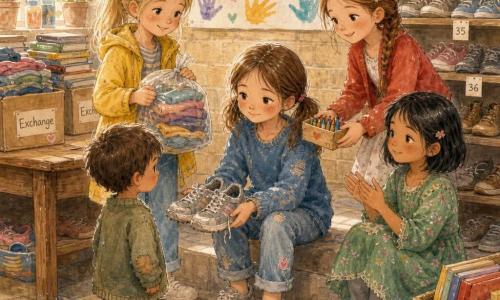
"Many people come here to learn, to eat, and to meet friends," she explained. "We also fix things and share clothes sometimes."
Mia watched a volunteer sew a missing button onto a child's coat. "Why do people give their time?" Mia asked.
"Because everyone needs help sometimes, and helping makes us stronger," Ms. Torres answered.
Back at school, Mia wrote notes and drew little icons: a book for the library, a spoon for the kitchen, a needle for the repair table. Her heart paper felt heavier with ideas.
On Wednesday, Mia's group visited the library. The librarian, Mr. Greene, showed them shelves of picture books and computers. "We lend books, but we also lend programs," he said. "Storytime, homework help, and sometimes warm socks during cold days."
"A treasure chest of whatever we need!" Sam said, grinning.
That afternoon, Mia saw her classmate Jonah sitting alone. His coat was patched, and he chewed on a pencil like it kept him brave. Mia remembered the map. "Want to see something?" she asked, holding out the folded heart paper.
Jonah unfolded it carefully. He read the little drawings and smiled. "My grandma used to sew like that," he said softly. "We don't have much money, but she taught me how to make things last."
"That's clever," said Mia. "We can add 'repair' to the map. Things can be fixed."
Jonah nodded. He looked less small. "Do you think we could help with the garden?" he asked.
"Yes!" Mia said. "You can teach me how to sew, and I'll help carry the watering cans."
They added another tiny icon: hands holding a plant.
Chapter 3: Acts of Kindness
Thursday brought a rainy drizzle and yet a cozy mood. The class met at the school hall to put the map on a big sheet of paper. Each group taped their drawings and wrote short notes. Mia wrote: "Everyone has something to give. Even a smile can be treasure."
"Look," Lina said, pointing to a new drawing. "My neighbor gives out extra bread on Fridays. She calls them 'Friday loaves.'"
"Add it!" Mr. Patel said. "This map is growing."
Mia felt proud and a bit nervous. She had an idea that made her stomach buzz. "What if we make a Helping Day?" she asked. "We could do small jobs to help people in our neighborhood and mark them on the map."
"Yes!" the class agreed.
They planned carefully. Some kids would tidy the community garden, others would collect extra coats for the center, and a group would make simple sandwiches for the food pantry. Mia and Jonah decided to fix things. They would collect broken toys and torn backpacks to try to mend them.
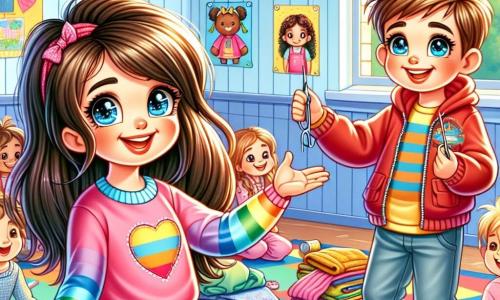
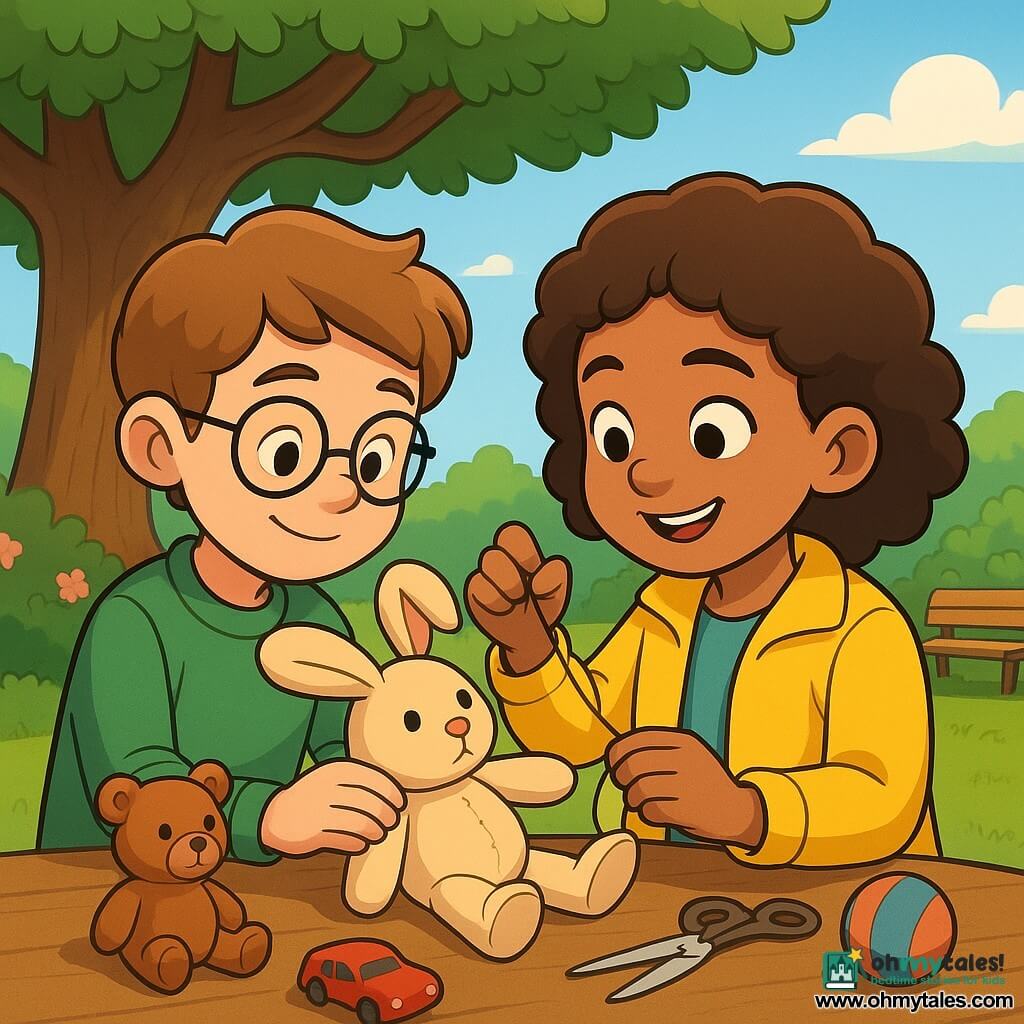
On Helping Day, the sun peeked through clouds like a secret. Mia and Jonah set up a small repair table under the old oak tree. "I've never sewn on a backpack," Jonah admitted, threading a needle with careful fingers. "But my grandma said the first stitch is like a promise."
Mia nodded. "Then promise we will try our best," she said.
Their first customer was Mrs. Alvarez, who brought a stuffed rabbit with one ear nearly hanging on by a thread. "He belonged to my son," she explained. "It's the last toy he had when he moved away."
Jonah and Mia worked slowly. "It's okay to ask for help," Mrs. Alvarez said. "We all need someone sometimes."
When they finished, the rabbit sat upright like new. Mrs. Alvarez's eyes filled with tears, warm and bright. "Thank you," she whispered. "This means so much."
Next came a small soccer ball and a torn glove. Word spread. People dropped off things and offered a polite "How much?" Mia always answered, "Nothing. We just like helping." Some nodded; some looked surprised. One old man, Mr. Lang, leaned on his cane and smiled. "When I was young, folks fixed shoes right on this corner," he said. He told stories of neighbors sharing meals and tools. "You kids are bringing it back."
By the end of the day, the table had a small pile of fixed toys and backpacks. Jonah and Mia pinned a tiny needle icon on the map. The class applauded. The map looked like a garden full of flowers—each one a helpful thing people did or offered.
Chapter 4: Sharing and Learning
Friday was the last day of their project week. The class invited families to see the Treasure Map of Help displayed in the gym. The map had little notes from people who had been helped: "A warm meal," "A repaired jacket," "A friend to listen." The notes smelled faintly of crayons and lunchboxes.
Mia stood near the map, holding the folded heart paper. Parents and neighbors walked by, whispering and pointing. Some left extra donations—books, scarves, jars of soup. Others signed a promise to teach a skill or share a meal. Little Mia felt the map pulse with kindness.
Her mother hugged her. "I'm proud of you," she said.
Mia's teacher asked her to say a few words. Mia's voice was small but steady. "We learned that not all treasures are coins," she said. "Some treasures are time, tools, and trust. If we share what we have, we all feel richer."
A neighbor called out, "And kindness grows when it's shared!"
After the meeting, the class decided the map would be kept at the community center so anyone could add to it. They put a zippered pouch beside it for notes and small offers: spare mittens, a promise to read to a child, help with homework. Jonah put in a tiny note: "I will teach sewing." Lina wrote: "Friday loaves." Mia added a new heart paper with a careful list: "Listen, Repair, Share, Teach, Smile."
Chapter 5: A New Morning
Monday came with the same morning sun, but things felt different. Walking to school, Mia noticed new faces at the garden. An older woman pruned a bush while a teenager filled a watering can. A little boy shared his crackers with a stray kitten and laughed when the kitten sneezed.
At school, Jonah showed Mia a small envelope. "Look," he said. Inside was a postcard from his grandma. "She wrote: 'Proud of my little mender.'"
Mia smiled. She thought of the rabbit, the soccer ball, and the promises pinned to the map. "Kindness is like a map," she said. "It helps us find our way to each other."
That week and the next, the Treasure Map of Help grew. People left simple things and simple offers. The community kept a shelf for extra socks, a board for volunteer hours, and a box for recipe cards with cheap, healthy meals. Schools and centers shared lists of helpful skills: cooking, knitting, bike repairs, reading aloud. No one pretended everything was perfect, but everyone tried to do a small kind act.
One afternoon, Mia found a boy sitting on the park bench, hugging his knees. He had a gray hat and quiet eyes. "Are you okay?" she asked.
He shrugged. "I lost my favorite cap. It had a dinosaur."
Mia reached into her pocket and pulled out a small paper heart. "This helped me find friends," she said. "Do you want to help me make a new cap?"
He looked up. "Really?"
"Yes," Mia said. "And I can teach you the map."
They walked to the community center, where Jonah and others were ready with needles, yarn, and stories. The boy learned to stitch and laughed when his dinosaur looked like a scribble. He learned that people could share time and skills, not just toys.
As the sun dipped low, Mia sat on the steps and watched neighbors pass by, carrying bread, tools, or a warm look. She felt something soft and bright inside her chest, like the folded heart had come alive.
That night, before sleep, Mia opened her little paper heart and drew one more icon: a small house with many hands reaching toward it. She wrote, in careful letters, "Everyone belongs."
She folded the paper and set it under her pillow. It felt like a promise and a map all at once. The treasure, she knew now, was not a thing you could hold for long. It was the steady kindness people chose every day, the way strangers became neighbors, and how small acts of help made life feel kinder and safer for everyone.