Chapter 1: The Stormy Living Room
Twelve-year-old Lily Parker had a knack for finding beauty in the most ordinary things. She loved the way sunlight filtered through her bedroom window, casting playful patterns on the floor. She adored the scent of fresh cookies wafting from the kitchen, especially when her mom baked on weekends. But today was different. Today, the air in the Parker household felt charged, thick with tension.
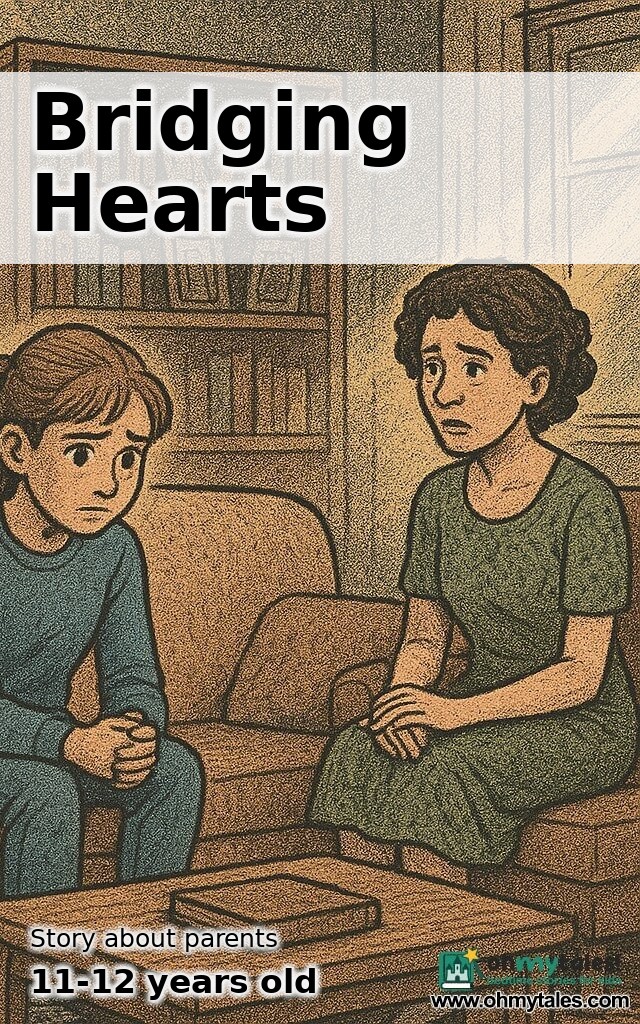
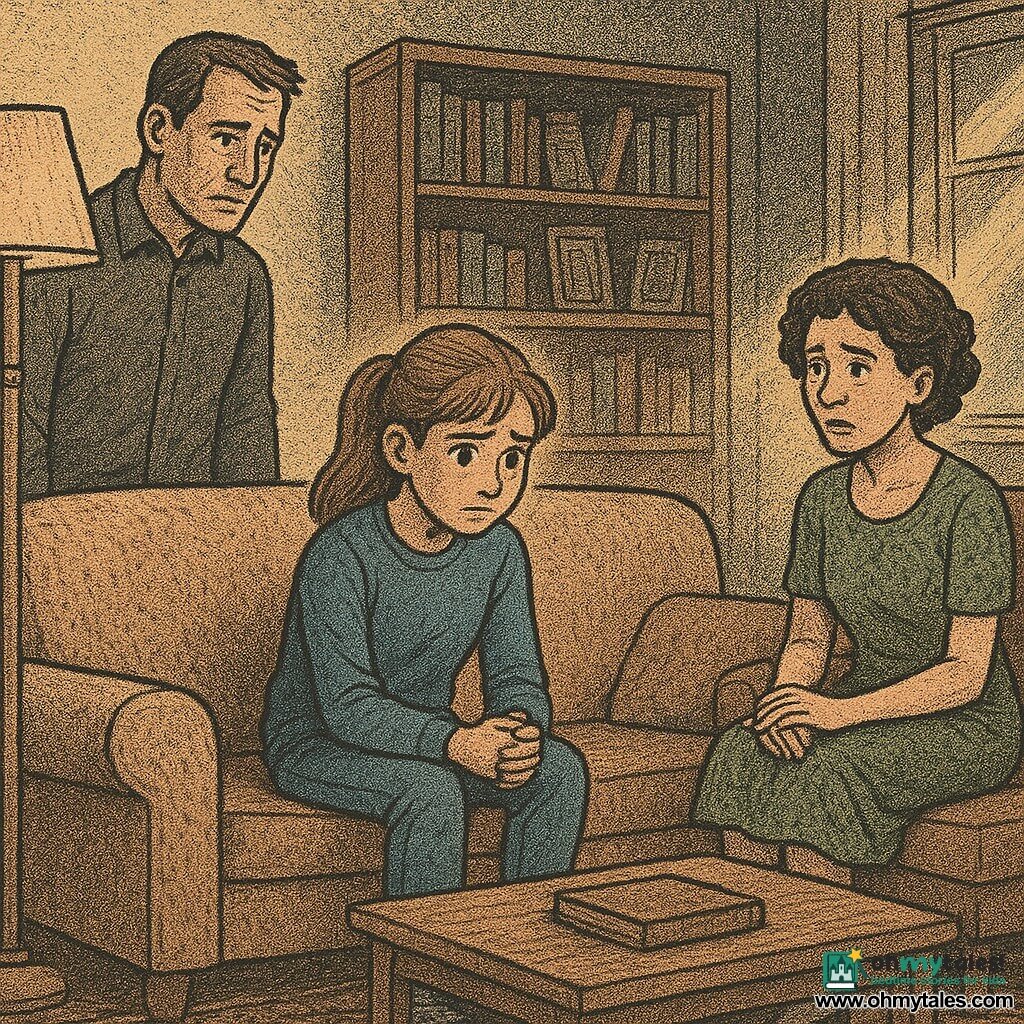
Lily sat curled up in her favorite corner of the living room, her knees hugged to her chest, as she watched her parents argue. It wasn't the first time, nor would it be the last. Her father, a tall man with a gentle smile, and her mother, a passionate woman with a knack for organization, were locked in a storm of raised voices and pointed fingers. The usual sounds of laughter and playful banter had been replaced by sharp words and sighs of frustration.
“What do you mean you're working late again? This is the third time this week!” her mother exclaimed, her voice quivering with frustration.
“I can't just drop everything, Sarah! I have responsibilities at the office!” her father countered, his brow furrowed with stress.
Lily shifted uncomfortably, wishing she could disappear into the wallpaper. She had often felt caught in the middle of their disagreements, like a small boat caught in a tempestuous sea. She felt the familiar churn of anxiety in her stomach. Would they ever stop fighting?
Chapter 2: The Workshop
The next day at school, Lily's mind was still buzzing with the echoes of the argument. She barely noticed her friends chatting and giggling during lunch. Instead, she absently poked at her salad, her thoughts drifting back home.
That afternoon, she attended a special workshop at the community center called “Family Matters.” The flyer had excitedly promised fun games and role-playing scenarios that would help families understand each other better. Lily was unsure if it would actually help, but she figured it was worth a shot.
As she entered the brightly decorated room, her eyes were drawn to a large poster on the wall that read, “Communication is Key!” Colorful drawings of families engaged in various activities surrounded it. There was a table brimming with art supplies, and a friendly woman named Ms. Harper greeted the kids with a warm smile.
“Welcome, everyone! Today, we're going to explore some of the challenges of family life and learn how to communicate better with each other. Who's ready for some fun?” she said, her enthusiasm contagious.
Lily felt a flicker of hope. Maybe today would be different.
Chapter 3: Role-Playing Realities
After a brief introduction, Ms. Harper divided the group into pairs for the first activity. Lily was paired with a boy named Max, who seemed as nervous as she was.
“Okay, let's think of a family conflict we can role-play,” Ms. Harper instructed. “It could be about chores, schoolwork, or even something as simple as what to have for dinner.”
“I don't know,” Max said, shrugging his shoulders. “What about when parents don't understand how much pressure we're under at school?”
Lily nodded, her heart racing. “Yeah, that's perfect! Let's do that.”
They took a few moments to plan their scene. Lily would play the role of a teenager overwhelmed with homework, while Max would be the frustrated parent who just didn't understand.
As they acted out the scenario, Lily felt a wave of emotion wash over her. She spoke loudly, her voice cracking slightly. “But Dad, I've got so much homework! How can you expect me to get it all done?”
Max responded, mimicking her father's stern tone, “You need to learn time management, Lily! It's not that hard!”
The other kids watched, some giggling, others nodding in understanding. When they finished, Ms. Harper encouraged the group to discuss how they felt during the role-play.
“I felt really stressed,” Lily admitted. “I just wanted my dad to see how hard I was trying.”
“I felt frustrated,” Max added. “I just wanted to help, but it seemed like nothing I said made a difference.”
Ms. Harper smiled gently. “That's exactly how many families feel. It's important to share your feelings, but it's equally important to listen to each other.”
Chapter 4: The Listening Circle
As the workshop continued, Ms. Harper introduced a new exercise called the “Listening Circle.” The kids were to sit in a circle, and one person would share a family conflict while the others listened without interrupting.
When it was Lily's turn, she felt a mix of fear and relief. “My parents argue a lot,” she began, her voice trembling slightly. “I feel like I'm stuck in the middle, and I don't know how to help them.”
The room fell silent. Lily could see the empathy in her classmates' eyes. One girl named Ava spoke up gently, “I understand. My parents fight too. It makes me feel like I have to choose sides.”
“I feel the same way,” said another boy, Sam. “It's hard when you love both of them.”
Lily felt a warm glow in her heart. For the first time, she realized she wasn't alone. Everyone in the room had their own struggles, and sharing those feelings made them feel lighter.
“Thank you for sharing, Lily,” Ms. Harper said, her voice soothing. “Remember, it's okay to feel confused or sad. What's important is to communicate and find time to talk about it.”
Chapter 5: Building Bridges
As the weeks went by, Lily continued to attend the “Family Matters” workshop. Each session introduced new activities and discussions that explored various family dynamics. They played games that emphasized teamwork, shared stories about their families, and learned different communication techniques.
One afternoon, they engaged in a creative exercise where they had to build a bridge using only popsicle sticks and glue. The goal was to create a structure that could hold a certain weight without collapsing. This activity quickly turned into a metaphor for family relationships.
“Just like this bridge, our families need strong connections,” Ms. Harper explained. “If we don't communicate or support each other, those connections can weaken.”
Lily took these lessons to heart. Inspired by the bridge-building activity, she began to think about how she could strengthen her own family connections. Maybe she could talk to her parents and share what she had learned.
Chapter 6: The Family Meeting
One evening, after dinner, Lily mustered up the courage to suggest a family meeting. Her parents looked at each other, surprise evident on their faces.
“A family meeting? What do you have in mind?” her father asked, raising an eyebrow.
“I think we should talk about how we can communicate better,” Lily suggested, her heart racing. “I've been learning about family dynamics and how we can support each other.”
Her mother nodded slowly, her expression thoughtful. “That sounds like a good idea, Lily. We can all be better at listening.”
With that, they settled into the living room, Lily's heart pounding with anticipation. She started by sharing her feelings, expressing how their arguments affected her and how she longed for more understanding in their family.
“I feel like I'm caught in the middle sometimes,” she confessed, her voice steady despite her nerves. “I love both of you, and I want us to be happy.”
Her parents exchanged glances, a mix of guilt and realization dawning on their faces. Her father spoke first, “I didn't realize how much our arguments affected you, Lily. I'm sorry.”
Her mother added, “We need to find a better way to communicate. You deserve a peaceful home.”
Lily felt a weight lift off her shoulders. The openness in the room was a refreshing breeze, filled with possibilities.
Chapter 7: Navigating the Waters
As the months rolled on, the Parker family began to adapt to their new communication strategies. They set aside time every week to discuss their feelings, concerns, and even their achievements. Lily noticed a significant change in the atmosphere at home. The stormy living room had transformed into a space filled with laughter, understanding, and shared experiences.
One sunny Saturday afternoon, they decided to have a family outing to the local park. As they walked along the winding paths, Lily felt a deep sense of gratitude wash over her. They played games, shared stories, and even had a picnic. It was a simple day, but it felt profoundly different from the chaotic evenings they had once shared.
“Lily, can you help me with the picnic blanket?” her father asked, laughing as he struggled to unfold it.
“Of course! Just like we practiced!” she replied playfully, echoing the bridge-building exercise.
“I think we're building our own bridge as a family,” her mother remarked, smiling warmly at her daughter.
Lily beamed at their words, feeling as if they were all working together to create something beautiful and strong.
Chapter 8: The Lasting Connection
As the school year drew to a close, the “Family Matters” workshop had a celebration. Parents were invited to join in on the last session, and Lily felt a mixture of excitement and nerves. She wanted her parents to see how much she had grown and learned.
During the celebration, each child presented a project that highlighted their journey through understanding family dynamics. When it was Lily's turn, she confidently spoke about her experiences, her voice steady and clear.
“I learned that communication is the key to a happy family,” she said, looking at her parents. “We all have feelings, and it's important to talk about them. I'm grateful for the support we've found together.”
The room erupted in applause, and Lily felt a sense of pride swell within her. Her parents exchanged proud glances, and Lily could see the love reflected in their eyes.
As the workshop concluded, Ms. Harper gathered everyone for a final group hug. “Remember, the skills you've learned here don't stop at the door. Continue to build those bridges!”
Lily left the workshop feeling empowered, knowing that while conflicts may arise in the future, her family now had the tools to navigate those waters together.
Chapter 9: A New Beginning
Back at home, the family continued to embrace their newfound communication skills. Whenever disagreements arose, they would pause, take a deep breath, and remember the lessons from “Family Matters.” They learned to listen, to empathize, and to express their feelings openly.
One evening, as they sat around the dinner table sharing stories about their day, Lily realized how far they had come. Her heart swelled with joy as she listened to her parents laugh together, their earlier tensions dissipated like wisps of fog.
“Lily, you've been a real force in bringing us all together,” her mother said, ruffling her hair affectionately. “Thank you for being brave enough to speak up.”
“I just wanted us to be happy,” Lily replied, her smile bright.
And in that moment, surrounded by love and laughter, Lily knew that they were indeed building something beautiful—a strong, lasting connection that would sustain them through life's challenges.
With a heart full of hope and a spirit ready for adventure, she looked forward to the future, knowing that together, they could weather any storm.