Chapter 1: The Wind and the Paper
Nora pinned a corner of the kite and smoothed the last strip of blue paper with her thumb. The classroom smelled like glue and crayons. Outside, the playground hummed with voices and the high, cold wind that always liked to visit their schoolyard in March.
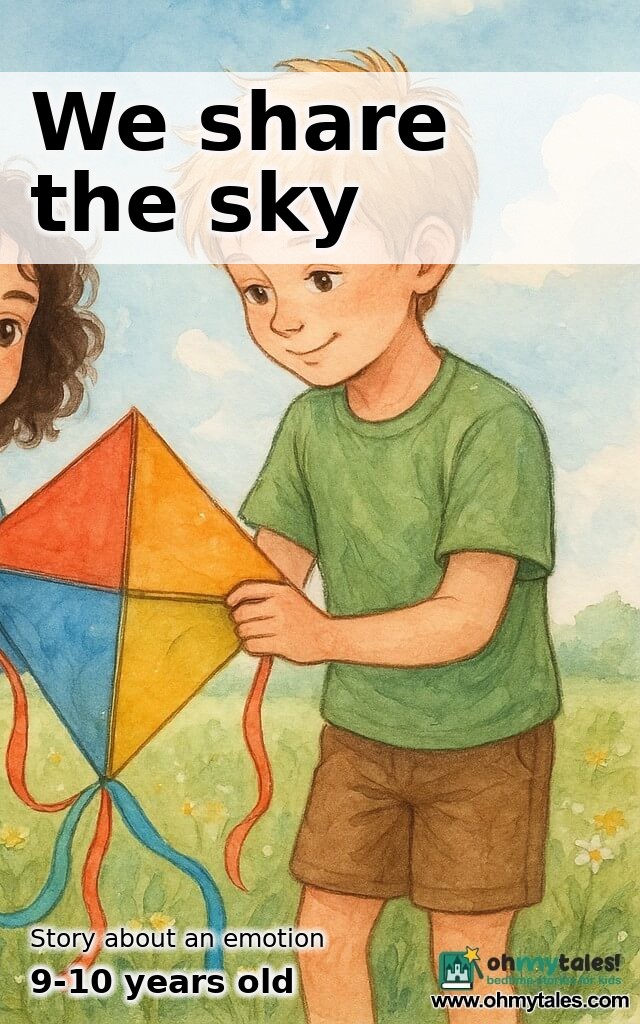
"This will fly so high," whispered Nora to the kite, as if the paper could hear her. She tucked a little drawing of a yellow sun into the center—her secret good-luck charm. At nine years old, making the kite had felt like making a promise: bright, thin and ready to lift.
At recess she ran to the field, the kite jawing in her hands like a small bird. The breeze lifted it, tugging with a friendly pull. Nora laughed, breath sharp and happy. The kite climbed, the sun drawing a warm smear on her cheek. For a moment she felt like the whole sky belonged to her.
Then a loud shout, a tangle of feet nearby, and someone tripped into the kite string. The paper shrieked. With a soft, terrible rip, a corner tore. The yellow sun slid down the crease like a pebble into a river. Nora's chest sagged. The sky kept moving, but something inside her felt suddenly heavy and small.
Chapter 2: The Quiet Inside
Nora sat on the curb under the big elm tree where the playground shadow made a cool pocket. She held the kite like a folded letter and watched the other kids play as if through glass. Her throat felt tight. The word for it hovered—sad—but it felt bigger than that, as if a small room inside her had lost its lights.
"Are you okay?" asked Ms. Rivera, the teacher, whose voice was the sort that wrapped around you like a blanket.
Nora held up the kite. "It broke," she said. The words were flat.
Ms. Rivera sat beside her and listened. She didn't hurry with advice. Her fingers rubbed the grass as if drawing slow patterns. "That hurts," she said. "You made it. It's special. I'm sorry this happened."
Saying the words made the heavy feeling loosen a bit, like steam from a kettle. Nora blinked. "I feel... disappointed," she said. "And a little annoyed."
"Both can live together," Ms. Rivera said. "It's okay to have a jumble of feelings. Do you want to fix it later? Or talk it out?"
Nora nodded. "Maybe both."
Chapter 3: A Hand and a Plan
At the library after school, Nora found the book corner that smelled of paper and lemon polish. She liked to sit there and imagine the kite on a page where nothing ever tore. Mrs. Kline, the librarian, noticed Nora clutching the folded kite like a treasure.
"What happened?" Mrs. Kline asked.
Nora told her, stopping and starting, like untying knots. Mrs. Kline listened with eyes that did not rush. When Nora finished, Mrs. Kline tapped a book about mending things with tape and kindness. "We mend things this way," she said, opening to pages with simple steps and pictures. "And sometimes we mend with words."
Nora looked at the pictures of people sitting together, sewing, talking softly. The idea of mending with words made her think of the person who had tripped into her kite. Nora felt a flicker—curiosity mixed with a thin worry.
"Would you like to try?" Mrs. Kline asked. "We can practice what to say. You can use kind sentences, and also tell them how you feel. That helps people understand."
Nora liked the idea. They practiced: "When you bumped my kite, I felt sad because I worked hard on it. Could you help me fix it?" They tried different endings—could you help, could you say sorry, could we make a new one together? Each version felt safer, like putting a step on a bridge.
Chapter 4: A New Friendship
The next day during recess, Nora saw Jamie, a boy from her class who often sat by the fence sketching birds. He had been the one who had tripped. He looked at her with a face that seemed smaller than his usual energy, like the wind had taken some of his boldness away.
Nora's stomach fluttered. She held the sentences in her mind like warm stones. "Jamie?" she called softly.
He jogged over, brushing his sleeves. "Hey. About the kite—I'm really sorry. I didn't mean to. I saw it tear and I felt awful."
Nora felt something open. "I felt sad and disappointed," she said. "I worked on it for days. It was really special to me."
Jamie listened, blinking. He sat down beside her on the grass. "I didn't know," he said. "I was running to show a drawing and I didn't see. Can I help?" His voice was small but honest.
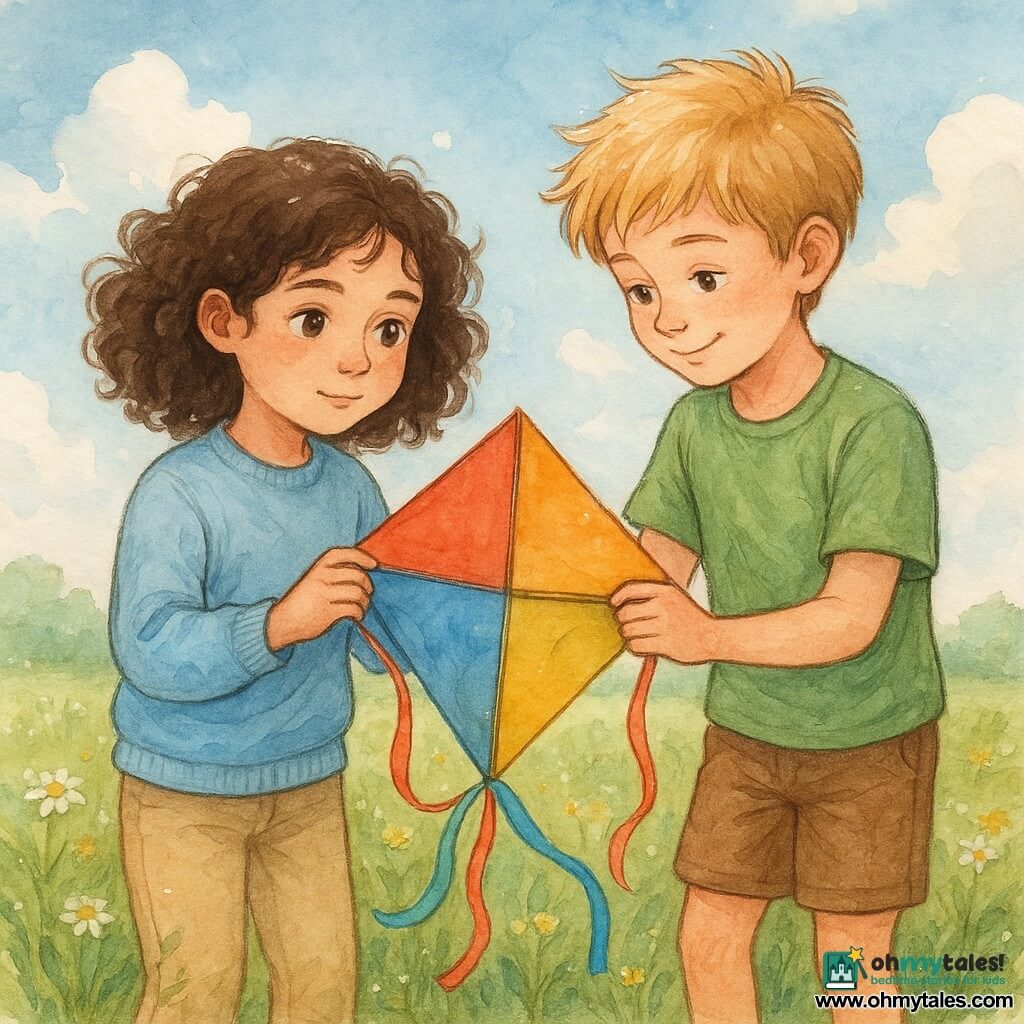
They traded stories—Nora about how the sun had been her secret charm, Jamie about how he always lost track of other things when he drew. He showed her the bird sketch on his hand. Nora smiled. They both laughed when a stray leaf landed on the kite like a tiny, thoughtful visitor.
They fixed it together that afternoon with tape and careful hands. Jamie held the kite steady while Nora smoothed the paper. They used colorful tape like bandages, and as they worked, their words flowed: small apologies, small thanks, small jokes. Each word felt like a stitch.
Chapter 5: Listening Weather
Over the next weeks, Nora noticed how much lighter her chest felt when she talked about feelings. She found other words—frustrated, proud, nervous—and tried them like new shoes. Ms. Rivera started a "listening circle" once a week where students could share small things. Mrs. Kline set up a shelf of books about feelings with soft covers and friendly pictures.
Nora and Jamie flew the mended kite together. It bobbed and dipped, with its patched corner catching the sun like a new scar that shone. When the kite climbed, Nora felt the sadness that had been a heavy stone turn into something she could carry more easily. It had been part of her story, but not all of it.
One afternoon, a girl tripped near the kite and almost knocked it down. Nora paused. She remembered the way Ms. Rivera had sat with her, the way Mrs. Kline had taught her words that were soft and clear. Nora took a breath like a slow bell and said, "Are you okay? It scared me a bit when the kite ripped earlier." The girl blinked, then nodded and apologized. They tied a small ribbon to the string together as a new promise.
At night, Nora looked at the window and thought of the sky she had shared with others. Feelings, she discovered, were like weather—sometimes bright and breezy, sometimes stormy. What helped was learning to speak about them and to listen when others spoke back. Sharing made the sky feel friendlier, like a big blanket under which everyone could rest.
Her kite sat by the windowsill, patched and proud. Nora felt proud too—not because the kite was perfect, but because she had found words to say how she felt, and hands willing to help. The wind outside whispered soft promises. Nora closed her eyes and breathed slowly, keeping the feeling of a mended corner safe in her chest.