Chapter 1: The Colorful Canvas
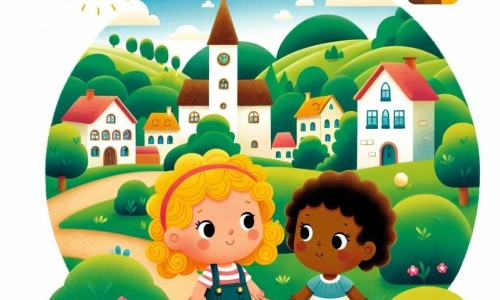
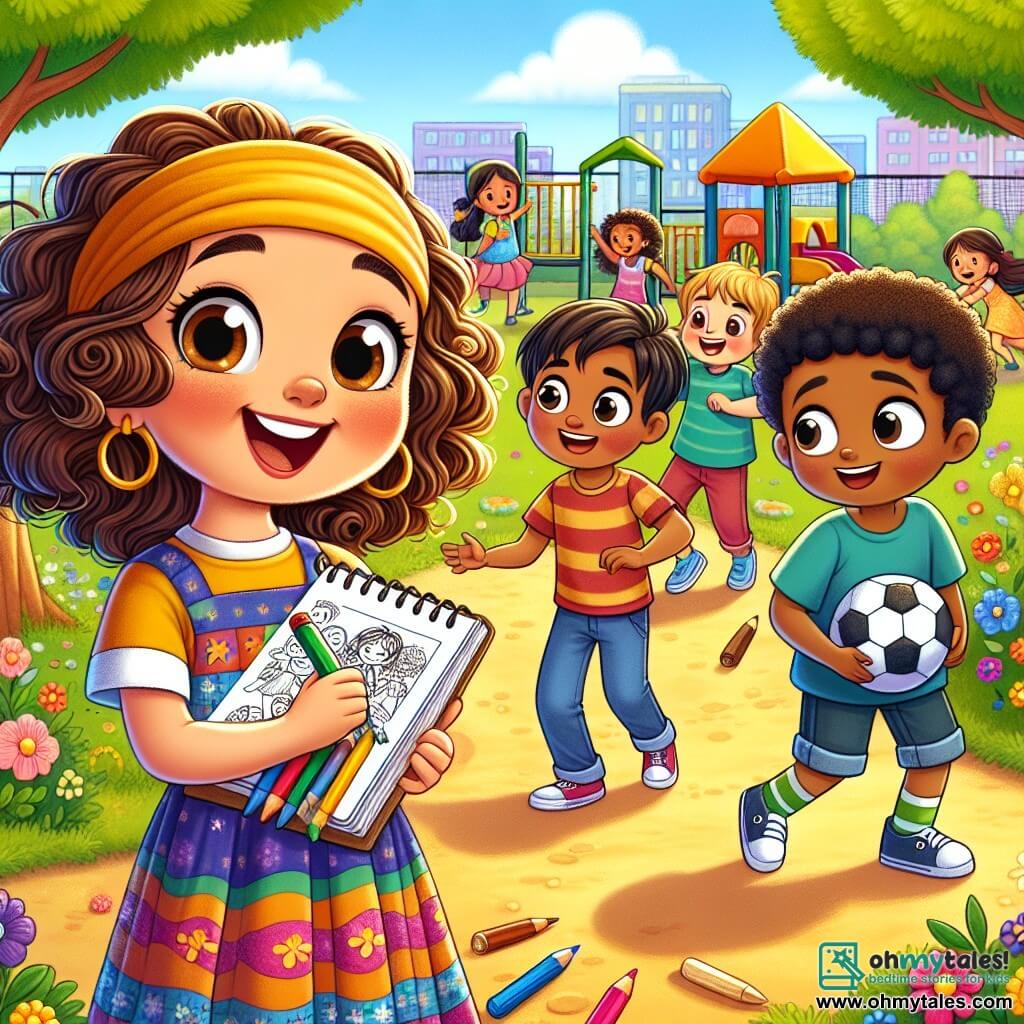
In the heart of a bustling town named Willowbrook, there lived a bright and imaginative ten-year-old girl named Mia. With her curly hair bouncing as she walked, Mia was known for her infectious laughter and vibrant personality. She had a passion for drawing and loved to spend her afternoons in the park, sketching the trees, flowers, and the people around her.
One sunny Saturday, Mia decided to set up her drawing supplies on a picnic table under her favorite oak tree. She brought along her sketchbook, a box of colored pencils, and a big bottle of lemonade. The park was alive with the sounds of children playing, dogs barking, and the rustle of leaves dancing in the breeze.
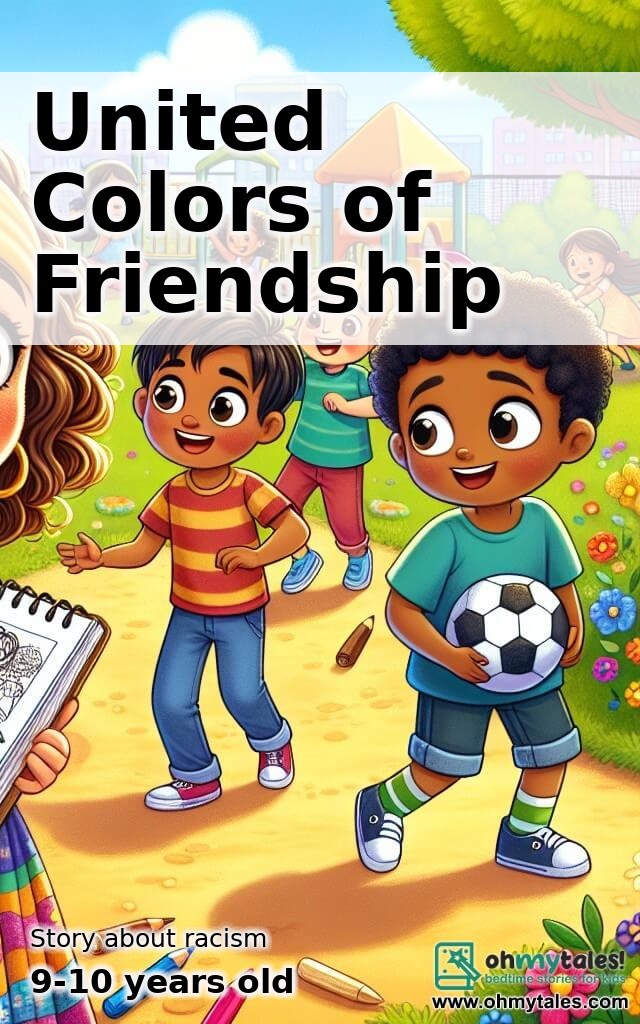
As Mia began to draw, she noticed a group of kids playing soccer nearby. They were all laughing and shouting, but Mia felt a twinge of unease. She noticed that some of the children in the group were teasing a boy named Amir, who had just moved to Willowbrook from a different country. Amir had a dark complexion and spoke with a slight accent, and Mia could see that he was trying to join in but felt left out.
Mia put down her colored pencils and walked over to the soccer game. "Hey! Why don't you let Amir play too?" she suggested, her voice steady and friendly. The kids turned to her, surprised. "He's new here! We should help him feel included!"
A girl with pigtails named Lily shrugged. "But he's not like us," she said, glancing at Amir, who was standing off to the side, looking sad.
Mia felt a spark of determination. "So what? Different is cool! We can learn new things from each other," she replied, her eyes shining with enthusiasm.
The children paused, considering Mia's words. "Alright," one of the boys finally said, kicking the soccer ball towards Amir. "Come on, join us!"
Amir's face lit up, and he ran over, a big smile spreading across his face. Mia felt a wave of happiness wash over her. She realized that sometimes, it just took a little push to bring people together.
Chapter 2: The Art of Understanding
The following week, Mia's school was hosting an event called "Unity Day," aimed at promoting diversity and understanding among students. Mia was excited; she signed up to create a mural with her classmates that would celebrate all the different cultures represented in their community.
In preparation, Mia spent her evenings drawing sketches of different symbols from around the world—like the Eiffel Tower for France, the Great Wall for China, and the pyramids for Egypt. She wanted the mural to be a colorful tapestry of the world, showcasing the beauty of diversity.
On the day of the event, the gymnasium was transformed into a vibrant space filled with posters, food stalls, and activities. There were booths where students could learn about different cultures, try on traditional clothing, and taste delicious dishes from around the world. Mia felt a buzz of excitement in the air.
As she set up her mural, Mia noticed Amir was also there, helping at a booth about his home country, Afghanistan. He was showing off traditional crafts and sharing stories with the other students. Mia approached him, beaming. "Your booth looks amazing, Amir! I love the stories you're sharing!"
"Thanks, Mia!" Amir replied, his eyes sparkling with pride. "I'm a little nervous, though. Some kids are asking questions that I don't know how to answer."
Mia nodded thoughtfully. "How about we make a list of the questions together? Then, we can practice what you want to say! It'll be fun!"
Amir's face broke into a wide grin. "That's a great idea! Let's do it!"
They spent the next hour brainstorming questions and answers, laughing and enjoying each other's company. Mia felt happy to see Amir gaining confidence, and she was inspired by how he was willing to share his culture with others.
Chapter 3: The Power of Words
As Unity Day continued, Mia decided to hold a small poetry reading at the end of the day. She wanted to share her thoughts on friendship, understanding, and the beauty of differences. She invited Amir to join her, and he agreed, even though he was a bit nervous.
Mia stood in front of the crowd, her heart racing. "Hi everyone! I'm Mia, and this is my friend Amir," she said, introducing him. "Today, we want to share some poems about friendship and how we can all learn from each other."
Mia began reading her poem, “Colors of Friendship,” which spoke about how friendships could bloom in the most unexpected places, like a garden full of different flowers. The audience listened intently, and Mia felt their support energizing her.
Then it was Amir's turn. He took a deep breath and read his poem, “Different, Yet the Same.” It talked about the things that made him unique, but also the common feelings they all shared—happiness, sadness, and the desire to belong. As he read, the crowd was silent, hanging onto every word.
When Amir finished, there was a moment of quiet before the gym erupted in applause. Many students shouted out encouragement, and Mia felt a swell of pride for her friend. He beamed, his cheeks flushed with happiness.
After their performance, several kids approached Amir. "You're really cool, Amir! Can you teach us some words in your language?" one girl asked eagerly.
"Sure! I would love to!" Amir replied, his confidence soaring.
Mia watched, her heart full. She realized that sometimes, it just took a little courage and creativity to break down walls between people.
Chapter 4: A New Project
As Unity Day came to a close, Mia felt inspired to create an ongoing project that would encourage her classmates to appreciate diversity and combat racism in their everyday lives. She gathered her friends, including Amir, to brainstorm ideas.
"What if we start a club?" Mia suggested excitedly. "A club where we can share our cultures through art, music, and stories!"
Amir nodded enthusiastically. "And we can have workshops where we teach each other different skills! I can teach cooking, and you can teach drawing!"
The group cheered, and they quickly got to work planning their first meeting. They decided to call their club "Cultural Connections," and they made colorful flyers to hang around school. The response was overwhelming—students from all grades wanted to join, eager to learn and share.
On the first day of the club, Mia was amazed to see so many faces in the room. There were students from different backgrounds, each with their own unique stories and talents. They spent the afternoon sharing food, music, and art, and Mia couldn't help but smile.
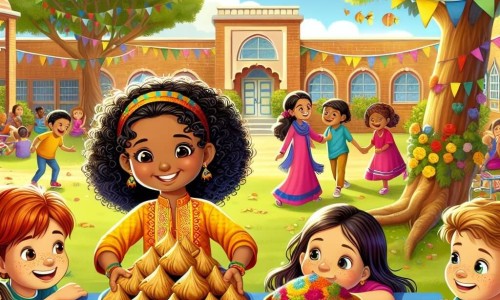
Each week brought new activities—Amir taught the group how to make Afghan dumplings, while another student introduced them to traditional Indian dance. Mia led drawing sessions where they created art inspired by their favorite cultures.
Through their club, they learned not only about each other's cultures but also the importance of respect and understanding. They shared laughter, stories, and sometimes even tears, creating bonds that transcended their differences.
Chapter 5: The Festival of Cultures
Months passed, and the "Cultural Connections" club blossomed. The students decided to organize a Festival of Cultures to celebrate their newfound friendships and showcase what they had learned. The entire school buzzed with excitement as they prepared for the big day.
Mia and Amir worked together to plan the event. They coordinated booths, performances, and even a talent show where students could showcase their skills. The day of the festival arrived, bright and sunny, and the school grounds were decorated with colorful banners and flags from around the world.
As families and friends gathered, the atmosphere was filled with laughter and chatter. Mia felt a warm glow as she watched her classmates sharing food, dancing, and performing. The festival was a beautiful mosaic of cultures coming together.
During the talent show, Amir took the stage to share a story from his homeland, weaving in elements of his culture. Mia, standing at the side, felt proud of him. When he finished, the audience erupted in applause, and Amir looked thrilled.
Mia took her turn next, showcasing a mural she had created, featuring all the different cultures represented in their club. She spoke about the importance of understanding and appreciating diversity, and the crowd listened closely, inspired.
As the sun began to set, casting a golden glow over the festival, Mia felt a sense of accomplishment. They had not only created a space for learning and sharing but had also sparked meaningful conversations about respect and acceptance.
Chapter 6: A Lasting Impact
The success of the Festival of Cultures left a lasting impact on the school. Teachers noticed a change in the students' attitudes toward one another. The teasing and isolation that had once existed began to fade away, replaced by kindness and friendship.
Mia continued to draw and write, using her creativity to express her thoughts on diversity. She filled her sketchbook with images from the festival, capturing the joy of their experiences. One day, she had an idea—what if she published a book showcasing the stories and art from the "Cultural Connections" club?
With the help of her friends, they worked together to gather stories, recipes, and artwork. They titled the book "Together, We Shine," a celebration of their diverse community.
When the book was published, the entire town came together for a reading event at the local library. Mia felt proud as she stood in front of the crowd, sharing the stories of her friends and the lessons they had learned.
As she looked around, she saw Amir smiling at her from the front row, and she realized that their journey had come full circle. They had transformed their community, proving that through creativity, understanding, and respect, they could make a difference.
In the end, Mia learned that everyone has a unique story to tell, and it's those stories that bring us closer together. The world is a beautiful tapestry of colors and experiences, and it's up to each of us to weave kindness and acceptance into that fabric.
And so, in the heart of Willowbrook, Mia continued to create, inspire, and remind everyone that diversity is not something to fear, but something to celebrate.