Part I
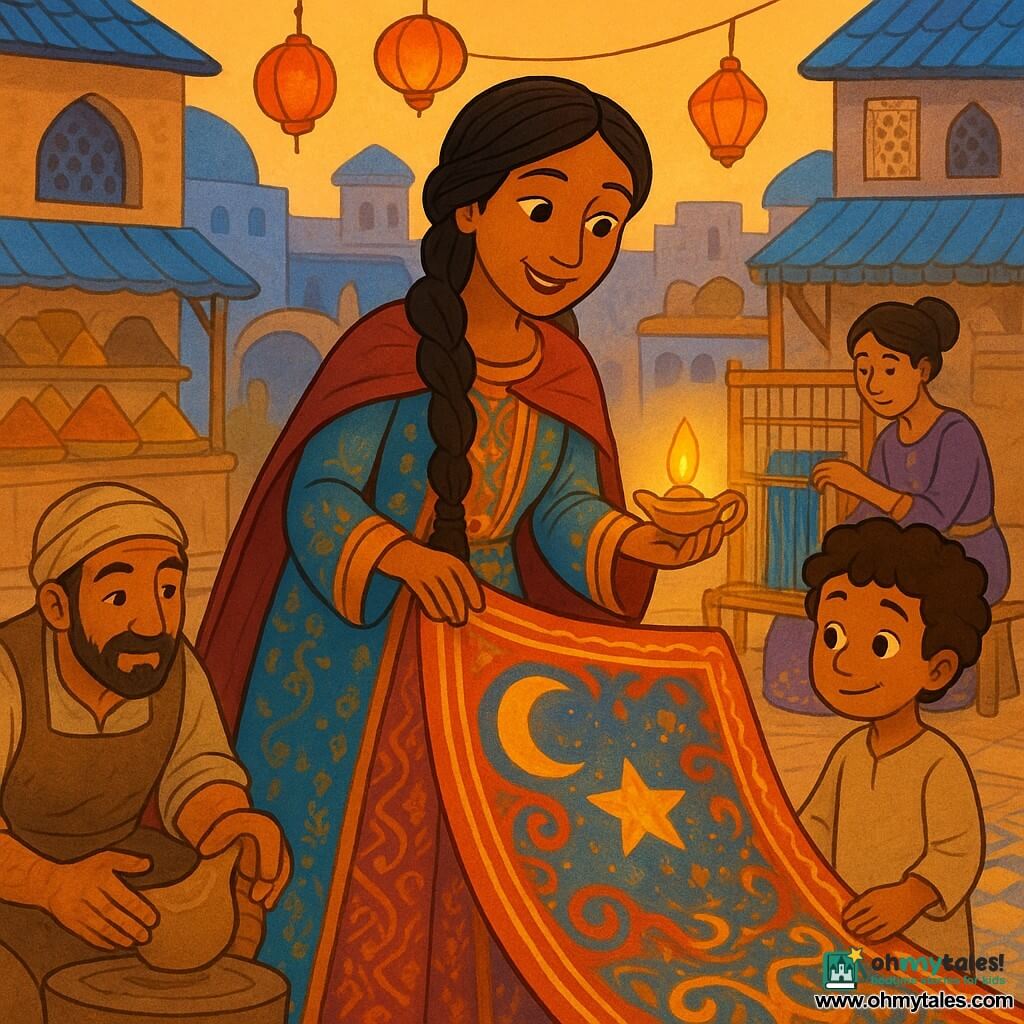
In a city of warm sun and blue tiles, there lived a woman whose name felt like a bell. She was a gentle diplomat. Her job was to bring people together like beads on a string. Her heart carried a small lamp that never went out. It glowed with care, with curiosity, and with the wish to make things bloom.
The city sat beside a quiet sea. The houses had little gardens on their roofs. Every morning the wind carried the smell of spices and jasmine. In the market, every step sounded like a tiny drum. People made things with bright hands. There were potters who spoke to clay, glassmakers who caught light in their fingers, weavers who threaded songs into cloth, and jewelers who listened for stories in stones.
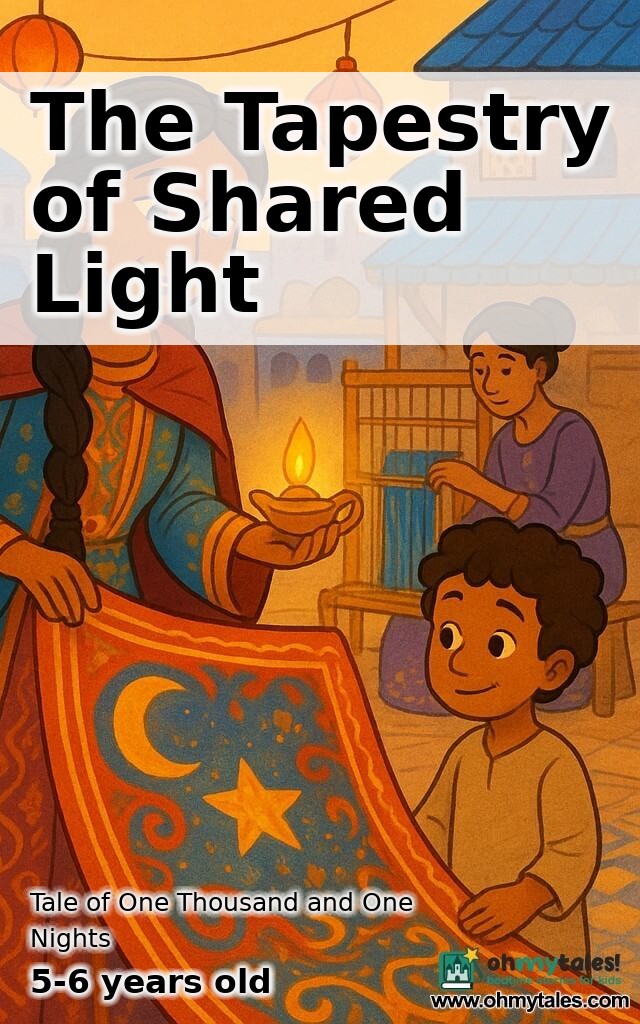
One day the woman walked the lanes with her lamp tucked inside her cloak. She had a dream in her pocket. It was a big dream shaped like a doorway. She wanted to build a great tapestry of the city. Not a regular tapestry, but a living one. It would be sewn with many arts. Each artisan would add a piece of their secret. The tapestry would sing the city's story. Her lamp hummed like a small bird. The dream doorway needed many keys. She would gather the keys.
People said the doorways of the heart opened with kindness. So she started at the potter's stall. The potter's hands were soft like warm bread. He was shy. He had never joined with others. The woman watched him shape a bowl. Her eyes were patient. She offered him a small cup of tea and a story about a bowl that had once sailed on a cloud. The potter smiled. He agreed to bring a clay moon to the tapestry.
She walked to the glassmaker near the blue fountain. The glassmaker lived where light liked to play. He blew glass like a whisper. His pieces held rainbows. The woman watched how he blinked at the sun. She placed her lamp near his tools. The lamp's light made new colors in the glass. The glassmaker promised to melt a little star to thread into the cloth.
She visited the weaver at dusk. The weaver's fingers were quick as birds. She had a basket of threads that smelled of saffron. The woman listened to the weaver's small tales. She told the weaver of the city's songs, of good and hard days. The weaver nodded, and chose the softest thread. She would weave the sky into the tapestry.
One by one the woman found the hidden artists: a singer who remembered lullabies, a sculptor who carved tiny doors, a spice-mixer who could make memories taste sweet. All had reasons to stay alone. All had a small fear like a pebble in their shoe. The woman did not rush. She brought tea and stories and the lamp's quiet warmth. She showed them the doorway dream and how their pieces would fit like puzzle pieces of sun and shadow.
Part II
The plan grew like a garden. A map took shape on a table. Little sketches rested like seeds. The artisans came once a week to a room that smelled of orange peel and wool. They laughed without a word and worked without hurry. The woman guided them with hands that drew gentle lines. She asked small questions and listened like rain listens to the earth.
But the path to the doorway held a riddle. A nightingale of the old tales told of a jealous wind. The wind liked to scatter things. When the artisans stitched their pieces, the wind would sometimes slip between the threads. Tiny disagreements flew in like leaves. A color did not feel right. A pattern felt lonely. The glass star felt too bright next to the clay moon. The singer's lullaby made the sculptor's door yawn too wide. The team paused. The tapestry sat like a sleeping bird. Doubt perched on the loom.
The woman did not scold. She brought the lamp and set it on the floor. She sat beside the artists and hummed a tune that smelled like coriander. She told a small tale of two rivers that met and became a bigger river. She spoke of how the rivers made room for each other. The artists watched the lamp. Its light warmed their hands and their hearts. They tried again.
There was a tiny twist that the woman had not planned. One evening, a child from the street wandered into the room. The child had sticky fingers and a pocket full of pebbles. He held up a small, ordinary pebble and placed it near the tapestry. The pebble was plain, nothing like the star or the moon. The artists stopped. The child's eyes were full of wonder. He pressed the pebble into the cloth with a shy smile.
When the pebble touched the fabric, something gentle happened. The tapestry blinked like a sleepy eye. The plain pebble let out a tiny sound, like a bell under water. The pebble fit between the glass star and clay moon. It made a bridge of quiet. The pebble seemed to say that everything, even the plain and small, has a place. The artists laughed softly. They whispered to the child a thank you that sounded like wind in the trees. From that night a softness spread. The tapestry woke up.
Part III
Stitches moved like a slow river. Threads braided with tales. The weaver wove the sky and the singer stitched the lullaby into the hems. The sculptor carved small doors that opened to tiny painted worlds. The spice-mixer ground memories into tiny pouches that smelled of home. The potter's moon settled on a hill of cloth. The glass star hung above all like a lantern made of morning.
The woman stood back and let the room swell with pride. The city's tale grew on the tapestry. Children who passed by found the doorway dream and pressed their faces to the holes. The tapestry gave gentle sounds. When the sun moved across the sky, the glass star tossed colored light across the street. Birds came and rested on the cloth. Old grandmothers sat and felt the weaver's sky cool against their knees. People who had been lonely found a place near the tapestry. They touched the soft thread and felt loved.
On the day the tapestry was finished, the city asked for a celebration. The woman walked through the market with the tapestry rolled like a sleeping river in her arms. She placed it in the square. Everyone gathered. The mayor spoke with a smile that smelled of honey. The artisans stood together, quiet and bright. The child with the pebble stood close by and the pebble looked proud on its small cushion.
When the tapestry unfurled, the doorway in the cloth opened like a mouth that tells stories. Light spilled out, not the kind that burns but the kind that bathes. It warmed the faces of the people. The tapestry hummed a story of the sea, of the tiles, of the hands that shape the world. Little lamps appeared in the audience. Each person who listened felt a tiny key turn inside them. They remembered the songs of their mother, the scent of bread, the first time their fingers learned to draw.
The woman felt her lamp grow bright in her chest. She had gathered keys and opened doors. But the greatest door was simple. It was the door to sharing. The truth the tapestry told was that things grow richer when hands join. The artisans had learned to let their art breathe with others. The city had learned that a plain pebble could hold magic.
As night wrapped the city like a soft shawl, the tapestry shone under the stars. Lullabies slipped into windows. Little ones fell asleep with dreams of blue tiles and lamps that never went out. The woman walked home with her lamp still warm. She knew that the doorway dream would open again in other hands. The artists went back to their shops with new light in their eyes.
In the days that followed, people taught one another what they knew. Children learned to shape clay, to blow a thin piece of rainbow, to thread the sky. The city grew into a garden of shared stories. Joy bubbled like a pot of sweet tea. The woman's lamp smiled in her heart. She kept it safe for the next dreamer.
And so the city kept telling its story. It taught that a kind heart is a clever key, that generosity tucks a new star into the night, and that the smallest things can build the brightest doors.