Chapter One: The Question in Class
Tommy sat at his small desk with his pencil tapping the edge. He liked math and stories about planets, but he liked listening almost as much as speaking. Miss Rivera was smiling at the front, writing the day's questions on the board.
"Who can tell me how we share the cookies fairly?" she asked.
Tommy raised his hand right away. He loved sharing. He fidgeted when he noticed that Miss Rivera often picked Samira or Ben to answer first. Sometimes she called on Lucas. Sometimes she called on Mei. Tommy liked all of them, but he wondered why she called on some children more than others.
When the class talked about playground jobs, Miss Rivera asked, "Who would like to be the line leader?" Samira's hand shot up. "And who wants to be the class helper?" Miss Rivera pointed to Ben. Tommy put his hand up too, but she kept scanning the room. "Claire and Mei, you can be helpers today."
Tommy felt a soft squeeze in his chest. He wasn't angry, just puzzled. He scribbled a small question mark in the corner of his notebook. He liked when everyone got a turn.
At recess Tommy whispered to Samira, "Do you think Miss Rivera asks some people more than others?"
Samira shrugged. "Maybe she picks who she thinks will answer. Or who she knows will put their hand up fast."
"But what if someone doesn't feel sure?" Tommy said. "Or what if Miss Rivera thinks only boys like certain jobs and only girls like others?"
Samira smiled. "That would be silly. Everyone can do everything."
Tommy thought of Lucas tying his shoes faster than anyone, of Mei building the tallest block tower, and of Ben painting with careful strokes. He thought about how Owen sometimes wore bright sneakers and liked dancing during music. It seemed strange that roles might be picked because of who someone looked like or acted like.
When the bell rang, Tommy decided he would watch more carefully. He liked fair games, and he liked thinking of ways to help everyone have a turn.
Chapter Two: The Playground Tournament
That afternoon the playground buzzed with excitement. The school was holding a friendly tournament for a new game called "Circle Tag." Teams lined up with colorful ribbons. Tommy's class divided into groups by lunchtime. Miss Rivera explained the rules: tag three people on the other team, then run to your base. It sounded simple and fun.
Tommy joined a team with Ben, Mei, Claire, and Owen. They were a good mix. As the game started, Tommy noticed something else: when a team struggled, Miss Rivera and Mr. Ali often shouted tips to the boys first. "Run to the left!" they called. "Stay close together!" The girls got calls too, but not as often. When Owen dashed away with a bright grin, adults cheered him louder than when Mei made a clever dodge.
Tommy felt a small bother again. He watched Mei quietly teach Claire a trick for hiding behind a bench. He saw Ben help Lucas untie a knot. He saw Samira cheer loudly whenever someone on their team scored. Everyone was trying hard.
During a break, Tommy sat on the bench with his water bottle. "Why do the grown-ups cheer more for some kids?" he asked Owen.
Owen shrugged, sweeping his hair from his forehead. "Maybe they notice loud players more. Or players who look like them."
Tommy thought about the word "notice." He liked the idea of noticing everything: the quiet helpers, the kids who tried even if they missed, the ones who changed their minds about games and discovered new things. He thought of how Miss Rivera sometimes looked at him with a little smile when he figured out a tricky puzzle, and how she gently nodded when Samira answered questions.
"Let's make a team plan," Mei suggested. She had a notebook for tiny lists. "We can help everyone play. We can give cheers to whoever does something brave."
"Like a cheer leader, but for everyone," Claire said, grinning.
"Yes," Tommy said, feeling a warm glow. "And maybe we can make a new game where anyone can be the catcher or the runner or the maker of teams. No rules about who does what."
They all liked the idea. They started to write small rules on Mei's notebook: everyone chooses a role, roles can change, adults give clues to anyone, and loud cheers go to the small things too.
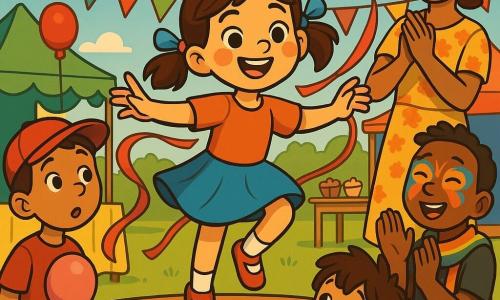
When the next round began, Tommy watched carefully. He made sure to pass the ribbon to Mei when she looked unsure. He clapped loud for Ben when he tripped and got back up. He cheered Owen when he danced a little victory move. The other children copied him. Soon the whole playground sounded like a chorus of small, kind noises.
Chapter Three: A Little Plan and a Big Change
After school, Tommy waited for his mum at the classroom door. Miss Rivera called him over, smiling softly. "Tommy, I saw you cheering a lot today. That was very kind."
Tommy felt proud and shy. "I noticed you sometimes asked the same kids first. I thought maybe everyone could get a turn."
Miss Rivera's smile became thoughtful. "Thank you for telling me. I try to be fair, but sometimes I do pick the ones who raise their hands quickly. That can mean quieter kids get missed. Do you have any ideas?"
Tommy remembered the notebook and the list the friends made. He told Miss Rivera about the plan for cheering and about making roles free in games. Miss Rivera listened and nodded. "Would you like to share this idea with the class?" she asked.
Tommy's breath shortened. Speaking in front of the class seemed big. "Yes," he said, because he liked being brave for everyone, not just himself.
The next day Miss Rivera asked the class to come up with one new rule for games. Tommy took a deep breath. When it was his turn he said, "I think we should make a game where you can choose any role, and you can change it. And adults should try to talk to everyone, not just the people who shout the loudest."
There was a thoughtful hush in the classroom. Mei raised her hand. "And we should cheer for small things. Like when someone helps someone else."
Samira added, "And nobody should say, 'Boys do this' or 'Girls do that.' Everyone can try anything."
Miss Rivera's eyes warmed. "Those are wonderful ideas," she said. "Let's try them at recess. We'll make a new game together."
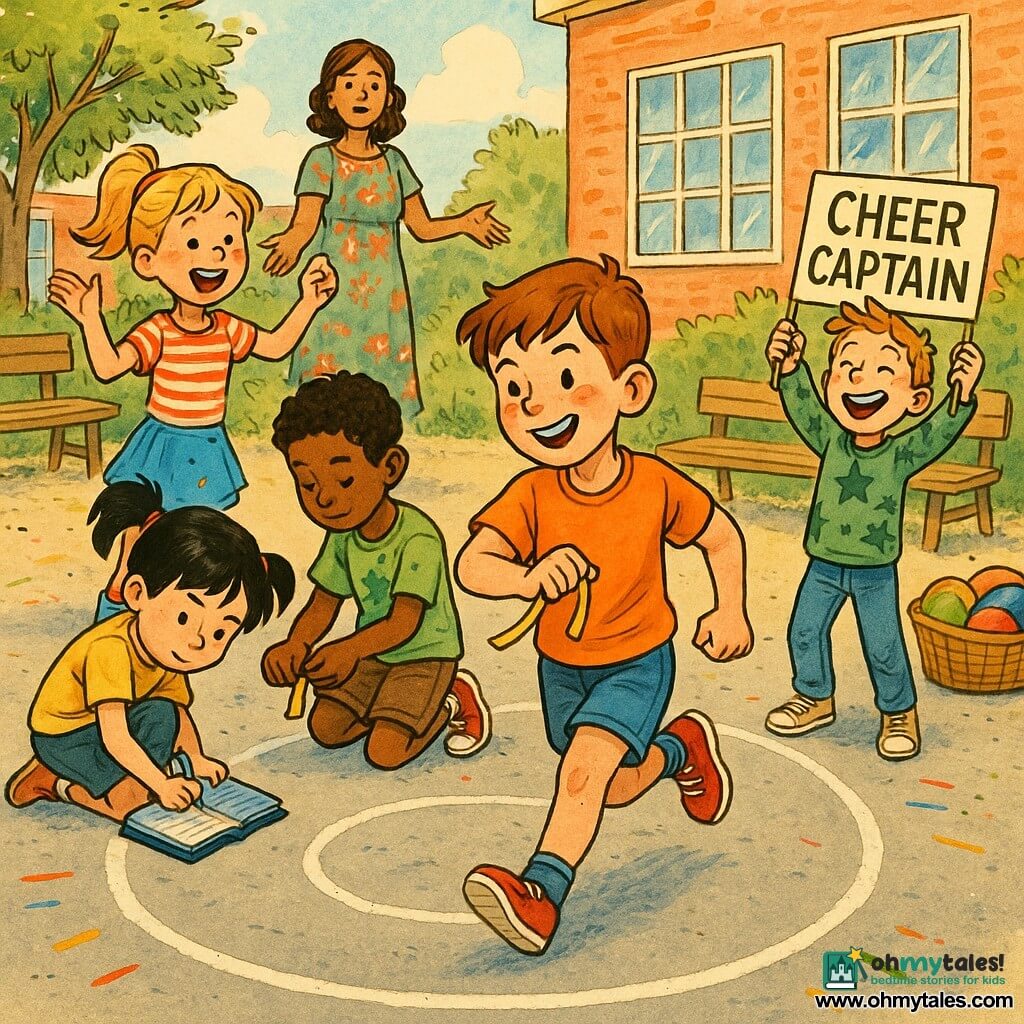
At recess, the class gathered. Miss Rivera drew a circle on the concrete with chalk and wrote the new rules. "This is 'Switch and Share,'" she announced. "Pick any role: catcher, runner, helper, or cheer captain. After two turns, switch. And when you score or try something brave, everyone cheers."
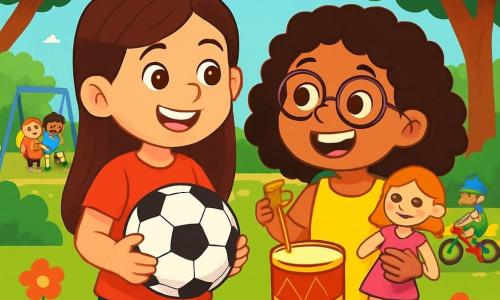
Tommy's heart beat happily. He chose runner first because he liked running. Ben chose catcher, then changed to helper. Claire chose cheer captain and practiced loud, kind cheers. Owen tried helper and discovered he liked tying ribbons for teammates. Mei was catcher in one round and runner in the next. The adults watched and called to everyone, asking, "How did that feel?" and "Who wants a turn next?"
The new game worked in a gentle, funny way. Sometimes a player tried a role they had never tried before and made a small mistake. A missed catch turned into a laugh. When a mistake happened, someone always said, "Nice try!" and clapped, and then the player tried again, a little braver.
Tommy liked watching Mei jump high to catch a ribbon. He liked hearing Claire's loud politeness. He liked when Mr. Ali asked Mei how her catch felt and nodded like it was very important. No one seemed left out.
Chapter Four: How Small Things Grow
After a few weeks, the new game was part of their usual play. Miss Rivera asked the class to think of ways to be fair in other parts of school too. They made small plans: rotate classroom helpers, make sure everyone gets asked at least once in a week, and invite quieter kids to share ideas by giving them a gentle nudge instead of waiting for loud hands.
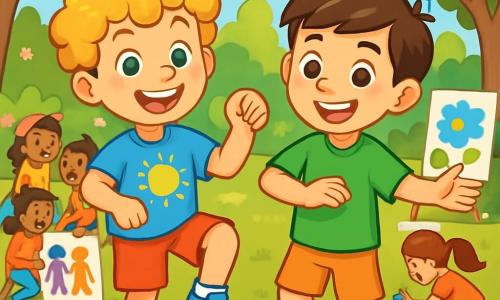
In the mornings, Tommy liked to sit quietly with his friends and draw. Sometimes he drew a sunflower with many petals, each petal a different color. He said to Mei, "Each petal is like a person. Different and important."
Mei smiled. "And the stem holds them up. That could be kindness."
Tommy liked that. He began to notice more small things: the way Samira's brow furrowed when she thought hard, the way Lucas smiled after he finished a tricky puzzle, and how Claire sometimes whispered jokes that made everyone giggle.
One day a new student joined the class. Alex had cropped hair and wore a bright green jumper with stars. Some children immediately assumed Alex would play only certain games. Tommy remembered the petal sunflower and the rules of Switch and Share. He walked up to Alex at lunch and asked, "Do you want to try our game at recess?"
Alex's eyes lit up. "Do I get to choose any role?"
"Any," Tommy said.
At recess Alex chose cheer captain and cheered so loudly and kindly that the whole class clapped for minutes. Miss Rivera came over and said, "I'm really glad you picked that." Later, Alex tried running and found they were very fast. The team whooped and shared a silly chant.
When the class talked about the Playmakers Club—a small group that helped plan playground games—Miss Rivera asked for volunteers. Tommy noticed some hands going up more than others, so he made a small plan: he suggested they ask two new people every meeting. Miss Rivera liked that and wrote it on the schedule.
Months passed. The classroom felt softer. Students asked each other, "Do you want a turn?" more than they argued about who should go. When an adult came to watch, they learned to ask different children for answers. Miss Rivera said she tried to remember the rotation and to give the quieter ones time to think. She would catch their eye and give a small smile.
One rainy day the class was inside and some children wanted to read aloud. Tommy noticed Mr. Ali sat closer to the circle, ready to listen to quieter voices. Tommy raised his hand and said, "Maybe next time we can invite someone who hasn't read aloud yet."
Miss Rivera's face glowed. "Wonderful idea. Let's make a reading list so everyone can pick a day."
Tommy felt proud. It wasn't that big changes had happened all at once. It was small things—choosing to cheer, reminding an adult, making a rule to switch roles—that sprouted into a fairer classroom.
Before long, the school decided to hold a little assembly to show games that celebrated fairness and teamwork. Tommy and his friends demonstrated Switch and Share. They explained how roles were chosen and why cheering for small things mattered. Parents and teachers clapped when Claire spoke and when Mei showed how to change roles after two turns. Miss Rivera introduced Tommy.
Tommy's voice wavered at the start. He looked at his classmates, at the petals of their sunflower drawings taped to the wall, then spoke more clearly. "We learned that everyone can try everything," he said. "We learned to notice quietly and to give turns. That's how we all get better."
The room filled with applause. Some grown-ups wiped their eyes. A parent stood up and said, "My child came home and made us switch chores at dinner so we could all try new things." Another teacher promised to try rotating question time in their class.
That night Tommy went to bed tired and happy. He thought of Miss Rivera's kind smile and Mei's notebook and Claire's cheers. He thought of Alex's green jumper and how being chosen didn't have to be the same for everyone.
Before sleep took him, he whispered to the sunflower drawing on his bedside table, "Thank you for showing me how petals work together."
The next morning, school felt the same and different at once. Kids still raced and laughed and argued over who could be line leader—but they settled quicker. They asked new questions out loud: "Who hasn't been the helper this week?" and "Can someone quiet try the loud part?" The adults remembered to look around and to wait a tiny bit longer before calling on the first hand.
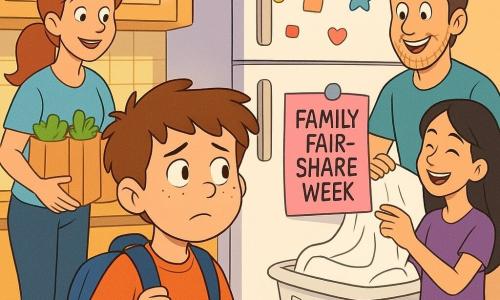
Tommy learned that justice is often a collection of small acts: a cheer, a hand offered, a role changed. It is the patience to listen and the courage to speak up kindly. He learned that being fair did not mean forcing everyone to be the same. It meant making space for everyone to be themselves and to try new things without fear.
And sometimes, at recess, when Tommy ran with his team, he would glance at the lines of children and the adults who watched, and he would see a hundred small petals swaying together in the playground breeze.