Chapter One: The Spoon of Light
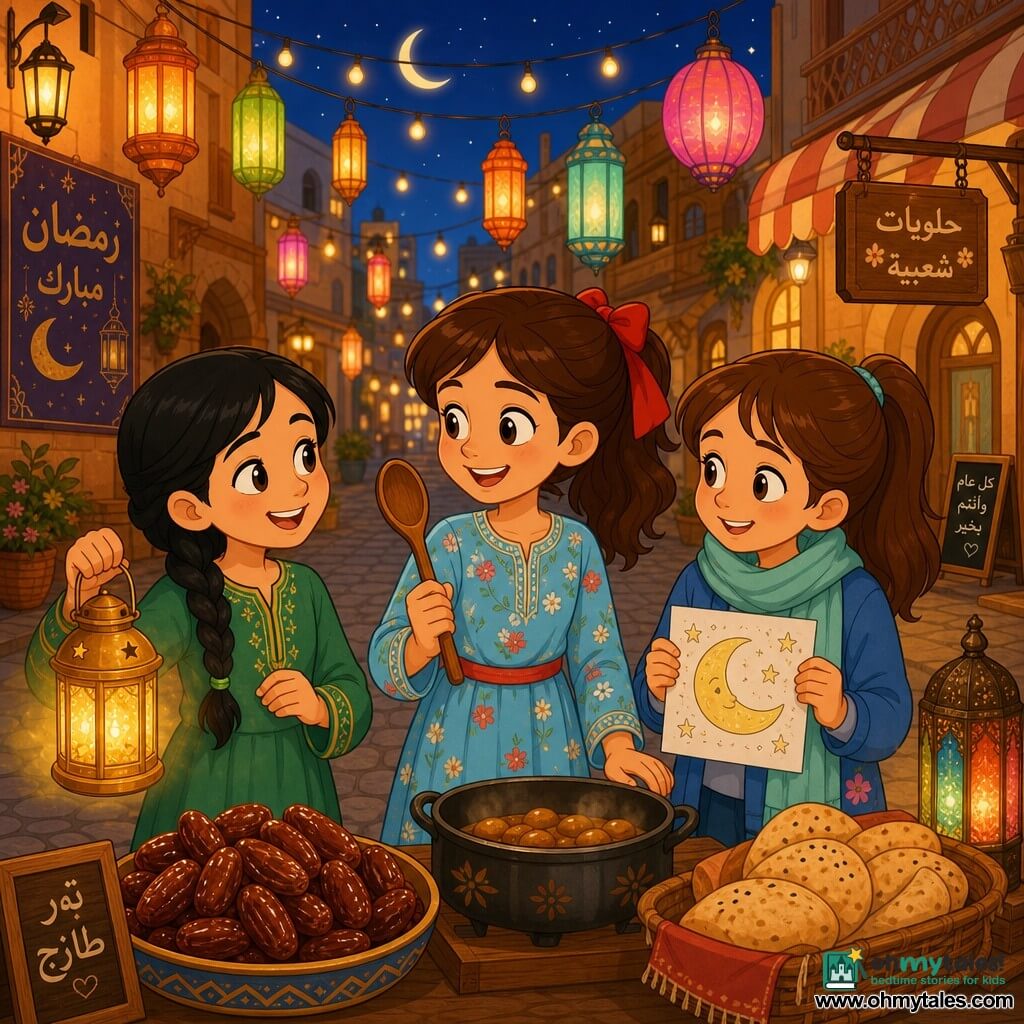
Lina loved pretty things. She loved the curl of a ribbon, the soft blue of a morning cloth, and how sunlight made dust look like tiny stars. Today she skipped down the lane with two friends, Amina and Noor, their hair tied with ribbon and laughter peeking from their mouths like shy birds.
They were heading to the market where the air smelled of orange blossom and warm bread. The market buzzed quietly because it was Ramadan, and people moved like they were keeping a gentle secret. Stalls were trimmed with little lights and bowls of sweets that glowed like jewels.
At a corner stall stood an old cook with flour on his apron and kindness in his eyes. He lifted a wooden spoon as if it were a magic wand. "Ah," he said with a smile, "three friends who wear joy like a scarf. Come, taste a handful of sweet dates. Taste takes you home."
Lina felt something warm in her chest when the cook spoke. His spoon was polished and bright. "How do you make everything feel so calm?" Lina asked, tracing the spoon with a fingertip.
The cook winked. "Beauty is in the doing," he said. "And kindness is in the saying. Remember to congratulate with a full heart, like you put extra sugar into a tea." He tapped the spoon against the bowl. "Say it true, and it will taste like honey."
Amina giggled, taking a date, and Noor hummed. Lina repeated the cook's words slowly. "Congratulate with a full heart." The phrase felt like a song. They left the market with their pockets soft with treats and the cook's words tucked safely away.
Chapter Two: The Lantern Parade
That evening the girls helped their families hang lanterns. Lina chose a lantern trimmed in gold that made little suns on the table. Amina found a blue one that shivered like a small sea. Noor's green lantern smelled faintly of mint because her grandmother had washed it in a soft-smelling soap.
They walked in a quiet parade through the neighborhood. Neighbors sat on doorsteps, sharing dates and small cakes. Lina watched faces as lantern light painted them gentle. She loved how a smile could look like a painted flower when someone was happy.
At a house they passed, a boy named Sami had baked tiny pies for everyone. He was shy and held the tray carefully. The girls stopped. Lina remembered the cook's spoon and the words about heartfelt congratulations.
"Noor, you tell him," Amina whispered. Noor stepped forward, then stopped. Sami's cheeks made a soft red moon. Lina felt her heart thump like a tambourine. She tucked a ribbon into her palm and walked up.
"Your pies smell like honey and sunshine," Lina said, and she meant it. Sami blinked, surprised, and then his smile opened like a little door. Amina added, "You did a lovely job, Sami." Noor nodded, and then her voice came out, bright and true: "They taste like a story."
Sami's shyness melted into pride. He said, "Thank you," and his thanks sounded like a bell. The cook's words—congratulate with a full heart—felt real and warm, like the bottom of a cup. The girls realized that when you say something true and kind, it becomes a gift as golden as any lantern.
Chapter Three: Lessons in the Kitchen
The next day the girls were invited to help in the community kitchen. The cook who had given Lina the spoon greeted them with a flour-dusted grin. "So, my little ornaments of joy, are you ready to learn the recipe of giving?"
They washed their hands and tied their scarves tight. The kitchen hummed with gentle work: chopping, stirring, folding. Lina watched the cook move—his hands were calm like a clock. He taught them to measure not only with cups but with care. "A pinch of salt and a pinch of patience," he said.
Lina measured spices carefully, her fingers remembering the spoon's shine. A woman who had fasted all day came in to collect a box of food. She looked tired but also peaceful. The cook nodded toward the woman and said, "When you offer, you also congratulate life. Say it with your heart."
Amina popped her head out from behind a bowl. "What do we say?" she asked.
"Say what you feel. Say it honestly," the cook answered. "A sincere congratulations is like adding a little light to another person's pocket."
When the woman left, Lina stepped forward. "May your evening be peaceful and warm," she said softly. The woman paused, then smiled, her eyes wet with gratitude. "Thank you, little one. Blessings to your family," she replied.
The girls learned that congratulations could be many things: praising someone's hard work, sharing joy for their good news, or wishing them well. It was not always about big words. Sometimes it was simply noticing and saying, "I see you, and I am happy for you."
Chapter Four: Evening in the Calm Parlor
Ramadan evenings became fuller with soft songs and shared stories. The girls often visited Lina's house, where her mother had a small parlor draped in cushions and warm light. They called it the calm parlor, a place to sit after the day's quiet fast, drink sweet tea, and speak quietly of kind things.
On the final evening of the little feast, families came together. The girls set the table with everything pretty: bowls, napkins folded like small birds, and candles that flickered like tiny friendly fires. Lina placed the polished spoon on the table, not as a tool but as a memory of the cook's kindness.
Someone announced that Noor had drawn a picture of the moon for the community board. Noor's face blushed with pride. Amina had sewn a tiny ribbon for a neighbor's jacket. Lina had found a way to fold napkins into hearts. Each small thing was a bright pebble of kindness.
They practiced congratulating one another. Lina turned to Noor first. "Congratulations on your moon. It's lovely," she said in a voice as soft as a blanket.
Noor smiled, eyes shining. "Thank you, Lina. Your napkins are like small hearts."
Amina clapped her hands gently. "And your ribbon, Amina, is the kindest color." She said it with all her warmth. Amina's grin could have lit the lamplight.
The cook, who had been welcomed to the parlor like a beloved uncle, raised a cup. "To small wonders," he said. "To noticing." Then he added, "And to saying them true." Everyone echoed, their voices weaving like a gentle ribbon.
After the meal, elders told a quiet tale about a night when the moon was so bright it seemed to listen. The girls sat on cushions, sipping tea, feeling the room fill with hush and laughter. Lina looked around at faces—soft cheeks, smiling mouths, hands that had shared and given. She felt like she was wrapped in something warm and wide.
Before they left, Lina took a breath and said to her friends, "I am proud of you both. You make everything beautiful." She meant it simply and fully. Amina hugged her, and Noor placed a tiny napkin heart on Lina's lapel.
At the doorway, the cook touched Lina's shoulder. "You have learned well," he said. "A sincere congratulations can mend a small worry, brighten a face, and pass on light."
Lina looked back at the calm parlor, its cushions like gentle hills and the lantern light soft as a promise. The night outside smelled of jasmine and calm streets. She kept the feeling close—like the spoon in her pocket—and promised to always say kind things when she really felt them.
As they walked home, the girls hummed. The road was lined with the friendly glow of lanterns. Lina glanced at her friends, at the ribbons and the quiet joy, and thought of how small words could carry so much warmth. Their laughter mixed with the light, and the world felt a little more beautiful, held together by congratulations said from the heart.