Part 1: A Map Full of Blue Lines
Leo, Max, and Sami were all six years old, and they were traveling together for the first time. Leo carried a small notebook with a springy pencil. Max wore a bright yellow cap that made him easy to spot. Sami had a tiny backpack with a toy compass clipped to the zipper, even though they already had real maps.
On the plane, Leo pressed his forehead to the window. “The clouds look like cotton,” he whispered, as if he might wake them up.
Max leaned closer. “Do you think Copenhagen has castles?”
Sami opened the map on his lap. Blue lines twisted everywhere. “It has water,” he said proudly. “See? Canals!”
When they landed, the air felt cool and clean. Outside the airport, bikes rolled past like quiet, shining beetles. The boys climbed into a train, then walked along a street with colorful buildings—red, butter-yellow, soft green—standing shoulder to shoulder like friendly blocks.
Leo wrote in his notebook: “Copenhagen smells like bread.”
They stopped at a bakery. Warm air floated out, carrying the scent of cinnamon. The baker smiled and pointed at a tray. “Would you like a small one?”
Max chose a swirl pastry and held it carefully with two hands. “It's like a snail,” he said, amazed.
Sami took a bite and blinked. “Sweet! My mouth is having a party.”
After that, they went to the canal. Boats slid by, leaving gentle ripples. A guide waved and told them simple stories about the city. The boys listened, then tried to spot things themselves: a bridge with a green lamp, a statue near the water, a line of bikes parked like patient horses.
Leo imagined he was an explorer. “We are discovering secret clues,” he told the others. “Clue number one: the city loves bicycles.”
Max nodded. “Clue number two: it loves snacks.”
Sami pointed at a tall tower far away. “Clue number three: it has places to climb.”
They didn't climb the tower that day. Instead, they walked, and looked, and asked questions. Leo sketched a boat in his notebook. Max counted the flags on a building. Sami watched the clouds drift and said, “They're traveling too.”
When the sky turned pink, they headed to their lodging. It was different from their homes—an old, cozy place with creaky wooden stairs and a hallway that curved a little, like it was thinking.
Leo felt excited. “This place is like a story,” he said.
Max tapped the wall. “It's real wood. Listen!” The wall made a soft thump.
Sami checked his toy compass. “We are safe,” he announced. “North is that way.”
Part 2: The Room With the Quiet Corners
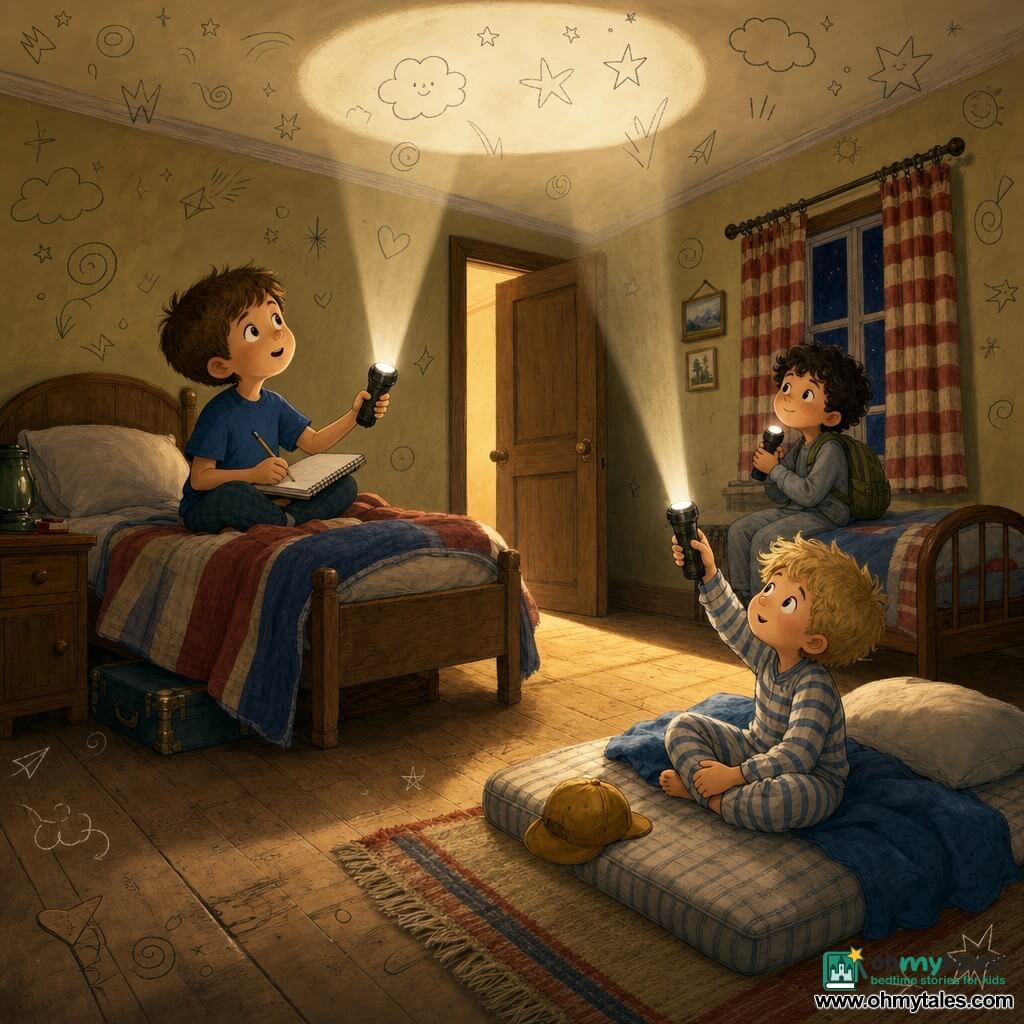
Their room had two small beds and one extra mattress on the floor. A lamp sat on a table, and the curtains were striped. Leo liked the sound the curtains made when he swished them. Max liked the soft rug. Sami liked the window, because he could see a streetlight outside.
After dinner, they brushed their teeth and put on pajamas. The grown-up with them—Aunt Mira—read a short bedtime book in a calm voice. The boys' eyes grew heavy.
Then Aunt Mira stood up. “Good night, explorers,” she said. “I'll be right next door. If you need me, call.”
She clicked off the main light.
The room changed right away. The corners looked deeper. The hallway outside went quiet. The streetlight made a pale square on the floor, but it didn't reach every place.
Leo's heart did a small jump. He loved imagining things, but in the dark his imagination felt too big, like a balloon pulling on its string.
Max whispered, “I can't see my yellow cap.”
Sami whispered back, trying to sound brave, “It is probably sleeping.”
Leo hugged his pillow. “I don't like the dark,” he admitted. His voice was small, but he was proud he said it.
Max sat up. “Me neither,” he said quickly. “At home I have a nightlight shaped like a star.”
Sami swallowed. “At my house, I can hear my dad in the kitchen. Here it's… different.”
The room made tiny sounds: a tick, a creak, a sigh of wind at the window. Leo imagined the shadows were giant coats hanging up. He knew coats were just coats, but his mind drew monster faces anyway.
He took a slow breath, the way Aunt Mira had shown him when he felt worried at the dentist. In through the nose, out through the mouth. It helped a little.
Max scooted closer. “What if we make our own nightlight?”
Sami's eyes widened. “How?”
Max pointed toward the window. “We have streetlight.”
Leo looked at the pale square on the floor. “It's too small,” he said.
Sami sat up and remembered his backpack. “I have my tiny flashlight!” he said. He unzipped his bag and found it. The beam was thin but bright.
Max smiled. “We can point it at the ceiling. Then the dark will have less space.”
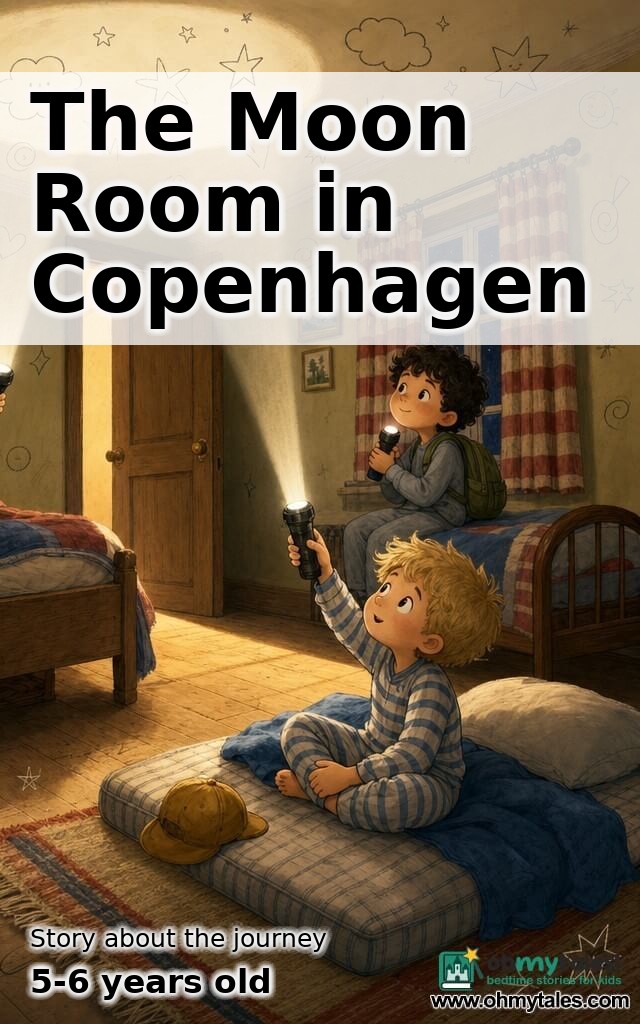
Sami aimed the light upward. A soft circle appeared above them like a moon. The room didn't look so scary anymore.
Leo let out a shaky giggle. “The moon is in our room.”
Max whispered, “Moon room.”
But then the flashlight flickered once. Sami's hand froze. “What if it runs out?”
Leo felt the balloon of worry tug again. He didn't want to depend on something that could disappear.
He thought of respect for himself, the way Aunt Mira had explained it earlier that day when Leo said he couldn't read a sign. She had told him, “You can say, ‘I need help,' and you can also say, ‘I am learning.' Both are strong.”
Leo sat up straighter. “We can do more than one thing,” he said. “We can use the flashlight, and we can use brave thoughts.”
Max blinked. “What are brave thoughts?”
Leo thought carefully. “Real thoughts. Like… the dark is just when the lights are off. The room is the same room.”
Sami nodded. “And we are together.”
Max added, “And Aunt Mira is next door.”
They made a plan. First, they would keep the flashlight on low by pointing it at the wall, not straight into their eyes. Second, they would name three real things they could hear or feel, to remind their brains that everything was normal.
Leo started. “I feel the rug. It is soft.”
Max went next. “I hear the wind. It is outside.”
Sami said, “I smell soap from our clean hands.”
Leo's shoulders dropped. The balloon string loosened.
Still, the corners were dark. Leo knew he might wake up later and feel afraid again. He didn't want to hide his fear, but he also didn't want fear to boss him around.
He called softly, “Aunt Mira?”
A moment later, the door opened. A warm line of light slipped into the room. Aunt Mira peeked in, her hair a little messy, her face kind.
“What's up, explorers?” she asked.
Leo took a deep breath. “I'm scared of the dark,” he said. His cheeks felt hot, but his voice stayed steady. “Can we have a small light?”
Aunt Mira nodded right away. “Thank you for telling me,” she said. “That is respecting yourself. You listened to your feelings.”
She plugged in a tiny nightlight in the hallway and left their door slightly open. The light was gentle, like a candle but safer.
“There,” she said. “Not too bright. Just enough.”
Max sighed. “Perfect.”
Sami held the flashlight like a treasure. “We can turn this off now,” he whispered, and he did.
The room stayed calm. The corners were still there, but they looked like simple corners again, not secret caves.
Aunt Mira whispered, “Good night. You did a good job solving a hard feeling.”
When she left, Leo wrote one last line in his notebook by the soft glow: “Being brave can mean asking for help.”
Part 3: Morning Discoveries and a Smiling Summary
In the morning, sunlight poured through the striped curtains. The room looked smaller and friendlier in daylight, like it was winking at them.
Max popped up first. “I dreamed about a pastry castle,” he announced.
Sami stretched. “I dreamed the canals were made of lemonade,” he said.
Leo smiled. “I dreamed we were brave explorers,” he said, and it felt true.
After breakfast, they walked to see a famous little statue by the water. It was smaller than Leo expected, but he liked it even more because it didn't try to be huge. It sat quietly, looking out at the sea, as if thinking gentle thoughts.
Leo wrote: “Small things can be important.”
They visited a playground with a ship-shaped climbing frame. Max climbed the mast and waved his yellow cap like a flag. Sami steered the pretend wheel and called, “Left! Right!” Leo pretended to read a map and shouted, “Land ahead!”
They also learned small travel lessons. They waited their turn. They said “thank you.” They kept close when bikes zipped by. When Leo felt tired, he told Aunt Mira instead of pushing himself too hard.
Later, they rode a boat on the canal. The water made soft slapping sounds against the side. Houses leaned toward the water like they wanted to listen.
Max pointed at people eating outside. “They look happy,” he said.
Sami watched a cyclist ring a bell. “They share the road,” he noticed.
Leo looked at his friends. “Travel makes my brain wake up,” he said. “But it also makes me miss home a little.”
Max nodded. “Missing home is okay. It means home is good.”
Sami added, “And we can be brave away from home.”
That night, back in the same room, the boys did their plan again before sleeping, even though they felt less afraid. They left the door a little open. They named three real things. They reminded themselves they were safe.
Leo felt proud, not because he was never scared, but because he respected himself enough to speak up and find a kind solution.
Before his eyes closed, he thought of Copenhagen: the bright buildings, the cinnamon smell, the bikes, the canals, the quiet statue, the soft nightlight.
In the dark, he didn't feel alone. He felt like an explorer who knew a secret: courage can be gentle.
And that was a warm, sleepy thought to carry home.