Chapter 1: The Seed in My Pocket
Maya walked down the lane with a tiny seed folded in a scrap of paper. It was light as a sigh. The sky smelled like wet stone and the breeze tasted faintly of grass. Spring had arrived slowly, like a cat stretching awake, and everything around her seemed to yawn with new colour.
She had planted seeds before, in pots on the windowsill, in the school garden, and once in a mug that cracked. This seed was different; it had been given to her by Old Mr. Bennett who kept bees and told stories about the earth. "Try again if it doesn't grow," he had said, tapping the packet. Maya liked that. It felt comforting to know she could start over.
On the farm where she lived with her family, the fields were waking up. Tractors hummed softly in the distance, and farmers walked along the rows, checking the soil. Maya loved to tap the earth with her fingers and listen to it. Today she was going to plant the seed in a quiet corner near the hedgerow, where the ground was warm and sheltered.
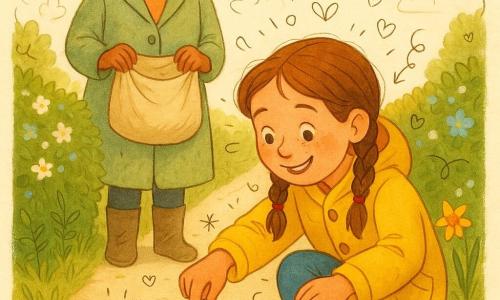
She knelt and pressed the seed into the soil, covering it with a careful handful. Her palms left soft, fingerprinted impressions in the earth. "Grow," she whispered, imagining a tiny green shoot peering up like a new idea. Then she patted the soil as if tucking a child into bed.
She left the field with the sun slipping through bare branches, promising to come back tomorrow. The promise of trying again hummed in her chest like a small bell.
Chapter 2: Morning of First Sightings
The next morning the world smelled of honey and damp leaves. Birds sang like bright spoons stirring syrup. Maya walked the old path that cut between hay bales and a puddle that reflected the whole sky. She kept her eyes down for any sign—a curl of green, a different shadow.
Before she reached the hedgerow she saw a pale yellow face among the grass: a primrose, its petals soft as butter. Her breath slowed. The primrose nodded in the breeze like a shy friend. There were a few more, tucked close to the ground, each one a small sun.
"Hello," Maya said. She crouched and reached out to touch the petals. They felt cool and silky, like the inside of a seashell. The scent was subtle—fresh and sweet, like the promise of a story just beginning. She looked around and saw primroses peeking under gorse and near the farm fence, bright little lamps guiding her along.
At the field where she had planted the seed, all she saw was smooth earth. No green twig, no brave leaf. Her heart gave a small, disappointed drop. But she remembered Mr. Bennett's words and the way his eyes crinkled when he spoke about failures that led to new tries. Maya smiled, not because she had succeeded, but because she could try again. After all, spring was all about small beginnings and patient waiting.
She collected three primroses carefully and tucked them in the fold of her jacket to show her mother. The flowers warmed her hands their way a pocket-warmed pebble warms you in winter. On the path home, she stopped to help Farmer Anya lead a sleepy lamb back to the pen. The lamb's fleece smelled of hay and sunshine. Maya felt the warm weight of helpfulness settle in her chest like a soft stone.
Chapter 3: The Field at Work
One afternoon, the farm was full of gentle activity. The big field near the river was being prepared—ploughs turned the soil into dark ribbons, and the air was sprinkled with the earthy scent of turned-over dirt. Maya watched from the fence as seeds were sown in neat lines like tiny promises.
Mrs. Cole, who drove the tractor, waved at Maya. "Come help us carry the seed sacks?" she called. Maya hopped down and together they lifted the bags. The seeds were small and dusty and smelled faintly of grain. Maya learned how to measure the rows and how to listen to the land. Mrs. Cole showed her how the soil crumbled between her fingers; it should be loose, not clumpy, ready to cradle new life.
They worked as the sun slid warm across the sky. Maya felt her arms grow strong and her laughter float up among the crows. She noticed how each person moved with a careful rhythm—Anna checking seedlings, Tom fixing a gate, her mother gathering herbs by the kitchen door. Helping was a quiet kind of music on the farm.
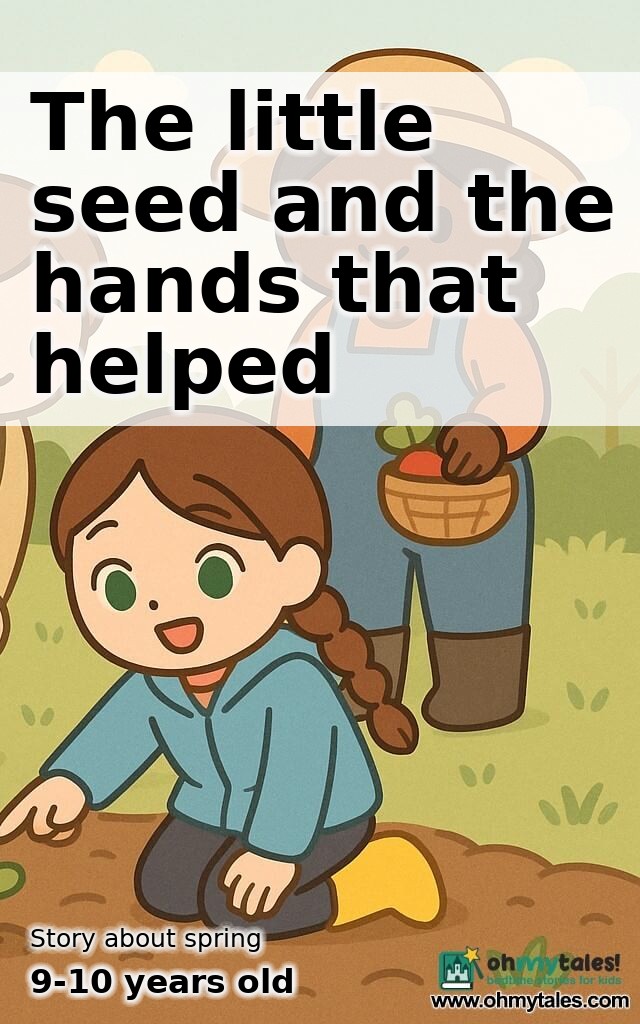
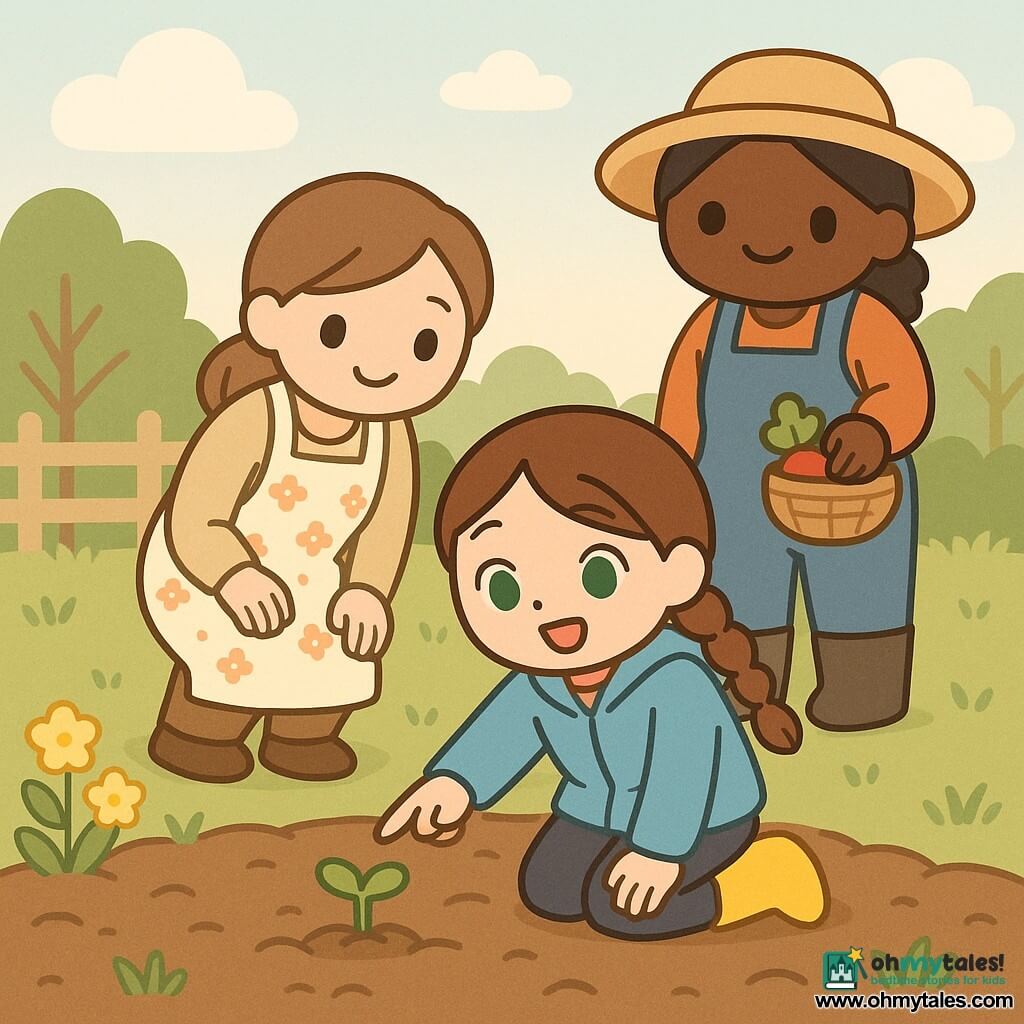
At the end of the day, they walked along the newly sown field. The soil was still warm. Maya knelt and made a small hole with her hand and planted another seed—the same kind she had tucked in her pocket. She covered it with soft soil and pressed gently. If it didn't grow, she would try again. That thought no longer felt heavy; it felt like a plan.
Chapter 4: Rain and Hands to Hold
A light rain began one evening, tapping the roof in a rhythm like a lullaby. The farm smelled richer—mossy, alive. Maya stood by the window and watched the drops bead on the primroses she had put in a jar. The petals glowed, each a tiny sun in a wet world.
The next morning, she found the hedgerow gleaming. The primroses lifted their faces, drip by drip. In the coop, the hens huddled under a shared oak board, their feathers patting one another like blankets. Helping was everywhere—streams sharing their water, worms opening the soil, the farmer mending a broken fence with his neighbour.
Maya set out with a small watering can to check her two planted seeds. One spot had a faint green tip—a brave, tiny curl. The other showed no sign. She felt a twist of sadness, but then she remembered how the animals huddled together when it rained. She fetched her mother and they sat by the earth together. Her mother smoothed the soil with a careful hand and said, "We'll give it time, and we can plant again if we need to."
They planted a few more seeds near the hedgerow, arranging them like a tiny constellation. Farmer Anya came by with a basket of radishes and offered Maya one. "Keep trying," she said, smiling. "Spring is full of second chances." Maya bit into the radish; it was crisp and a little peppery, and it made her giggle. The taste felt like encouragement.
Chapter 5: Evening Rest and New Light
Weeks folded gently into each other. Each morning brought a new look: a sprout here, a cluster of yellow where primroses multiplied, a row of tiny green teeth nibbling through the soil in the big field. Maya learned to watch without rushing. She learned to smell the change in the air before she could see it and to name the birds by their call.
One evening, after a day of planting and checking and helping Mr. Bennett fix the hive lid, she walked to the hedgerow. There, in the soft light of a lowering sun, she saw a small green shoot exactly where she had first placed her seed in the soil weeks before. It was not tall or showy—just a hopeful leaf curling like a hand making a tiny fist. Beside it, primroses dotted the ground like bright coins.
Maya breathed in the scent of the field—damp soil, cut grass, and a faint sweetness of blossoms. Her heart hummed. She knelt and ran her fingers through the earth, feeling the coolness, the small stones, the warm crumbly soil that had held the seed. She remembered the times she had re-planted and the hands that had helped her: her mother's steady palms, Mrs. Cole's laugh, Farmer Anya with her basket. Together, they had made room for new things.
That night she lay in bed under a blanket that smelled faintly of her mother's lavender. The window was open and the air came in soft and green. The sounds of the farm settled like a gentle chorus—sheep lowing, distant tractor, a night bird calling once. Maya thought of the primroses, the radish that left a peppery memory on her tongue, the tiny green shoot. She felt a quiet certainty: if something failed, she could try again, and there would always be hands to help.
She closed her eyes like folding a letter, and sleep came easy, as if the earth itself had tucked her in. Tomorrow would be another gentle day of watching, of small steps and patient care. For now, she rested, held by the warm, slow promise of spring.