Chapter One: The Dream That Called
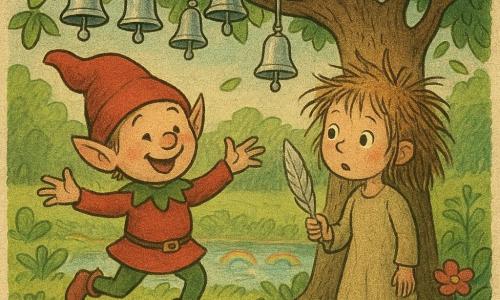
Each night, when lantern-birds blinked out and the moon turned like a silver coin, Lio the little elf heard the same soft song. It was not words but a feeling: a cool ribbon that wrapped around his ears and tugged him gently awake. In the dream, the orchard hummed, and a tall wind stood sleeping beneath the roots of the oldest tree. The wind wore a cloak of leaves and slept like a child, breathing slow and deep.
Lio lived in a small hollow among the glowing fruit trees. The orchard was round as a bowl, each tree bent with lantern-apples, star-pears and bell-melons that pulsed in colors. At dusk the fruit made the ground glow in patterns like a river of lanterns. Lio loved how the colors changed when he walked, like paint stirred by footsteps. He loved the hush of the orchard, the soft rustle of moth-lamps, and the way fox-gloves hummed lullabies to passing beetles.
The dream called because the wind was gentle now, only tiny breezes that tickled the leaves. The world around the orchard was still—too still. Stones forgot their stories, the stream moved like a slow ribbon, and even the dandelion wishes hesitated on their stems. Lio felt a quiet throb in his chest whenever the dream sang. It told him the wind must wake, not to blow everything away, but to bring the right amount of movement back—enough to let seeds dance, to cool the peaches, to balance the warmth of the sun.
Each morning, Lio would brush his leaf-hair, tie his cape with a clover-knot, and look toward the oldest tree. It was called the Rootwise, its bark mottled like owl-feathers and its branches tangled like friendly arms. The Rootwise held the sleeping wind, its roots curled into a hollow like a nest. Lio felt kind and small beside it, but the dream tugged at him again: please wake the wind.
Chapter Two: The Orchard's Quiet Tasks
Lio began with small, kind things. He sang to the fruit so their glow stayed gentle. He watered the ground with a cup of moon-tea and patted the soil like a sleeping head. The orchard answered with tiny tremors—a raspberry ripple here, a pear-kiss there. Birds would hop in to check, and Lio would offer them crumbs that tasted like cinnamon and stars.
He learned how balance lived in little acts. When a bell-melon leaned too heavy on one side, he propped it with a green pebble. When two lantern-apples argued about which should glow bluer, Lio told a joke and both laughed, their lights blending to a softer gold. Humor was his secret tool; he chewed on silly rhymes and tossed them like pebbles into still ponds. The pond always made a nice plunk and sent ripples to the water-lilies' toes.
But the dream sang more urgently as the days passed. The Rootwise's leaves drooped now and then. The orchard's glow smoothed into one big, sleepy color. Lio sat under the Rootwise, pressing his small palms to the bark. He felt the wind press back—distant and slow. “I will wake you,” he whispered. The tree shivered as if to say, “Hush, try gently.”
So Lio listened. He learned the wind's rules by watching spider-silk tremble, by counting how many seeds drifted from a shaken branch, by timing the way the moth-lamps cooled at dawn. He understood that waking the wind was like waking a friend: too rough and they would startle; too soft and they would drift back. Balance, he remembered, lived in the middle of the swing.
One evening, while plaiting a vine into a crown, Lio found a small map stitched into a fallen leaf. It showed three small steps: Gather a laugh, borrow a breath, and set the fruit to sing. Lio tucked the map into his pocket and felt the dream pull a little closer, like a ribbon winding onto a spool.
Chapter Three: The Gentle Ceremony
The first step was easy and warm. Lio walked through the orchard telling tiny jokes to the beetles and whispering riddles to the sleeping foxes. Laughter bubbled like fizzy honey. The laughter climbed into the trees and tickled the fruit. Lantern-apples blinked brighter. The orchard began to hum with a small, happy song.
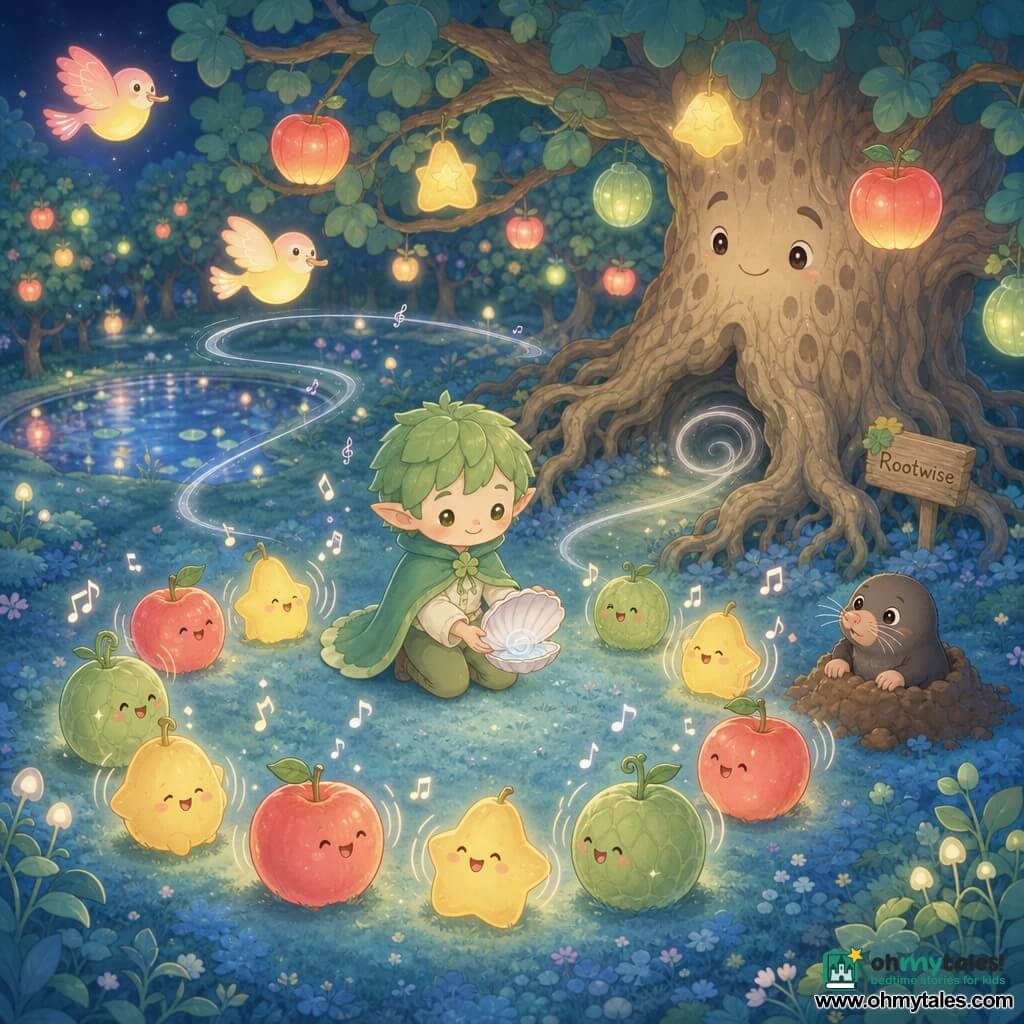
Next, to borrow a breath, Lio needed permission. He knelt by the pond and cupped his hands. He asked the moon, the stones, and the Rootwise if a small bit of wind might be borrowed for a gentle rousing. The moon lowered her eyelids in a slow smile. The stones hummed back, remembering old breezes. The Rootwise sighed, and from its hollow slipped a thin, misty thread of air—soft as a lullaby, sweet as peppermint. Lio tucked the breath into a shell and held it like a fragile promise.
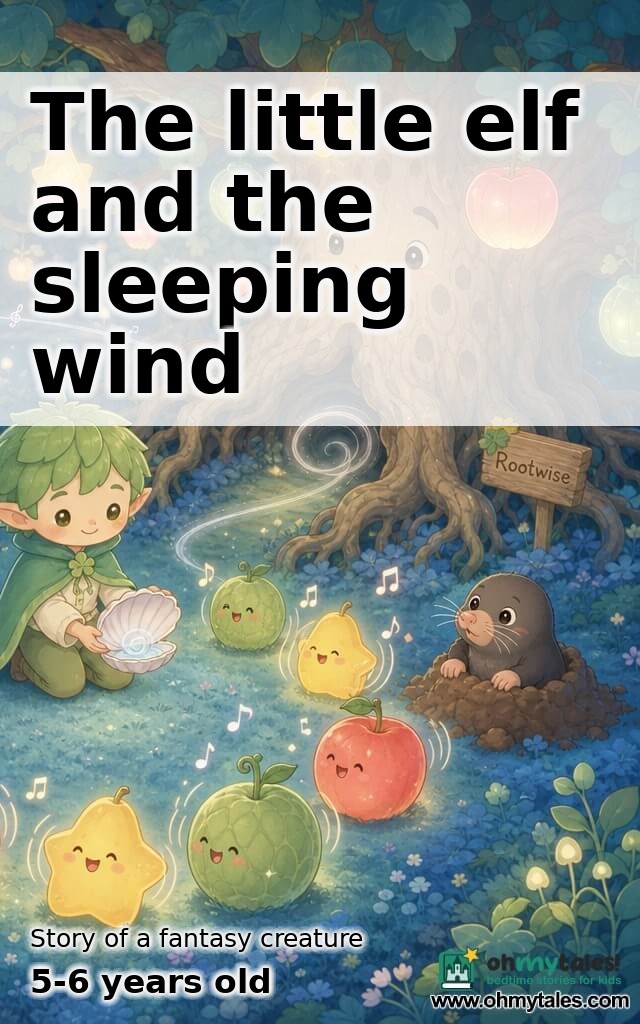
For the third step, he arranged the fruits into a chorus. He found an empty twig and tapped a rhythm. The bell-melons answered with a deep, mellow thunk. The star-pears chimed, high and bright. The lantern-apples pulsed like tiny drums. Lio placed the borrowed breath in the center and blew a tiny, careful puff. The breath traveled through the fruit chorus like a musician touching a string. The orchard listened.
At first, nothing happened. Then, a leaf twitched. A mole popped its head up and blinked twice. A slow wind uncurled from the Rootwise like someone stretching after a nap. It was not a wild storm but a slow, musical wind, the kind that hums through window cracks and makes curtains dance in a loving way. The wind began to move, slow and exact, kissing each fruit with cool fingers, balancing the warmth of their glow. The bell-melons rung in gentle tones; the star-pears scattered tiny sparks that looked like distant fireflies.
Lio felt the wind press his cheeks, a soft nudge. It did not rush or shake; it balanced. The orchard sighed in contentment. Seeds loosened and drifted just enough to promise future trees. The stream remembered its hurry and started to sing again. Even the lantern-birds blinked awake, their chests puffing bright.
Chapter Four: A Small Elf, A Great Balance
The dream visited Lio that night and found him sitting beneath the Rootwise, wrapped in a breeze that felt like a shawl stitched from cloud. The song was mellow now, no longer a long tug but a grateful hum. The wind had woken, but it had learned to be kind.
The Rootwise bent a branch low and dropped a single silver-seed into Lio's palm. It was warm and pulsed like a tiny heartbeat. “Balance,” the Rootwise seemed to say, “is a small thing done often.” Lio smiled until his cheeks ached. He tucked the seed into his pocket like a secret and promised to care for the orchard always.
From then on, when the wind grew sleepy, Lio sang his small songs, propped fruit, told jokes, and borrowed a gentle breath. Sometimes he would stitch tiny flags to guide the air, or leave a pebble on a bell-melon to teach it to lean well. The orchard stayed glowing, colors shifting like soft music, and the world beyond remembered how to move just enough.
Neighbors came to see Lio's orchard and learned to listen—to laugh softly, to touch the earth kindly, and to let the wind do what it must with a little nudge. The puppies who chased fireflies learned to stop and watch seeds fly. The old stones told younger stones how they used to hum. Life balanced itself like a pair of scales tipped by many small acts.
That night, Lio slept without the tugging dream. The wind hummed in his window like a friend telling secrets. He dreamed of a future orchard full of tiny elves and birds and bouncing beetles, all keeping the balance together. He felt proud, not because he was big, but because he learned to be gentle and brave for something greater than himself.
The orchard slept under a sky that hummed soft lullabies, and all around, in small and steady ways, balance grew like new fruit—bright, glowing, and ready for tomorrow.