Part One
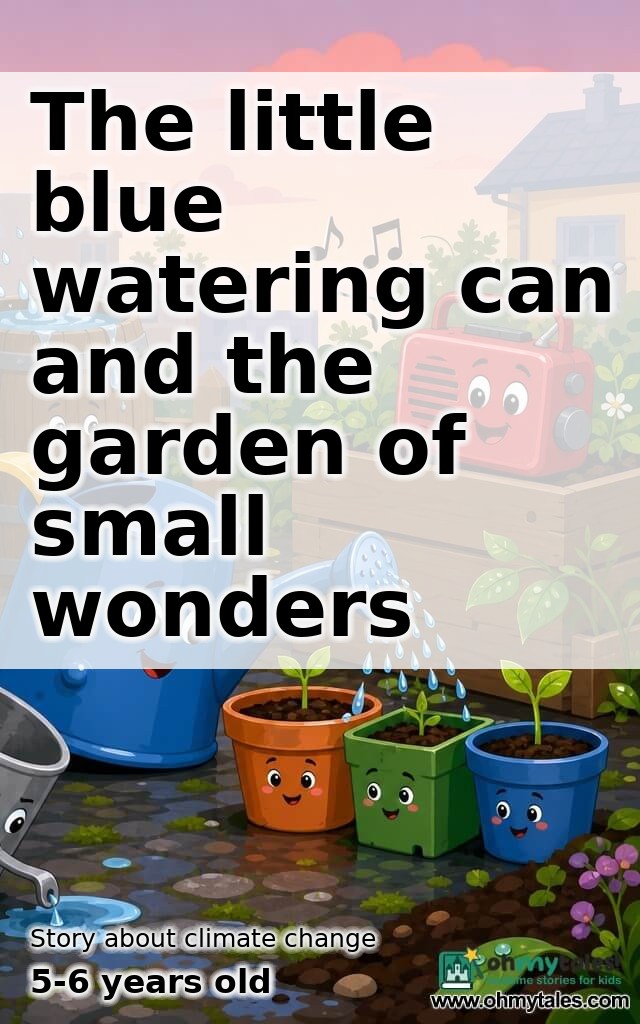
There was a little blue watering can who lived on a sunny shelf. The can had a small dent on its side and a bright yellow handle that had been taped once. It liked to wake with the morning light and watch the garden below. The garden changed more with each year. Summers were warmer and the bees came earlier. The watering can felt both curious and a little worried.
One morning the can rolled down from the shelf to visit the thrift shop across the lane. The shop smelled of wool and old paper. Everything there had been loved before. The can paused by a wooden crate full of tin cups and a faded scarf. A lamp with a crooked neck blinked gently nearby. A pair of well-worn boots leaned against a basket of thread. On a small card, someone had written: Useful things need new homes.
The can remembered the parched patch near the fence. It remembered how the soil cracked last summer. It wanted to help but also felt small in a big, changing world. The can sat beside the crate and listened. The lamp hummed stories of evenings spent lighting tiny kitchens. The boots shared a memory of rainy walks. The scarf breathed softly about long winters. Each item had seen weather change in its own way.
A friend arrived on the shelf above. A little battery-powered radio that still played one bright tune. It had a knob that clicked when turned. The radio told the can about a school garden where a group of small planters were learning to grow herbs. They had trouble with thirst and heat. The radio said the planters needed help collecting water at times when the tap was low. The can felt a small flip inside—an idea, fragile and warm.
Part Two
The can rolled home with a gentle wobble. It made a plan. It would teach the planters what it knew about saving and sharing water. The can gathered the radio, a tin mug, and a soft cloth to polish its spout. Together they walked back to the shop and then to the garden, along a path of cobblestones that glimmered after rain.
At the garden, little planters sat in a sunny row. They were made of clay and plastic, patched and bright. The planters listened while the can spoke with calm, steady drops of advice. It showed how to collect rain in a shallow bowl for young roots. It suggested moving a few pots into shade during the hottest hours. It taught how to use the tin mug to catch spillings and share them with friends. The planters tried. At first the scoops were clumsy. Water splashed, then was caught. The can reminded everyone that small steps helped.
A breeze passed and carried news from a willow tree. The tree had watched the river shrink one year and swell the next. It told the group about long patterns and short cycles. The can learned that some things, like seasons and river paths, were larger than any single helper. That made the can pause. It wanted to fix everything, but now it saw the limit of its little spout. The can understood it could do things that mattered, and that others would need to join.
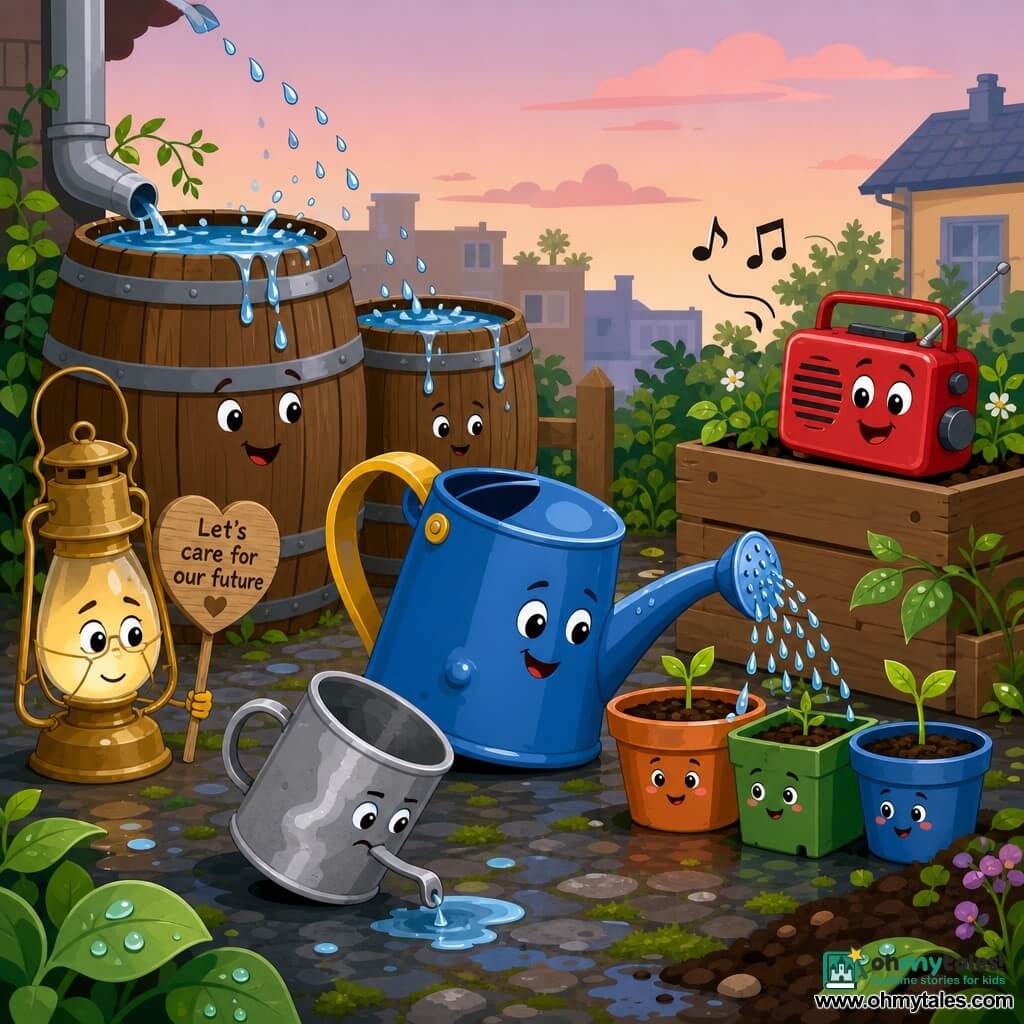
A few buds later, the lamp from the shop arrived with two old rain barrels on a cart. The lamp had made friends with a clever box fan who loved to push leaves and air. They had spoken to neighbors—pots, baskets, even a compost bin. Each one offered something small: a lid to keep water cool, vines to shade the soil, seeds saved from last year. Together they started a plan to catch more rain and shade the hottest rows. The can felt warmth at this shared effort.
Part Three
One afternoon a storm came sharp and quick. Rain tapped loud on the greenhouse roof. The barrels filled fast. The can and the planters cheered as drops slid into waiting cups. After the storm, the garden glowed clean and bright. New shoots peeped from the soil. The can looked around at the friends who had come from the shop and from shelves. Each had brought one small idea and a steady heart.
The can still remembered the dent that sometimes made it leak. It learned to ask others for help. The tin mug patched the dent with a ribbon. The scarf wrapped a seal and the boots pressed gently to hold it still while it dried. The can accepted the patch and felt proud. It could not stop the whole world from changing. It could not make the seasons stay the same. But it could mend, teach, and encourage others to act together.
Days passed and the young planters grew taller. Children were not part of this tale; the garden's friends tended the soil themselves. They watched the sun, moved pots for shade, and gathered water in the cool mornings. The can showed patience. It counted small victories: one extra leaf, one fuller barrel, one seed that sprouted after a dry spell. Each tiny win felt like a bright coin added to a jar of hope.
Spring turned softer, and a small festival of sharing took place. The radio played a gentle tune. The lamp glowed copper and warm. The garden shared herbs with neighbors—mint, lemon balm, rosemary tucked into small baskets. There was no parade, only the quiet exchange of help and ideas. The can felt a steady glow inside, like sunlight in its belly.
The lesson settled in like soil around a root. Some problems are big and slow to change. The can could not mend a whole river or cool the whole sky. But the can could notice, learn, try, and reach out. When many friends joined small actions, the garden grew stronger. Hope was not loud. It was patient and kind.
At the end of a long day, the can rested on the same sunny shelf. It watched the garden breathe in the twilight. Stars blinked above like tiny promises. The can thought of the thrift shop and its friends there, of patched dents and shared barrels, of little planters standing tall. It slept with a calm heart, knowing that together, step by small step, they could make gentle change.