The Singing Platforms
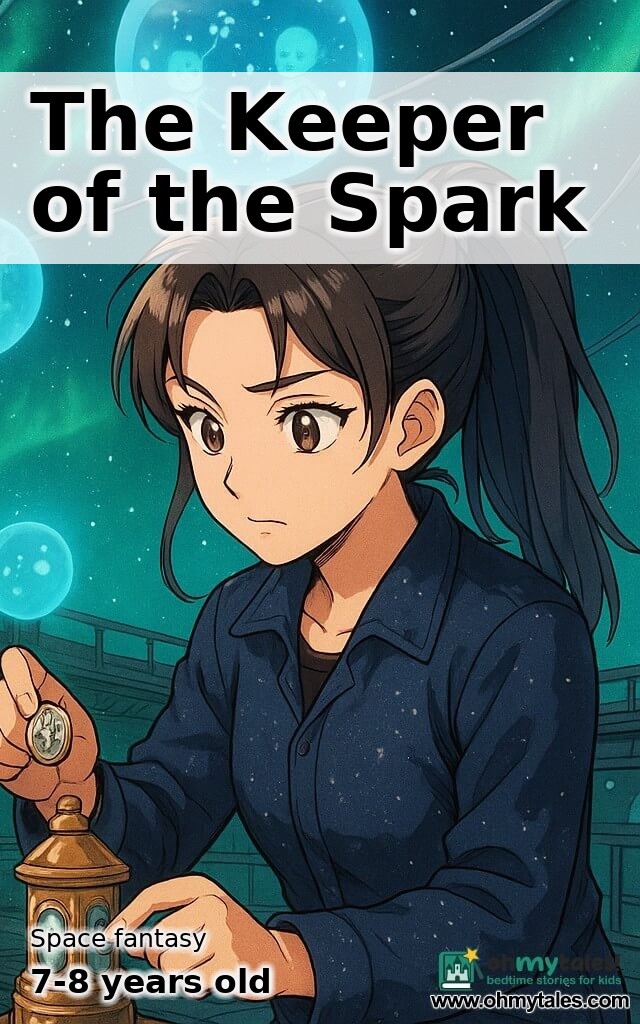
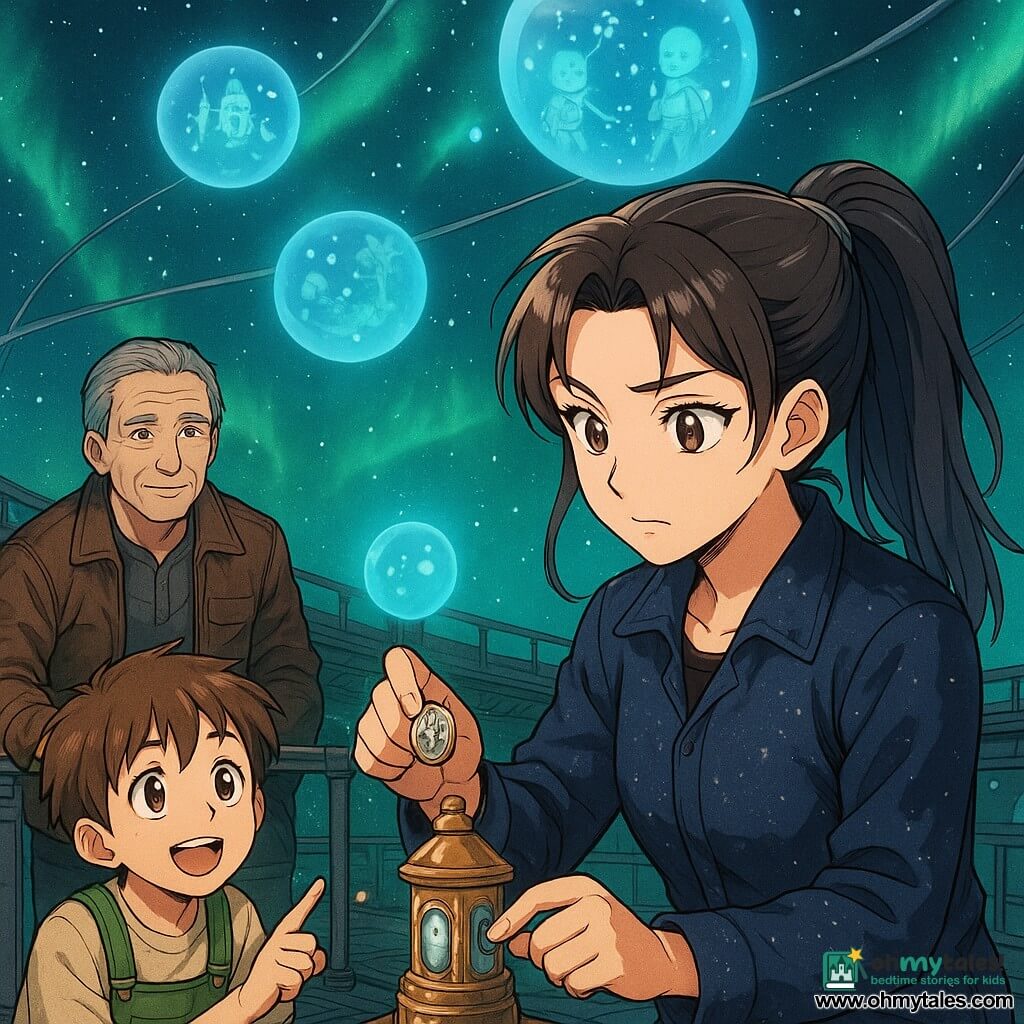
Lira moved like a comet between the metal ribs of the gas field, her boots whispering on alloy walkways that hummed with a gentle magic. The sky above the extraction platforms was not blue but the soft green of distant auroras, threaded with silver cables that tethered the gas vents to the stars. Each platform had a heart: a ring of valves carved from moonstone and brass, engraved with runes that glowed when the wind of the cosmos flowed through them.
Lira was a specialist in arcanotech cyberdefense. She knew how to listen to the machine-songs and how to sew small shields of code and charm—tiny stitches that kept valves singing true. Her coat had pockets full of glow-tools, each tool a hybrid of metal and spellwork. Around her neck she wore a locket that clicked softly; inside was a scrap of comet cloth that shimmered whenever a valve hummed happily.
The platforms called her because something curious had begun to happen. Every morning the valves sang in layered voices like whales, but lately the songs had odd pauses and soft sighs. The platform children — technicians who loved to climb the valve trees — had noticed bubbles of blue gas that smelled faintly of lemonade and memories. "It whispers old stories," one child told Lira, eyes wide. "But the stories get stuck."
Lira knelt beside the ring of valves and placed her palm on a moonstone. Warmth ran up her arm and into the coils of her mind. She could feel strands of data and magic braided together, humming like a loom. Where the song stammered, someone had braided a loose thread that tangled the pattern.
She smiled. "We'll tidy the song," she said, and the children giggled because Lira always said things like tidy and stitch as if the galaxy were a great sweater you could mend.
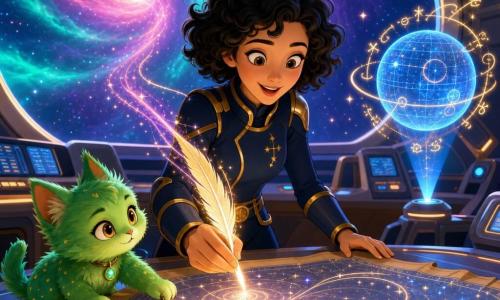
Lira set up a small lantern that burned with a safe, soft flame. She unfurled a map of the field—constellations and pipeways drawn in ink that shimmered—and pointed to the valves. Each valve had a name, and each name had a legend that helped it stay brave against storms of static and gusts of starlight. The valves trusted names. That was a secret the arcanotech specialists kept: names were small anchors.
She hummed a tune as she worked, a tune she had learned from her grandmother who told stories of planets shaped like teapots and comets that forgot to be bright. Lira's tune braided with the valve songs, and the small disturbances eased like waves settling after a pebble skips across them. It was good work: quiet, steady, rewarding. The platform sighed in relief, and the children clapped, their faces lit by the moonstones.
But the map had a blank corner. Where the field reached toward a jagged horizon of rusted satellites, the runes faded like pale footprints on ice. Lira's fingers traced that blank place; she could feel a coldness there, not frightening but puzzled, like a riddle with a missing word. The valves in that distance blinked like sleepy fireflies. Some of them were new, sunk into a shale ridge that hummed differently, and they had valves that looked like tiny lanterns with locks.
"Those are the Guarded Valves," said an old engineer, leaning on a rail with eyes like polished stone. "They were woven by the first arcanologists. They hold gas that tastes of chosen moments. No one opens them without the Spark-Token."
Lira listened. The Spark-Token was a small, old thing in her grandmother's stories: a token of trust that could call a valve to sing its full voice and release its memory gently into the world. Lira had never held one. Yet she felt a tug that perhaps she was meant to learn how to ask for one, responsibly and with kind hands.
She looked at the children, at the platforms, at the green auroral sky. "Tomorrow we'll walk there," she promised, and the platform bells chimed as if approving a pact.
The Ridge with Locked Lanterns
The path to the ridge wound through pipes that puffed clouds like steam dragons, through gardens of brittle crystal that cracked into soft chimes when stepped on. Guardians in the form of tall, brass beetles patrolled the walkways; they were more curious than fierce, clicking at Lira as she passed. She carried a satchel of tools and a small bundle wrapped in comet cloth—its content was a gift from her grandmother, a scribbled poem tucked between ribbons.
When she reached the ridge, the wind of the field felt thicker, like a blanket folded many times. The Guarded Valves sat in a circle at the top of the ridge, each valve smaller than her hand but glowing with its own light. Around the circle stood statues of old engineers, frozen mid-spark, holding imaginary keys. The locks on the valve-lanterns blinked with patterns of letters that Lira almost read as songs.
Lira set the lantern. She could feel the valves' memories leaning outward, curious and cautious. She reached for the first valve and heard a tiny voice in her head: an old voice, warm and peppered with laughter. It tasted like sun-warmed honey. When she touched it with her gloved finger, it hummed, but the lock made a gentle chime and quietly said, "Not yet."
She sighed with a smile. The locks knew when to open. The Spark-Token was not something to be taken. It was given in trust only when a hand had proven itself steady, when the holder would scatter the valve memory like seeds and not keep it hidden.
Lira sat on a stone and took out the comet cloth. She pulled the poem from between the ribbons and read it aloud. The words were small magic, a patchwork of stories that reminded machines how to be kind. The poem spoke of moons that sang lullabies to tired rockets, and of small lights that helped lost travelers find their way home. As Lira read, the valve-lanterns quivered and turned their faces toward her. Her voice was a bridge.
A kid from the platform, Timo, had followed with a nervous grin. "Can it be given to anyone?" he whispered.
"It must be given to a heart that will share," Lira answered. "It must belong to someone who can carry a song and offer it away when needed."
Timo nodded like he understood the simplest thing in the galaxy. Lira thought of the spark in her grandmother's stories and of the way the children shared their sandwiches and secrets. She understood that the Spark-Token would choose someone who understood small kindnesses as fiercely as big plans.
They waited until the ridge looked like a chorus line of glowing beads. A breeze rose, scented with the taste of childhood laughter and cold starlight, and from the highest statue a faint click sounded. The statue's eyes lit, and a small compartment in its palm opened. A tiny, metal token tumbled out and landed in Lira's hands. It was warm, with a weight like a promise.
The token hummed gently, like a bird remembering the sky. Lira held it close, and she felt the entire field lean toward her—as if the platforms were nodding and the valves promising to remember their songs if she kept watch.
"Guard it with the job you do," the old engineer said when he saw the token. "The token is a promise to listen."
Lira nodded. She tucked the token into the comet cloth and placed it near her heart. Her work felt suddenly different—not just mending songs, but keeping a living promise of trust.
The Night of Blue Bubbles
That very night, a festival of pink and silver balloons drifted past the platforms, and the people below sang faint, happy chants. But as the stars moved and the sky cooled, blue bubbles of gas began to float up from one of the distant pipes. They shone like tiny globes of memory, drifting past the valve-lanterns. Normally such bubbles told small tales of the fields—how the first valve had learned to laugh—but these bubbles carried something else: they shimmered with hesitation, the way someone pauses before doing a brave thing.
Lira saw them and felt a tug at her locket. The comet cloth inside flickered with light like a heartbeat. She set out across the walkways, following the bubbles where they floated like drifting lanterns. The beetle-guardians clicked encouragement and the children trailed behind with wide eyes.
The largest bubble drifted toward a platform where a young valve had been newly installed. The valve's runes still smelled of solder and star-dust. As the bubble touched the valve, the runes swallowed the light; the valve's song tried to start but then caught on a soft knot, like a hiccup. The bubble trembled and released a small cloud of stories that smelled faintly of rain on tin roofs.
Lira knelt and placed a hand on the valve. The Spark-Token inside her coat hummed, and for a heartbeat it glowed like the first sparks of a campfire. She drew it out, careful and reverent, and for the first time she let the token sing in a tiny voice only she could hear. The token's song was a woven thing: part instruction, part lullaby. It told the valve how to breathe the bubble gently, how to turn memory into a ribbon and pass it into the world rather than hiding it away.
"Let it go when it needs going," Lira whispered, more to herself and the valve than anyone else. Her voice was small but steady. The valve listened.
She fitted the token to the valve's lock. For a moment nothing happened. Then the runes brightened, and the valve exhaled a soft chorus. The blue bubble opened like a flower and spilled gentle memories into the air—tiny scenes of planet picnics, of sisters sharing helmets, of grandmothers singing in kitchens that smelled of cinnamon and wires. The bubbles floated and scattered, and the children caught them in their hands to read and laugh and share.
Solidarity bloomed like morning flowers. A crew member who had been guarding a lonely satellite remembered a neighbor back on a red planet and sent a supply shipment. The beetle-guardians tucked small gas-bellies into safe jars for the old engineers who loved reminiscence. Even the statues seemed to relax their stone faces. The platforms shone brighter, as if pride were a new kind of fuel.
When she returned the token to the comet cloth, Lira felt each platform breathe a little easier. The token had warmed in her hand, as if pleased to be useful. She realized that keeping the spark wasn't about storing power; it was about knowing when to offer it, about being brave enough to let things go where they needed to go.
An Étincelle Gardée
Weeks passed, and the field found its rhythm. Valves learned new songs; engineers hummed while they worked. Lira taught the children a little technique: when a valve hiccupped, you breathe with it, count to three, and then tip your head to listen. "It helps the song remember how to finish its line," she told them with a wink. The children practiced on tiny valves that sang nursery tunes.
One evening under a galaxy stirred like soup, a small trouble bubbled up—not dangerous, merely wistful. A valve in the oldest platform began to sing a tune that everyone recognized from when they were small, but the tune wanted to change, to grow new verses. The valve's lock held fast, remembering old rules. It would not open right away.
Lira took the Spark-Token and let it glow in her palm. She remembered her grandmother's hands, the feeling of comet cloth against her cheek, and the faces of the children who had learned to share a bubble of blue gas. She thought of how the field had been gentle with her when she first learned to mend, and she felt the solid warmth of belonging.
"May I?" she asked the valve softly, even though no one strictly needed to be asked. The valve listened. Trust is like that: it requires invitation. The lock clicked and the valve opened its tiny mouth to a new line. A fresh melody unfolded—brave, funny, and kind. Lira fed the melody a little spark, and the valve let its new verse flutter into the night like a paper bird.
When the melody finished, Lira closed the token back into the comet cloth and pressed it against her heart. She had been given the Spark-Token not to keep it like a treasure but to guard it, to give it away wisely and bring it home again. The token would always be warm when it returned, like flour used to bake bread.
As she walked across the platform, the children ran up and offered her a small tin cup filled with nothing but friendship. Lira laughed and accepted it like a queen offered a pebble crown. Around her, the field hummed a slow, steady song that felt like a promise kept.
She kept the spark safe, not by locking it away but by making sure it was used for sharing. That night, she hung the comet cloth on a peg above her workbench. The token rested inside, soft as a heartbeat. Every morning she would take it out to mend a valve or teach a child the right way to count to three, and every evening she would tuck it back like a story saved for bedtime.
The platforms sang, and the sky above them shimmered. Lira closed her eyes and listened to the whole field: valves, beetles, children, statues, engineers, even the wind. The melody braided around her and settled into her chest like a nest. She had learned how to guard an é t i n c e l l e—how to keep a spark alive, honest and generous. It was a little miracle, a promise that glowed gently in the dark.
And when the stars blinked and the auroras sighed, Lira whispered to the night, "We will keep singing." The field answered with a chorus of valves, and somewhere, tucked into comet cloth, the Spark-Token thrummed contentedly—a kept spark, a trusted light, an étincelle gardée.