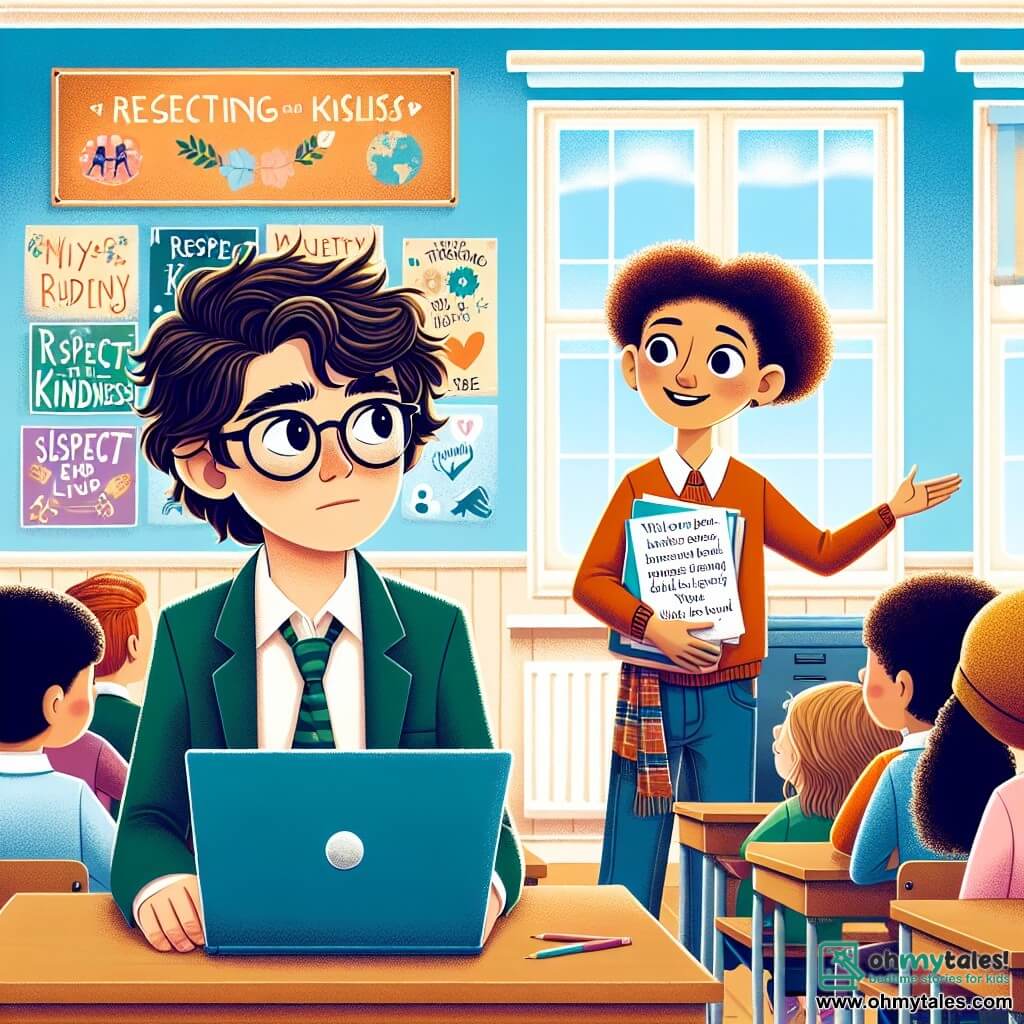
Chapter 1: The New Project
Matt dragged the tip of his sneaker along the line between two tiles in the school hallway, listening to the rumble of voices all around him. He was a small twelve-year-old, with dark, messy hair that always seemed to hide half his face, and eyes that noticed things most people missed. His backpack was heavy with books and notebooks, but he carried something heavier: a knot in his stomach that came every time he walked into seventh grade.
It wasn't that he hated school. He loved science and reading, and he was good with computers. But sometimes, being different didn't make things easy. For the past week, he'd noticed whispers behind his back and odd glances when he typed quickly on his laptop or got excited about a funny coding joke. He tried to brush it off, but the feeling of being watched never fully left.
That morning, Ms. Carter, their homeroom teacher, clapped her hands to get everyone's attention. “Good morning, class! This month, our big project is about respect and kindness. We'll be learning about bullying, including cyberbullying, and thinking of ideas to make our school safer. You'll work in groups and create presentations or even digital campaigns.”
Matt's heart skipped. This was something important. He remembered the sharp words he'd read in a group chat just last week—a message sent to someone else, but it made his face burn anyway. He wanted to say something then, but the words had gotten stuck.
Ms. Carter went on, “I want you to think about your talents and interests. How could you use them to help others understand why bullying is harmful? How can we support each other?”
Later, as the class buzzed with chatter, Matt sat quietly, ideas twirling in his head like autumn leaves. He loved making digital stories and coding simple games—maybe this was his chance to do something meaningful.
His friend Zoe slid into the chair next to him, her ginger hair a bright halo around her face. “You could do something with computers,” she said, nudging him with her elbow. “You're always coming up with cool stuff.”
Matt shrugged, feeling his cheeks heat up. “I don't know if anyone would care.”
“Try me,” Zoe grinned. “I do.”
He smiled, just a little. Maybe, just maybe, he could make a difference.
Chapter 2: Whispers in the Hall
The next day was worse.
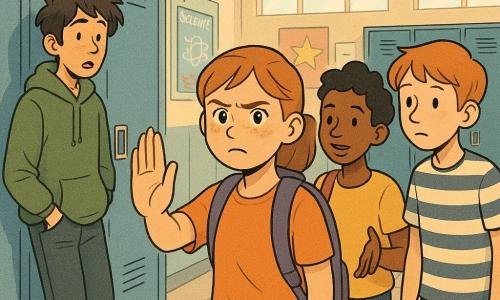
Matt walked into the computer lab after lunch, hoping to escape the cafeteria noise and finish outlining his project. As he passed a group of kids near the lockers, he heard it—a stifled laugh, the hiss of a message. “There goes the computer geek. Probably hacking the school WiFi again.”
He hunched his shoulders, forcing himself to keep walking. The words weren't new, but every time they hit, they stung. The others in the hallway seemed to pretend not to notice, eyes flickering away. He wondered if they felt the same knot in their stomachs as he did.
Inside the lab, the quiet hummed, broken only by the gentle clack of keyboard keys. Matt pulled out his laptop, opening the files he'd started: a digital comic about a robot who felt left out, until a group of friends helped him find his voice online. He wanted to show how words could hurt, even if you never saw someone's face.
As he worked, Ms. Carter walked by, pausing at his desk. She glanced at his screen and smiled. “That looks fantastic, Matt. Are you planning to share it with the class?”
“Maybe,” he muttered. “If it's good enough.”
She knelt beside him, lowering her voice. “Sometimes the best way to help is to show others what it feels like. Stories do that—and your story might help someone feel less alone.”
Matt nodded, feeling a tiny seed of confidence plant itself inside him.
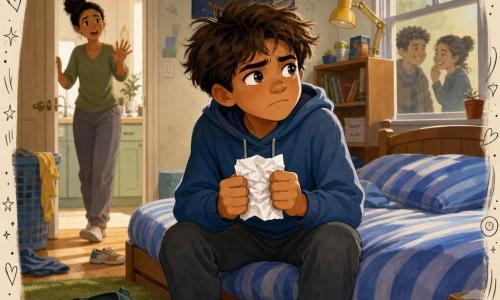
That evening at home, he opened his messages and found a new one: a string of laughing emojis, a photo of his face from lunch, and a cruel caption. He felt cold all over. He wanted to delete it, to pretend it never happened, but the words lingered behind his eyes.
He pressed “block” on the sender's name, fingers shaking. Then, he opened a new chat with Zoe. After a minute, he wrote, It happened again.
She replied right away: I'm here. Want to talk about it?
Matt typed, Maybe tomorrow.
He closed his laptop, determined not to let the message win. He would finish his story. Maybe it would help him—and someone else, too.
Chapter 3: The Digital Story
For the next week, Matt poured himself into his project. He stayed late at the library, sketching ideas, coding simple animations, and writing dialogue for his robot character, Byte. Byte was small and shy, with blinking lights for eyes, and he found it hard to fit in at his digital school. Anonymous messages would pop up on Byte's screen: “You're weird.” “No one likes you.” The words chased Byte through glowing corridors.
But Matt didn't want his story to end there. He wrote scenes where Byte reached out for help—to a friend, to a teacher, to his parents. Each time, the messages lost a bit of their power. Byte's friends started a campaign, spreading positive messages and reminding everyone that kindness online mattered just as much as in real life.
One afternoon, Zoe found Matt at their usual table in the library. She watched the screen as Byte's story unfolded, her eyes wide.
“Matt, this is really good,” she said. “It's exactly what we need.”
He swallowed. “Do you think… do you think people will understand?”
“Definitely,” she said. “And I'll help you present it.”
Later, Matt handed in his project to Ms. Carter, who beamed. “Would you be willing to share this with the whole school at the assembly next week?”
The idea terrified him, but also filled him with hope. If even one person understood, maybe the whispers and the cruel messages would mean less.
He nodded slowly. “Okay. I'll do it.”
At home, he told his parents about the messages and the project. His mom hugged him tightly. “I'm proud of you for speaking up, Matt. And for not letting them silence you.”
His dad nodded. “Words matter, son. Yours can help others find theirs.”
Matt felt lighter, the knot in his stomach loosening just enough to let in a breath of courage.
Chapter 4: The Assembly
The day of the assembly dawned bright and cold. Matt hardly slept the night before, replaying his script over and over in his mind. At breakfast, his mom slid a note into his hand. “You are braver than you believe,” it read.
At school, the gym filled with the noise of a hundred voices. Matt sat in the front row with Zoe, his palms sweaty. Behind him, he heard a few kids whispering, but he focused on the stage, where a screen glowed with the opening image of his story: Byte, alone in a digital world.
Ms. Carter introduced him. “Today, Matt has something important to share—a story about respect, kindness, and the impact of our words online.”
Matt walked onto the stage, his heart pounding. He held the microphone tight and began, his voice trembling at first, but growing stronger with each word.
He showed Byte's journey—the cruel messages, the loneliness, the fear. He described how Byte reached out for help, how friends and teachers stepped in, how Byte learned to block the bullies and remember that he wasn't alone.
As the story unfolded, the room grew quiet. Matt saw faces in the crowd—some bored, some curious, but a few with tears in their eyes. When the last image faded—Byte and his friends, surrounded by positive messages—Matt looked out over the sea of students.
He took a shaky breath. “Words can hurt, online and in real life. But words can also heal. If you see someone being bullied, don't ignore it. Stand up, say something, help them. And if you're being bullied, remember: you're not alone. Ask for help. It gets better.”
The gym erupted in applause. Matt's whole body tingled with relief and pride. Zoe grinned, giving him a double thumbs-up.
As he walked off the stage, a girl he barely knew caught his sleeve. “Thank you,” she whispered. “I needed to hear that.”
Matt smiled. Maybe his story really could make a difference.
Chapter 5: Changing the Conversation
After the assembly, something changed at school.
Ms. Carter started organizing weekly lunchtime groups where students could talk about what was happening—good and bad. Matt joined, sharing his experience with online messages and listening as others told similar stories. He learned that even the confident, popular kids sometimes felt alone or hurt by words.
One day, a boy from Matt's math class, Jamie, stayed behind after the meeting. He looked nervous, chewing his nails.
“Hey, Matt,” he said quietly. “That story… I've been dealing with some stuff online too. I thought I was the only one.”
Matt shook his head. “You're not. Want to talk about it?”
Jamie nodded, and for the first time, Matt felt the full power of what he'd started. Kids began to stand up for each other in the halls. Zoe started a school-wide “Kindness Wall,” where students could post anonymous notes of encouragement. Matt helped set up an online club called “Net Positive,” where students could share resources and report problems.
The teachers paid attention, too. They talked more about cyberbullying—what it looked like, how to block or report hurtful messages, and the importance of empathy. The school counselor visited classes, explaining that it was okay to ask for help and that everyone deserved respect.
Matt realized that change didn't come all at once. There were still mean messages, and not everyone understood right away. But the whispering behind his back started to fade. And when he saw someone being picked on, he knew what to do.
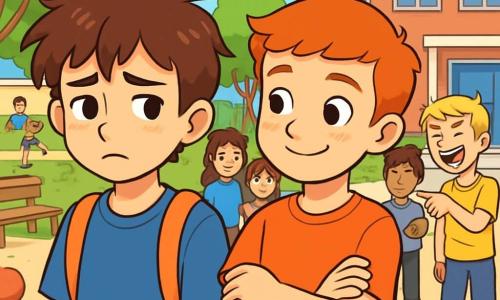
One afternoon, he noticed a shy girl, Mia, sitting alone while two boys snickered nearby. He walked over and sat down. “Hey, want to come join us? We're playing chess.”
Mia's face lit up, and the boys lost interest. Matt felt proud, not just for himself, but for the small circle of kindness he was helping to grow.
Chapter 6: Standing Together
A month later, Matt's story was still being talked about. The school's website featured his digital comic, and other students began sharing their own stories—some serious, some hopeful, all meaningful. Even the principal, Mr. Thompson, started every Monday with a short message about respect and the power of words.
But not everything was perfect. One day, Matt checked his email and found a message from an unknown address: “You think you're a hero? You're just a loser no one cares about.” The words thudded in his chest like a stone. For a moment, his old fears rushed back.
Instead of trying to deal with it alone, he showed the message to Zoe, and together they went to Ms. Carter. She listened carefully, then walked with Matt to the counselor. They talked about digital footprints, about how bullies often hid behind anonymity, and how reporting something didn't mean you were weak.
Matt realized that even after all his efforts, some people would try to hurt others. But now he had a network—a safety net of friends, teachers, and adults who cared.
The next day, Matt and Zoe organized a workshop for their class. They acted out scenarios: what to do if you see someone being bullied, how to support each other, and how to be an upstander instead of a bystander. The class laughed at their silly skits, but by the end, everyone agreed: things felt different.
That afternoon, Jamie handed Matt a note, scrawled in messy handwriting: “Thanks for being there. I reported the messages. I feel better now.”
Matt smiled. That was worth more than any applause.
Chapter 7: A New Beginning
Spring arrived, and with it, a warmth that seeped into every corner of the school. The hallways were still noisy, filled with shouts and laughter, but now there was something else—a sense of safety, of belonging.
Matt continued to work on digital stories, teaming up with other students to make short videos about friendship, empathy, and online safety. The “Net Positive” club grew, and more students came forward to share their ideas for making the school a kinder place. They organized themed days—“Compliment Friday,” “No Tech Tuesday”—to remind everyone about balance and connection.
One afternoon, as Matt packed up his things, Zoe nudged him. “You know,” she said, “you started all this.”
Matt shook his head. “We all did.”
“But you were brave enough to tell your story,” she insisted. “That matters.”
As they walked out into the sunlight, Matt thought of everything that had changed: the way people spoke to each other, the courage it took to ask for help, the strength he'd discovered inside himself. He realized that bravery didn't mean facing things alone—it meant reaching out, speaking up, and standing together.
He turned to Zoe, smiling. “Maybe next year, we can help more schools do the same.”
She grinned. “We will.”
Matt looked back at the school, its windows shining in the afternoon sun, and felt proud—not just of the story he'd told, but of the new stories yet to be written. He knew that kindness was like ripples in a pond—one small act could spread, touching lives he'd never even see.
And as he walked home, backpack lighter now, he carried with him the most important lesson of all: that everyone deserves respect, online and in real life, and that together, they could change the world—one word at a time.