Chapter 1: The Ticking Discovery
Tom found the clock in the attic behind a box of yearbooks and a quilt that smelled like cinnamon. It was taller than him, dark wood with a face like an old moon and hands that did not move. A brass plaque read simply: For New Years Together. He cradled it like a sleeping animal and ran his fingers over carved stars.
"Does it work?" whispered his little sister, Mia, who had appeared as if by magic.
Tom shook the case. Inside, a tiny paper note rattled against a gear. It said: Wind until the chime sings. He carried the clock downstairs while dust motes turned into little fireworks in the beam of light from the window. The kitchen smelled of citrus and gingerbread—his mum was making last-minute cookies for the guests. Outside, small drifts of last-year's snow rimmed the hedges.
Grandma paused from arranging napkins and looked at the clock with a smile that warmed the room. "That old thing used to count down with us," she said. "We haven't heard it since your grandad's year of the green hat."
Tom's heart thumped. The clock felt important, like a promise. "Can I fix it?" he asked. Grandma nodded. "Together," she said.
Chapter 2: A Team of Tinkerers
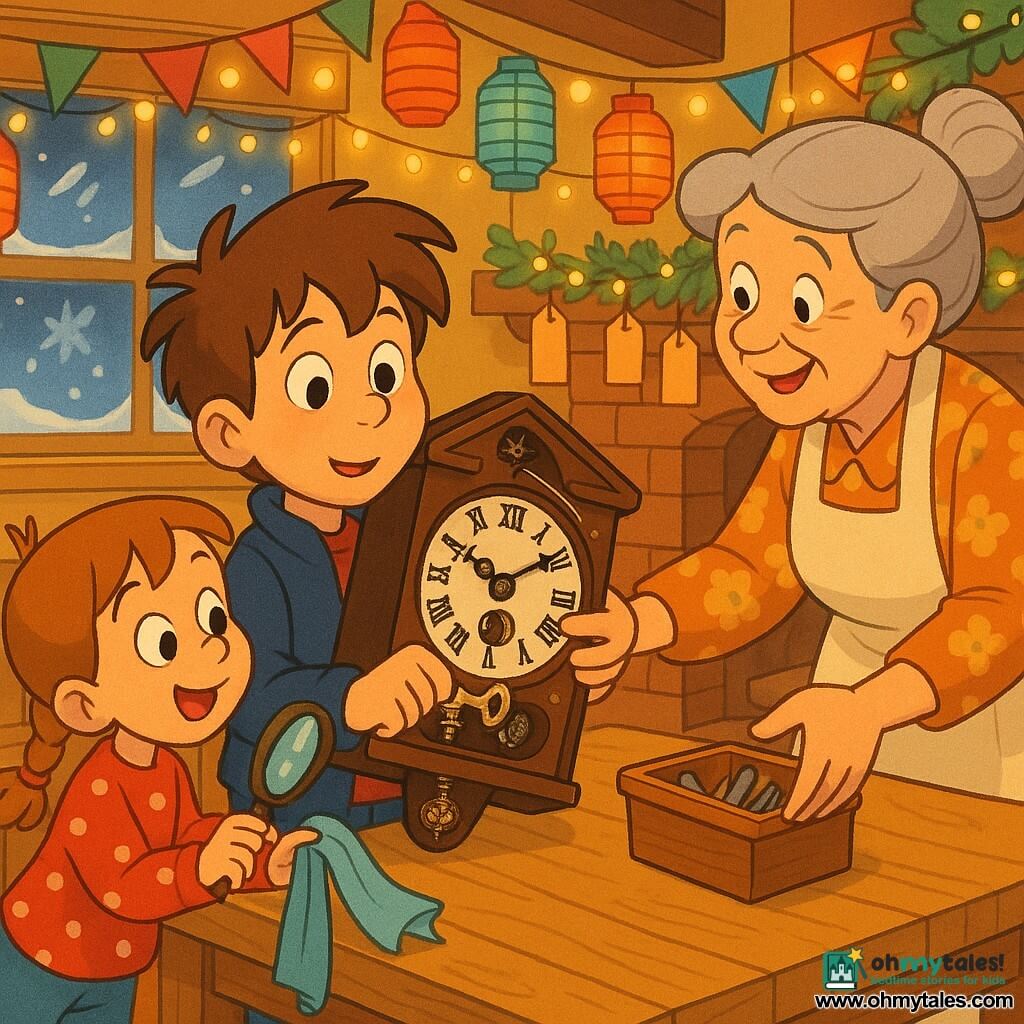
They set the clock on the kitchen table. Tom opened the back and peered at gears that looked like tiny planets. Mia brought the magnifying glass and a jar of jam because she thought it would help "stick the bits together." Tom laughed and gently brushed a layer of sleep-dust off a cog.
Grandma produced a small box of tools, all labeled in her looping handwriting. "Sometimes the problem is only a feather of rust," she said. Tom learned to hold the screwdriver like a knight holds a quill—careful and steady. They found a bent tooth on one gear and straightened it with pliers. Mr. Patel, the neighbor, came in after hearing laughter and offered a cloth and a story about fixing radios with his father. Soon, the kitchen had become a workshop full of voices and tiny repairs.
"Count the screws," Mia chirped, because everything felt like a game. They counted together, traded jokes about screws being secret agents, and waited for the moment when the gears would breathe. Outside, friends began arriving with scarves that had tiny bells.
When Tom wound the key again, the hands shivered and for the first time in years the second hand moved—then stopped. The little chime still didn't sing. Tom's shoulders drooped, but Grandma squeezed his hand. "We will try again at midnight," she said. "There is more than one kind of repair. Sometimes a thing needs not only fixing but a proper reason to wake up."
Chapter 3: The Rituals and the Runaround
The house filled with New Year rituals. They hung paper lanterns, they tied wishes on strings (Tom wished for a real compass), and Grandma taught them the family countdown song: a nonsense chorus that always made everyone clap crookedly. At six, they opened envelopes with tiny slips of paper—predictions from last year. Some were silly: "You will grow a beard that sings." Others were sweet.
Tom felt restless. He wanted the clock to chime. At nine, the battery-operated radio announced a surprise parade of local bands passing the town square, and the family decided to go see the lights. Tom carried the clock on his shoulder like a trophy. The case felt heavier now, loaded with expectation.
On the street, they met Mrs. Alvarez, who brought a bowl of citrus punch to share, and Mr. Patel who hummed a tune and tickled the clock gently; he said some clocks listen better to music. A small crowd approved their ideas: wind all the keys, tell the clock a story, sing to it. They did them all, arms linked, voices blending like different spices in a pot.
Back at the house, the clock still whispered but did not sing. The children put their heads together and, in a burst of hopeful mischief, they cleaned the bell with a silk scarf until it gleamed. The eldest cousin, Jess, found a tiny pin lodged where the striker should swing. With a careful tug and a cheer, the pin popped free.
"Try it!" Mia shouted. Tom wound the key again. The hands moved. The gears whispered. The bell sighed and, then—like someone taking a breath before a very long hug—it chimed once, clear and bright. The kitchen clapped like a small thunderstorm.
Chapter 4: Countdown and a Quiet Ending
As midnight approached, the house hummed with excitement. Everyone wrote a small wish and placed it on the mantle. The repaired clock stood tall, its face glowing by candlelight. Grandma handed Tom the brass key. "You start the counting," she whispered.
Tom felt the weight of the moment like a warm coat. He cleared his throat and counted with a voice that grew steadier word by word. The family joined in, voices tumbling like marbles. Ten, nine, eight... The clock's chime warmed like bread in an oven, promising good things.
At three, the chime chimed again, sweet and sure. The second hand swept, and the gears sang in soft, precise clicks. When the count reached one, the clock released a bright, ringsome chorus that filled the room. Outside, distant fireworks replied in color.
They cheered and hugged, cheeks wet with happy tears. Tom's little sister danced with her paper wish, and Mr. Patel handed out the citrus punch as if it were a treasure. Grandma put an arm around Tom and said, "You got it going. You made us all work together, and that's the real chime."
As the laughter settled, Tom took a small phone from his pocket. He had set it to record the chime so his grandad, who lived far away, could hear the family countdown across towns and nights. He pressed record, watched the clock smile in the glass, and felt the room's warmth like a blanket.
Then, after the last echo faded, Tom reached out gently and set the phone down. He set the phone down.