Chapter One: The Missing Buttons
There was a small town with bright houses and a quiet clock tower. The streets smelled like bread and rain. People waved. Dogs barked. The town was safe, but one morning something odd happened.
A line of shirts in the schoolyard lost their buttons. Small round buttons, blue and red and yellow, vanished from collars and sleeves. The children were puzzled. Teachers frowned. A hush moved like fog.
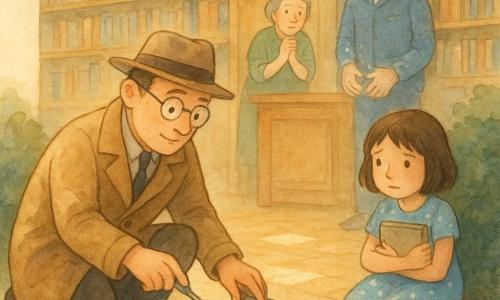
The young man called Milo loved puzzles. He was a careful detective. He wore a soft coat and carried a little notebook. Milo noticed small things. He liked to look and listen. He liked to think.
Milo went to the schoolyard. He knelt and saw tiny threads on the ground. He found one blue button under the slide. He wrote in his notebook with neat letters. The notebook had a lock, but Milo could not open it yet. The lock clicked, and the pages were a secret.
Milo looked up. Faces watched him. The children pointed to a fence. Small prints led away like a dotted line. Milo followed them.
He thought like a slow river. He did not rush. He counted the steps between the prints. He looked at the sky for the sun. He smelled the air. Everything could be a clue.
He found a hat near the garden. The hat had a leaf. Milo held it gently. He wrote two words: leaf and hat. He put the blue button inside his coat pocket. He felt brave.
Milo asked the children a question. He spoke softly. "Who saw a shadow near the fence?" A small girl raised her hand. She said she saw a tall shadow with a slow walk. Milo listened and drew the shadow in his mind. The shadow had a bag.
Milo walked to the bakery. The baker had crumbs on his apron. He had no buttons in his hands. He did, however, remember a person with a bag who bought little buns. The baker pointed down the lane toward the river.
Milo walked on. He kept a steady pace. He did not run. He knew patience helped solve things. He watched the river for ripples. He listened for footsteps, for any small sound.
Near the bench by the river he found more tiny threads. The threads led to a bench where an old cat slept. The cat opened one eye and blinked. Milo smiled. He took out his notebook and made a careful sketch of the bench and the cat. The cat knew more than it showed.
Milo thought of the secret notebook. He tried to remember the key. He touched the lock and felt a small bump under the coat button of his own shirt. He had to stay calm. He would try later. For now, he kept the blue button safe in his pocket.
Milo folded his hands and asked himself a small question. "What if the buttons were taken by someone who needed them?" He looked at the playground. He thought of a lonely doll, a torn coat, and little hands that wanted to fix things. The heart could hold clues too.
Chapter Two: The Scratched Notebook
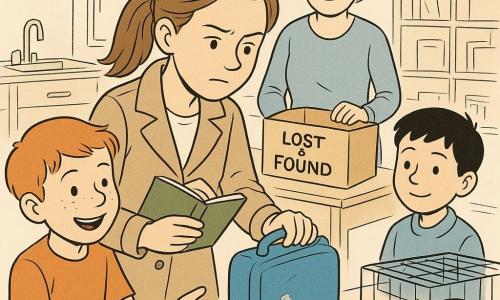
Milo found the school librarian, Mrs. Hart. She kept a basket of lost mittens. Her hair was like soft clouds. She showed Milo a small scrap of paper. It had a drawing of a tree and a tiny mark. Milo put the paper in his notebook and drew a line under it.
Milo knew every street. He walked to the park where the tree from the paper grew. The tree had carved letters from old days. The letters looked like a secret maze. Milo circled the tree slowly. He found a small hole in the bark. Inside was a tiny wooden box with a note.
The note was messy. It had a scribble like a song. Milo tried to read it. The letters were mixed. Some were backward. Milo thought of a code. He looked at his notebook and wrote a list: shapes, marks, letters. He knew he would need to open his locked notebook. It felt important.
When Milo reached into his coat to check the blue button, he found a different button. It was yellow. He looked puzzled. He must have mixed them when he listened to the cat earlier. He put the yellow button on the bench and kept walking. He would come back.
At the end of the park Milo saw a bicycle with a basket. The basket had a scarf. The scarf had a patch with the same backward letter from the note. Milo smiled. He was getting close.
He sat on a bench and tried to work the code. He wrote shapes, then matched the shapes to the letters on the tree. The code began to make sense. Milo hummed to himself. He used logic, like putting blocks together. Step by step the note cleared.
The note said: LOOK UNDER THE RED DOOR. Milo blinked. Which red door? The town had many. Milo kept calm and thought of the places the shadow might visit. He remembered the hat and the bag. He thought of the bakery and the river bench.
Milo walked more slowly now. He checked each red door he passed. Most had flowers, some had bells, none had buttons. Milo did not get upset. He knew perseverance mattered. He drank a sip of water and kept going.
At the third red door he saw a small bootprint made of mud. The print matched the ones from the schoolyard. Milo felt his heart beat with careful joy. He knelt and peered under the door. A hand reached out and handed him a small envelope. Milo took it gently.
The envelope had a single word: SORRY. Inside was a broken ribbon and a blue button. Milo felt warmth and a little ache. Someone was sorry. Milo liked that someone felt the need to say sorry. He wrote SORRY in his notebook and drew a smile.
He did not open his locked notebook yet. He had to keep the blue button safe. But Milo felt another small tug—curiosity. He wanted to know whose hands had sewn the lost buttons. He followed more tiny bootprints.
Milo came upon a small shed near the river. It had old paint and a crooked window. He looked at the latch. It was open a little. Inside the shed were jars and strings and a pile of old clothes. And on top of the pile was a notebook—thin and worn, with a lock like his.
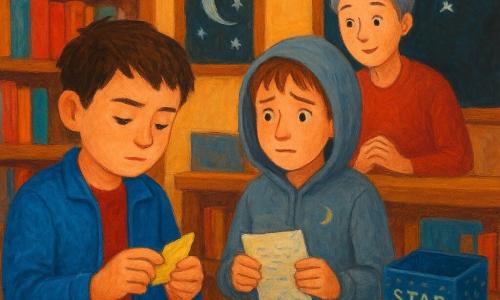
Milo found a paper tucked inside the notebook. It had pictures of buttons, neat rows of them, and a list of names. Each name had a small mark beside it. One name had a heart. One had a scribble. The names were children in the school. Milo's eyes grew gentle. He did not jump to conclusions. He was careful.
He heard a foot on the path. Milo hid behind a pile of sacks. A figure walked by. It was a parent—Mr. Pine, who had hair like soft straw. He carried a basket of berries. He stopped by the shed, sniffed the air, and then knocked on the shed door lightly. Milo held his breath.
Mr. Pine sounded tired. He called softly into the shed, "Are you there, little one?" The voice sounded kind. A small child came out, blinking. It was the baker's little boy, Tom. Milo watched them talk. The boy looked sad. He held a bag of buttons.
Milo stepped out slowly. He did not shout. He spoke, calm and steady. "Hello. I found a notebook." Tom's eyes widened. Mr. Pine looked surprised too. Milo showed them the list. Tom's face turned red. He looked at his shoes.
Milo sat on a stone. He did not accuse. He asked with gentle words, "Can you tell me what happened?" Tom's small voice trembled. He said he had taken buttons for a doll that was alone in the attic. He wanted the doll to smile. He had stitched the buttons onto the doll and felt better. But some buttons had fallen and scattered. He had been trying to fix it.
Mr. Pine put a hand on Tom's shoulder. He said he did not know at first. He had helped Tom hide the notebook because the boy was afraid of getting into trouble. Mr. Pine looked sorry. Milo listened to every word. He watched their hands. The boy's foot tapped like rain.
Milo thought about the misplaced yellow button at the park bench. He asked, "Where did you leave that one?" Tom pointed to the river bench. He said he dropped it when he saw the cat. Milo understood. An odd clue had made the trail twist. The yellow button had been an accidental mislead.
Milo breathed slowly. He needed to be wise and fair. He knew prudence meant not to rush to judge. He told Tom kindly, "Taking things without asking can hurt. But you helped the doll, and you wanted to make it happy. That matters." Tom nodded and wiped his eyes.
Chapter Three: The Little Celebration
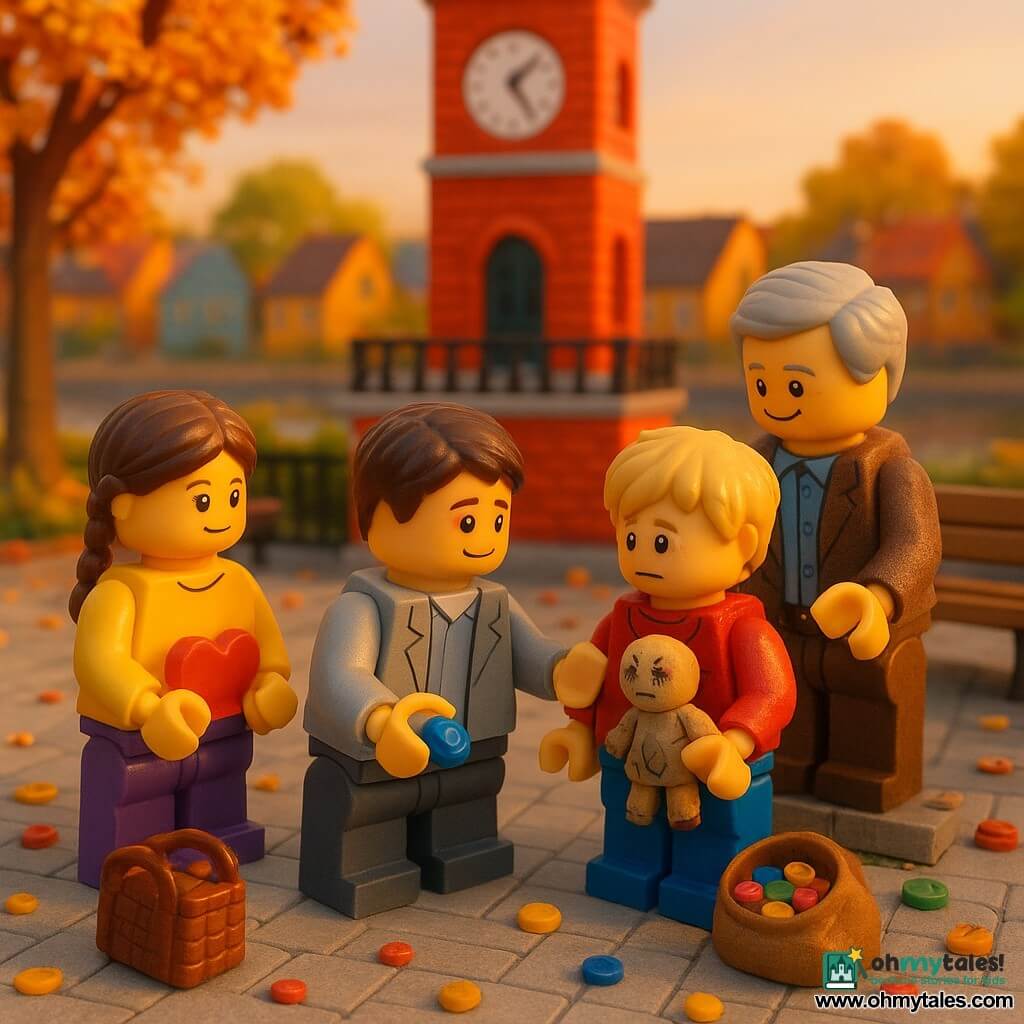
Milo asked if he could see Tom's doll. Tom ran to the shed and brought it out. The doll had one eye made of a tiny button, a patch on its heart, and a stitched smile. Tom had placed a blue button on the doll's dress. The doll looked proud of its new button.
Milo took out his locked notebook again. He had learned the key. It was a small riddle in his mind. He turned the lock with calm fingers. The pages opened like a small door. Inside were notes Milo had written: observe, ask, measure, wait. He smiled. He had learned much from the town.
Milo listened as Tom and Mr. Pine promised to return buttons. They wanted to ask the children and the teachers. Tom looked brave. He wanted to fix what he had broken. Mr. Pine said he would help.
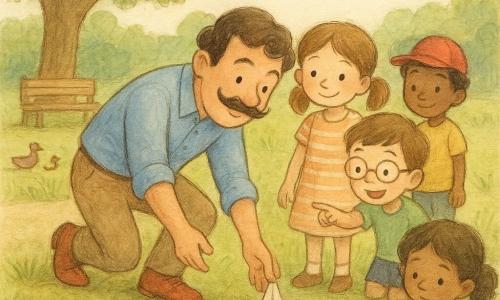
They walked back to the schoolyard. Milo helped Tom speak to the children. The children forgave him because they understood. Tom apologized slowly. He said he had only wanted to help his lonely doll. The children nodded. Stories can change how we feel.
Milo thought of the misplaced yellow button. He told the children how a small error can twist a path. He explained how he had followed clues and asked questions. The town learned to look closely. They learned to be careful and kind.
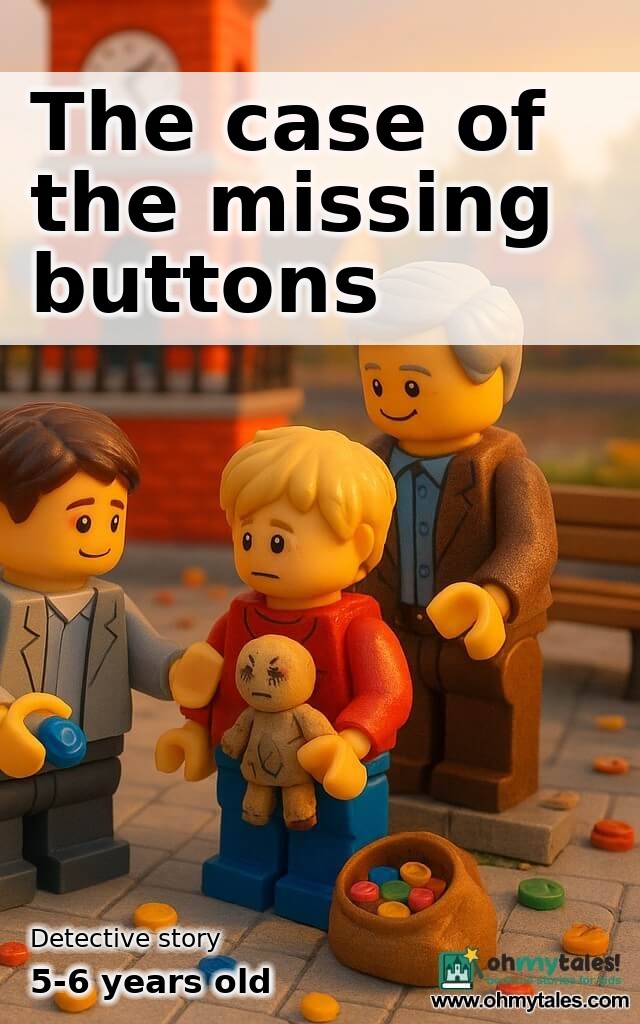
The day ended with a small celebration under the clock tower. Mr. Pine baked berry tarts. The baker brought warm rolls. The children danced in a gentle circle. Tom held his doll high. Milo watched and smiled quietly.
Milo felt proud but not proud like a big show. He felt proud like a light in a window—soft and steady. He had used patience, logic, and kindness. He had listened and asked questions. He had helped solve the mystery not by anger, but by being careful.
The school gave Tom a task: to help sew a bright new row of buttons with all the children. They matched blue to blue and red to red. Each child sewed a stitch. Tom learned to ask before taking. The town learned to keep eyes open and hearts kind.
When the sky turned orange, Milo walked home with his notebook closed. He kept the blue button in a small pocket as a memory. He thought of the cat on the bench and the hat by the garden. He thought of the river and the crooked shed. He thought of one simple truth: small things can make big stories.
Before he reached his door, a child called his name. It was the little girl from the playground. She gave Milo a paper heart she had cut. On it she wrote: thank you. Milo placed it gently in his notebook.
Milo sat on his doorstep and watched the stars wink awake. He felt safe. He felt wise enough to be gentle. He had solved the mystery not by being loud, but by being slow and careful. He had helped a boy find courage.
Later that night Milo opened his notebook and added one last note: be kind, be careful, ask, listen. He closed the book, put it under his pillow, and fell asleep with a small smile. Outside, the town slept too, its buttons sewn, its people close, and its clock tower ticking a soft song of patience and peace.