Chapter 1: City Morning
The sun slid between tall buildings and painted the street in warm gold. Leo pressed his forehead against the apartment window. He was ten and everything about the city felt like a secret waiting to be opened. Cars hummed like friendly insects. Bicycles rang little bells. Steam rose from a bakery on the corner and smelled like sugar and bread.
Leo loved the way the city kept changing as he walked. Today was the first day of his summer holiday. He had a small backpack, a notebook, and a curious pulse in his chest. His mother tied his shoelaces and smiled. “Stay close,” she said. He nodded, but his eyes were already on the corner where the ice cream stall stood under a striped umbrella.
At the stall, colors piled in metal tubs. Vanilla, chocolate, lemon—the usual parade. Then Leo noticed a small jar with a hand-written label: basil and honey. He had never seen that at the ice cream stall before. “Basil?” he asked, amazed. The vendor, a woman with silver hair and kind creases around her eyes, laughed softly. “It's summer,” she said. “Things mix and try new friends.”
Leo chose the basil and honey. The flavor was green and silky. It tasted like sunlit leaves and warm sweetness and made him imagine gardens on rooftops. He walked the city with the cone in his hand, feeling brave enough to explore a little farther than before.
Chapter 2: The Narrow Alley
A narrow alley popped up between a bookstore and a flower shop. Leo had never noticed it. It smelled of damp stone and jasmine. He stepped inside and found a tiny courtyard where three children were trying to lift a heavy crate. Their faces were red with effort.
“Hello,” Leo said. His voice felt small but steady.
The tallest child wiped his brow. “We need to move this to the community kitchen,” she said. “There's a mix-up with the delivery and the cake tins are in there.”
Leo looked at the crate. It was heavier than it looked. He remembered his mother's hands lifting bags of groceries and how she hummed to make the work lighter. Without thinking too much, he crouched and pushed with them.
Together they moved the crate across the courtyard. They took short breath breaks and joked about shaky arms. Leo felt his muscles working and a warm buzz in his chest. The basil-honey taste from the cone lingered and made him grin.
At the gate, the children introduced themselves: Mira, Sam, and Juno. They were part of a small group that helped in the community kitchen during holidays. Leo found out the kitchen was helping make a big celebration cake for the neighborhood festival. He hadn't planned to stay, but when they invited him to help, he surprised himself by saying yes.
Chapter 3: The Kitchen
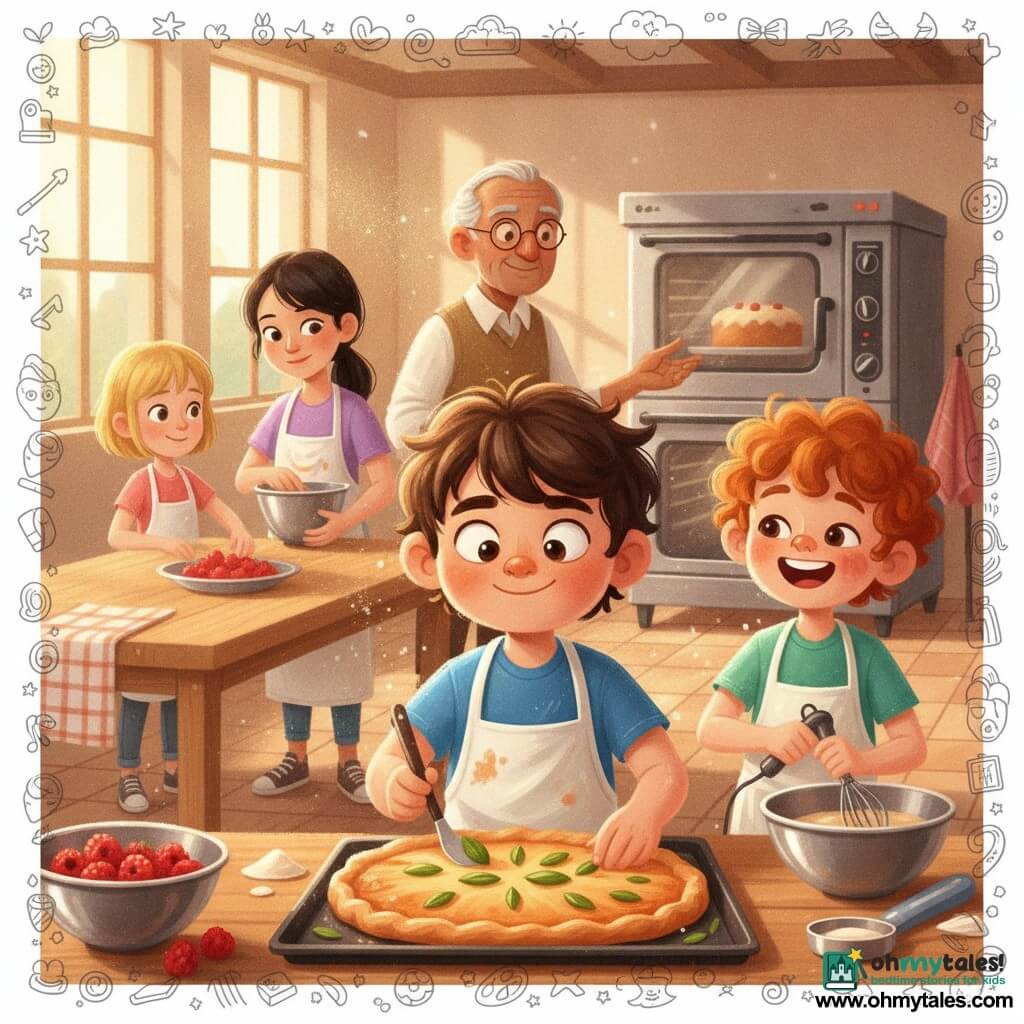
The community kitchen smelled of butter and citrus. Big windows opened to a courtyard full of sunlight. Adults and children worked around long tables. Bowls clinked. A radio played gentle music. Leo washed his hands, tied on an apron too big for him, and picked up a wooden spoon.
They were making a layered lemon cake with cream and fresh berries. Mira measured flour while Sam beat eggs, and Juno folded in whipped cream. An elderly man, Mr. Ortega, showed Leo how to crack eggs without shells falling in. His hands moved calm and sure. “Take your time,” he said. “We're a team.”
Leo's job was simple but important: he brushed sugar onto the crust and arranged thin basil leaves on top with Juno. The basil smell mixed perfectly with lemon. He was careful, his fingers learning the steady rhythm of work. When a bowl slipped, someone caught it. When a ribbon of cream broke, another pair of hands smoothed it out. Laughter patched up small mistakes.
At one point, the oven door slammed and a heat wave made Leo step back. He felt a small prick of fear—loud ovens and hot metal were new to him. His palms grew clammy. He thought of his mother saying “stay close,” and he felt a wish to run away. Then Mira squeezed his shoulder. “We've got you,” she said. Sam handed him a dry towel to hold the tray steady. Mr. Ortega gave a quiet nod and the cake slid into the oven without trouble.
The kitchen hummed with confidence. Working together made each task lighter. Leo's fear softened, like sugar dissolving in warm water. He watched the cake rise through the oven glass and felt proud as if he had helped lift the city itself, just a little.
Chapter 4: Festival Evening
That evening the street buzzed with lights. Lanterns swung above the pavement like small moons. The festival smelled of popcorn, oranges, and the last sweet hint of basil from the cake. Leo walked home with a slice wrapped in paper and his notebook safe in his backpack. He had sketches inside: the ice cream stall, the alley gate, the kitchen table with all the hands at work.
At the festival square, people shared stories, music floated, and children raced with paper boats. Leo found a bench and unwrapped his cake. The first bite was warm when the cake was fresh; the basil on top made it taste like the city had been folded into the batter. He offered a piece to a little girl who looked unsure on the edge of the crowd. She took it and smiled. They traded thoughts about fireworks and the best sun-finding spots on rooftops.
As the sky darkened, Leo felt a small change inside him. He remembered the oven's heat and his quick wanting-to-run feeling. It was still there, but now it sat beside the memory of hands helping him steady the tray. Fear had not vanished, but it felt smaller. Teamwork had added a cushion to it.
Walking home under the lantern glow, Leo noticed things he had not seen that morning: a cat stretched on a windowsill, a couple sharing a newspaper like a secret, an old woman watering a potted lemon tree. The city felt friendlier, stitched together by small kindnesses.
He climbed the stairs to his apartment with a quiet satisfaction. Summer still stretched ahead, filled with new streets, flavors, and kitchen smells. He put the last bit of cake on the windowsill for his mother and sat with his notebook. He wrote one sentence: Today I tried something new and people helped me. Then he pressed his pen down and smiled. The city hummed outside, and inside, his small worry had lost some of its sharpness. He felt braver for tomorrow.