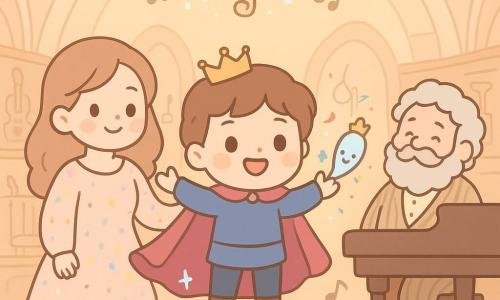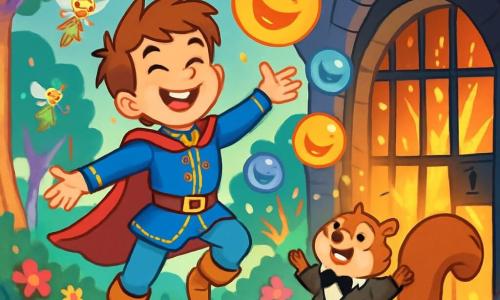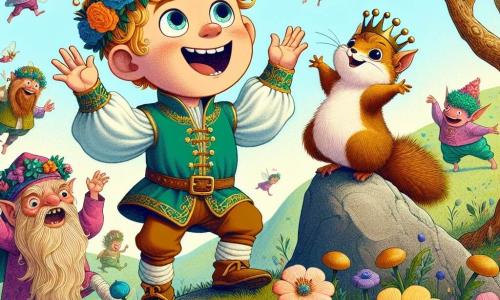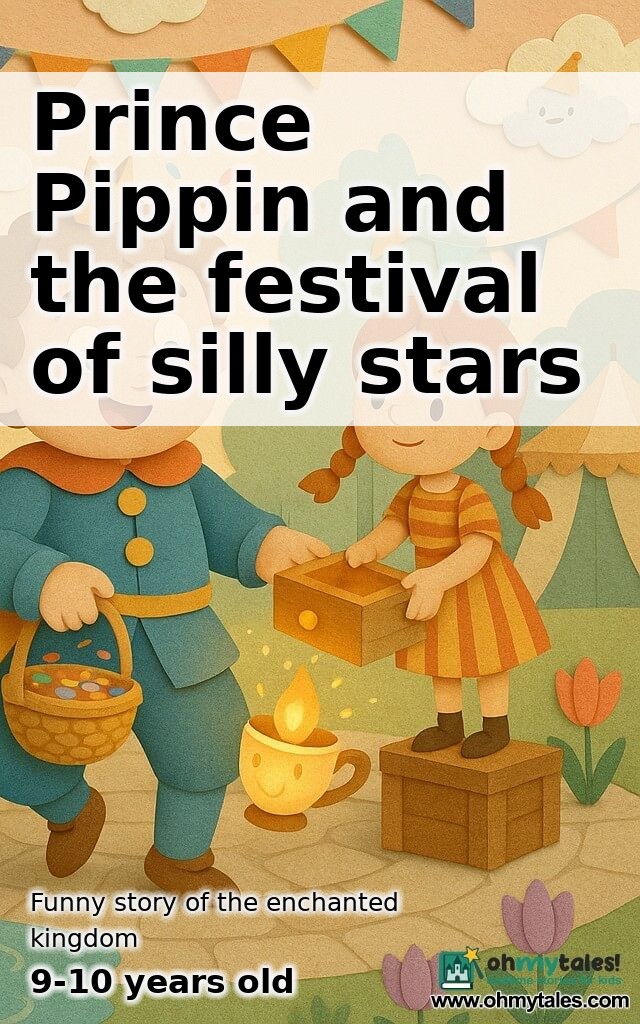
Once upon a time there was a prince who tripped over giggles.
Chapter 1: The Prince and the Puddle
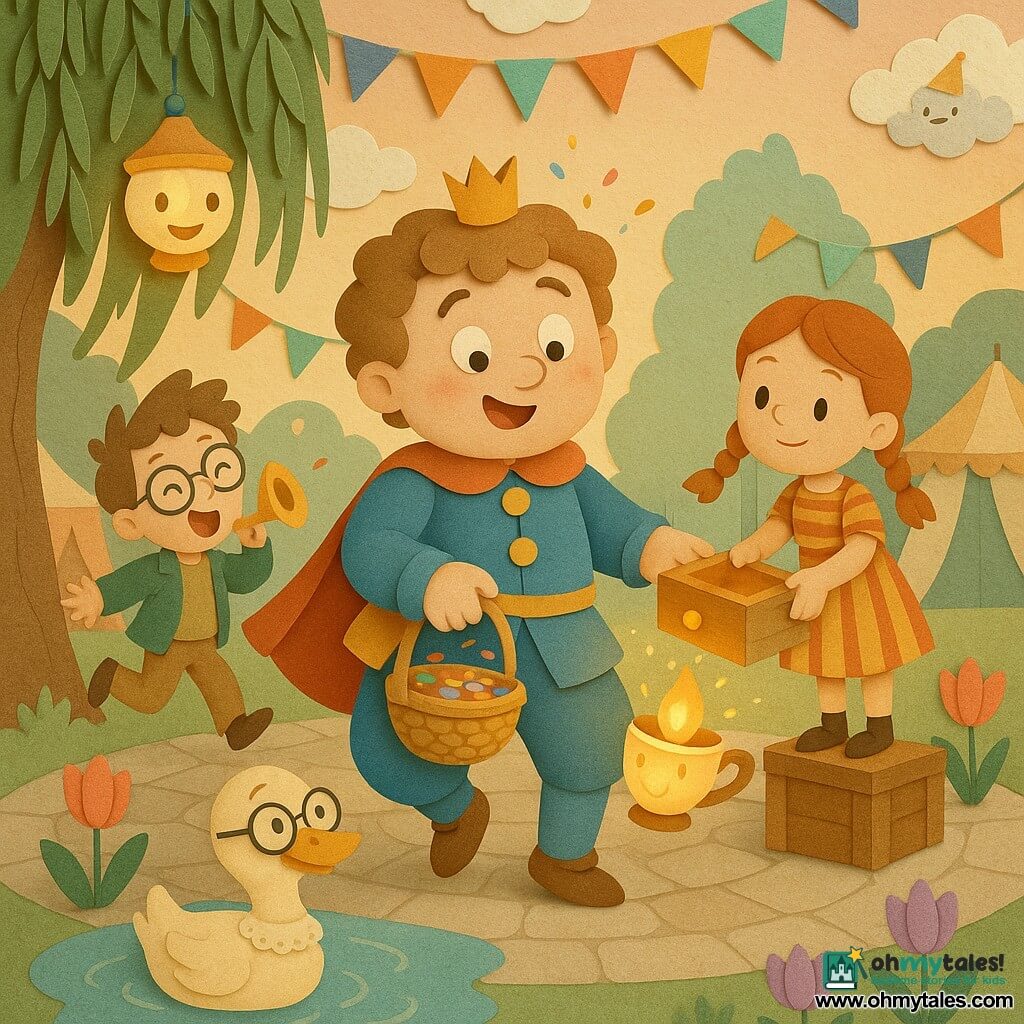
Once upon a time—yes, that is how it begins—Prince Pippin lived in a kingdom where the clouds wore hats and the tulips practiced ballet. Pippin was not tall like a tower or grave like a statue; he was inclined to wobble like a jelly-lamp. His shoes were always on the wrong feet at breakfast and his crown liked to slide over one ear like a sly moon.
One morning the kingdom announced a Festival of Silly Stars. The air smelled like toasted marshmallow and mischief. Pippin wanted to help. He wanted to juggle moonbeams, perhaps, or tell jokes to the royal owls. Instead he stepped into a puddle that was wobbling with laughter. The puddle splashed up like a fountain of glitter and sprayed his hat with rainbow polka dots.
"Splish!" said the puddle. "Splosh!" said Pippin. A duck wearing spectacles paddled by and offered a napkin. "No worry," quacked the duck. "Silliness suits you."
Pippin curtseyed, nearly toppled into a daisy, and decided he would be the Festival's official Helper-in-Chief. He had ideas—bright, bouncy ideas—but first he needed to gather the festival bits: a trumpet that honked in three languages, a giggle-basket, and a map that giggled when it was happy. The map, it trilled, lived in the village schoolhouse under the slate roof, where children skated like cats on paper and sugar-laced chalk wrote jokes on the walls.
Chapter 2: The Preau Parade
The schoolhouse had a preau—a covered playground that smelled like sun-warmed paint and old crayons. It was a magical preau: swings that sang lullabies, hopscotch that skipped its own squares, and a climbing frame that told riddles if you climbed it the right way. Pippin arrived with a small bounce and a large wobble.
"Hello!" he called to the preau. The preau whistled back a tune of bells. Children practicing a puppet opera paused mid-pirouette and pointed to a rusted chest under the slide. "The giggle-basket!" they exclaimed. Pippin lunged forward with noble intent—and slipped on a banana peel that was learning to waltz.
He landed in a pile of beanbags like a slingshotted cloud. From the chest tumbled a trumpet that honked like a surprised frog and a map that giggled in a squeaky voice. The map looped its paper edges around Pippin's fingers and whispered, "Find the North of Tickled Pines. Turn left at the third bubble. Do not step on the purring stones."
"Very helpful," Pippin said, carefully tucking the map into his pocket where it continued to giggle faintly, folding itself into a tiny accordion of snickers. The children cheered because he had recovered everything with a flare of clumsy grace. They loved him for falling in the most entertaining patterns.
Chapter 3: The Mischief of the Moth-Men
The map led Pippin out of the preau and into a lane where the lampposts told stories in rhymes. On the way, he met a troupe of Moth-Men—small creatures who wore spectacles and patched cloaks and liked to fold socks into origami animals. The Moth-Men were arranging a parade of lanterns shaped like potatoes, and one lantern insisted on singing opera in a very loud whisper.
"Careful!" warned the head Moth-Man, who had whiskers like question marks. "We have a knot of sleepy spells ahead."
Pippin, who untied knots with both hands and sometimes with his elbows, offered to help. He tied a knot with a loop-de-loop and a polite bow, but the knot transformed into a giggling caterpillar and wiggled off to nap on a muffin-top fence. That sent the lanterns into a parade march with three left steps and a pirouette.
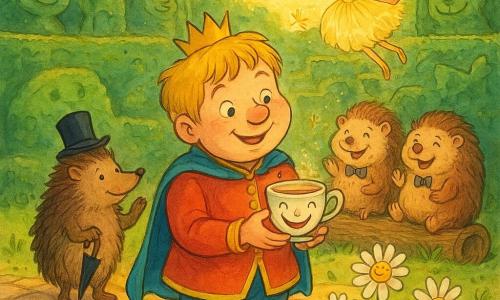
"Delightful!" Pippin clapped, and his clapping made the nearby bushes shed confetti-earned leaves. The Moth-Men giggled and gave him a tiny lantern shaped like a teacup. It hummed softly and said in a teapot voice, "For courage when you wobble."
Pippin thanked them with a deep, dignified dip that nearly did a somersault. The teacup lantern chimed and pointed him towards Tickled Pines, where the North was supposed to be, or at least somewhere north-ish.
Chapter 4: The Puzzle of the Purring Stones
Tickled Pines stood like a green sea breathing peppermint. The trees leaned close to whisper secrets, and the path to the festival sparkled with sugar sand. Soon Pippin found the purring stones—smooth, round pebbles that purred like contented cats when you stepped on them.
The map in his pocket began to giggle a little louder: "Step lightly, step bright. Sing a silly tune and do not fright."
Pippin hummed a tune he made up then and there, mostly rhymes and hiccups, which caused the stones to purr louder and start to vibrate like a drum. But then a startled hedgehog rolled out from behind a rock and sneezed glitter confetti into Pippin's face. The map popped out of his pocket and flapped open to a new page: "Beware the Mischief Mirror."
"What mirror?" Pippin asked the hedgehog, who blew a bubble that read, "Behind the willow that yawns."
He hurried—well, he hurried in an elegant, flapping-sleeved sort of way—to the willow that yawned like a grandparent. Behind it, a small mirror sat on a stump. It looked ordinary but blinked when no one was looking. Pippin peered in and saw a reflection that tripped—his own reflection wore mittens and told tiny jokes that made its reflection laugh again. The mirror was mischievous and delighted in copying clumsiness.
Pippin laughed along, and the mirror laughed back. They had a short contest of who could make the silliest face. Pippin stuck out his tongue like a flag and the mirror stuck out two tongues like twins. Their laughter joined the purring stones, and the willow stopped yawning to listen.
Chapter 5: The Festival and the Drawer
At last Pippin arrived at the Festival of Silly Stars. The kingdom had gathered: moon-hat clouds bobbed in the sky, tulips leaped in tutus, and the royal owls nodded in time. Pippin coordinated with the trumpet, the giggle-basket, and the teacup lantern. He slipped a little, twirled a lot, and directed the children in a performance that looked, wonderfully, like organized chaos.
They played the map's instructions: left at the third bubble, do not step on the purring stones unless you “boogie lightly.” Everyone boogied lightly, which looked like tiny moonwalks with jazz hands. Even the lampposts hummed along. The mirror that copied faces only amplified the good laughs, never mean ones. When a cloud hat slipped, the tulips offered pins. When the trumpet honked in three languages, the royal owls translated into applause.
As the final act, Pippin opened the giggle-basket to release confetti that smelled like cinnamon and warm socks. Out popped a stack of little wooden drawers—each drawer contained a different kind of chuckle: snickers, snorts, giggles, and the rare, gentle belly laugh. Pippin placed the drawers on a table like tiny treasure chests. He invited the children to choose a chuckle and plant it in their pockets.
When the festival wound down like a ribbon slowly curling, Pippin noticed one small drawer at the very bottom, a drawer so plain it might have been hiding. He reached out, fingers shaking with a ticklish excitement. Inside was a soft, glowing lump of simple joy. It hummed a lullaby that smelled faintly of warm bread and evening stories.
Pippin smiled, folded the glowing joy gently like a napkin, and tucked it into his coat where it would keep the cold out and the silly in. Then, with a ceremonious wobble and a bow that almost became a cartwheel, he closed the drawer. It clicked shut with a sound like a contented sigh—the kind of sound that promises everything will be all right.
The kingdom hummed a little quieter, the tulips took their last pirouette, and the prince walked home under a hat-wearing cloud, his pocket full of borrowed laughs. He had helped in the most Pippin way: not perfect, but perfectly full of joy. And when he reached the palace he put away the map, hung the teacup lantern on a hook, and with a final, careful motion, closed the little drawer.