Chapter One: The Unexpected Carol
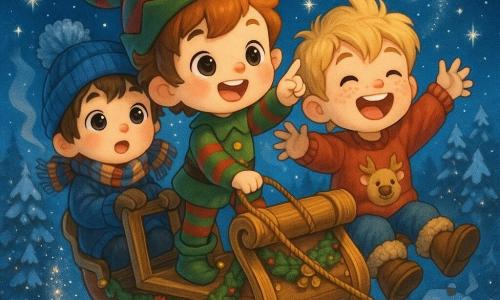
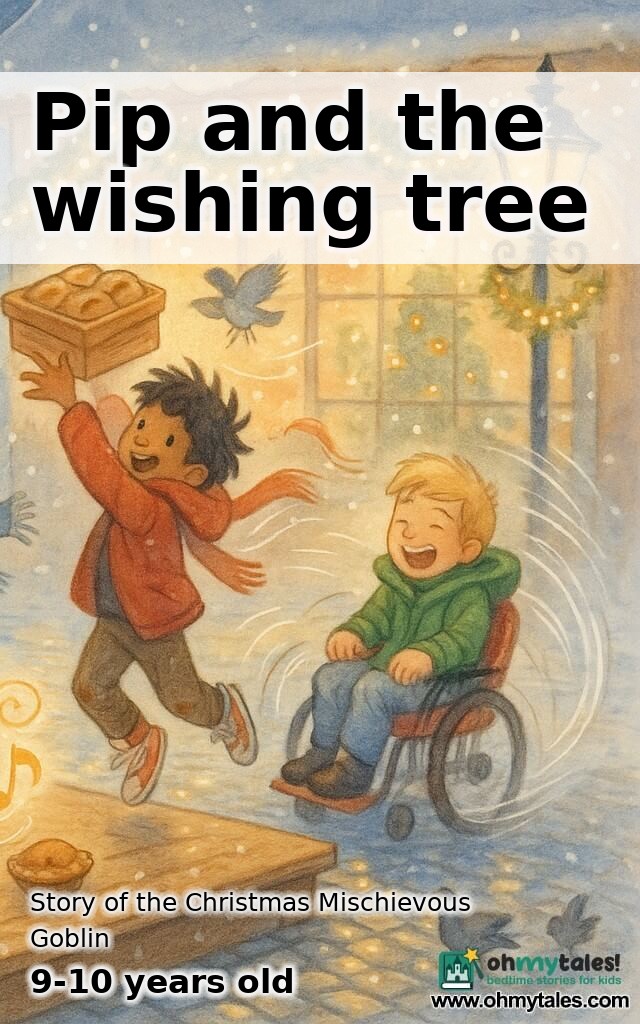
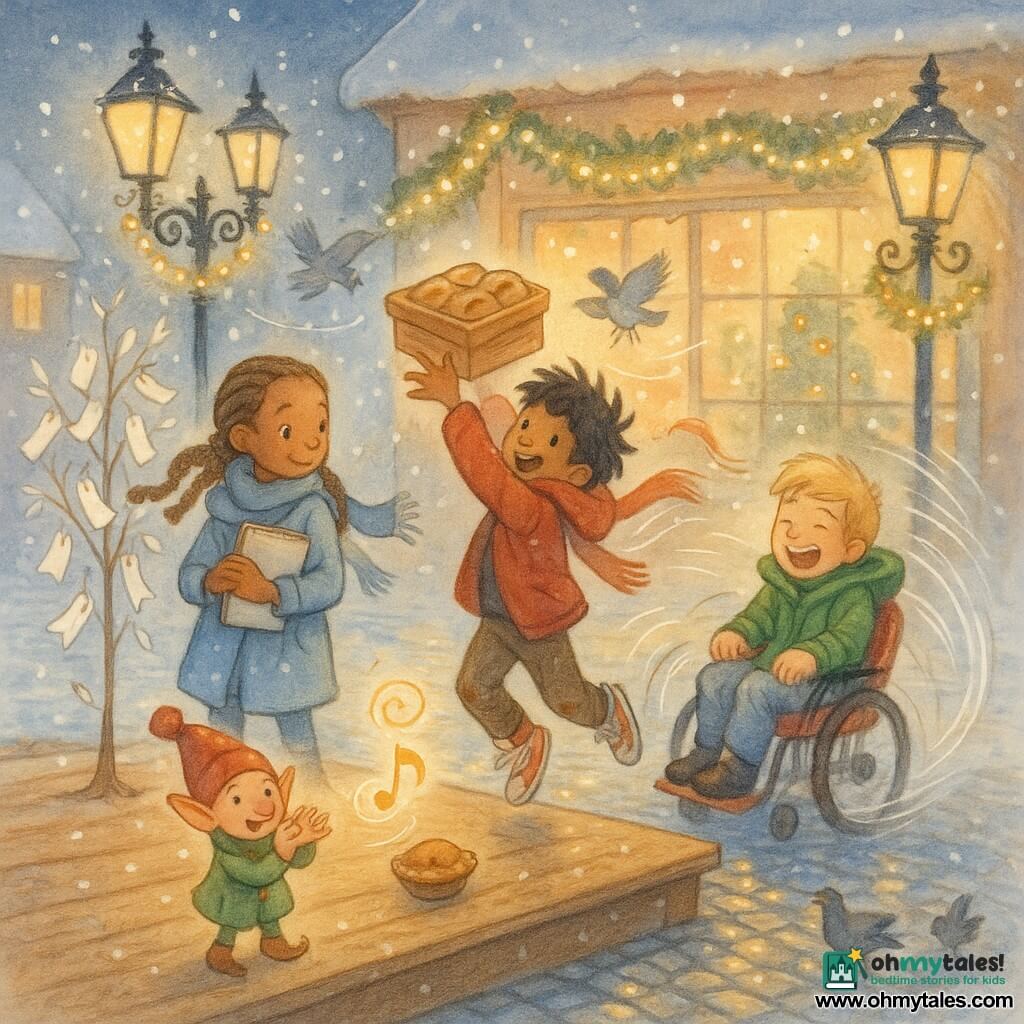
On the coldest night of the year, when roofs wore frosting like sugar and strings of lights winked like sleepy stars, three friends crept into the town square. Mira, who liked to draw snowflakes in her notebook; Jonah, who could climb the oldest oak like a squirrel; and Sam, who wheeled beside them in a red scooter-chair that squeaked when he laughed. They were nine and brave and full of holiday mischief, but not the sort that broke things—only the kind that made people smile.
The square was empty except for a single decorated shop window and a little wooden stage waiting for the carol singers. The children had come to hang tiny paper snowmen, one for each person in the village, on the wishing tree. They were tying the last one when a tiny sound—like a bell trapped inside a cookie jar—tapped at their ears.
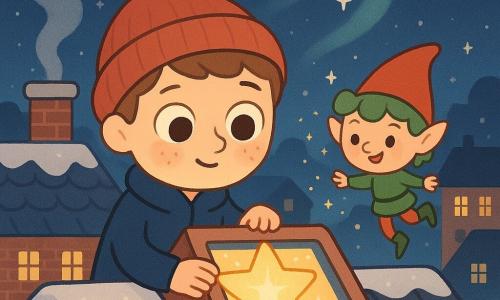
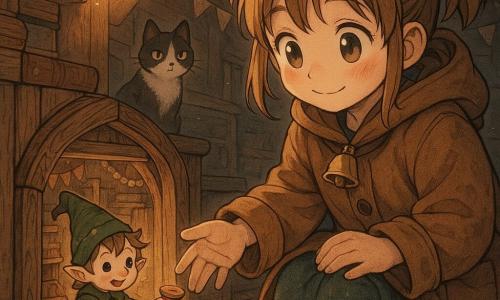
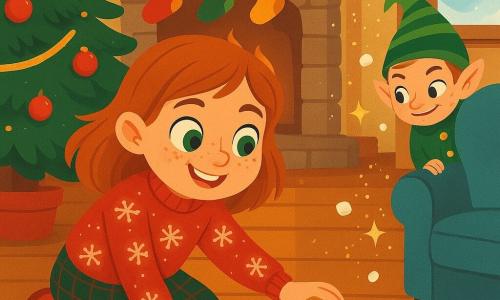
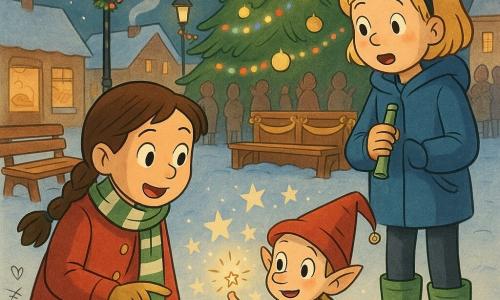
A small figure zipped from behind the lamppost, green coat flaring, hat tipped like a wink. He was no taller than a broom handle and had eyes that glinted like tinfoil. He moved so fast the children thought he might be a wind-up toy given life. He bowed so low his hat brushed the cobbles.
“Hello!” he sang in a voice that seemed to rattle with giggles. “I am Pip, the Christmas Trickster! I love a good surprise.”
Before the children could answer, Pip set his mitten on the stage and, with a theatrical cough, started a carol. But it wasn't any ordinary carol. It began with a note that tumbled like a snowball, then another that hopped like a rabbit, and soon the melody sped up until it sounded like a dozen sugarplums doing hopscotch.
Then Pip started to clap. Not regular clapping—this was clapping that made nearby tin cans rattle, that shook the window of the bakery and made the gingerbread man on the sill topple. Shopbells jingled, the wishing tree swung, and the whole square filled with a roaring, ripple-laugh of music.
Mira laughed; Jonah danced; Sam's chair spun once and then settled. The carol made everyone's feet flurry. The town clock, half asleep, chimed along in a bouncy rhythm. For a wild, wonderful moment, the square was a melody with legs.
Chapter Two: Merry Mayhem
But Pip's song had plans of its own. A choir of pigeons, awakened by the tune, decided to join and produced such a flurry of feathers that snow flurries mixed with downy fluff. A pile of scarves on a nearby bench flew like kites into the lamplights. Mrs. Granger from the bakery—known for her perfectly stacked tart tins—came rushing out, arms full, only to see her pastry pyramid begin to sway to the beat and cascade like a tiny, buttery waterfall.
Pip, delighted, trilled a new verse and clicked his tiny heels. The Christmas lights hiccupped and blinked in dizzy colors. One of the village cats, who liked quiet pondering, got so startled that it launched itself over the fence and landed in a basket of holly. The children chased, picked up, and giggled while Pip conducted the chaos as if the whole square were his orchestra.
“Stop!” cried Mira, at first laughing but soon worried as Mrs. Granger's tart tins rolled toward a snowbank and a string of paper snowmen fluttered apart. Jonah hopped to catch a rolling sausage from the butcher's stall; Sam steered his chair through the wobbling lamppost streamers like a captain in a tiny, merry ship. Each rescue was a small adventure.
When the carol finally faded—Pip humming the last note with a solemn little bow—the square looked like a confetti storm had made a home there. Ribbons tangled in the lamppost's beard of ivy. A wreath lay upside down, staring at the sky. The wishing tree had lost half its paper snowmen, which now circled the fountain like little white planets.
Pip clapped himself delightedly and folded his tiny hands. “Wasn't that fun?” he asked, cheeks rosy. He did not mean harm. His mischief was a bright, bubbling thing that wanted attention and laughter. But the town's people, waking from surprise, looked worried. Mira wiped a smear of icing from her cheek and felt a small guilty stickiness.
“We need to fix this,” Jonah said, setting his jaw in a way that meant adventure plus responsibility. Sam nodded. Pip's smile faltered; he had wanted applause, but now his giggle sounded thin. The children decided to do something clever: they would make an after-mischief plan—a repair-and-tidy workshop, right there under the twinkling stars.
Chapter Three: The Repair-and-Tidy Workshop
The children announced their plan like captains recruiting a crew. They set up a little table with string, tape, a roll of glittering ribbon, and a big cardboard sign that read (in crooked red letters) FIX IT, TIDY UP, SING AGAIN. Pip's eyes grew as wide as luminescent buttons.
They invited everyone—shoppers, bakers, cat-lovers, and the choir pigeons. People trickled in, some with flour on their sleeves and others with puzzled smiles. There was grumbling at first, then chuckles when Jonah used a candy cane as a measuring stick. Mrs. Granger brought hot cocoa in paper cups; a busker handed over spare jingles; folk moved with purpose, turning the square into a workshop buzzing like a hive.
Pip, ashamed of the mess but eager to help, rolled up his sleeves (or what counted for sleeves on an elf the size of a mitten) and began to fix. He threaded ribbon through the wreath, mended the paper snowmen with careful stitches, and arranged the tart tins like tiny islands. He hummed, and the children joined in, their voices soft and warm like toasted marshmallows.
As they worked, Pip told stories about his pranks—how he once tied shoelaces into bows so shoes danced, or how he switched the cat's bed with a pillow of porridge (the cat had not enjoyed that). He had meant his tricks to be playful nudges, not troubles. The children listened and, instead of scolding, asked questions—how did he think of such pranks? Did he ever feel lonely? Pip confessed, quieter than a falling snowflake, that sometimes he made chaos because it got people to notice him. He loved the bright gasp of surprise more than the slow comfort of being part of something steady.
Mira tucked a repaired paper snowman on the tree and said, “You don't have to shout to be seen. You can be seen by helping.” Jonah added a ribbon to Pip's hat. Sam, rolling up his sleeve to hand Pip a glue stick, smiled, “You're part of this now. Trick or not.”
Slowly, the square tidied itself into a cozier, stranger sort of glow. Each person who helped left with a smile and a little piece of the repaired magic—a doughnut with extra icing, a paper snowman, a borrowed song. Pip's cheeks looked less bright with mischief and more with something like belonging.
Chapter Four: The Shared Carol
With the square fixed and a trail of giggles behind them, the group decided to sing a carol together. But this time, Pip didn't start alone. He stood in the middle, looking nervous and hopeful, then nodded for everyone to join. Voices rose—young, old, scratchy, smooth—and wrapped around the square like a warm blanket.
The tune began gentle and steady, not like a bouncing snowball but like a lantern floating down a river. Pip followed the rhythm instead of racing it. His tiny voice found its place as part of the choir, not the conductor. He added twinkles—little musical notes that made people clap—but this time he shared them.
Halfway through the song, a little gust swept the paper snowmen free again. For a breath, the old panic stirred. Then the town, like a single big mitten, reached out. Hands—big and small, gloved and bare—caught the fluttering snowmen, tucked them back onto the tree, and laughed. A child who had been watching from a window later said it looked like someone invisible was tying the world up with kindness.
When the final note hung and slowly melted into the air, the square hummed with a contented sort of silence. Pip bowed, grateful. The children high-fived, snow dusting their hair, and Sam zoomed his chair in a celebratory circle that made everyone clap again.
Pip stepped forward, a small, solemn elf now brimming with a new kind of mischief—the mischief that starts a game where everyone wins. “Thank you,” he said, in the hush that followed a kind surprise. “For helping me see that sharing a trick is better when you share the fixing, too.”
Mrs. Granger handed Pip a tiny gingerbread man, and he nibbled the corner with such delight that a crumb fell right into Mira's mitten. Jonah laughed and pretended to scold him, but his eyes were soft. Sam pushed forward, offering Pip a ribbon from his scooter-chair. They tied it around Pip's hat like a badge.
As people drifted home, the lights in the square blinked one slow, satisfied blink. The wishing tree glittered, whole again, and the paper snowmen swayed in the night breeze like tiny, contented moons. The children rolled and walked and skipped toward their own porches, feeling the kind of warm that stays in your pocket like a secret.
Pip, now quiet and thoughtful, waved until he was a tiny dot by the lamppost. He had started the evening eager to be noticed, but he left with something brighter: friends who had listened, laughed, and helped. He learned that a prank could be a doorway to sharing and that sometimes the best trick of all is the one that brings everyone together.
That night, in the village square, laughter rolled like soft sleigh bells, and every house glowed a little greener. Under the twinkling sky, the three children and a very small elf promised to meet next year—perhaps to hang more snowmen, perhaps to start a quieter mischief. Either way, they knew that when the song began, they would sing together. And if Pip felt like a gentle prank, they'd be ready—with glue, ribbon, cocoa, and a chorus of help—to make the world tidy and merry again.