Nightfall That Felt Too Big
The streetlights hummed on like sleepy fireflies as Noah hurried up the path to his house. He clutched his backpack, the zipper sticking just a little from the sandwich crumbs inside. At nine years old, he could tie his shoelaces without looking, finish a jigsaw puzzle in an afternoon, and name every dinosaur in his sticker book. He was brave at school during math quizzes and brave on the climbing frame. But when the sun slid down behind the rooftops and shadows pooled in corners, a different, heavier feeling settled on Noah's chest.
That evening his kitchen smelled of tomato sauce and warm bread. His mum set his plate down with a gentle smile and asked about his day. Noah spoke about the soccer game, the new comic in the library, and how he'd found a neat bug with green stripes. He did not tell her that his stomach felt twisty whenever the house dimmed, that his throat tightened if the hallway light went out. He did not tell her, at least not yet.
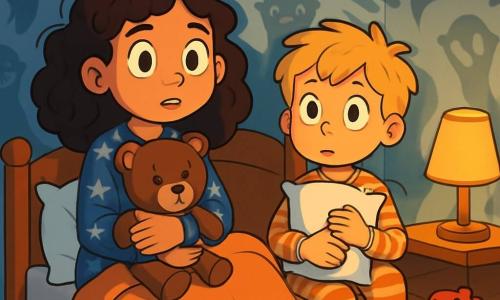
When bath time came, he noticed the mirror looked darker; the bathroom tiles cast strange angles. The radiator made a sigh. At bedtime, his room seemed different as if the familiar bookshelf had stretched taller and the curtains turned into heavy waves. He pulled his duvet up to his chin and listened to the house breathe. The clock ticked loud and crisp. Every small creak sounded like something big shifting in the shadows.
“I don't like being alone at night,” he said finally, voice small in the dark.
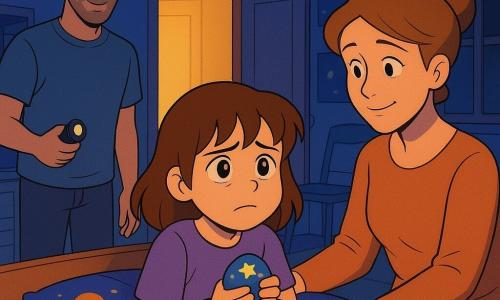
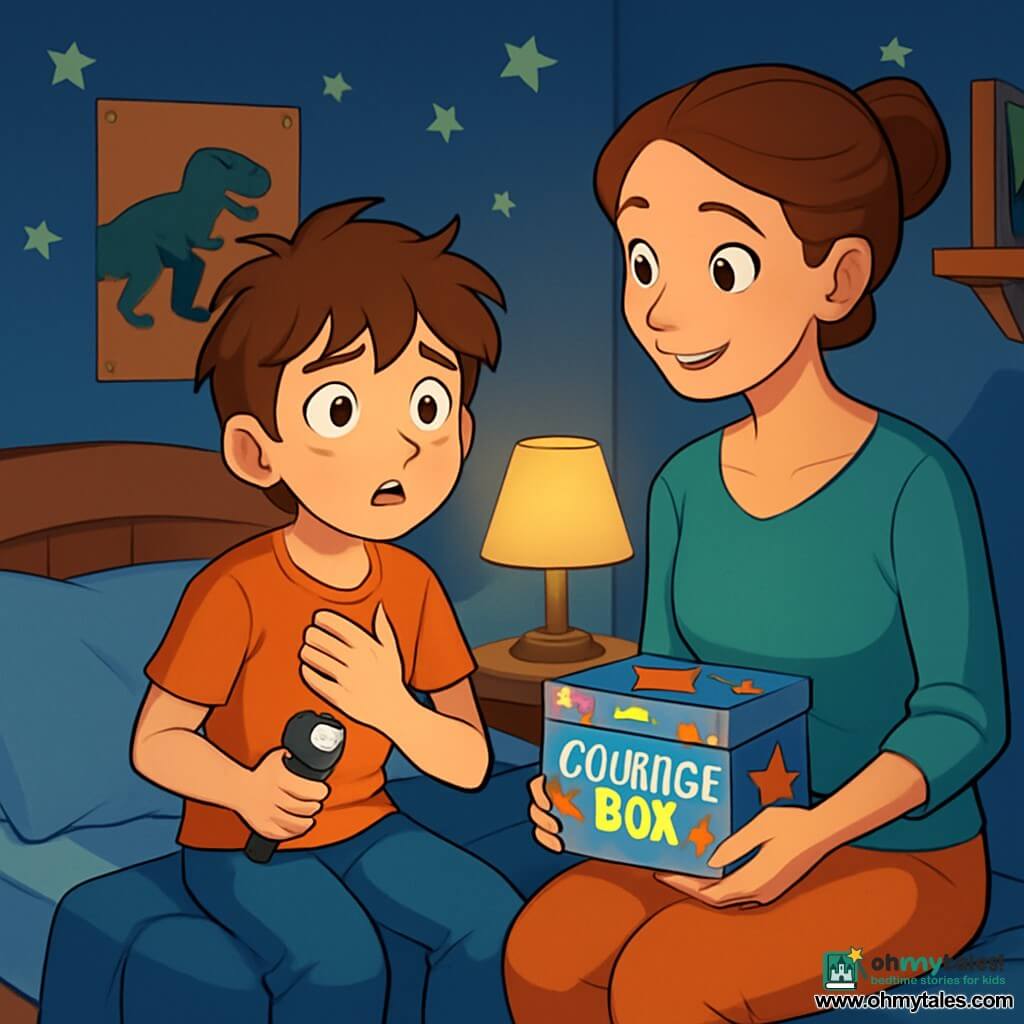
His mum sat on the edge of the bed, the lamp painting the room in soft gold. “I know,” she said. “Lots of people feel that way sometimes. We can make a plan together.” Her words felt like a hand on his shoulder. They made the fear a thing that could be talked about, not a monster required to be faced in secret.
The Power That Went Out
Just as Noah climbed into bed with a promise to try the breathing exercises his teacher had talked about, the lights flickered. The lamp blinked and went. The house sank into a thick black. Outside, a soft rain started, each drop tapping the roof like a finger.
Noah's breath stopped for a moment. The dark was not the same as it had been before; it felt bigger now, like the room had swallowed the edges. The hallway that led to his parents' room disappeared into nothing. The old grandfather clock in the lounge, which usually chimed reassuringly, said nothing. In its silence, Noah imagined shadows moving and long arms of night feeling about for him.
“Mum?” he called. His voice sounded far away. The house answered with the distant gurgle of the washing machine and the rain on the window.
His mum held a torch and a small pouch in her hand. “Storms love to play tricks on our lights,” she said cheerfully, opening the pouch. Inside were things that did a brave job of being ordinary: a little flashlight that felt comfortable in his palm, a soft heat pack for his hands, a small book of silly facts, and a strip of glow-in-the-dark stars.
They sat on the floor with the door left slightly ajar so the hallway's faint glow would leak in. “We'll try something together,” she said. “First, we'll check the house for noises. Then we'll make a bedtime plan that changes one small thing at a time.”
Noah learned a simple trick that night. When he felt the knot of fear begin to tangle in his chest, he named it out loud: “That's worry.” Naming it did not make it vanish, but it turned the feeling into a thing they could look at together. They listened to the rain, counted heartbeats quietly, and breathed in for four counts, held for four, and breathed out for four. The breathing made the room feel less like a canyon and more like a safe, steady space.
Small Steps and a Bravery Kit
The next day, Noah and his mum made a “bravery kit.” They filled a small box with real, sensible tools: a flashlight with fresh batteries, a night-light with a low glow, a list of three calming actions, a folded note from Mum that said, “I'm proud of you,” and a tiny tin of lavender that smelled like summer. On the outside of the box they stuck one glow star for each small step Noah chose to try.
They practiced using the tools during the daytime. Noah sat in his bed with the night-light on and read his comic until the pages blurred. Then he turned the light off for one minute while his mum sat in the doorway where Noah could see her silhouette. One minute. That felt short and doable. The next night, he tried two minutes. He counted slowly, breathed, and felt the fear wash in and out like waves.
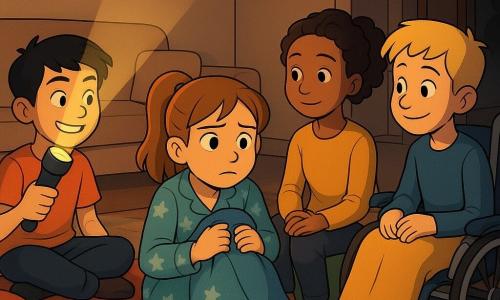
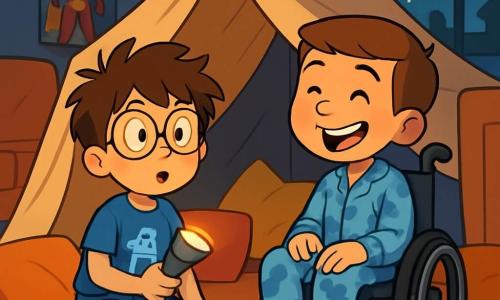
On Saturday, his friend Lila came over. Lila, who liked making forts and knew a million fun facts about space, showed Noah how she used a calm-down jar. She pushed glitter into a clear bottle with water and glue, and when she shook it, the glitter swirled and settled while she breathed. “Watching it is like watching a storm move out,” she said, as bright as a little sun. Noah shook the jar and watched the sparkles drift. He felt something loosen.
Their next small step was a household check. Noah asked his father to walk through the house with a small notepad. They banged on doors gently, checked window latches, and looked in the attic. Seeing each hinge and nail and the neat row of paint on the wall showed Noah that most noises had simple explanations. The creaks were the house settling. The rustle outside was a loose gutter. Each explanation removed a bit of the dark's power.
Waking Up Brave
Night after night, Noah tried one small change. He left his door a crack open with a star on the handle. He kept the flashlight in reach. He used the breathing counts and the calm jar. He read a silly fact aloud when a strange noise made his stomach twist. One afternoon, his teacher gave the class stickers for “small brave steps” and Noah stuck one on his sleeve proudly.
Then came a night when the rain tapped the roof and the lights stayed steady. The house hummed its familiar tune. Noah lay in bed wrapped in his blanket like a turtle in its shell. He reached for his bravery box, found the note from his mum, and read the words again: “I'm proud of you.” He smiled into the fabric of his pillow. He closed his eyes and used the four-count breathing until his shoulders relaxed like someone on a gentle swing. When his door light went to sleep, he did not feel like a small boat on a wild sea. He felt like a sailor who had learned to read the stars.
Halfway through the night he woke, sat up for a moment, and listened. A branch tapped the window. Somewhere, a car hummed past. The house sighed. He placed a hand on his chest and felt the steady, patient beat. He took a breath, then another, and lay back down. Morning found him asleep in his own bed, the duvet tangled around his knees, a faint smile on his face. He had done it—he had been alone for a whole night and learned there was a way through.
At breakfast, his mum ruffled his hair and put out two plates of toast. “How did it go?” she asked, not as a test, but as a neighborly check-in.
“It was okay,” Noah said, which held more than it let on. He told her about the calm jar and the small star on his door. He told her he had checked the house noises with Dad. They celebrated with extra jam on his toast.
That week, Noah learned something simple and useful: courage is not a giant leap; it is a collection of tiny steps. Saying the fear out loud made it less like a storm and more like weather. Use a light, leave the door open a little, count the breaths and name the feeling—each was a tool, not a magic spell, and they worked together.
At school, when a classmate whispered that she was scared of the dark in her new house, Noah offered his calm jar to show her how the glitter became still. Lila high-fived him for being brave and offered to make another jar together. The chorus of small supports grew: a dad checking a house, a mum listening without pushing, a friend sharing a trick. The fear softened in the presence of these ordinary, kind acts.
Noah kept his bravery box under his bed. Sometimes he still needed the lavender or to count his breaths. Sometimes the rain made him tight in his chest again. But the tools were there, and so were the people who knew how to use them with him. The night was no longer a great, swallowing thing; it was simply night—the same quiet friend that let him be brave in small, steady ways until, bit by bit, he believed the dark could hold safe things too.