Frosty Morning
Moss the red squirrel blinked awake to the hush of winter. The trees wore white caps and the air smelled like cold spell and pine. Little puffs of breath left tiny clouds when Moss scurried along the branch. Winter felt new and strange. Days were short. The sun sank early, and the shadows grew long and soft.
Moss's paws felt brisk. His tail, a warm brush of fur, twitched as he explored. He loved the crunch of frosty leaves underfoot and the way his whiskers prickled when snowflakes tickled his nose. Still, a worry lived in his chest like a small pebble. What if he bounced too fast and frightened his friends? What if the cold made them go away?
He held the pebble of worry close and tiptoed down to the forest edge. A group of creatures gathered near a frozen puddle. They were playing a gentle game of sliding and hopping. Moss wanted to join. He wanted to move fast and flip and make them laugh. He wanted the warmth of company to melt the worry inside him.
Slippery Play
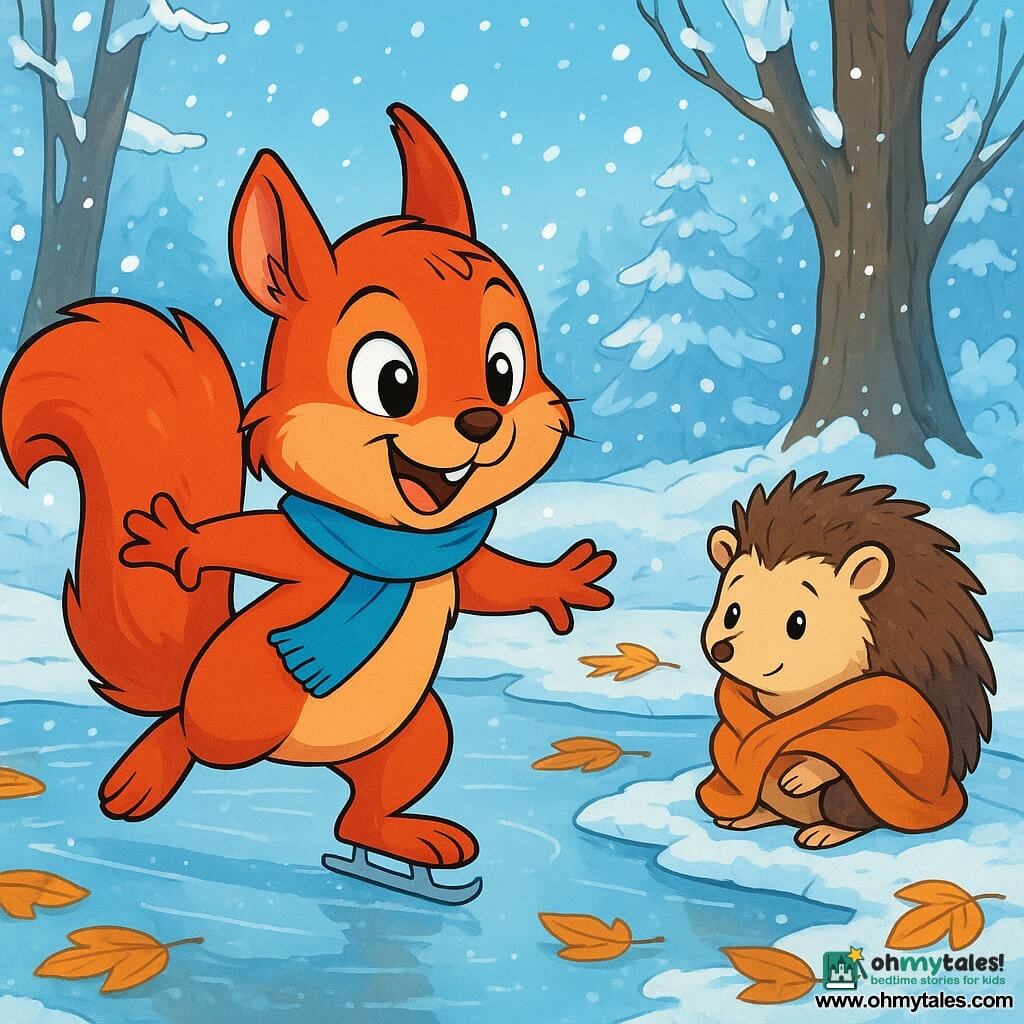
Moss scampered onto the ice and tried his first slide. It felt like flying for a heartbeat. His toes dug into the slick surface, and he laughed—a soft, bright sound. Other animals watched and then joined. They slid together in a messy row, feathers and fur fluffed against the cold.
After a few turns, Moss noticed a small hedgehog named Poppy sitting by the edge, wrapped in a woolly leaf. Poppy's nose twitched, but she did not slide. Her eyes looked tired. Moss kept sliding. He pushed for one more big, showy flip. His slide ended near Poppy with a loud skitter. The hedgehog flinched and turned away.
A hush fell like falling snow. Moss's pebble of worry grew heavier. He had meant to be fun, not frightening. He pawed the ice, remembering how warm his own family room felt. He thought of the heated sofa, the hum of the stove, and the soft light that made the whole room glow. Maybe he should go inside and think.
Warm Living Room
Back at his family's den, the living room smelled of cedar and baked root bread. A low stove made the air cozy. Moss curled on a sun-warmed rug, listening to the steady tick of the clock. Outside, winter breathed cold, but inside, the house held a small summer of warmth.
Moss watched his reflection in the window and breathed out. He held his head low. When his mother padded over, she sat and wrapped her tail around him. Her voice was a warm cup. "Did you have fun?" she asked.
Moss thought of Poppy and how he had wanted everyone to play his way. He whispered, "I tried to make them laugh. Poppy seemed upset. I didn't mean to scare her."
His mother smiled gently. "We sometimes forget to listen when we're excited," she said. "Stopping when someone doesn't want to play is part of caring."
Moss thought about stopping. He imagined himself sitting beside Poppy quietly, offering a berry, giving space. The idea felt like easing a mitten onto a cold hand. He felt small courage grow—soft as a mitten, strong enough to hold.
Snowy Forgiveness
The next day, Moss returned to the frozen puddle. The sun threw silver across the snow. Poppy was there again, tucked in the same woolly leaf. Moss walked slowly this time, feet making tiny prints.
He sat a respectful little distance away and said, "Would you like to slide together, or would you prefer I stay here?" His voice was calm, not loud. Poppy glanced up, then down. She sighed, a soft, puffing sound, and then she smiled a prickly smile.
"I was startled yesterday," Poppy said carefully. "You slide so fast. I needed time."
Moss nodded. "I'm sorry. I forgot to ask." He pushed a small berry toward her. "I can stop whenever you want."
Poppy nudged the berry and laughed lightly. "Thank you." She stood and took a very small slide, and Moss stayed at the edge, cheering with a whisper. When she finished, she didn't rush away. They sat together on the frosty bank, sharing silence and a little warmth.
Other animals watched and learned. The forest felt softer that day. When a sparrow shivered, Moss offered his scarf. When the fox wanted to play but then grew tired, Moss nodded and let her rest. He realized it's brave to stop, to listen, and to let others set the pace.
Days grew colder, and evenings grew shorter, but the living room at Moss's home stayed like a small sun. He returned there each night, curling on the rug and thinking of what he had learned. The pebble of worry shrank, not because it disappeared, but because Moss had found ways to carry it with gentleness.
He forgave himself for mistakes and forgave others for sudden moods. The forest forgave too, in soft ways: an extra crumb left on a stump, a playful paw given space. Winter, which had seemed sharp and big, became a season of slow discovery. Moss learned that the hush of snow could hold laughter and that warmth was made of kind choices.
At bedtime, Moss listened to the stove sing and promised himself one small thing: tomorrow he would keep learning. He would practice stopping when friends needed it, offering space like a warm blanket, and saying "I'm sorry" with a true little heart. Each small day was a chance to grow, and the quiet winter nights felt gentle with that hope.