Part One
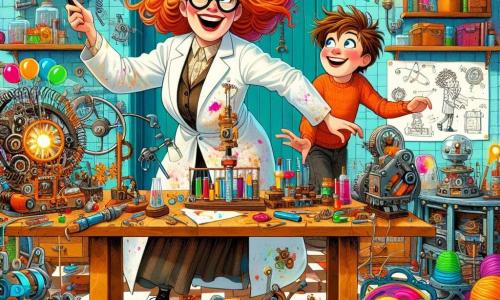
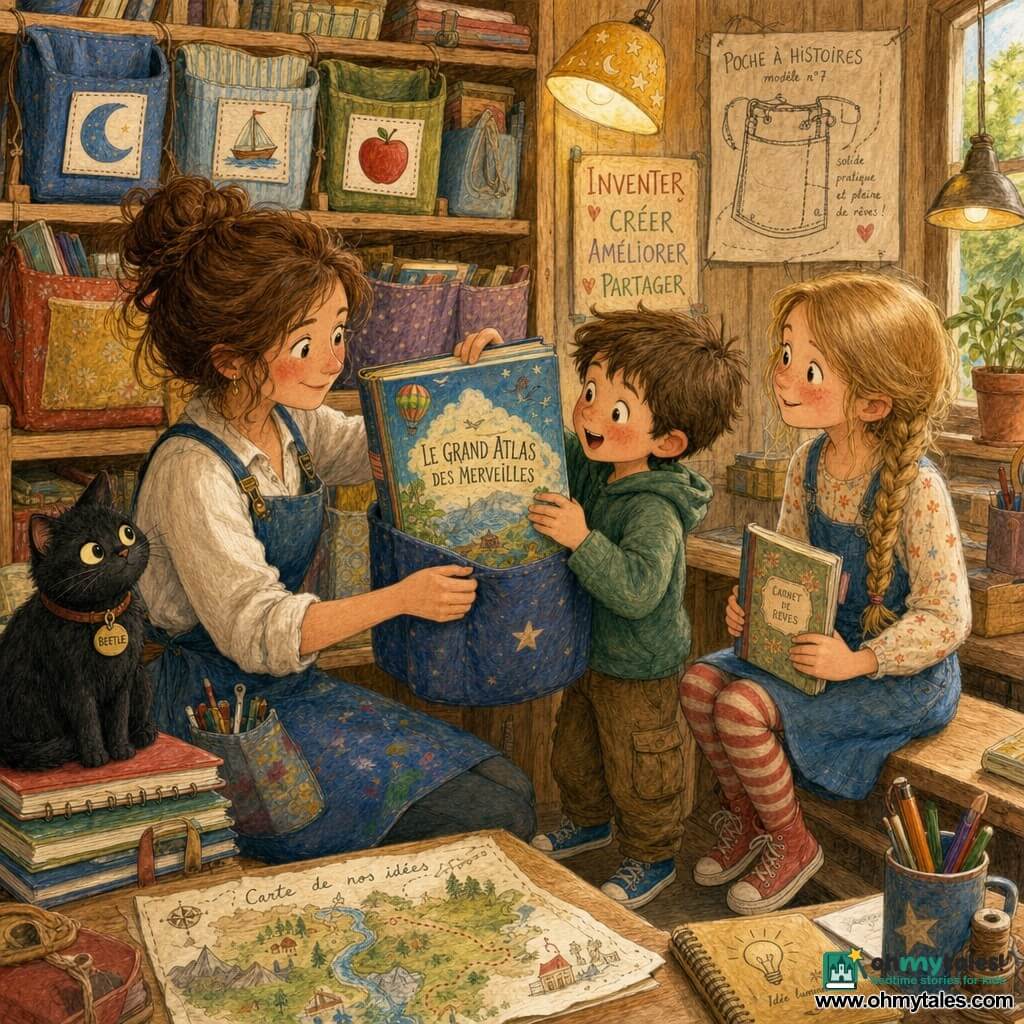
There was a woman named Mira who loved to make things. Her little workshop was a warm room with windows like round eyes. Shelves climbed the walls. Books and notebooks leaned like friendly trees. Paper cranes hung from the ceiling and little lights blinked like fireflies.
Mira wore a blue apron with paint spots and a pencil behind her ear. She listened to the hum of her tools and the soft rustle of pages. She liked to think of herself as an inventor whose job was to sprinkle joy into the world. Her inventions were not loud or scary. They were gentle ideas that made each day a bit sweeter.
One rainy morning, Mira sat at her desk surrounded by stories. There were picture books with smiling suns, science notebooks with tiny scribbles, and journals filled with curious ideas. The books were lovely, but they were always in a mess. Some fell like sleepy birds. Others hid under the table. Mira frowned. “There must be a kinder way to keep them,” she whispered.
She drew a small heart in her notebook. Then she drew boxes, doors, and loops. Ideas bubbled like soup. “An inventor tries things,” she told herself. She wanted a new way to store books that felt like a hug, that made finding a story easy, and that kept pages safe from spills and rain.
Part Two
Mira began to build. She tried a wheel at first. She made a tiny cart with round wheels so books could roll like pets across the room. It was fun, but books tumbled when they laughed too hard. Next, she tried a cloud shelf that floated on strings. The shelf looked soft, but the strings tangled the crayons.
She did not give up. She scribbled, folded, and tried again. Sometimes things went wrong. Once a drawer opened like a yawning mouth and poured out bookmarks. Once a lamp winked and the ink spilled like a small storm. Mira sighed, wiped her hands, and smiled. “That's how ideas grow,” she said. “A little mess, a little mending.”
Her cat, Beetle, watched with round eyes. Beetle liked to paw at sticky notes. He nudged a stack of notebooks toward Mira. She picked one up and read a line she had forgotten: “Make it easy to find the story that fits the day.” That sentence felt like sunshine. It made Mira think of steps, like footprints in a garden, that could help someone find a book.
She thought of tall shelves that were like trees. She imagined leaves that folded to hold small books. She pictured labels that smelled like lemon or lavender so that each shelf would smell like something familiar. The idea was silly and sweet. Mira laughed quietly. Her office smelled of paper and tea and a hint of something new.
Part Three
Mira built a new kind of shelf. It was gentle and simple. Each shelf had soft pockets like pockets on a sweater. Some pockets were round, some were long, and some were the size of a marble. Books slipped into pockets and felt snug and warm. The pockets had tiny tabs with colors and simple pictures: a moon, a boat, an apple. Little fingers could touch the tab and know which shelf to open.
Mira added a friendly map. It was not a difficult map. It had dots and doodles and a smiling sun to show the right side up. The map rested on the desk like a small friend. She also made a light that woke up with a soft click when someone picked a book. The light whispered, not shouted. It made reading feel like sitting under a soft lamp on a rainy day.
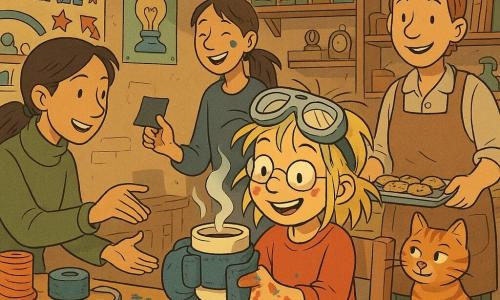
Children came to Mira's workshop one by one. They walked between the book-covered walls with wide eyes. A boy found a book about stars because he liked the moon tab. A girl chose a story about a brave chicken from a pocket with a tiny feather. Each child learned how to look and how to return a book to its pocket. They learned to be gentle with pages. They learned that an inventor might make things that help people care for each other.
A small moment surprised Mira. A little boy tried to put a very thick book into a small pocket. The pocket stretched but strained. Mira watched. She could have smiled and fixed it quickly. Instead, she knelt and asked, “What story are you choosing?” The boy said softly, “A very big picture book.” Mira helped him choose a bigger pocket and hummed a tune while she worked. The boy clapped. He learned that inventions sometimes need small changes to care for different people.
Part Four
Days became weeks. Mira kept changing, testing, and listening. Sometimes she used tape. Sometimes she used yarn. Her notebooks filled with drawings that looked like little gardens. She taped a note on the door that read “Try, Learn, Kindness” in shaky letters. That was her promise to herself.
At night, Mira sat in the middle of her room. The shelves glowed softly and the notebooks whispered ideas. She touched a pocket, then a tab, then the tiny map. Her invention was not perfect. Some pockets were too soft; some tabs needed brighter colors. But the books smiled from their places. The room felt like a safe cloud.
Mira whispered to the books, “I will keep trying, but I will do it carefully.” She thought of the world outside her window. She wanted to make things that helped people, not hurt them. She decided to ask questions before she made big changes. She would ask who the invention would help and how it would make days better.
The next morning the sun painted the shelves gold. Children returned with stories and new ideas. Mira listened and learned. She fixed pockets, brightened labels, and added a small bench so friends could sit together. Sometimes an idea came like a tiny seed, and sometimes like a roaring river. Mira learned to be patient with both.
She kept a small list in a notebook: Help, Kindness, Safe, Joy. It was simple and steady, like a heart beat. Every time she made something, she checked her list. The shelves became a little kinder. The world outside felt a touch softer.
When the day ended, Mira closed her eyes with a happy tiredness. She had tried, she had failed, she had tried again, and she had helped. Her promise was quiet but true: she would keep inventing with care, with imagination, and with a kind heart. The books slept in their pockets, the lights dimmed, and the workshop hummed like a lullaby.