Part One: The Little Stall and the Big Festival
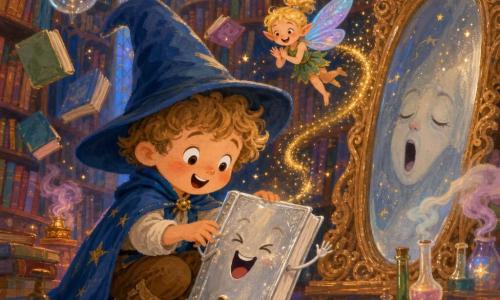
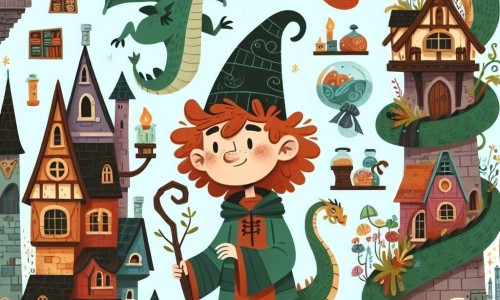
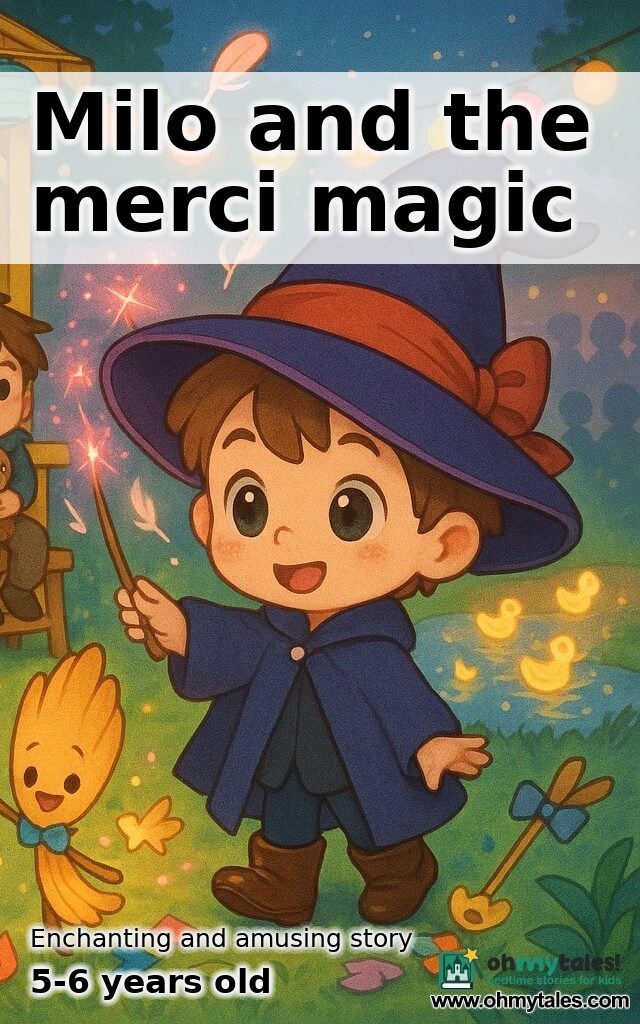
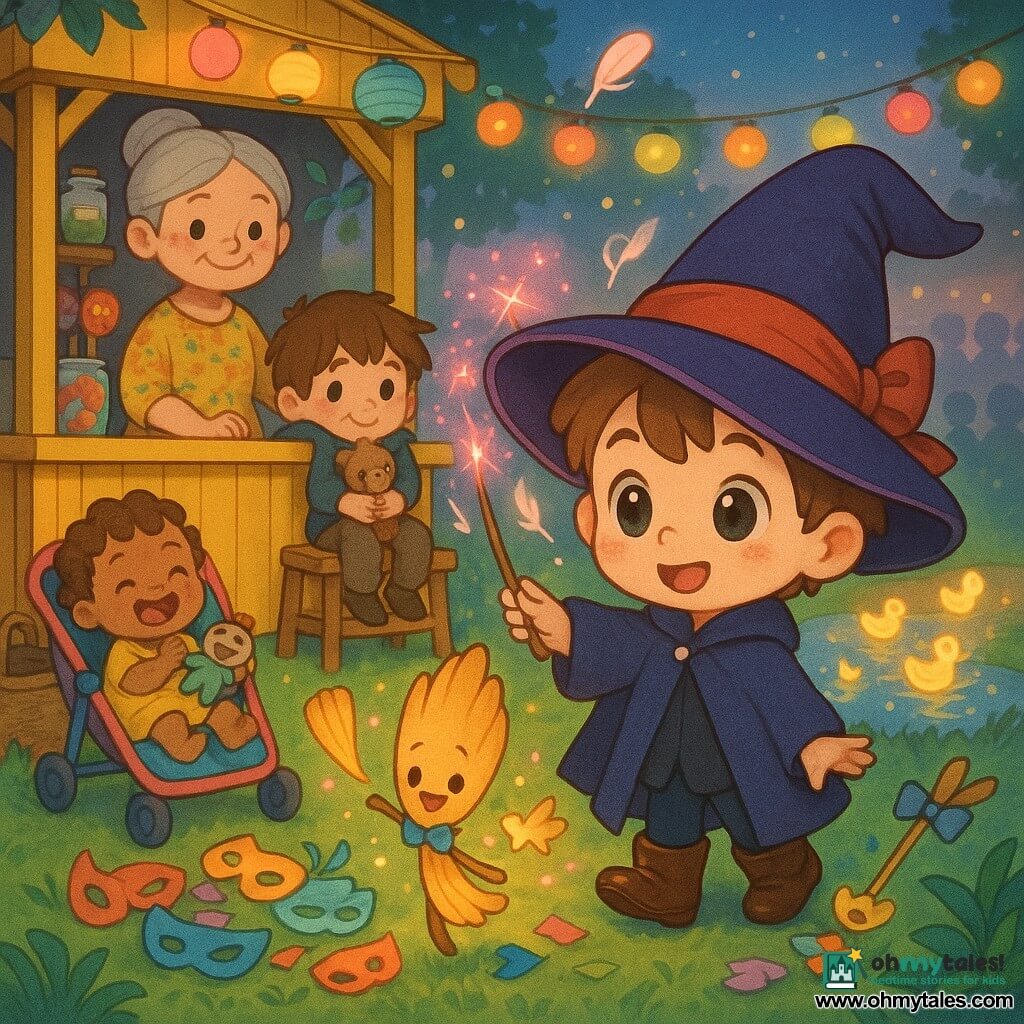
Milo was five and very good at making faces. He was also a tiny apprentice wizard with a hat one size too big and boots that squeaked. Today his home was a bright festival. Paper lanterns bobbed like friendly fish. Music hopped from tent to tent. People laughed like bells.
Milo lived in a small stall painted sunflower yellow. The stall smelled of cinnamon sugar and old books. It had jars of glitter, a broom that liked to sweep, and a wooden sign that read "Magic Help — Ask Kindly." Milo's teacher, Madam Poppy, left him in charge for the afternoon. She said, "Practice your merci magic, Milo. Remember: thankfulness makes kind spells true."
"Merci magic?" Milo whispered to the broom. The broom clicked its bristles and made a tiny bow.
Milo had been practicing a new kind of spell. It was not for flying or turning frogs into hats. It was a soft, polite kind of magic. When you said "merci" with care, small things happened. A sad face would find a smile. A drooped sunflower might lift its head. A lost coin might jingle into a child's hand. Madam Poppy called it the "merci magic." Milo liked the word. It sounded like a bell.
He tied his hat with a ribbon and arranged a row of jars. Each jar had a label: "Polite Pebbles," "Kind Kisses (paper)," and "Tiny Thank-Yous." He practiced saying merci in front of a popcorn machine. "Merci," he said. The popcorn jumped and popped into neat little piles. Milo giggled. That was a good start.
Part Two: Spells, Giggles, and Little Slip-Ups
The festival was full of curious people. A tall man with a mustache bought a balloon. A girl in a blue dress wanted a painted paw. A dog with a polka-dot collar wagged three times and sneezed confetti. Milo greeted them all.
"Would you like a tiny thank-you?" Milo offered to the mustache man. He said merci and waved his wand like a noodle. The wand sneezed a tiny spark and the man's balloon politely bobbed into his hand. The man smiled and left a coin on the counter. Milo made a little curtsey and tucked the coin in the jar labeled "For Wishes."
A family approached, dragging a stroller that looked like a friendly cart. The baby inside had lost its favorite rattle. Milo felt his heart squeeze. He hadn't found a rattle before, but merci magic helped small hearts. Milo said merci and blew across a "Kind Pebble." The pebble popped and rolled under the stroller like a brave little soldier. It nudged the rattle so gently that it clinked back into the baby's fist. The baby laughed a laugh like a ribbon untying. The mother smiled so big Milo's cheeks warmed.
Sometimes the merci magic wasn't tidy. Milo's wand liked to be silly. He meant to make a lost hat float back to its owner, but the hat did a few loops and landed right on a visiting mayor's head. The mayor, surprised, juggled a cookie and said, "Why, thank you?" Then he clapped with cookies in both hands. Milo apologized and the mayor laughed like a drum. The mayor tapped Milo's shoulder and said, "Good job, young wizard."
A joke popped up like a mischievous cloud. Milo tried to help a grumpy prize fish who had flopped out of a game and looked embarrassed. Milo whispered merci and sprinkled "Tiny Thank-Yous" from a jar. Instead of water, the fish got a tiny paper umbrella and a polite napkin. It blinked and flapped and then hopped back into its bowl with a cheerful splash. The child's eyes shone. "Hooray for the fish," the child said. Milo felt proud.
Not everything went as planned. A little tumble sometimes made things go sideways. A gust of wind lifted the "Polite Pebbles" and made them dance like gray fireflies. They flew across the festival, landing on someone's shoe and someone else's nose. People stopped, looked down, and then laughed. Milo hurried, saying merci so the pebbles would settle. He noticed a girl with a purple ribbon fretting because the pebbles had tickled her cat. Milo knelt down. "Sorry," he said, and whispered a gentle merci to the cat. The cat blinked, licked its paw, and began to purr like a soft drum. The girl hugged her ribbon and thanked Milo with a grin.
Milo learned something new that afternoon: magic liked two things—kindness and fixing mistakes. If you said merci with care and a little help, the magic would bloom. If you forgot the care, the wand would giggle and make socks wear hats.
The biggest small problem came when a stack of painted faces toppled and rolled like colorful pebbles toward the pond. They were masks for a laughing game. Milo gasped. The masks would get soaked and sulk. He didn't want anyone to be sad.
He ran, hat bobbing. He scooped up some masks with help from the broom, who tickled his hands. Milo said merci to a line of paper ducks that lived in a nearby jar. "Merci, little ducks," he whispered. The ducks hopped into the air, flapped their paper wings, and made a bridge across the pond. People stepped over, laughing. The masks sat safe on the grass. The ducks did a tiny bow and returned to their jar. Everyone clapped. Milo felt a warm fizz inside his chest. His heart was as bright as a lantern.
A quiet moment came when a small boy came to Milo. He had lost his words. Not his words like the ones you speak, but the words that made him feel brave. He stared at the jars and then looked at Milo with big, unsure eyes. Milo knelt. He remembered Madam Poppy's gentle voice. "Merci can be a thank you, and it can be a bridge," she had said.
Milo held the boy's hand and said, "Merci for sharing your worry." The boy blinked. The magic did a tiny swirl of pink sparkles around them. The boy breathed out a tiny sigh that turned into a giggle. He said, "Thank you, Milo." Milo grinned. He wasn't sure which of them had been helped most.
Part Three: The Moon, the Stars, and a Quiet Thank-You
Evening came like a soft blanket. Lanterns turned on like friendly fireflies. Shadows tucked themselves under tables and chairs. The festival music slowed to a sleepy tune. People yawned in a line and hugged their treats.
Milo cleaned his stall with the broom, who hummed a little cleaning song. He placed the jars in a neat row. Each jar held small treasures now—pebbles, paper kisses, tiny thank-yous. He felt a little proud and a little tired. Madam Poppy returned, carrying a basket of chamomile buns. "How did you do, little moon?" she asked, using one of her nicknames.
Milo told her about the mayor's hat, the hopping masks, and the paper duck bridge. He told her about the boy who had lost his bravery and the baby who found her rattle. Madam Poppy listened with her eyes warm and wise. She tapped Milo's nose with a bun. "You practiced the merci well," she said. "You learned to fix and to care."
Milo looked up. The sky was changing like a big blue blanket being folded. The first stars were waking. One bright star twinkled like a button on a robe. Milo felt the whole day hum in his chest. He had tried to be kind. He had tried to say thank you in a magic way. He had made little mistakes and fixed most of them. He had helped others feel better. That, he thought, was like making the sky a little kinder.
They closed the stall. Madam Poppy and Milo walked to the grassy hill by the festival. People scattered home with their pockets full of giggles. The moon put on a silver hat. The stars climbed into their places, one by one, like careful stitches.
A small crowd gathered on the hill. Some held hands. Some had sleepy eyes. Milo stood with his broom and his jar of "For Wishes." He looked at the sky and then at the faces around him. He felt a fizz of courage.
Milo raised his wand. He did not make thunder or fireworks. He whispered a soft, clear merci. The word floated up like a feather. It touched the moon, tapped two stars, and came back like a tiny laugh. The people on the hill felt a warmth in their chests. They looked at one another with softer eyes. A child who had been shy smiled and squeezed her mother's hand. An old man laughed and let his laugh sound like a little bell. A stray cat purred and placed its head on a lap.
Madam Poppy squeezed Milo's shoulder. "Empathy," she whispered, using a big word in a small way. "You made space for other hearts. That is the best magic."
Milo felt it then—the way the thank-yous and apologies and little fixes had knit the people together. He had listened when someone was sad. He had helped without making a show. He had said merci not to get magic, but to share care.
The night wrapped them like a cozy cloak. The stars made tiny sparks. Milo imagined each sparkle as a small thank-you sent out into the world. He felt gentle and bright.
As the festival hummed softly behind them, Milo and Madam Poppy sat and shared a chamomile bun. Milo leaned back against the broom. He watched the sky. The biggest star winked, as if it had been waiting to see how kind the day would be.
"Good night, little wizard," Madam Poppy said.
"Good night," Milo whispered, and he added one more merci to the sky, just because the world felt like a hat that fit right. The stars shivered happily, and the moon tucked them in.
The festival lights dimmed. The people went home with pockets full of small, bright moments. Milo closed his eyes and dreamed of paper ducks, polite pebbles, and words that could fix small troubles. The night was calm. The sky was full of stars. And Milo, who was only five and very brave, felt his heart swell like a lantern. He had learned to listen, to help, and to say merci. In the hush of the festival's end, that little kind of magic glowed like a tiny, steady star.