Chapter 1: The Squeak of the Big Top
Ellie arrived at the circus when the sky was still a soft blueberry, and the tents smelled of caramel and old velvet. Her sneakers squeaked on wooden planks as she darted past a line of performers carrying hats the size of dinner plates, a trombone that seemed to sigh, and a crate of parrots arguing about the weather.
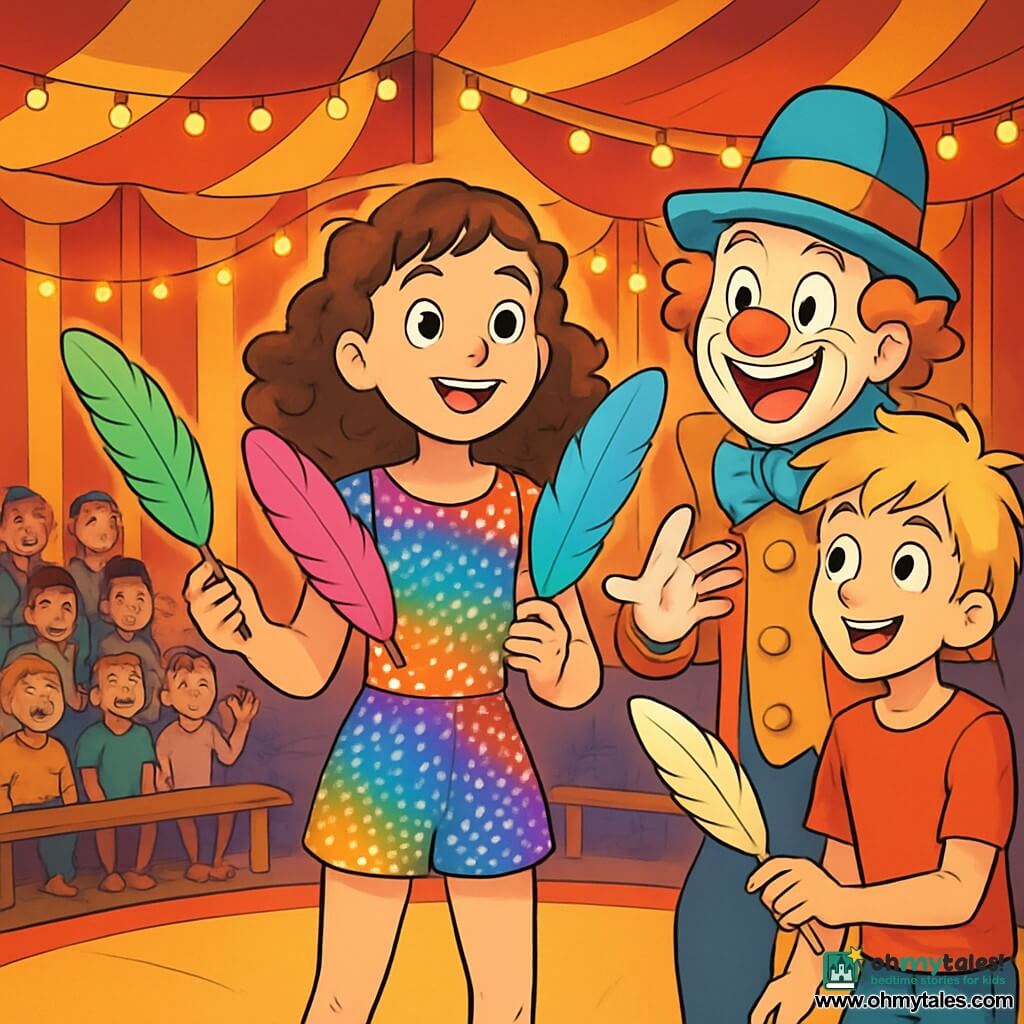
She had one bright idea in her head: she would learn to juggle three feathers. Not balls, not clubs, not dangerous flaming torches. Feathers—light as gossip, soft as a whisper, perfect for making the audience tilt their heads and smile.
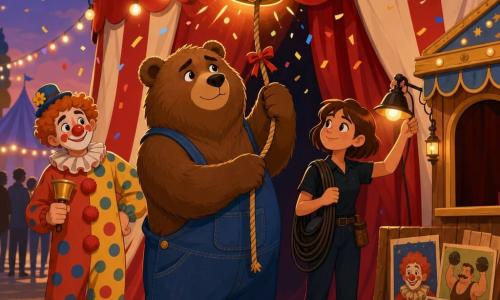
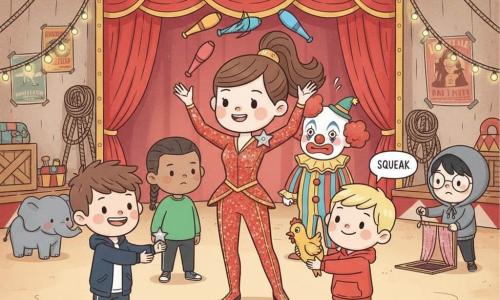
Inside the rehearsal tent, everything hummed. A man in a glittery waistcoat juggled oranges and stopped midair to wink. Two clowns practiced pie-throwing with the meticulousness of surgeons. High above, a trapeze artist cut through the air like a silver knife. Ellie pressed her nose to the rope and watched.
“Want to try?” asked a small voice. Ellie turned. An elderly clown with a painted teardrop and shoes that squeaked like rubber boots held out a tiny pair of pince-nez balanced on a ribbon. The lenses had been painted with little smiling mouths.
“They'll help you laugh at yourself,” the clown said with a conspiratorial whisper. “They're a laughing pince-nez. Try them on.”
Ellie slipped the pince-nez onto her face. For a moment she saw everything as if it had sprouted tiny confetti tears, and the world felt friendlier. The laughter painted on the lenses seemed to giggle back.
“Ellie!” called a voice. Mateo, a lanky boy who walked on a practice tightrope with shoelaces flapping, waved her over. “We're about to start feather practice. Come on!”
Ellie hugged the pince-nez ribbon to her chest and followed, heartbeat tapping a percussion beat in her throat. She had a plan: learn the three-feather trick, and make the audience go “ooooh” and then “hahaha!” in the very same moment.
Chapter 2: The First Tosses and the Featherstorm
The feathers were the colour of marshmallows and moonlight, soft and a little bossy as they refused to drop when commands were given. Madame Marzipan, the juggling coach, demonstrated with a flourish that made the feathers float like lazy butterflies.
“Start with one,” she said in a voice that smelled faintly of peppermint. “Then two. Then imagine the feathers are tiny planets orbiting your fingers.”
Ellie tried. The single feather obeyed like a polite pet, landing exactly where she wanted. The second feather found a rhythm. The third feather, however, decided to stage a protest. It drifted upward, looped around Madame Marzipan's bun, and tickled Mr. Taffy the tuba player's ear. He sneezed. A shower of confetti came out of his hat.
Ellie's cheeks went tomato-red, but the pince-nez wiggled and made a tiny hiccuping laugh.
“Relax,” said Rosa, the trapeze artist, handing Ellie a feather that smelled faintly of roses. “Feathers are actors; they love drama.” Rosa plucked another feather from Ellie's hair and winked. “Sometimes they perform their own solos.”
They turned practice into a game. Mateo called it “feather follow,” a silly improvised routine where everyone had to catch the feather that landed nearest them without using their hands. Ellie watched how the others moved—the way Mateo's body kept the rhythm, how Rosa laughed like a wind chime, how Madame Marzipan made the impossible look like a nap.
But the third feather still had ideas. It hopped into a hat, then took off again, hitching a ride on a bat costume and flying through the tent like it had somewhere far more interesting to be.
Ellie chased feathers, tripped over a unicycle, and emerged with a feather tucked behind her ear like a badge. Every flop made the tent erupt in an indulgent, compassionate chuckle. No one pointed or pouted. They clapped like they were celebrating little discoveries.
“You've got this, Ellie,” whispered the pince-nez on her nose, or perhaps it was just the tape of laughter in her head. Either way, the words sounded true.
Chapter 3: The Secret Trick of the Backstage
Backstage was a maze of trunks and mirrors and costumes that smelled of lavender and electricity. Ellie's friends were there—Rosa, Mateo, two clowns who practiced pratfalls with the precision of dentists, and a woman called Lila who sewed sequins so quickly she could thread a needle without blinking.
“We use the Bulb Method,” Lila announced, as if revealing the recipe to the best jelly ever made. She handed Ellie a small flashlight shaped like a lemon. “Think of each feather as a bulb you need to light in order. Call them one, two, three. Light, pass, catch. If you ever fumble, the others become the switch.”
“What does that mean?” Ellie asked.
“It means this is not a solo trick,” Rosa said, putting a steady hand on Ellie's shoulder. “We juggle each other along with the feathers.”
They practiced in a circle. Ellie said “one” and tossed a feather which Mateo tapped toward Rosa, who giggled and tipped it to Lila. They made a chorus of whispers to guide each toss—soft commands that sounded like the tent breathing.
At one point, the feather she was supposed to catch landed straight into a custard tart someone had set down, and for a second it looked like the feather had decided to become a pastry decoration. The clowns debated whether that counted as artistic expression. A custard-splattered clown winked at Ellie and handed her a napkin.
“Think of the feather as a friend,” Madame Marzipan advised. “Friends sometimes wander. We bring them back.”
Ellie began to move differently. Instead of watching the feathers like a teacher watches a class, she started listening to the tent—the squeal of the tightrope, the rustle of costumes, the soft chuckle that came from the pince-nez when she landed one toss right. Her throws became invitations. The feathers answered.
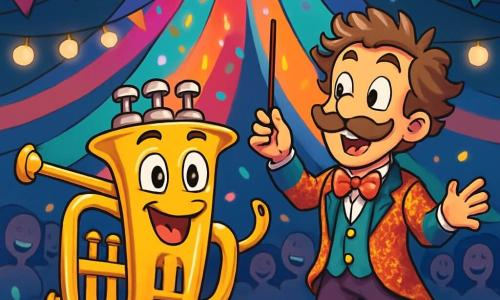
Outside the practice circle, Mr. Taffy played a low, silly horn. The notes fell like dumplings and made everyone grin. The band's music felt like a wave everyone rode together.
“Try tossing higher,” Mateo suggested. “It gives you time to breathe.”
Ellie tossed higher. The feather took a lazy arc, and for a breathless, sparkly second, it looked like she'd actually done it—three feathers twirling like cotton on a windmill. The tent clapped. Ellie gasped and then laughed so loudly her pince-nez fell off and did a little hop onto a chair.
“Solidarity,” Rosa said, scooping the pince-nez and popping it back onto Ellie's nose. “We lift each other.”
Ellie felt light as a balloon.
Chapter 4: The Great Feather Chase
The next day, there was a parade through the town to advertise the evening show. Ellie marched with a feather tucked in her braid, and the pince-nez hung like a medal. People followed the band. Children trailed like little comets, and even the mayor—wearing an enormous hat—did a little wobble that looked almost like a dance.
During the parade, a gust of wind decided it preferred feathers to hats. One feather—the one Ellie cherished most because it had been stubborn and then obedient—escaped. It soared over carts, between the mayor's hat and a poodle's ears, and out toward a fountain where a group of pigeons seemed to have formed a committee.
Ellie sprinted. The parade turned into a comic chase. Rosa vaulted over a stack of crates, Mateo leaped a vegetable stand without knocking over a single turnip, and the clowns rolled under a produce cart in a way that made everything smell faintly of bananas.
They chased feathers through a maze of surprises: a busker playing a violin that sneezed (the violin, not the busker), a dog that thought the feather was a hat, and a tea stall where a spoon got tangled in a mustache.
Finally the feather landed in the hands of a small girl who had been watching with wide, delighted eyes. She held up the feather like it was a flag.
“It's for you,” she said, handing it to Ellie with a shy smile. “I saw you trying so hard.”
Ellie's chest swelled. She thanked the girl, and suddenly the parade felt less like a race and more like a promise kept. She noticed how hard everyone had run not just to help her but because they wanted the show to sparkle.
“You don't chase feathers alone,” Mateo panted, wiping his forehead with a strip of confetti. “You chase them with friends.”
Back under the big top, Madame Marzipan pinned a tiny feather to Ellie's jacket, like a badge of honour. The pince-nez wiggled in time with the pin and let out a little satisfied giggle.
Chapter 5: The Rehearsal That Almost Didn't
On the night of the dress rehearsal, the tent buzzed like a hive about to sing. Costumes were ironed until they shone; the band tuned their instruments to sound like a kettle stirring itself. Ellie stood in the wings, feathers tucked into her sleeves.
“We do this together,” Rosa said, squeezing Ellie's hand. “If anything goes wrong, we fix it, with jokes if needed and with hands if required.”
They stepped on stage. The lights softened like marshmallows melting. The audience—made of friends, family, and a few very brave neighbors—leaned forward.
Ellie started the routine the way she always did: one, two, breathe, three. But halfway through, a gust of stage wind (meant to be dramatic) whooshed in and turned the third feather into a small, rebellious tornado. It flew straight toward the mouth of the man with the tuba.
Without missing a beat, Mateo caught the feather on the trombone slide and flicked it back like a ping-pong champion. Rosa cartwheeled and batted a feather into the czar of custard pies. The clowns did a synchronized fall that had been practiced down to the silly sneeze.
Ellie stumbled, then remembered Lila's voice—“We are switches; we light each other up.” She said an invented little rhyme, and the tent seemed to breathe with her. Hands moved like a chorus, catching, nudging, props flying in a choreography of friendly rescues. The audience laughed, not in a mean way but like they were part of the secret. The laughter became a cushion that made any slip feel like a step in a dance.
When the final feather fluttered into Ellie's palm, she lifted it up as if it were a tiny, living torch. The tent erupted, and Ellie felt every hand in the wings clap for them as one.
“Brilliant!” Madame Marzipan cried. “And utterly ours.”
Ellie looked at her troupe, at the clowns with custard on their noses, at Rosa's glittering braid, at Mateo's shoes untied because he'd never quite learned to tie knots that weren't on a tightrope. They grinned at each other like conspirators.
“Solidarity,” Ellie whispered—this time not as a word on a list, but as the drumbeat inside her chest.
Chapter 6: The Night of the Glowing Thank You
Opening night arrived like a firework. The big top was full to the seams with people who carried umbrellas, laughter, and hope folded into their pockets. Lights spilled like golden syrup over the audience.
Ellie's troupe performed number after number, each act sparkling with its own special kind of silliness. There was a juggling octopus who actually only had three tentacles, a dog that could whistle better than some of the band members, and two acrobats who could make gravity feel confused.
At last it was time for Ellie. The host announced, “And now, a delicate feat from one of our very own—Ellie and her feathers!”
Ellie stood in the middle of the ring. The pince-nez perched on her nose was no longer just a gag—its painted smiles felt like old friends. She remembered the parade, the custard tart, the lemon flashlight, the girl with the wide eyes, the way hands had reached out for feathers like lifelines. She remembered Madame Marzipan's peppermint voice. She remembered the chorus of her friends, always tuned to the same hum.
She took a breath that tasted of popcorn and evening air and started. One. The ring around her hands glowed faintly, as if the feathers wanted an audience. Two. The feathers made tiny ellipses of sky. Three. The third feather rose like a ribbon deciding to be a flag and then settled into her palm like it had come home.
This time, when the feather waltzed across, the whole troupe stepped into the light to be part of the trick. Mateo nudged a feather in the right direction with the toe of his shoe; Rosa gently guided another with the fringe of her costume; Lila and the clowns made small gestures that worked like secret signposts. The audience went “ooooh” when they saw the feathers dance and then “hahaha!” when a clown pretended to be shocked to find a feather on his hat.
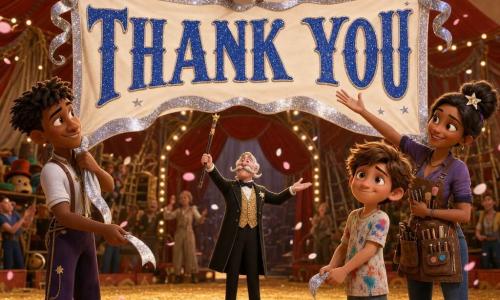
When the last feather landed, Ellie lifted her hand. The lights dimmed, then brightened into a ribbon of stars that lit up the tent's ceiling like a painted sky. In the center of that sky, each light flickered and arranged itself into letters, slowly and kindly: THANK YOU.
It glowed like a soft sunrise.
Ellie felt a warmth spread from her toes to her hair. She glanced at her troupe. Rosa blew a little kiss; Mateo gave a mock bow that almost made him tumble; the clowns formed a neat line and did a tiny synchronized wink. The pince-nez gave one last happy hiccup.
The audience rose as one, clapping and cheering. It sounded like a waterfall of joy.
Ellie stepped forward and made the only speech she needed, with her hands full of feathers and her heart full of everyone who had helped her. “Thank you,” she said, loud enough for the lights to hear. Her voice was bright and clear. “Thank you for catching the feathers with me.”
Outside the tent later, in the hush after the curtain call, the troupe gathered like a family at the door of a warm house. Fireflies blinked as if they were trying to learn circus rhythms.
Madame Marzipan placed a tiny feather in Ellie's hair. “For courage,” she whispered.
Ellie touched the feather and felt the memory of every helping hand, every shared laugh. She looked at her friends—at Lila's nimble fingers, at Mateo's steady balance, at the clowns' patient pratfalls—and knew the feathers had not been the only things that were being juggled. They had juggled each other's hopes and fears and silliness.
Together they took a bow beneath the stars.
A big, glowing thank you!