Chapter One: Morning Light on the Tarmac
Milo woke to a light like honey across his window. He was a pilot — calm, careful, and curious. He put on his soft blue cap and walked outside. The airport smelled of warm metal and fresh coffee. Small birds darted like paper boats between lights.
“Ready, Captain Milo?” said Nia, the ground handler, with a smile that folded into her eyes. She held a clipboard with neat ticks and tiny, serious notes.
Milo nodded. “Ready.”
They walked across the tarmac together. The airplane gleamed under the morning sun, its wings like outstretched hands. Milo touched the name by the door as if saying hello to an old friend. He liked that the plane had a story. Today, it would carry families and flowers and a little dog named Pip.
Milo loved flying, but he loved the team on the ground almost as much. The pilots in the cockpit were part of a bigger circle. There were people who checked tires, people who unlatched doors, and people who made sure the coffee would be warm for tired travelers. Milo watched them move like the wind moves leaves — gentle, careful, needed.
“Everything looks good,” said Raj, the mechanic, as he tapped the plane's skin. “Tires, brakes, lights. We checked the maps, the weather, and the radios.”
“Thank you,” Milo said, and he meant it. He remembered learning every bolt and chart as if they were notes in a lullaby.
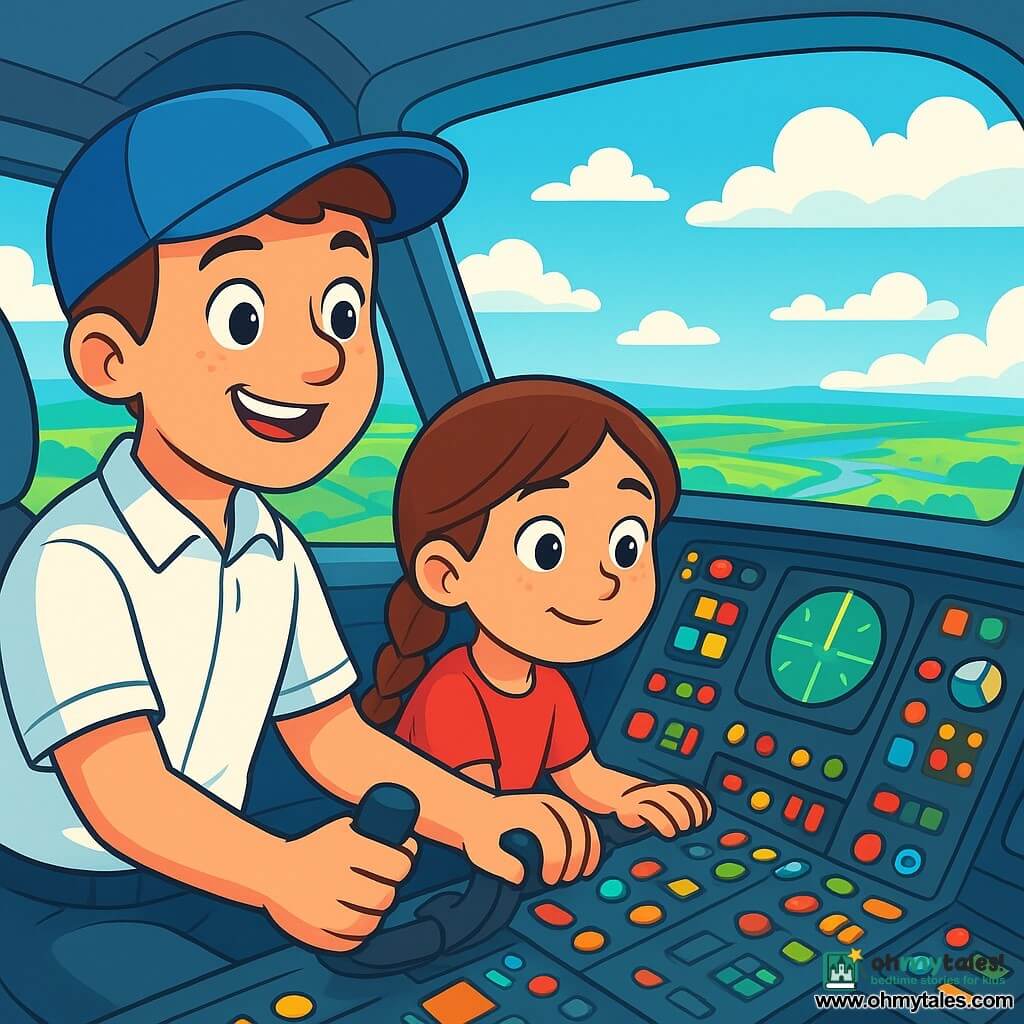
Inside the cockpit, lights glowed like small stars. Milo breathed in and out, counting three slow breaths. He looked at the controls and imagined the plane humming like a friendly whale. He spoke softly into his headset.
“Cabin crew, doors are clear. Passengers are welcome. We'll be kind and careful.”
“Yes, Captain,” said Mira, the flight attendant, her voice a soft bell. “We've got children who want stories, and an old man who likes the window seat.”
Milo smiled. “Let's make it smooth.”
Chapter Two: The Sky Lesson
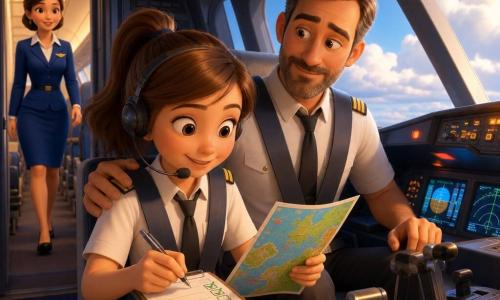
The climb felt like a gentle lift as if the world below were a quilt being folded away. Milo guided the plane with hands that knew both maps and manners. He showed his co-pilot, Ana, how to read the air as if it were a poem.
“Feel that?” Milo said quietly. “A little tug on the left. That's a breeze wishing to play.”
Ana put a hand on the wheel, feeling the tiny language of wind. “Like a whisper.”
Milo nodded. “Yes. We listen. The sky tells us where it's calm and where it's thinking. We keep everyone safe by listening and by following our checklists like steps in a gentle dance.”
Below them, clouds were cotton islands. Sunlight poured through a gap like a golden ribbon. Passengers watched, letters of light on their faces. Milo spoke over the speaker, a voice like soft bread.
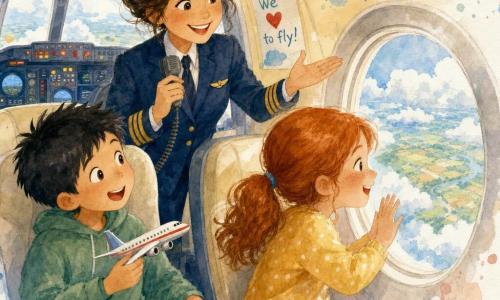
“Good morning. This is Captain Milo. We're climbing to our cruising height. If you look out the windows, notice the quilt of fields and the rivers that mirror the sun.”
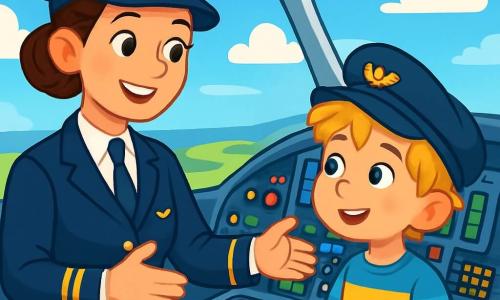
A child near the window leaned close. “How do you know where to go?” she asked with a voice of peppermint.
Milo smiled. “We plan. We practice. We read the sky. And we have helpers on the ground who tell us things we cannot see from here, like how heavy the airplane is and whether the fuel is perfectly balanced. It's teamwork. The sky and the ground sing together.”
Ana pointed to tiny lights blinking on the instrument board. “These are our helpers inside. They tell us speed, height, and if something needs our attention.”
“And the ground?” the child asked.
Milo thought of Nia and Raj and Mira. “They are like the roots of a tree. They hold us steady. Without them, we could not stand.”
Above the clouds, the plane moved with the hush of a lullaby. Milo kept an eye on the horizon and a kindness in his voice. He told a little story over the speaker about a paper plane that learned to ask for help. Parents glanced at each other and smiled. The old man with the window seat folded his hands as if the story were a warm scarf.
Chapter Three: A Small Problem, a Big Heart
Midway through the trip, a soft alarm blooped. Milo felt his shoulders steady like the wing of a bird.
“Just a note from the ground,” he said. “A small door seal needs a check when we land. Nothing to worry about. We'll be safe.”
People relaxed because Milo's voice was steady. He called the control tower and spoke with calm words that sounded like pebbles dropped into a pond — small, steady ripples.
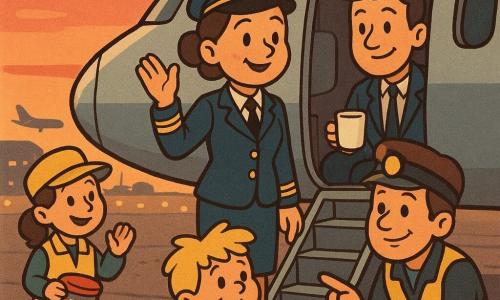
On landing, the plane rolled like a gentle wave onto the runway. Passengers clapped softly when they stepped out — a sound like rain on a tin roof, warm and real. Nia and Raj waited at the gate. They moved as one: checking, chatting with passengers, guiding luggage, and petting Pip the dog.
Milo stepped out of the cockpit and saw Mira showing a child how the safety vest had a light. He saw Raj showing a young apprentice how to tighten a bolt. He saw Nia hand a flower to the old man.
“You did well,” Nia said to Milo, but she was looking at everyone.
Milo looked at the ground team and felt a large, quiet joy. “Thank you. For every checklist, every cup of coffee, every careful look.”
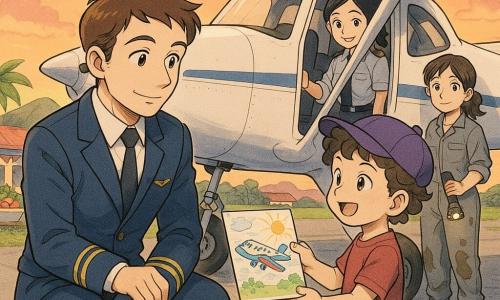
The child from earlier tugged Milo's sleeve. “Do pilots clap for ground teams?”
“We do,” Milo said. He watched as the little applause began softly — a handful of hands, a smile that spread. Then more hands joined — passengers, crew, and even the apprentice with his grease-smudged hands. The clap sounded like a flock of birds taking off.
The airport around them hummed with hands and voices. People shared small stories: the map-maker who loved puzzles, the mechanic who used to make wooden toys, the ground handler who saved a lost kitten last week. Milo listened and felt his heart grow like a kite catching wind.
Chapter Four: Evening Light and Home
As evening laid a shawl of pink across the sky, Milo sat on a low wall with a cup of tea. The plane rested like a sleeping whale. He thought of the day's sky, the quiet alarms, the teamwork that had turned a small problem into a gentle story.
Mira sat beside him. “You told a nice story,” she said. “About listening.”
“So did you,” he answered. “About helping.”
They watched lights blink on like tiny fireflies in the distance. Milo thought about responsibility — not as a heavy stone, but as a lantern you carry to help others see. He thought about empathy, how it was a bridge between a pilot and a ground crew member, between a child and an old man, between a frightened pet and a steady hand.
“Applause feels good,” the child had said. Milo smiled. It did feel good, but it was the quiet thanks that felt like the truest sound. The hug from a traveler, the nod from a mechanic, the careful reading of a checklist — those were the stars Milo loved to notice.
Night came on like a soft blanket. Milo rose and touched the plane's nose once more. “Good night,” he whispered. He walked home under a sky full of small, patient lights. The wind hummed a soft tune, and he hummed back.
At home, Milo tucked his cap beside the window. He thought of tomorrow's map and tomorrow's helpers. He felt grateful for the people who made flying a kind work. He felt calm, like the sea after a gentle day.
Outside, the airport fell quiet, but somewhere, people dreamed of clouds and kind hands. Inside Milo's house, a tiny lamp glowed like a star. He closed his eyes, listening to the hush.
“Thank you,” he said into the dark, not just to the sky, but to everyone who had kept the journey safe. The stars seemed to nod, as if in applause.