The Riddle-Loving Tyrant
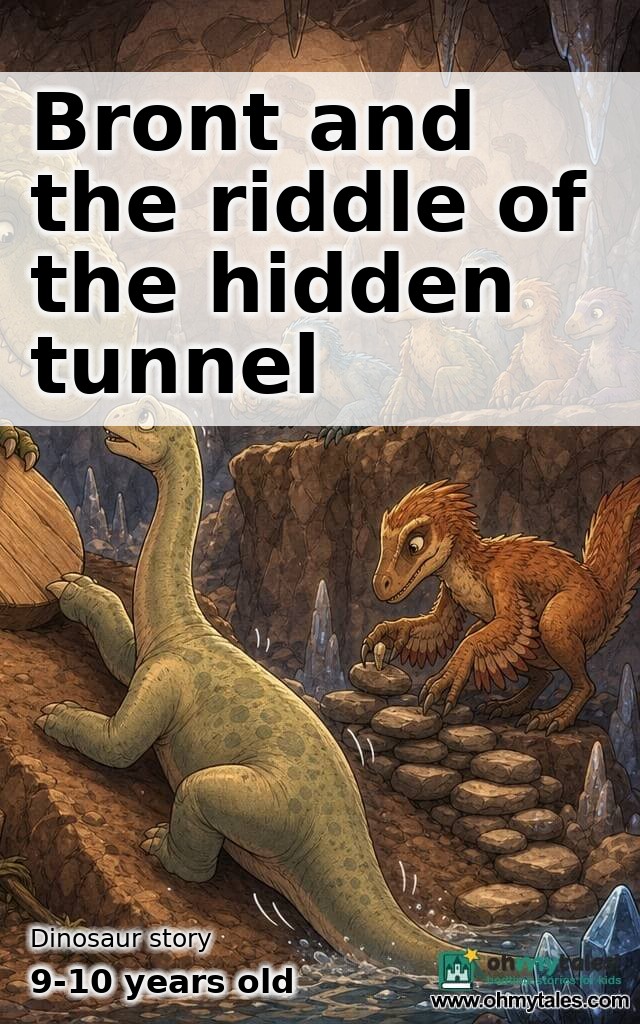
Long before the stars grew familiar to the sky, when ferns curled like sleeping hands and volcano smoke painted the dawn, there lived a tyrannosaur who loved puzzles. He was called Bront, though his roar rolled like thunder and his mind was made of curious gears. Bront kept tiny stones sorted by shape, traced secret patterns on river mud, and pieced together the songs of river shells.
Bront's teeth were fierce, but his heart was softer than the moss at the base of the trees. He spent his days exploring cliff paths, listening to riddles carried on the wind. He greeted every creature—horned ceratops, long-necked sauropod, feathered dino—offering help whenever a foot got stuck or a lost egg needed returning. He believed a problem was a kind of friend: puzzling, patient, waiting to be solved.
One morning the ground shuddered beneath the herds. A thunder of falling rock closed a path Bront had walked a hundred times, trapping smaller dinos on the other side. Without the path, the valley would be cut off from the fresh watering pool. Bront's jaws tightened—not with hunger, but with determination. He would find a way.
The Cunning Companion
As Bront circled the blockage, a voice like wind through dry grass called his name. From a tangle of roots and bright feathers peered Sira, a velociraptor with eyes that saw corners other eyes could not. Sira was a strategist: she mapped shadows, threaded clues into plans, and loved a clever trick almost as much as Bront loved a riddle.
"Stone falls close, river waits," Sira chirped. "But darkness under the cliff sings—there may be another road."
Bront sniffed the earth. There was a narrow crack yawning beneath the boulders, just wide enough for a nimble neck and a brave heart. Sira glanced at Bront's heavy shoulders and then at the trapped herds on the other side. In her mind, she threaded a plan as one threads beads.
"We go below," she said. "But paths under the earth are clever. I will think three moves ahead; you will listen to the world."
They pushed through the gap together. Bront's powerful tail balanced them; Sira picked at loose stones and traced lines where rock seemed to speak. The entrance inhaled their breath and shut behind them like a shell.
The Underground Map
The cavern smelled of old rain and crushed leaves. Stalagmites rose like frozen trees, and faint crystals shone with trapped moonlight. At first the tunnels wound like the roots of a giant fern, tricking senses and folding back on themselves. Bront's steps made soft thuds that sounded like heartbeats in the dark.
Sira moved like a shadow, reading scratch marks left by ancient feet. "These marks go left," she whispered, tapping a pattern on the wall. "But they lie. There is one trail that forgets nothing—listen."
Bront held his head still and listened. Far away, the drip of water counted time. The drips beat a rhythm: short, long, short. It echoed through a half-buried stone, and in that echo Bront felt a pattern—a puzzle. He tapped the air with his snout and matched the rhythm, and a hidden slit sighed open, revealing a narrow ledge.
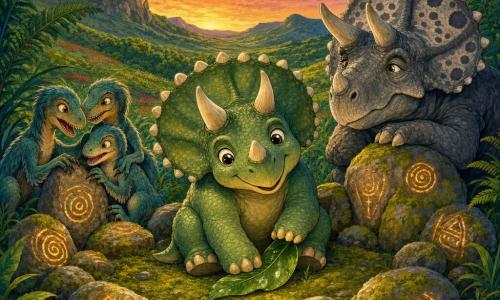
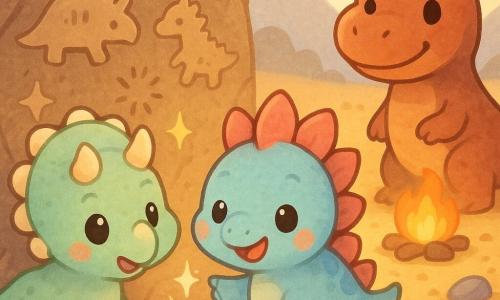
They crossed the ledge and found a chamber where murals told stories in curled lines: a great tail guiding a herd, a tiny dinosaur leading the way across a flooded plain. Bront traced a mural with a careful claw and smiled; the murals were a map, a promise that someone before had also been brave and kind.
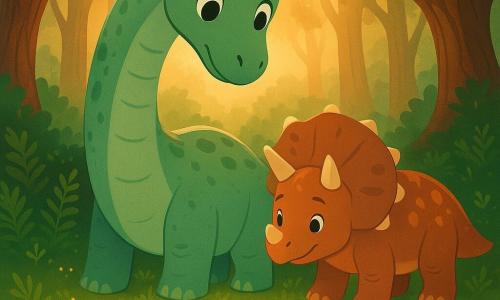
But the chamber held more than maps. A cold wind carried the cries of a lost sauropod calf named Luma, whose long legs had slipped into a pit when rocks tumbled. She could not climb back, and each cry rattled like pebbles. Bront listened, his chest filling with a warmth that pushed him forward.
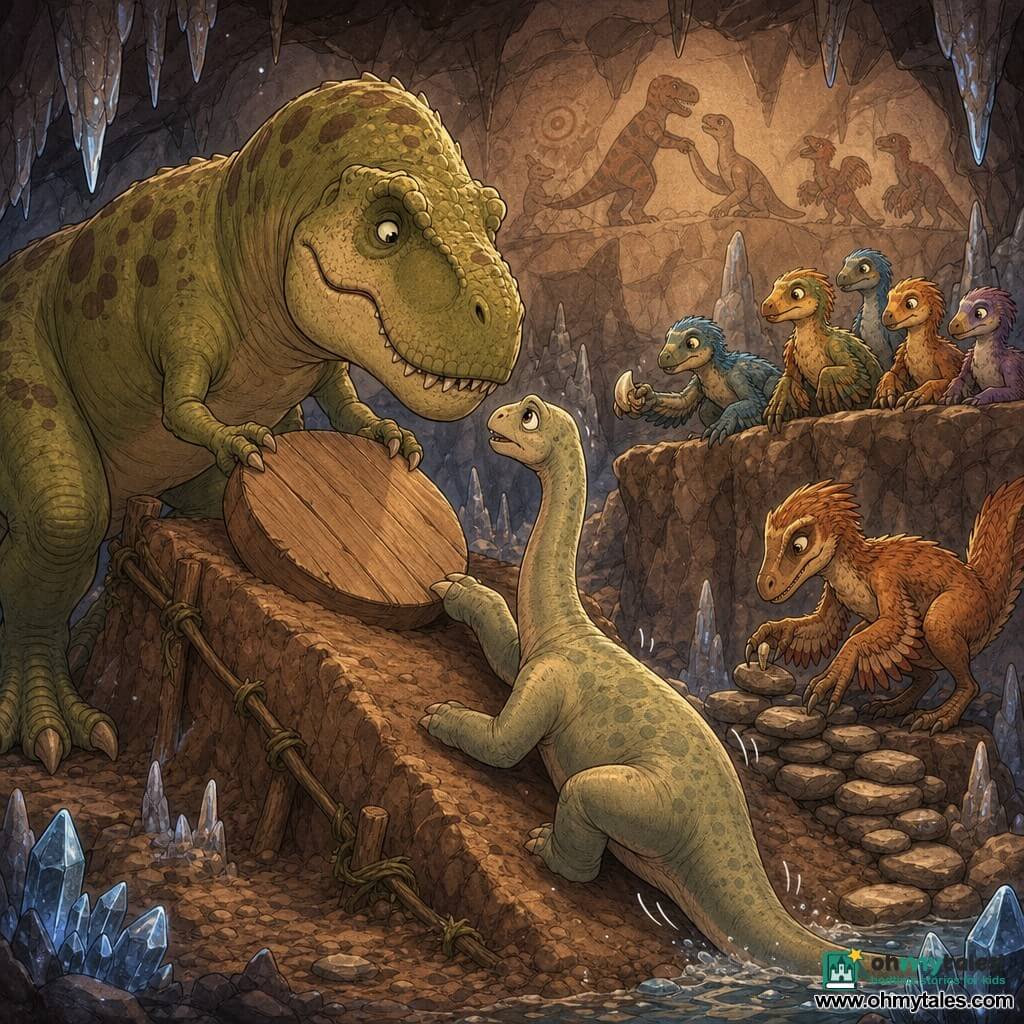
"Help," Luma whispered, small as a pebble voice. Bront bent, though his jaws were broad and clumsy for small things. He could have squeezed past, left the calf for bolder, lighter-footed explorers. Instead, he dug, not with his teeth but with patience, clearing earth and nudging a fallen log until a ramp formed. Sira balanced stones with nimble toes, arranging each like a bead in a careful necklace.
"Hold," Bront told Luma. "We will make a ladder the way the murals show—slow and steady."
They pulled the calf up together. When Luma's head cleared, her eyes were moist with gratitude. "You listened," she breathed.
Bront felt something return to him—like a missing stone in his collection. Helping was solving a riddle no one could answer alone.
The Puzzle of the Hollow Bones
Beyond the mural chamber a long corridor narrowed into a chamber filled with bones—arches of rib, spines like stacks of fallen trees. The bones hummed with old stories. Sira frowned; bones were tricky, like a chessboard where the pieces still remembered their moves.
At the center of the chamber lay a sealed door carved from basalt, etched with a pattern of circles and triangles. A fossilized tooth sat in a socket above it, but it was cracked, and the door would not open without the missing piece. The corridor behind the door might be the secret route to the valley, but the missing tooth had been taken by something that loved riddles too.
On a ledge above the bones, a small flock of feathered dinos chattered, guarding the missing tooth. They had found it and refused to part; they liked riddles too and demanded a trade: a challenge for a trade.
Sira's mind sharpened. She proposed a game of logic. "We ask three riddles," she said. "If we answer, we take the tooth. If not, we leave a gift."
Bront loved riddles. He closed his eyes and let the cavern's hush sharpen his thoughts. The first riddle was a whisper about a thing that eats night and grows fat with stars. Bront smiled and answered, "The moon's shadow." The second spoke of a path that moves but never walks; Bront said, "A river's song." The last was sly, about a friend with a hunger that heals: "A helping hand," Bront said, thinking of the calf he'd saved.
The birds clapped their wings in delight. "You have heart," they crowed, and returned the missing tooth. But when Sira reached for it, a small eggshell trembled beneath the ledge. One of the feathered dinos had hidden an egg among the bones. The birds refused to give the tooth if a stranger would take the egg.
Bront looked at Sira, at the birds, at the fragile shell. Strategy could outwit or soothe. Sira bent her head. "We will not take the egg. We will help you guard it until it hatches." It was not part of any plan, but it was a choice that felt right.
The birds lowered their feathers in surprise, then nodded. Trust warmed the chamber like sunlight. They gave the tooth to Bront. The basalt door sighed, gears moving like sleep-worn jaws, and opened onto a sloping tunnel that smelled of wet earth and home.
The Return and the Ribbon of Light
The tunnel sloped up toward the river valley. The last stretch was steep and slick with ancient clay. As Bront pushed forward, a sound reached him: the trapped herd below cried their old fear. The path above the collapse shimmered like a memory; it needed a step that was more than strength—it needed planning.
Sira studied the incline. "We need anchors," she said. "Roots, stones, and hearts willing to hold." Bront's arms were not nimble enough to knot vines, but his tail could brace and his shoulder could press. Luma offered her long neck as a balk, the birds promised feathered alarm, and other small dinos volunteered paws and patience.
Working together, they woven a rope of vines and lined the way with stones. Bront pressed his weight like a lodestone, steadying the ladders as each dino climbed. When the last small sauropod stepped onto solid earth, they all cheered—a sound like rain.
On the other side of the landslide the valley opened, bright and safe, the watering pool catching the sky. The trapped dinosaurs stepped forward, hugging trunk and claw with grateful noises. Bront looked at Sira. The strategist's eyes gleamed, not with pride, but with the quiet delight of a plan that had grown beyond itself and become something kinder.
"You solved not only riddles," Sira said. "You solved what mattered."
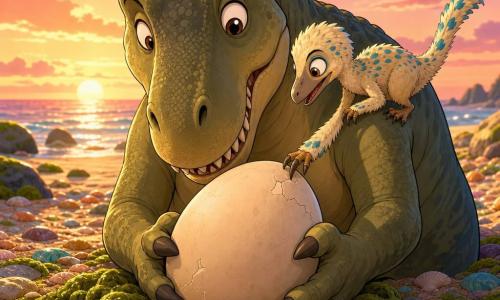
Bront felt a warmth in his chest larger than any sun-warmed stone. He had used his puzzle-love to listen, to help, and to make room for others. The valley crowned them with birdsong. Even the feathered guardians who had demanded riddles returned to place the egg they had hidden at Bront's feet. It trembled and cracked; a tiny dino blinked up, astonished by the brightness of the world.
That evening the herd lit a ribbon of fireflies along the repaired path. They looped it about the entrance to the tunnel as if weaving a thank-you. Bront traced the ribbon with a careful claw and then tapped it gently with Sira's clever toe. The light danced like answers that glow when you help someone find their way.
Bront climbed the cliff once more and looked back into the dark tunnel. He had been afraid of the unknown, but now he saw tunnels as stories waiting to be read, and companions as the best punctuation. He thought of Luma, of the birds, of the flock of small helpers, and felt a simple truth settle in him: a riddle is sweetest when solved together.
Under the stars the valley breathed easy. Bront lay with his head on a folded rock and closed his eyes, a mind full of patterns and a heart full of thank-yous. Around him, dinos of all sizes settled, safe and sound, and the world felt, for a night, perfectly solved.